
Blog
Reroof Permit Requirements in Miami: 2026 Owner's Guide
Learn Miami reroof permit requirements: jurisdiction, NOA approvals, HVHZ documents, inspections, and mistakes to avoid. A friendly 2026 guide.
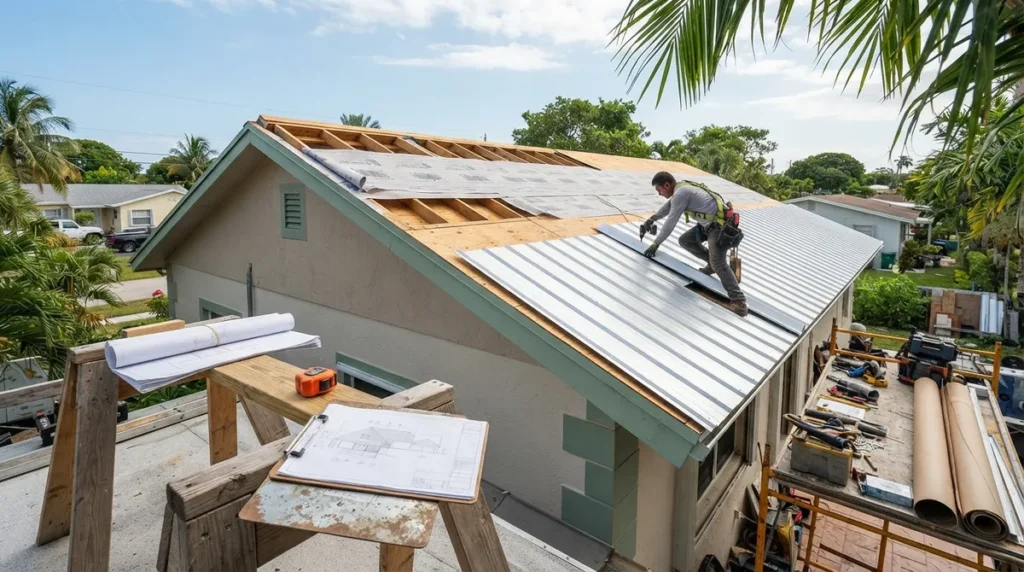
Key Takeaways
-
A building permit is required for nearly all roofing work on residential and commercial properties in the City of Miami, and a reroof permit covers only the described roof work, not other unpermitted improvements.
-
First confirm your jurisdiction: a Miami mailing address may fall under the City of Miami, unincorporated Miami-Dade County, or another municipality, each with its own application process.
-
Product approvals must match your exact roof assembly; a Miami-Dade NOA or Florida Product Approval for one component does not cover a different system, and mismatches are a common reason for rejection.
-
Because Miami-Dade is in the High-Velocity Hurricane Zone, submittals need detailed roof plans showing dimensions, slope, drains, scuppers, and pressure zones, plus the HVHZ Uniform Roofing Application.
-
Expect staged inspections such as insulation, underlayment, roofing installation, tin cap, and final, and avoid covering work before it is inspected to prevent later problems.
-
Commercial roofs may also require a DERM application, so don't assume residential submittal rules apply; always confirm the current checklist with the authority having jurisdiction.
Let's be honest: nobody dreams about permit paperwork. You're dreaming about a solid new roof that can shrug off the next hurricane season. But in Miami, the road to that roof runs straight through the building department, and knowing the reroof permit requirements Miami officials expect can save you weeks of frustration.
Here's the short version. A building permit is required for roofing work on residential and commercial properties within the City of Miami. The exact application route, documents, and inspections depend on where your property sits, what roof system you're installing, and whether you're in the High-Velocity Hurricane Zone (HVHZ) rules that Miami-Dade County enforces.
Whether you're a general contractor juggling multiple jobs, a roofer, a realtor helping a client close, or a homeowner replacing storm-weary shingles, this guide walks you through it in plain English. We'll cover jurisdiction, documents, product approvals, inspections, and the common mistakes that trigger rejections. Grab a coffee, and let's make this simple.
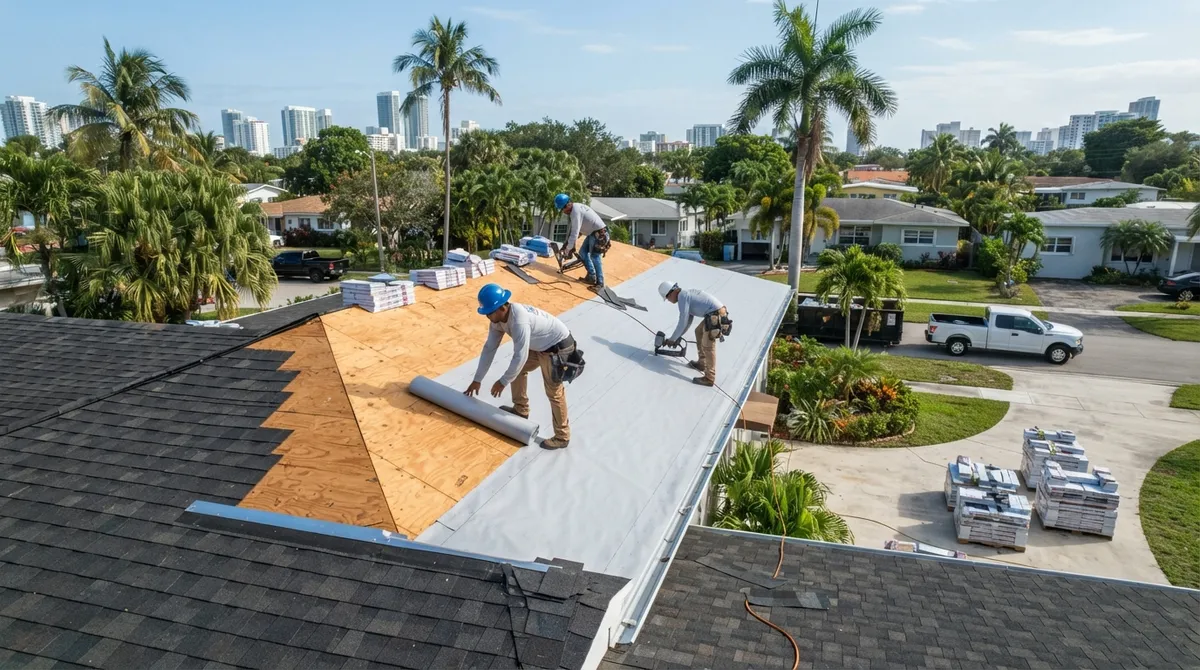
Do You Need a Permit to Reroof in Miami?
Short answer: yes, almost always. The City of Miami states that a building permit is required for all roofing work on residential and commercial properties. That's a requirement, not a suggestion.
A reroof permit covers tear-offs, recovering, and replacing the roof system. It does not cover unrelated work. The City's checklist includes a disclosure statement making clear the permit authorizes only the reroof work described. So if there's an unpermitted addition or enclosure on the property, a reroof permit won't legalize it. If that's your situation, our guide on 7 steps to legalize unpermitted work in Florida is a great next read.
What about small repairs? Rules differ by scope and jurisdiction, so it's smart to check before you assume. We break down the gray area in Permit vs. No Permit: Fixing a Few Shingles in Florida.
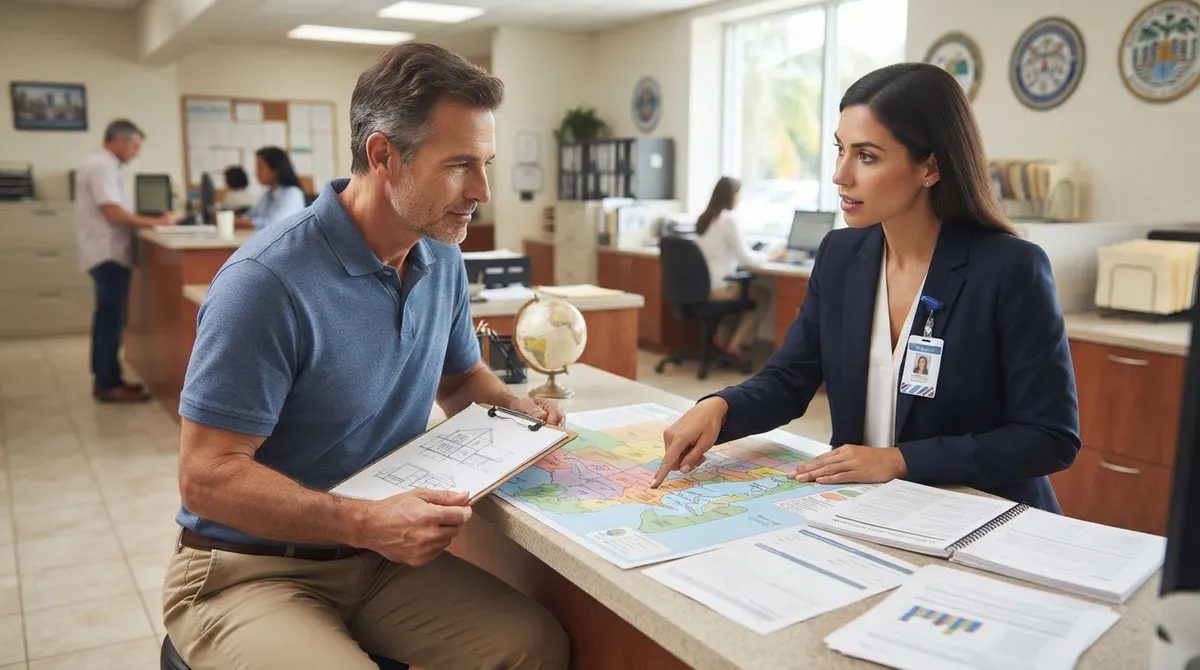
First Step: Confirm Your Jurisdiction
This trips up more people than you'd think. "Miami" on a mailing address doesn't always mean the City of Miami. Your property could be in:
- The City of Miami, which uses its own online permitting system and checklists
- Unincorporated Miami-Dade County, which follows the county's roofing permit process
- Another municipality within Miami-Dade, each with its own forms and portal
Applying in the wrong place means a rejected application and lost time. Near city lines, the answer isn't always obvious. We cover this exact problem in City of Orlando vs. Orange County Roof Permits: Which Applies?, and the same logic applies in Miami-Dade.
| Jurisdiction | Where You Apply | Key Notes |
|---|---|---|
| City of Miami | City online permitting system | Uniform Roofing Application plus project-specific checklist |
| Unincorporated Miami-Dade | Miami-Dade County building portal | HVHZ Uniform Roofing Application based on the 2023 Florida Building Code, 8th Edition |
| Other Miami-Dade municipalities | That city's own building department | Forms and checklists vary; confirm before filing |
What Documents Do You Need?
Requirements shift depending on roof type and scope, so always pull the current checklist from the authority having jurisdiction. That said, here's what commonly shows up in Miami reroof submittals:
- Uniform Roofing Application. The City of Miami directs applicants to submit this through its online permitting system. It may need to be signed and notarized.
- HVHZ form and supporting information. Miami-Dade's High-Velocity Hurricane Zone application calls for project-specific details and supporting materials.
- Product approval documents. A Miami-Dade Notice of Acceptance (NOA) or Florida Product Approval for each roofing component.
- A roof plan. Showing dimensions, slope, roof levels, drains, scuppers, and pressure zones where applicable.
- Design calculations and component approvals. Depending on the system, these may be needed.
- Owner's Notification for Roofing Considerations (Form 1524). The City's residential checklists identify this form as a document that may apply.
- Roof-to-wall connection documentation. Another item flagged on City residential reroof checklists.
- Disclosure statement. Clarifying that the permit covers only the described reroof work.
For commercial properties, the City's application instructions note that a DERM application may also be required. Don't assume residential submittal rules apply to a commercial roof.
Product Approvals: NOA and Florida Product Approval
Your roofing materials and systems generally need an applicable Miami-Dade County Notice of Acceptance (NOA) or Florida Product Approval. Here's the catch: the approval you submit must match the proposed roof system and its installation conditions. An NOA for one underlayment doesn't cover a different assembly, and mismatches are a classic reason plan reviewers send applications back.
Not sure how to read those approval numbers? Our walkthrough on how to read a Florida Product Approval number for roofing will help you spot problems before the reviewer does.
| Approval Type | What It Covers | Common Pitfall |
|---|---|---|
| Miami-Dade NOA | Roofing products and systems approved for HVHZ use | Expired or mismatched to the installed assembly |
| Florida Product Approval | Products approved statewide under Florida's system | Used where an HVHZ-specific approval is required |
The Role of the High-Velocity Hurricane Zone
Miami-Dade sits in the HVHZ, which carries stricter wind-resistance expectations than much of Florida. Miami-Dade County's current roofing application identifies the Florida Building Code, 8th Edition (2023), as the basis for its HVHZ Uniform Roofing Application.
Practically, that means roof plans, pressure zone details, and component approvals matter more here than in many other counties. Because forms and requirements get updated, always confirm the current versions with the building authority before filing. And if you want the wind-load side explained, check out What Is a Roof Uplift Letter? A Florida Permit Guide.
Inspections: What to Expect
The permit isn't the finish line. Inspections are built into the process, and the sequence depends on your roof system and permit scope. City of Miami checklists list roofing inspections that may include:
- Insulation
- Underlayment or base application
- Tile, shingle, or metal installation
- Tin cap
- Final inspection
For example, the City's residential flat-roof checklist lists five potential inspection stages: building roofing, insulation, base application/hot mop, tin cap, and final. Which ones apply to you depends on the project.
Here's a friendly warning: covering work before an inspection signs off can create headaches later. If that happened to you, read How to Handle Covered Work That Missed Inspection in FL.
Step-by-Step: Getting Your Miami Reroof Permit
- Confirm your jurisdiction. City of Miami, unincorporated Miami-Dade, or another municipality.
- Download the current checklist. Match it to your roof type (flat, tile, shingle, metal) and property type.
- Select an approved roof system. Verify the NOA or Florida Product Approval matches your assembly.
- Prepare the roof plan and supporting documents. Include dimensions, slope, drains, and pressure zones as required.
- Complete the application. Include notarization and forms like Form 1524 where applicable.
- Submit through the correct portal. Note that some older master-project roofing applications may require in-person plan submittal, since the City's ePlan system launched December 5, 2018.
- Respond to reviewer comments. Address each one fully to avoid repeat rounds.
- Schedule inspections. Pass each stage through final.
Speed matters when a crew is scheduled. Our tips in How to Speed Up Roofing Permit Approval in Miami FL can shave off avoidable delays.
Common Mistakes That Slow Miami Reroof Permits
- Wrong jurisdiction. Filing with the City when the property is unincorporated, or vice versa.
- Mismatched product approvals. The NOA doesn't match the actual roof assembly.
- Incomplete roof plans. Missing drains, scuppers, slopes, or pressure zones.
- Missing forms. Form 1524 or the HVHZ form left out.
- Skipping the commercial add-ons. Overlooking a possible DERM application.
- Treating the reroof permit as a cure-all. It won't legalize other unpermitted work.
For a deeper dive into these pitfalls, see 14 Miami Roofing Permit Facts Every Owner Should Know and, for contractors, 5 Roofing Permit Mistakes West Palm Beach Pros Avoid, which many Miami roofers find equally useful.
Tips for Different Readers
General Contractors and Roofers
If you're running multiple roofs at once, consistency is everything. Standardize your submittal packet, verify every NOA before filing, and track comments across jobs. When volume climbs, many roofers lean on outside help; our piece on high volume roofing permits in Miami lays out a workable workflow.
Homeowners and Property Owners
Ask your roofer who is pulling the permit, and get that in writing. An unlicensed or permit-skipping contractor can leave you holding the problem. If a roof was already replaced without one, don't panic. Read What If My Reroof Was Done Without a Permit in Florida? for a clear path forward.
Realtors and Investors
An unpermitted roof can stall a closing fast. Check permit history early, and if something's off, see How Do You Legalize an Existing Roof in Florida? and After the Fact Roofing Permit Miami: 2026 Guide.
When Professional Help Pays Off
Plenty of reroof permits sail through. But when a reviewer flags your roof plan, a denial lands, or a crew is waiting, having a team that handles the whole process can be the difference between days and weeks. At 1 Contractor Solutions, we act as Florida's outsourced permitting department: we prepare or review plans, file the application, work every reviewer comment, and carry the permit through approval and closeout. Our drafting and engineering are in house, so when a reviewer asks for a fix, we handle it directly. If you're weighing options, 14 Things to Check Before Hiring High Volume Roofing Permits Help in Miami-Dade is a helpful checklist.
You can also see what our customers say: Visit us on Google — 1 Contractor Solutions. And if you like staying in the loop, follow us on LinkedIn or follow us on Facebook for Florida permitting updates.
Final Thoughts
Reroofing in Miami isn't complicated once you know the pieces: confirm your jurisdiction, use the current application and checklist, match your product approvals to your roof system, document everything the HVHZ requires, and pass each inspection. Miss one of those, and you'll feel it in your schedule.
You don't have to do it alone. If you'd like a team to handle the filing, tracking, and revisions so your crew can get on the roof, get a free quote and we'll tell you exactly which jurisdiction controls your project and what it will take. Permits approved. Projects moving.
FAQs
Do I need a permit to reroof a house in Miami?
Yes, in nearly all cases. The City of Miami requires a building permit for all roofing work on residential and commercial properties. Confirm your property's jurisdiction first, since unincorporated Miami-Dade and other municipalities have their own processes.
Does my roofing material need a Miami-Dade NOA or Florida Product Approval?
Generally, yes. Roofing materials and systems need an applicable Miami-Dade Notice of Acceptance (NOA) or Florida Product Approval, and the approval you submit has to match your proposed roof system and its installation conditions. A mismatch is one of the most common reasons for a rejection.
What inspections are required for a Miami reroof permit?
It depends on your roof system and scope. City checklists list inspections that may include insulation, underlayment or base application, tile/shingle/metal work, tin cap, and a final inspection. Check your specific checklist so you know which stages apply.
Can a reroof permit legalize unpermitted work elsewhere on my property?
No. The City's reroof checklist requires a disclosure statement making clear that the permit authorizes only the reroof work described. Unpermitted additions or other prior work need their own after-the-fact permitting path.
What is Form 1524, and is it required?
Form 1524 is the Owner's Notification for Roofing Considerations, and City of Miami residential reroof checklists identify it as a document that may apply. Requirements vary by roof type and scope, so confirm against the current checklist before you file.
We do this work every day across all 67 Florida counties. Call (866) 314-6931 and we will tell you what your situation actually requires — including when you do not need us.
Related services
Permit Facilitation & Filing
You have a crew scheduled, a client asking for dates, and a permit sitting somewhere in a queue you cannot see. We file it, w…
See the servicePlan Review Coordination
A permit in plan review is not one queue. On a commercial project it can be six queues, each with its own reviewer, its own c…
See the serviceReady to get your permit moving?
One call tells you which jurisdiction controls your project, what it will take, and what it will cost. Most of the time we can scope it on the phone.