
Blog
How to Speed Up Roofing Permit Approval in Miami FL
Learn how roofing permit expediting works in Miami FL, including jurisdiction rules, NOA approvals, timelines, fees, and inspection requirements.
Key Takeaways
-
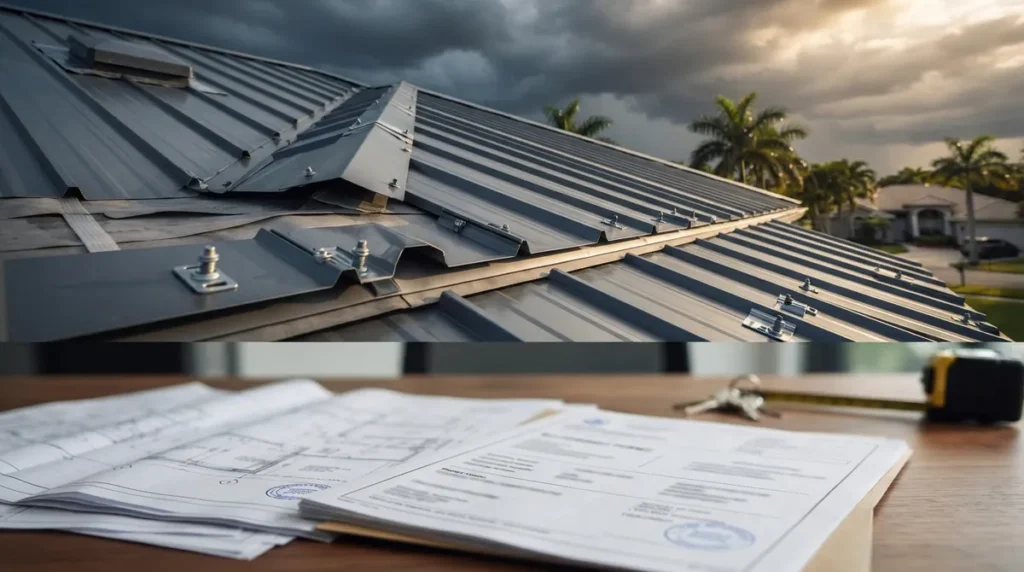
Miami requires roofing permits for all residential and commercial properties because the region is in Florida's High-Velocity Hurricane Zone; permits ensure materials and fastening patterns meet hurricane-resistant standards to prevent costly rework and insurance complications.
-
Before submitting a roofing permit application, confirm your exact jurisdiction (City of Miami, unincorporated Miami-Dade County, or other municipality) since different building departments have different requirements, forms, and processing procedures.
-
Complete and accurate permit applications must include the Uniform Roofing Application, Miami-Dade County Notice of Acceptance (NOA) matching your exact roof assembly, signed/notarized forms, roofing plans, and contractor license information to avoid rejections.
-
The City of Miami's first permit review cycle takes up to 14 business days, but missing product approvals, unsigned forms, or reviewer comments can extend this significantly; using a registered permit expediter reduces delays by catching errors before submission.
-
Roofing permits are followed by required inspections (underlayment and final inspection), which must be coordinated after approval; experienced permitting services can expedite this post-approval phase to keep projects moving quickly.
-
A permit expediter handles only the government submittal and paperwork side; the licensed roofing contractor remains responsible for construction, trade compliance, and insurance, so both roles are necessary for a compliant project.
If you have ever stood on a Miami rooftop with a leak growing worse by the day, you already know the feeling: your roofer is ready, your materials are ordered, and yet nothing can start until a permit lands in your hands. Roofing permit expediting in Miami FL is exactly the kind of behind-the-scenes work that turns that frustrating wait into a manageable, predictable process. Whether you are a general contractor juggling five jobs at once, a homeowner who just wants a dry ceiling, or a realtor trying to close on a property with a shaky roof, understanding how permit expediting works can save you weeks of stress.
Miami's permitting landscape is not one-size-fits-all. Between the City of Miami, unincorporated Miami-Dade County, and dozens of neighboring municipalities, the rules, forms, and timelines can shift block by block. That is exactly why so many contractors and property owners lean on a dedicated permitting partner. In this guide, we will walk through what roofing permit expediting actually involves in Miami, what documents you need, how long the process realistically takes, and how a company like 1 Contractor Solutions helps keep projects moving instead of stalling in a review queue.
Why Roofing Permits Matter So Much in Miami
Miami sits squarely in Florida's High-Velocity Hurricane Zone, which means roofing work is held to a higher standard than almost anywhere else in the country. According to the City of Miami's official roofing-permit guidance, a building permit is required for roofing work on both residential and commercial properties within city limits. Miami-Dade County has its own roofing-specific checklists for projects located in unincorporated areas.
This is not bureaucratic red tape for its own sake. Roofs in this region need to withstand extreme wind uplift, wind-driven rain, and flying debris. Permits exist to confirm that the materials, fastening patterns, and underlayment your roofer plans to use have actually been tested and approved for these conditions. Skipping that step can mean costly rework, insurance complications down the road, or a roof that fails exactly when you need it most.
The First Question: Which Jurisdiction Actually Controls Your Property
Before anyone talks about fees or timelines, there is a more basic question to answer: is your property inside the City of Miami, a separate municipality, or unincorporated Miami-Dade County? This matters because permit applications must go to the authority that actually has jurisdiction over your address, and an expediter cannot bypass that agency's review or inspection requirements.
It is a surprisingly common point of confusion. Two houses on the same street can fall under different building departments depending on annexation lines drawn decades ago. Tools like the Building Department Lookup and resources on which Florida jurisdiction reviews your project can help clear up this confusion before you waste time submitting to the wrong office.
| Jurisdiction | Permitting Contact | Notable Detail |
|---|---|---|
| City of Miami | 305-416-1100 | Roofing permits processed at 444 SW 2nd Avenue, 4th Floor |
| Unincorporated Miami-Dade County | 786-315-2000 | Permits handled at the Herbert S. Saffir Permitting and Inspection Center |
| Other Miami-Dade Municipalities | Varies by city | Each city maintains its own building department and forms |

What Roofing Permit Expediting Actually Involves
A lot of people picture an expediter as someone who simply drops off paperwork and waits in line. In reality, the job is much closer to project management for the permitting side of your roofing job. It typically includes preparing the application package, verifying every attachment is correct, submitting through the proper digital portal, and then actively tracking the file until it is approved.
Step-by-Step: How the Process Usually Works
- Confirm the jurisdiction and roof category. The City of Miami separates residential reroofing into categories like flat, metal, waterproofing, shingle, and tile, and each has slightly different application requirements.
- Assemble the application package. This generally includes the Uniform Roofing Application, project details, signed and notarized forms where required, roofing plans, and applicable affidavits.
- Verify product approvals. Every roofing assembly used in the High-Velocity Hurricane Zone needs a matching Miami-Dade County Notice of Acceptance (NOA) or qualifying Florida Product Approval.
- Submit through the correct portal. City of Miami roofing applications are initiated digitally through the iBuild/ePlan system.
- Track the review cycle. The City of Miami states the first building-permit review cycle can take up to 14 business days, though incomplete applications or comment cycles can extend that timeline.
- Respond to reviewer comments. If the plans reviewer flags something, someone needs to quickly resolve it, whether that is a missing signature or a mismatched product approval.
- Collect the issued permit and schedule inspections. Once approved, the roofing contractor coordinates any required inspections, which commonly include underlayment or concealed work and a final inspection.
Every one of those steps can eat up hours that a busy contractor or overwhelmed homeowner simply does not have. That is where a dedicated permitting service like permit facilitation and filing earns its keep, tracking down missing paperwork and pushing files forward instead of letting them sit in a queue.
Documents You Will Likely Need for a Miami Roofing Permit
Nothing derails a permit faster than a missing signature or an unmatched product approval number. Here is a general checklist based on the City of Miami's published roofing-permit guidance and Miami-Dade County requirements:
- Uniform Roofing Application, fully completed
- Property and project information, including ownership documentation
- Signed and notarized forms where the jurisdiction requires them
- Roofing plans or drawings showing the scope of work
- Miami-Dade County Notice of Acceptance or Florida Product Approval documents matching the exact roof assembly
- Contractor license information and applicable affidavits
- Proof of workers' compensation or exemption, where required
If your project also involves structural repairs, added dead load, or modifications tied to solar equipment, you may need supporting structural engineering or sealed drawings. Companies with in-house engineering, like 1 Contractor Solutions, can produce and seal these documents without sending you to a third party and waiting on a callback.
How Long Does Roofing Permit Approval Take in Miami?
This is the question everyone asks first, and understandably so. According to the City of Miami's own guidance, the first review cycle for a building permit can take up to 14 business days. That is the baseline, not the ceiling. Several things can stretch that timeline considerably:
- Missing or mismatched product approval documentation
- Unsigned or unnotarized forms
- Unpaid fees at submission
- Zoning or historic-district review requirements
- Plan review comments that require a resubmission cycle
On the fee side, the City of Miami notes that residential roofing applications with project costs below $2,500 may have no upfront fees, though final charges and other applicable costs should always be confirmed directly with the department. Because fees vary by jurisdiction, project valuation, and roof type, it is smart to get a department estimate rather than relying on a flat number you saw online.
| Factor | Impact on Timeline |
|---|---|
| Complete, accurate application package | Keeps you within the standard review window |
| Mismatched or missing NOA | Common cause of rejection and resubmission |
| Historic district or zoning overlay | May add additional review steps |
| Unpaid permit fees | Can halt processing until resolved |
| Using a registered, experienced expediter | Reduces back-and-forth and catches errors early |
Permit Expediting Versus Roofing Contracting: Know the Difference
Here is something worth repeating because it trips up a lot of property owners: a permit expediter manages the government submittal and paperwork side of the project. The properly licensed roofing contractor remains responsible for the actual construction, trade compliance, insurance coverage, and requesting or coordinating inspections as required by code. An expediter does not authorize unlicensed roofing work, and it cannot guarantee approval, since that decision always sits with the reviewing jurisdiction.
Notably, the City of Miami requires permit expediters to register before initiating projects and to provide proof of a valid Business Tax Receipt or occupational license. Registration is free and generally takes about 2 to 3 business days, according to city guidance. This registration step matters because it confirms the expediter is authorized to represent your project in the system, not just someone claiming they can "get it pushed through."
Why This Distinction Matters for Different Readers
For general contractors, this means your expediter should slot into your existing project timeline without adding friction, tracking files while your crews stay productive elsewhere. Learn more about how general contractors use permitting partners to keep multiple jobsites moving at once.
For solar companies layering panels onto existing roofs, coordination between roofing permits and electrical or structural permits is critical, since incompatible timelines can delay an entire installation. Our solar contractors resource page covers this overlap in more detail.
For realtors and property investors, an open or missing roofing permit can hold up a closing entirely. If you are dealing with this scenario, our guide on whether a permit hold can delay a Florida real estate closing walks through what to expect.
For homeowners, the process can feel intimidating simply because it is unfamiliar. Our homeowners page breaks down what to expect in plain language, without the jargon.
Common Pitfalls That Slow Down Miami Roofing Permits
After years of filing roofing permits across Florida, certain mistakes show up again and again. Here are the ones worth watching for:
- Submitting the wrong product approval. The NOA or Florida Product Approval must match the exact roof assembly, fastening pattern, and underlayment described in the application, not just the general product category.
- Guessing at the jurisdiction. Filing with the City of Miami when the property is actually in unincorporated Miami-Dade County (or vice versa) wastes valuable time.
- Incomplete notarization. Several forms require notarized signatures, and a missed notary stamp is an easy way to get bounced back.
- Ignoring historic district overlays. Certain neighborhoods carry additional design review requirements that standard applications do not account for.
- Waiting to address reviewer comments. Every day a comment sits unanswered is a day added to your timeline.
If your project has already stalled because of one of these issues, services like revisions and resubmittals or urgent permit rescue exist specifically to get denied or stuck applications back on track quickly.
Inspections: The Part That Comes After Approval
Getting the permit issued is a milestone, not the finish line. Roofing projects in Miami commonly require inspection of concealed or underlayment-related work, along with a final inspection once the roof is complete. The exact sequence depends on your jurisdiction, the roof system installed, and the scope of work, so it pays to confirm the required inspection order before your crew starts tearing off old materials.
Working with a firm that also offers inspections coordination, or that operates as a licensed private provider, can shave meaningful time off this stage since you are not waiting in a county queue for a scheduled visit.
Why Contractors and Homeowners Choose to Outsource Permit Expediting
Handling roofing permits in-house sounds simple until you are the one chasing down a missing signature at 4:45 PM on a Friday. Here is what a dedicated permitting partner brings to the table:
- Familiarity with jurisdiction-specific forms and portals across Miami-Dade County
- Quality control on product approval documentation before submission
- Active tracking so applications do not silently sit in a review queue
- Fast turnaround on reviewer comments and resubmissions
- In-house sealed drawings when structural or engineering documentation is needed
1 Contractor Solutions has spent more than 15 years handling permitting work across all 67 Florida counties, filing in over 400 municipalities along the way. Because drafting and engineering are handled in-house, when a reviewer flags an issue, the fix happens internally rather than waiting on an outside consultant. That kind of responsiveness matters enormously in a market like Miami, where hurricane-zone product approvals and jurisdictional quirks can trip up even experienced contractors.
If you want a closer look at how this plays out for local jobs, our page on the Miami service area covers the specifics, and our broader Miami-Dade County resource explains how city and county rules interact. You can also browse roof permits services directly to see the full scope of what is handled from start to finish.
Bringing It All Together
Roofing permit expediting in Miami FL is really about removing friction from a process that has a lot of moving parts: jurisdiction confirmation, product approval matching, digital portal submissions, reviewer comment cycles, and post-approval inspections. None of these steps are optional, but all of them can be handled efficiently when you have a team that does this work daily instead of once a year.
Curious how other Miami property owners feel about working with a dedicated permitting team? You can visit us on Google — 1 Contractor Solutions to see feedback directly from clients, or connect with us on follow us on LinkedIn and follow us on Facebook for ongoing updates on Florida permitting changes. For broader background on state-level requirements, the Florida Building Commission's guidance through the Florida Building Code portal is a helpful reference point as well.
Whether your roof needs emergency repairs after storm damage or you are simply planning ahead for a full reroof, getting the permitting side handled correctly the first time saves money, saves headaches, and gets your crew on the roof faster. If you are ready to stop guessing and start moving, get a free quote and let a team that knows Miami's permitting landscape handle the paperwork while you focus on the project itself.
FAQs
Do I need a permit to replace a roof in Miami, Florida?
Yes, absolutely. Both the City of Miami and Miami-Dade County require a permit for roofing work on residential and commercial properties, so skipping this step really isn't an option if you want a code-compliant, insurable roof.
How long does a Miami roofing permit take to approve?
The City of Miami states the first review cycle can take up to 14 business days, though a complete and accurate application tends to move much faster than one missing signatures or product approvals. Think of it like packing carefully before a trip — a little extra prep upfront saves a lot of scrambling later.
What is a Miami-Dade County Notice of Acceptance, and do I need one for my roof?
A Notice of Acceptance, or NOA, confirms that a specific roofing product and installation method has been tested for Miami-Dade's High-Velocity Hurricane Zone conditions. If your property sits within this zone, your roofing assembly generally needs a matching NOA or qualifying Florida Product Approval attached to the permit application.
Can a permit expediter submit a roofing permit application for my contractor?
Yes, but the expediter must be registered with the relevant jurisdiction first, and the licensed roofing contractor still remains responsible for the actual construction and code compliance. Think of the expediter as your paperwork navigator, while your contractor stays fully in charge of the physical roofing work.
What inspections are required after a Miami roofing permit is issued?
Most roofing projects need at least one inspection of concealed or underlayment-related work plus a final inspection once everything is complete, though the exact sequence depends on your roof system and jurisdiction. It's a good idea to confirm the required order before tear-off begins so nothing catches you by surprise.
We do this work every day across all 67 Florida counties. Call (866) 314-6931 and we will tell you what your situation actually requires — including when you do not need us.
Related services
Permit Facilitation & Filing
You have a crew scheduled, a client asking for dates, and a permit sitting somewhere in a queue you cannot see. We file it, w…
See the servicePlan Review Coordination
A permit in plan review is not one queue. On a commercial project it can be six queues, each with its own reviewer, its own c…
See the serviceReady to get your permit moving?
One call tells you which jurisdiction controls your project, what it will take, and what it will cost. Most of the time we can scope it on the phone.