
Blog
7 Steps to Legalize Unpermitted Work Florida (2026)
Learn the 7 essential steps to legalize unpermitted work in Florida, from documentation to permit closure, with expert guidance from 1CS.
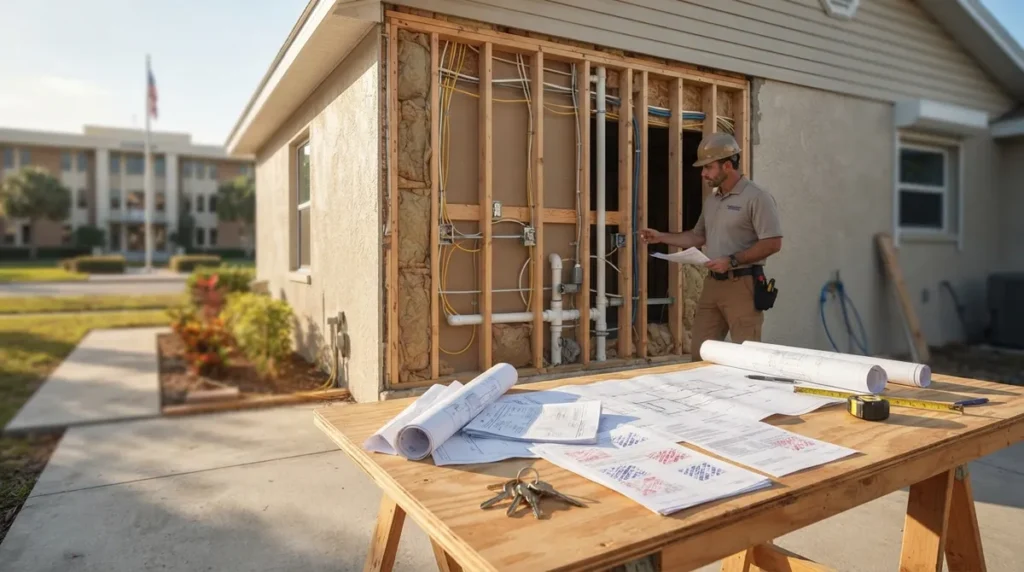
Key Takeaways
-
Florida Statutes Section 553.79 prohibits unpermitted construction work, and violations typically surface during home sales, refinances, insurance renewals, or county audits—making proactive legalization essential to protect property value and avoid costly delays.
-
Permitting requirements vary significantly by county in Florida; there is no statewide after-the-fact form, so you must identify your local jurisdiction's specific procedures, fees, and documentation standards before filing.
-
Verify whether work is truly unpermitted before proceeding by searching county permit portals, requesting property records from the appraiser, and checking with the building department directly, as some violations are actually closed permits never finalized with inspection.
-
Concealed work like electrical, plumbing, or structural elements may require exposure for visual inspection, but engineering assessments or photographic evidence can sometimes substitute for full demolition, depending on jurisdiction and scope.
-
After-the-fact permit applications must include as-built drawings, appropriate engineering documentation, and payment of both base permit fees plus locally assessed penalty fees under Florida Building Code Section 109.4, followed by plan review revisions and final inspections.
-
Unpermitted work discovered during real estate transactions can delay or derail closings; resolving violations before listing or immediately upon discovery with proper documentation and compliance corrections is the fastest and most cost-effective path forward.
If you just found out your Florida home or investment property has unpermitted work, take a breath. You are not alone, and this is fixable. Whether a previous owner added a lanai without pulling a permit, a well-meaning contractor skipped the paperwork on an electrical upgrade, or you converted a garage years ago and never quite got around to filing, there is a clear path forward. Learning how to legalize unpermitted work in Florida is one of the most common calls our team fields, and it is genuinely one of the more solvable problems in real estate and construction.
This guide walks through exactly what it takes to bring unpermitted work into compliance under Florida law, county by county, so you can protect your property value, satisfy your insurance carrier, and stop losing sleep over an open code violation. Whether you are a homeowner, a general contractor cleaning up a job site, a solar installer documenting a system, or a realtor trying to save a closing, these seven steps will get you oriented and moving in the right direction.
Why Unpermitted Work Is a Bigger Deal Than It Looks
Florida Statutes Section 553.79 generally prohibits constructing, altering, repairing, or demolishing a building without first obtaining the required permit from the local enforcing agency. That means the addition, the re-wired subpanel, the new bathroom, or the roof-over that never got inspected is technically a code violation sitting quietly on your property record, waiting to surface at the worst possible moment.
And it usually does surface at the worst moment: during a home sale, a refinance, an insurance renewal, or a routine county audit. Buyers pull permit history. Appraisers flag square footage that does not match county records. Insurance adjusters deny claims tied to unpermitted systems. None of this is meant to scare you unnecessarily, it is simply the reality of how Florida's permitting system is designed to work, and why getting ahead of it pays off.
Step 1: Confirm the Work Is Actually Unpermitted
Before you do anything else, verify what you are dealing with. Sometimes a permit was pulled decades ago and simply never closed out with a final inspection, which is a different (and often simpler) problem than work that was never permitted at all.
- Search the county's online permit portal using the property address
- Request property record cards from the county property appraiser
- Check with the building department directly if online records are incomplete
- Review any prior inspection reports or certificates of occupancy on file
Our open permit search tool and building department lookup are great starting points if you are not sure which office even has jurisdiction over your address, which happens more often than you'd think near city and county borders.
Step 2: Identify the Correct Jurisdiction and Requirements
Florida's permitting requirements are administered locally, not by one statewide office. That means the process, fees, and documentation standards in Miami-Dade will look different from what's required in Sarasota County or Duval County. There is no single, universal "after-the-fact permit" form used across all of Florida; instead, you typically apply for the same type of permit that should have been pulled originally.
This is exactly the kind of jurisdictional puzzle our team solves every day for clients across Hillsborough County, Pinellas County, Manatee County, and beyond. Knowing the local building department's specific after-the-fact procedures saves weeks of back-and-forth.
Common Jurisdictional Variables to Expect
| Factor | Why It Varies by County |
|---|---|
| Application Form | Some counties use a dedicated after-the-fact application; others reuse the standard permit form |
| Fee Structure | Florida Building Code Section 109.4 allows an additional fee for unpermitted work, but the amount is set locally |
| Documentation Needed | Some jurisdictions require sealed engineering plans; others accept as-built drawings for simpler scopes |
| Inspection Process | Concealed work may need to be exposed for visual verification in some counties, not others |
Step 3: Gather Documentation and As-Built Drawings
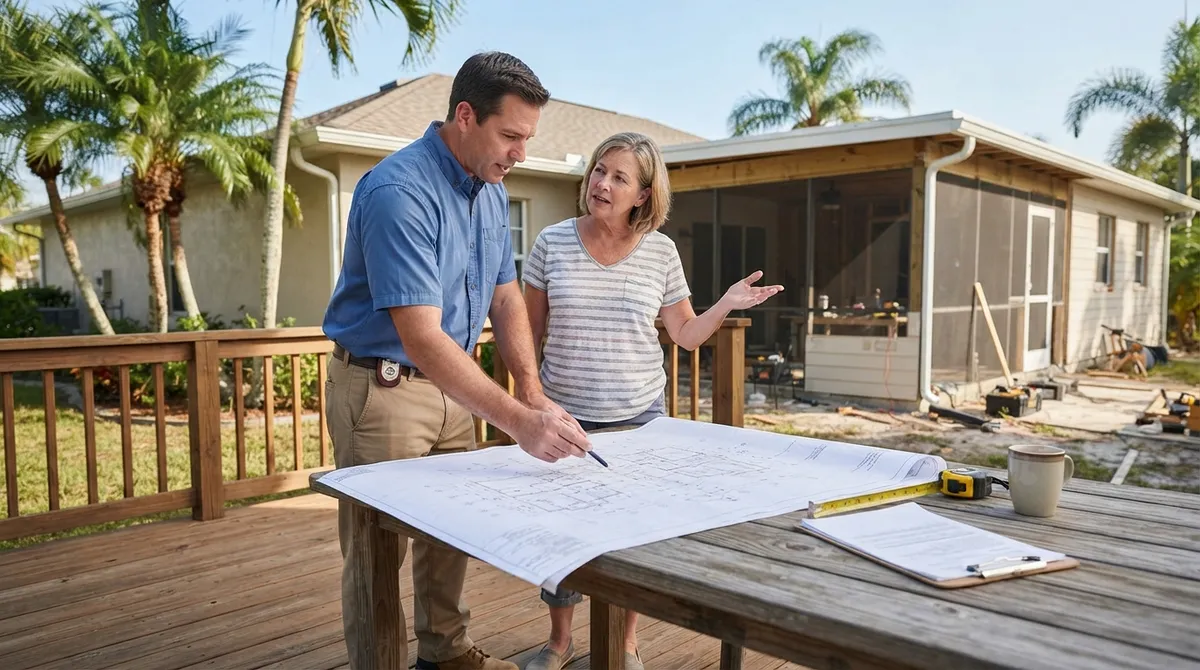
Once you know the jurisdiction, the next step is documenting exactly what was built. This usually means producing as-built drawings that reflect the current condition of the structure, electrical, plumbing, or mechanical systems, whatever is being legalized.
Because our drafting and engineering team works in house, we can typically prepare as-built drawings alongside sealed structural engineering or MEP engineering documents without bouncing you between outside consultants. That matters because reviewers frequently request revisions, and every round-trip to an external engineer can add days or weeks to your timeline.
Step 4: Prepare for Possible Exposure of Concealed Work
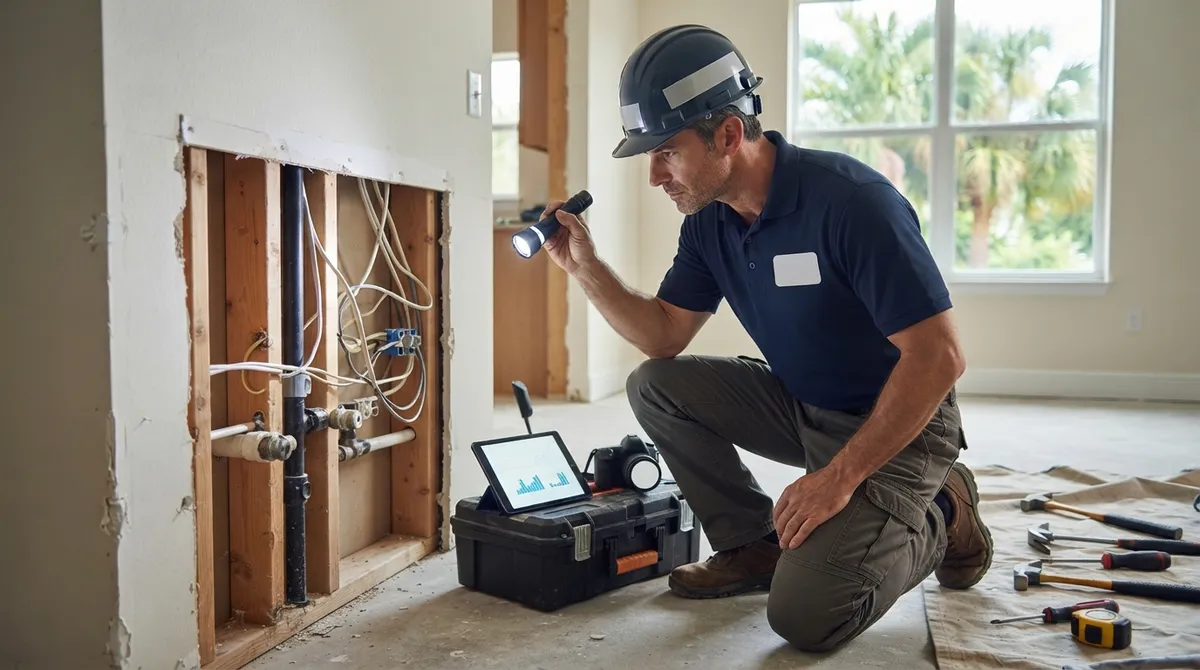
This is the part most homeowners dread, and understandably so. If the unpermitted work involved framing, electrical wiring, plumbing, or structural connections that are now hidden behind drywall, flooring, or stucco, the local building department may require that finishes be opened up so an inspector can visually verify code compliance.
- Not all unpermitted work requires demolition; some can be verified through engineering assessment or photographic evidence taken during construction
- Structural connections and electrical panels are the most commonly required to be exposed
- An engineer letter can sometimes substitute for full exposure if a licensed engineer can certify the condition based on available evidence
- Roofing and impact window work often has its own documentation pathway separate from interior systems
This is precisely where an experienced after-the-fact and expired permits team earns its value. We take on files that other providers decline because we have the in-house engineering to find a code-compliant path forward without unnecessary demolition whenever possible.
Step 5: File the Application and Manage Plan Review
With documentation in hand, it's time to file. This step involves submitting the application, paying applicable fees (including any after-the-fact penalty under Florida Building Code Section 109.4), and then working through plan review comments as they come in.
- Submit the completed application with supporting plans and documentation
- Pay initial permit fees plus any locally assessed after-the-fact fee
- Respond to plan reviewer comments, which may require revised drawings
- Resubmit corrected plans promptly to avoid application expiration
- Schedule required inspections once the permit is approved
Our permit facilitation and filing service and plan review coordination exist specifically to keep this stage moving. Because we handle revisions and resubmittals internally, reviewer comments get addressed same-day in most cases rather than sitting in an inbox for a week.
Step 6: Complete Inspections and Correct Deficiencies
If the work doesn't meet current Florida Building Code requirements, you may need to make corrections, remove non-compliant elements, or provide additional engineering documentation before final approval. This is normal and does not mean the project is doomed, it simply means the code has standards that must be met regardless of when the work happened.
Florida Statutes Section 553.79 and related code provisions exist to protect occupant safety, particularly around structural integrity, electrical safety, and flood-resistant construction in coastal counties like Lee County, Collier County, and Miami-Dade County. Our inspections team, along with our status as a licensed private provider, allows us to perform plan review and inspections directly rather than waiting in the standard county queue.
Step 7: Close the Permit and Protect Your Property Record
The final step is getting the permit officially closed with a passed final inspection. This clears the violation from the property record and, depending on the scope, may support issuance of a Certificate of Occupancy or Certificate of Use.
This matters enormously for real estate transactions. An open permit found at closing can delay or even derail a sale, and our realtor and closing support service exists specifically to resolve these issues quickly so deals stay on track.
What This Typically Costs
Costs vary significantly depending on scope, county, and whether engineering or demolition is required. Here's a general breakdown of what factors into pricing:
| Cost Factor | Typical Impact |
|---|---|
| Base Permit Fee | Set by local jurisdiction, based on project valuation |
| After-the-Fact Penalty | Additional fee per Florida Building Code Section 109.4, varies locally, sometimes doubled |
| Engineering & Drafting | Depends on complexity; structural or MEP scopes cost more than simple additions |
| Exposure/Demolition | Only if concealed work must be opened for inspection |
| Corrections | Varies widely if non-compliant work must be redone |
Who Needs This Service Most
- General contractors cleaning up a previous crew's paperwork before finishing a renovation
- Solar companies needing structural documentation for systems installed without proper permits
- Realtors and investors trying to close a sale held up by an open violation
- Homeowners who inherited unpermitted work from a prior owner
- Design professionals needing outsourced drafting to support an after-the-fact application
Whatever category you fall into, our team works with general contractors, solar contractors, realtors, and homeowners across all 67 Florida counties every single week.
A Quick Word on Enforcement
It's worth noting that Florida Statutes Section 489.127 prohibits performing permit-required work without a permit in effect, and continuing work after a stop-work order or using an unlicensed contractor adds legal exposure on top of the underlying violation. Legalizing the work properly, rather than ignoring it, is almost always the faster and cheaper path in the long run.
If you're dealing with an active stop-work order or a denied application, our urgent permit rescue service is built for exactly that kind of time-sensitive situation.
How 1 Contractor Solutions Helps You Get There
We've spent over 15 years and handled more than 5,000 permits across Florida, and after-the-fact legalization is one of our specialties precisely because it's rarely simple. Our in-house drafting and engineering department means that when a reviewer flags an issue, we fix it ourselves rather than waiting on an outside consultant to call back. Combined with our status as a licensed private provider, we can move your plan review and inspections forward without sitting in the standard county queue.
We serve property owners and professionals throughout all 67 Florida counties, with especially deep experience in Sarasota County, Broward County, and Palm Beach County, among many others. You can also visit us on Google — 1 Contractor Solutions to see how local clients describe working with our team, or follow us on LinkedIn and follow us on Facebook for regular updates on Florida permitting changes.
Ready to Get Started?
Legalizing unpermitted work in Florida doesn't have to be an overwhelming, drawn-out ordeal. With the right documentation, the right engineering support, and someone who knows exactly which local office to call, most cases move through faster than people expect. If you're ready to stop worrying about that open violation and start solving it, get a free quote from our team today, and let's get your property back in good standing.
FAQs
How do I legalize unpermitted work in Florida?
You'll want to confirm the scope of the unpermitted work, identify the correct local building department, prepare as-built drawings or engineering documentation, and file for the same type of permit that should have been obtained originally. From there, it's a matter of working through plan review comments and completing inspections. It sounds like a lot, but with the right team guiding you, it's very manageable!
Can I get an after-the-fact permit for a completed renovation in Florida?
In most cases, yes. Florida doesn't use one single standardized after-the-fact form statewide, but local building departments generally allow property owners to apply retroactively for the permit that should have been pulled before construction began. The process, fees, and documentation requirements just depend on your specific county or city.
Will I have to open walls or remove finishes for an after-the-fact inspection?
Sometimes, yes, especially for structural, electrical, or plumbing work that's now hidden behind drywall or flooring. That said, some jurisdictions accept engineering assessments or photo documentation in place of full exposure, so it really depends on the scope and your local building department's requirements.
Can unpermitted work prevent me from selling or refinancing a Florida property?
It absolutely can. Buyers, lenders, and title companies routinely check permit history, and an open violation can delay or even derail a closing. The good news is that resolving it before you list the property, or quickly once it's discovered, is very achievable with the right support.
How much does it cost to legalize unpermitted work in Florida?
Costs vary based on your county, the scope of work, and whether engineering or exposure of concealed elements is required. You're generally looking at the base permit fee, an additional after-the-fact fee set locally under Florida Building Code Section 109.4, and any drafting or engineering costs. We're always happy to walk you through a specific estimate for your situation.
We do this work every day across all 67 Florida counties. Call (866) 314-6931 and we will tell you what your situation actually requires — including when you do not need us.
Related services
Permit Facilitation & Filing
You have a crew scheduled, a client asking for dates, and a permit sitting somewhere in a queue you cannot see. We file it, w…
See the servicePlan Review Coordination
A permit in plan review is not one queue. On a commercial project it can be six queues, each with its own reviewer, its own c…
See the serviceReady to get your permit moving?
One call tells you which jurisdiction controls your project, what it will take, and what it will cost. Most of the time we can scope it on the phone.