
Blog
6 Steps to a Hurricane Damage Permit in Fort Myers (2026)
Six practical steps to get a hurricane damage permit in Fort Myers, from jurisdiction checks to the 50% rule, sealed plans, and inspections.
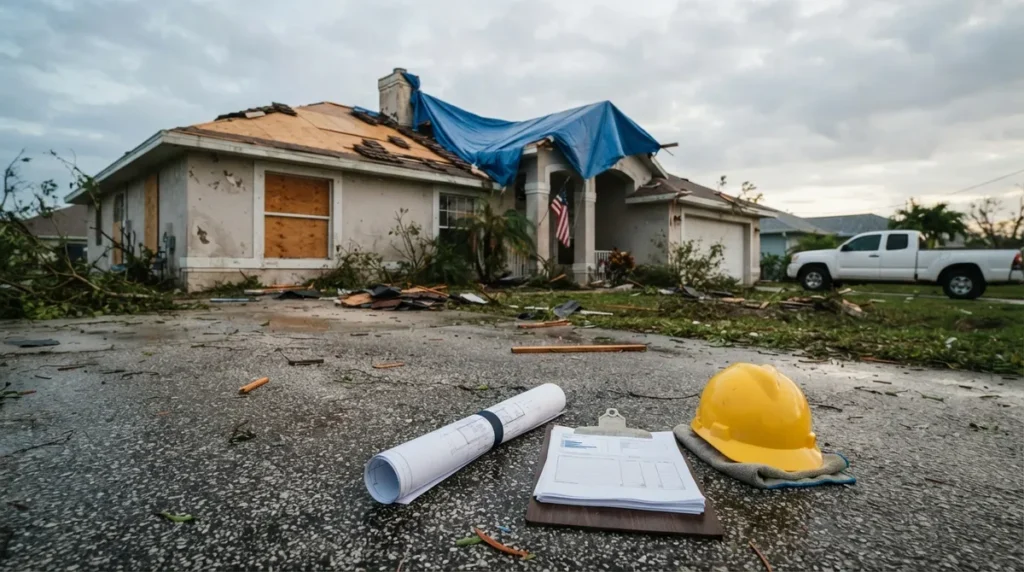
Key Takeaways
-
Confirm which jurisdiction controls your property first: a Fort Myers mailing address doesn't tell you whether the City of Fort Myers or unincorporated Lee County issues your permit.
-
Storm repairs generally need a permit in Lee County; only a short exempt list applies, such as debris removal, glass replacement, gutter repair, and replacing up to one square of shingles.
-
Exemptions may not apply in flood hazard areas, where even wet drywall repairs can require a permit.
-
Under the 50% rule, repair costs at or above 50% of pre-damage market value can trigger substantial damage and possible flood-resistant compliance, such as elevating the structure.
-
Major structural work like collapsed roofs, destroyed walls, foundation damage, or damaged beams requires sealed construction drawings from an architect or engineer; minor repairs may need only an itemized scope and cost estimate.
-
Incomplete applications are the top cause of permit delays, so verify the exact checklist with your jurisdiction and prepare photos, scope, cost estimates, and contractor license details before filing.
Let's be honest: after a hurricane, the last thing you want to think about is paperwork. Your roof is damaged, your drywall is wet, and your crew is ready to start. Then someone mentions the word "permit," and everything slows down. Take a deep breath. You are far from the first Fort Myers owner or contractor to land here, and the process is more manageable than it looks once you know the order of operations.
Getting a hurricane damage permit in Fort Myers comes down to a few key questions. Which jurisdiction controls your property? Is your repair scope small enough to be exempt, or does it need a full permit? Is the property in a flood zone, and does the 50% rule come into play? And does the work need sealed plans from an engineer? Answer those in the right order and you avoid most of the costly detours.
This 2026 guide walks you through six practical steps, written for homeowners, general contractors, solar companies, realtors, and design trade professionals alike. Nothing here replaces the official word from your building department, so always confirm current rules with the authority that governs your address before work begins. Let's get you moving.

Step 1: Confirm Which Jurisdiction Controls Your Property
This is the step people skip, and it is the one that trips up the most projects. A Fort Myers mailing address does not tell you who issues your permit. Some properties sit inside the City of Fort Myers, while many others with a Fort Myers address sit in unincorporated Lee County. Each one runs its own permits, inspections, and floodplain review.
Filing with the wrong office wastes days you do not have. Before you do anything else, verify your jurisdiction using your parcel information or by calling the building department directly.
Quick Ways to Check
- Look up your parcel on the Lee County Property Appraiser website and review the jurisdiction or taxing district shown.
- Check your property tax bill for the municipality listed, if any.
- Call the City of Fort Myers building division and Lee County Community Development to confirm who permits your address.
- Ask a permitting professional who files in this area every week. A fast confirmation up front saves a lot of headaches.
Near city lines, the answer is not always obvious. If you are unsure, this is a great moment to lean on someone who has filed across hundreds of jurisdictions. Our team at 1 Contractor Solutions handles permitting in Fort Myers and across Lee County, and we can tell you which office actually controls your project.
| If your property is... | Permit authority | Floodplain review by |
|---|---|---|
| Inside City of Fort Myers limits | City of Fort Myers building division | City floodplain administrator |
| In unincorporated Lee County | Lee County Community Development | Lee County floodplain staff |
| Not sure | Verify before filing | Depends on jurisdiction |
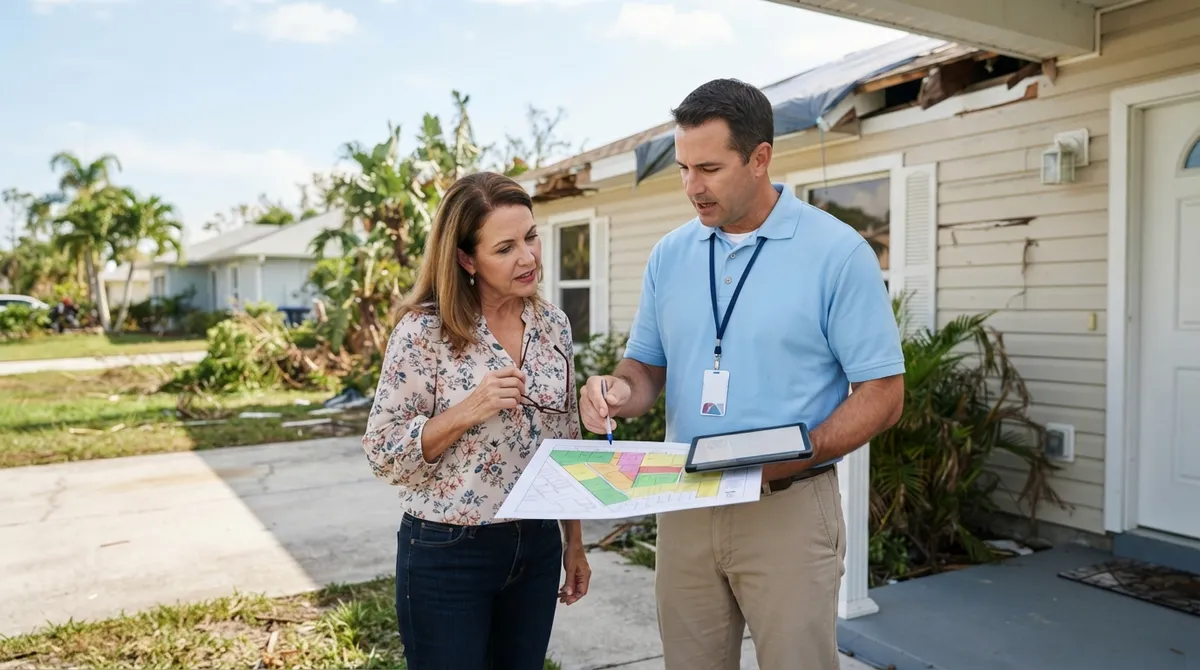
Step 2: Find Out Whether Your Repair Needs a Permit at All
Here is some genuinely good news. Lee County's emergency-permitting guidance lists a limited set of storm-related work that may not require a permit. Knowing the list can save you time and money on the small stuff.
Work That May Be Exempt in Lee County
- Debris removal
- Temporary structural shoring
- Replacement of broken glass in existing window or door frames
- Soffit and gutter repairs
- Minor nonstructural exterior repairs
- Replacement of up to one square of roof shingles (a 10-by-10-foot area, or 100 square feet)
Now the important caveat, and please read this one twice. These exemptions are limited, and they may not apply in flood hazard areas. Rules can also change after a disaster, so verify with the authority having jurisdiction before you start. If you are curious how this plays out for roofing specifically, our guide on fixing a few shingles in Florida with or without a permit breaks it down.
As a general rule, storm repairs in unincorporated Lee County require permits. If your repair goes beyond the short exempt list, plan on filing. And remember that a homeowner may be able to perform some work under Florida law, but any contractor you hire must be properly licensed. Confirm the license and make sure the permit is issued to the correct owner or contractor.
Step 3: Check Your Flood Zone and the 50% Rule
If your property sits in a Special Flood Hazard Area, the rules get stricter. Lee County has specifically required permits for damage repairs in flood zones, including water intrusion and drywall work, even when the repair might otherwise feel minor. That surprises a lot of people who assumed that swapping out wet drywall was a weekend job.
What Is the 50% Rule?
The 50% rule is the part of floodplain management that deserves your full attention. Lee County and the City of Fort Myers describe substantial damage as repair costs equal to or greater than 50% of the building's pre-damage market value. A similar 50% threshold generally applies to substantial improvement. If your property crosses that line, you may be required to bring the structure into compliance with current flood-resistant construction standards.
That can mean elevating the structure or changing how the lower area is built, which is a very different project from simple repairs. Confirm the exact calculation method and documentation requirements with your jurisdiction, because each one may handle it slightly differently.
| Scenario | What it generally means |
|---|---|
| Repair costs below 50% of pre-damage market value | Standard repair permit path, with flood-zone rules still applying |
| Repair costs at or above 50% of pre-damage market value | Substantial damage determination; flood-resistant compliance may be required |
| Outside a flood zone | Repair permit rules still apply; 50% floodplain rule is generally not the driver |
Floodplain situations can also touch on substantial improvement questions, so it is worth reading up if you are repairing and upgrading at the same time.
Step 4: Gather the Right Documents
A clean application moves faster. Incomplete packets are the number one reason permits stall, so a little preparation here pays off big.
What Most Hurricane Repair Applications Need
- The property address and parcel information.
- A clear description of the damage.
- A defined repair scope, written out plainly.
- An itemized cost estimate with supporting material costs.
- For flood-related cases, information such as water-entry height, market-value documentation, and prior repair or improvement costs.
- Contractor license information, or owner-builder details if applicable.
Ask the building or floodplain office for the exact checklist before you file, since requirements shift by jurisdiction and by project type. Pulling together photos taken right after the storm is also smart. They support your damage description and help if an insurance question comes up later.
If you ever discover that earlier work on the property was never permitted, do not panic. We cover that scenario in 4 steps if a prior owner skipped permits in Florida.
Step 5: Know When Sealed Plans Are Required
Not every hurricane repair needs engineering. But some absolutely do, and filing without the right drawings guarantees a rejection.
Under Lee County guidance, minor repairs may be supported by an itemized scope and cost estimate. More serious structural or building-envelope work requires plans or documentation prepared and sealed by an approved architect or engineer. Examples of major work that call for detailed sealed construction drawings include collapsed roofs, destroyed walls, foundation damage, and damaged beams.
| Damage type | Typical documentation |
|---|---|
| Minor nonstructural repairs | Itemized scope and cost estimate |
| Water intrusion and drywall (flood zone) | Permit application with scope, costs, and flood-related details |
| Roof system damage | Permit plus product approvals; engineering depending on scope |
| Collapsed roof, destroyed walls, foundation or beam damage | Sealed construction drawings from an architect or engineer |
This is where having drafting and engineering under one roof makes life easier. When a reviewer questions a load path or a connection detail, you want someone who can answer immediately. If you are wondering who handles the seal, read who seals structural drawings for Florida permits. For roofs in particular, our explainer on roof uplift letters is a helpful read, and our overview of structural engineering for permits shows how this support works in practice.
Step 6: File, Track, and Schedule Inspections
Once your documents are ready, it is time to file. Lee County's emergency-permitting page states that hurricane-damage applications receive priority under its disaster-recovery procedures. That is encouraging, but keep your expectations realistic. Processing times can vary, and current estimates are not guaranteed, so ask your jurisdiction what to expect right now.
Your Filing and Inspection Checklist
- Submit through the correct jurisdiction's portal or office, based on Step 1.
- Track the application and respond quickly to any reviewer comments.
- If corrections come back, address every comment in one organized resubmittal. Our guide on fixing and resubmitting a denied permit shows how to do this cleanly.
- Request inspections for the approved scope. In Lee County, inspections can be scheduled through the eConnect/ACA system or by phone.
- Keep your permit card and inspection results on site and organized.
Here is a pro tip for contractors juggling several storm jobs at once: build a simple tracker with each address, permit number, status, and next inspection. Volume is where good jobs slip through the cracks.
If you would rather not run this process yourself, that is exactly what a permit facilitation team is for. Our permit facilitation and filing service covers filing, tracking, reviewer comments, and closeout. And if you are trying to decide between handling it alone and getting help, our comparison of DIY versus pro help may be useful.
Common Mistakes to Avoid After a Storm
Even careful owners and contractors make a few predictable errors. Here is what to watch for:
- Starting work before confirming permit needs. Unpermitted repairs can lead to stop-work orders and complications at sale or with insurance. If that has already happened, see our guidance on storm repairs done without permits, or read how to legalize unpermitted work in Florida.
- Assuming the exemption list covers everything. It is short, and flood zones change the picture.
- Ignoring the 50% rule. Underestimating repair costs can mask a substantial damage trigger.
- Hiring unlicensed help. Verify licensing and permit holder details every time.
- Skipping documentation. Photos, estimates, and scope notes are your best friends.
Who Benefits Most From Outside Permitting Help?
Hurricane recovery creates a surge of work for everyone, and different groups feel different pain points.
- General contractors need dependable filing and tracking across multiple jobs at once.
- Solar companies often face re-permitting and documentation needs after storm damage to arrays.
- Realtors and investors need to know what is open, unpermitted, or required before a closing.
- Homeowners simply want a clear path from damage to done.
- Architects, designers, and specialty trades benefit from outsourced drafting, MEP, and structural support without adding headcount.
For those buying or selling storm-affected property, our article on who pays for open permits when buying a Florida home is worth a read. And if your repair job also involves a new roof, roofing permit support through a facilitator can keep things moving.
Want to see how other customers feel about working with us? You can visit us on Google — 1 Contractor Solutions and read the reviews. You can also follow us on LinkedIn or follow us on Facebook for Florida permitting updates, and our website partner Brain Buzz Marketing helps us share them.
Ready to Get Your Hurricane Repairs Permitted?
Recovering from a hurricane is a marathon, and the permit should never be the thing holding you up. To recap, confirm your jurisdiction, check the exemption list, understand your flood zone and the 50% rule, gather complete documents, know when sealed plans are required, and file with a plan for tracking and inspections.
Remember, this guide is general information. Your building department has the final word, and rules can shift after a disaster, so always verify before you start. If you want a team that does the filing, drafting, engineering, and reviewer follow-up for you, we would be delighted to help. Reach out today to get a free quote, and let's turn your storm damage into a finished, approved, and properly documented project.
FAQs
Do I need a permit to repair hurricane damage in Fort Myers?
In most cases, yes. Storm-related repairs generally need a permit, though Lee County lists a short set of limited exemptions, like debris removal and replacing up to one square of roof shingles. Always confirm with the City of Fort Myers or Lee County before you start.
How can I tell if my property is in the City of Fort Myers or unincorporated Lee County?
A Fort Myers mailing address does not settle it. Check your parcel on the Lee County Property Appraiser site, review your tax bill, or call both building offices. A permitting professional can also confirm this quickly for you.
What is the 50% rule for hurricane damage repairs?
Substantial damage means repair costs equal to or greater than 50% of the building's pre-damage market value. If your property crosses that threshold in a flood-regulated area, you may need to bring it into compliance with flood-resistant construction rules. Confirm how your jurisdiction calculates it.
When do hurricane repairs require sealed plans from an engineer or architect?
Major work like collapsed roofs, destroyed walls, foundation damage, and damaged beams generally calls for detailed sealed construction drawings. Minor repairs may only need an itemized scope and cost estimate. Your building department can confirm what applies to your project.
How do I schedule inspections for a hurricane repair permit in Lee County?
Inspections for the approved scope can be requested through Lee County's eConnect/ACA system or by phone. Procedures and availability can change after a disaster, so check current instructions with the county.
We do this work every day across all 67 Florida counties. Call (866) 314-6931 and we will tell you what your situation actually requires — including when you do not need us.
Related services
Permit Facilitation & Filing
You have a crew scheduled, a client asking for dates, and a permit sitting somewhere in a queue you cannot see. We file it, w…
See the servicePlan Review Coordination
A permit in plan review is not one queue. On a commercial project it can be six queues, each with its own reviewer, its own c…
See the serviceReady to get your permit moving?
One call tells you which jurisdiction controls your project, what it will take, and what it will cost. Most of the time we can scope it on the phone.