
Blog
Do You Need a Shed Permit in Cape Coral, FL in 2026?
Planning a shed in Cape Coral? Learn the 2026 permit fee, size and setback limits, required documents, and flood-zone rules before you build.
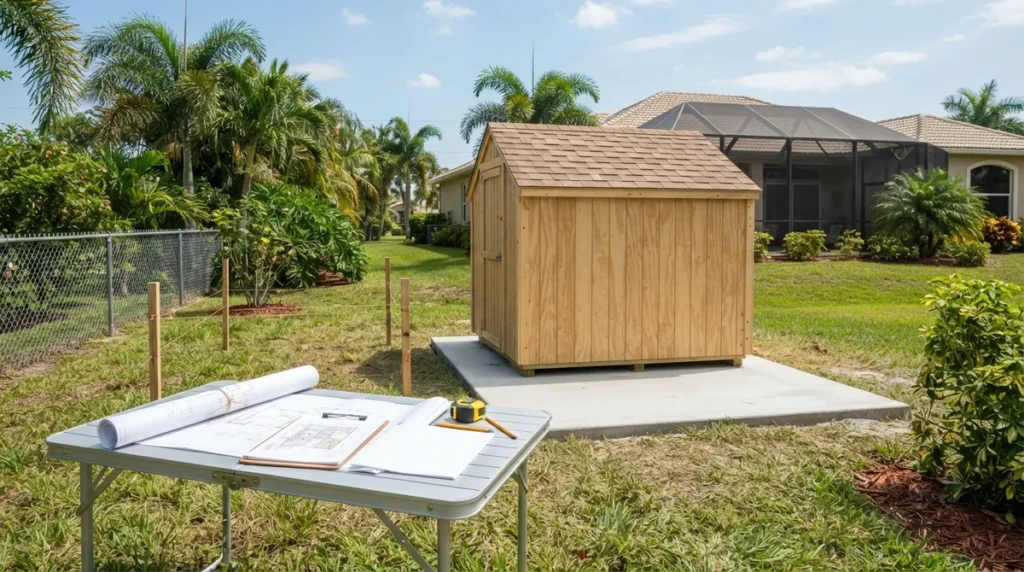
Key Takeaways
-
Yes, a permit is almost always required for a shed in Cape Coral; the City's code requires a valid building permit for accessory structures, even small or store-bought ones.
-
Cape Coral's current guidance generally caps sheds at 200 square feet and 14 feet tall to the highest eave, so a 12x20 shed (240 sq ft) would exceed the limit.
-
Setbacks typically require at least 5 feet from the home or other structures and a 10-foot rear property-line setback; side-yard sheds may need screening.
-
The first decision is whether the shed is site-built/non-DBPR (requiring design drawings, tie-down specs, and an impervious-surface worksheet) or DBPR-approved prefab (requiring DBPR approval documents and a site plan).
-
The residential shed permit fee is $167 per the January 1, 2026 schedule, but a 2.5% Florida Building Code surcharge and separate slab or electrical permits may add to the total.
-
Check your survey for utility easements and flood-zone status before choosing a location, since building over an easement can force removal and flood-zone sheds may need flood vents or an elevation certificate.
So you've got a backyard in Cape Coral, a pile of lawn gear on the lanai, and a shiny new shed in your online shopping cart. Great plan! But before that delivery truck shows up, there's one question worth answering: do you need a shed permit in Cape Coral, FL?
Short answer: almost certainly yes. Cape Coral's code says accessory structures can't be built without a valid building permit, and a small shed doesn't get a free pass just because it looks harmless. The good news is that the process is very manageable once you know the rules, the paperwork, and the common snags.
In this friendly 2026 guide, we'll walk through the size limits, setbacks, required documents, fees, and flood-zone surprises that trip up homeowners, contractors, and even real estate pros. Think of it as a chat with a neighbor who's already been through the permit portal, minus the headache.
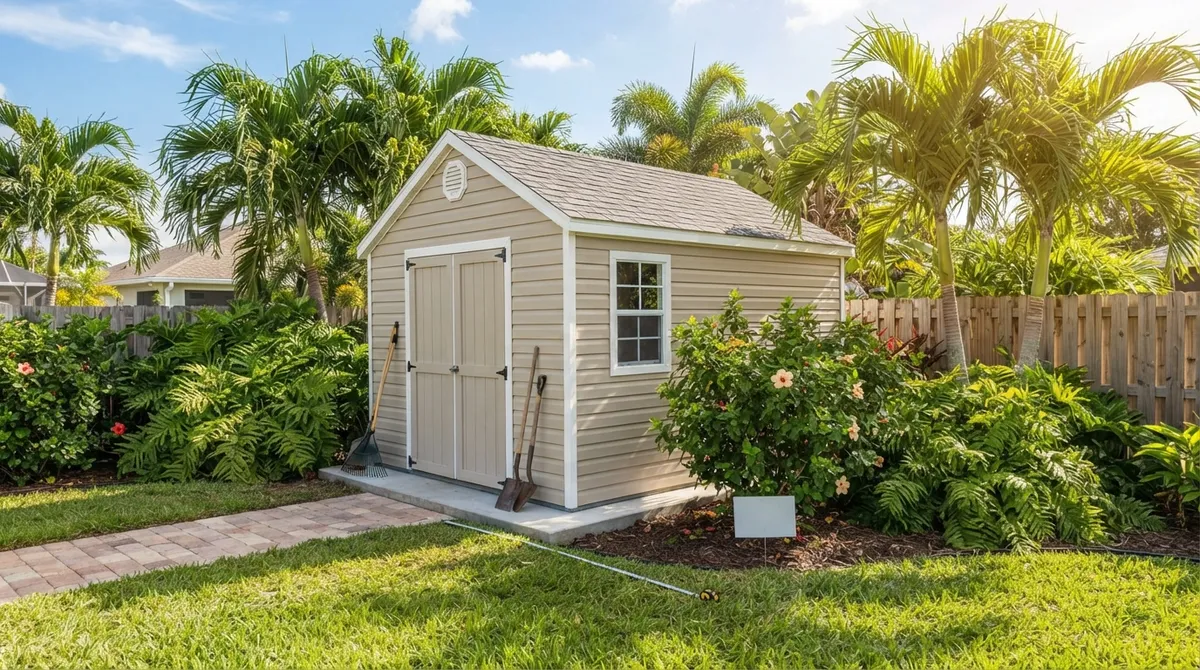
Do You Really Need a Shed Permit in Cape Coral?
In most cases, yes. Cape Coral's Land Development Code requires a valid building permit for accessory structures, and sheds fall squarely in that category. Don't assume that a small, store-bought, or "temporary" shed is exempt. Rules depend on the specific shed and the specific parcel, so confirm with the City before you build.
Here's why it matters:
- Safety: Sheds must be tied down to resist Florida's wind loads.
- Zoning: Location, screening, and easements are reviewed before anything is built.
- Resale: Unpermitted structures can surface during inspections, appraisals, and closings.
- Insurance: An unpermitted shed can complicate a claim after a storm.
If you're a Realtor or investor, this is a big one. A shed that was never permitted can become a closing headache, and we've covered how that plays out in how to sell a Florida house with unpermitted additions.
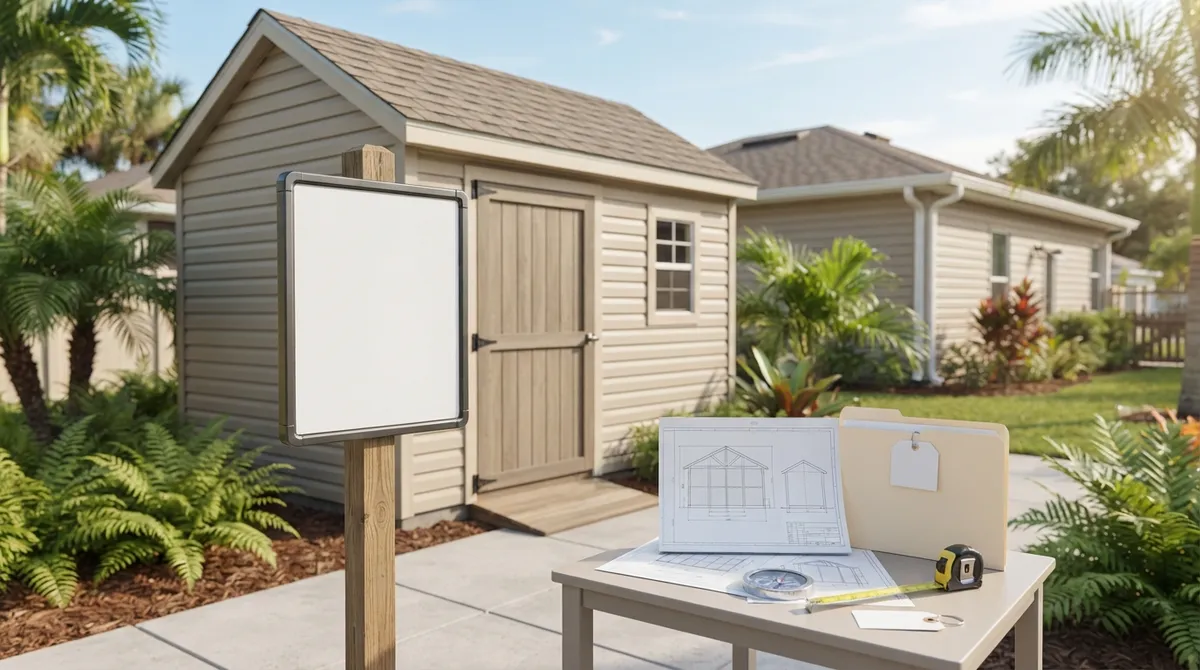
Cape Coral Shed Rules at a Glance
Before you pick a model, check it against the City's current shed guidance. These are the figures commonly cited in Cape Coral's shed guidelines and accessory-structure code. Always verify the details for your parcel and zoning district before relying on them.
| Requirement | Typical Cape Coral Standard |
|---|---|
| Number of sheds | One per residential site |
| Maximum area | 200 square feet |
| Maximum height | 14 feet to the highest eave |
| Separation from home or other structure | At least 5 feet |
| Rear property-line setback | 10 feet |
| Side-yard placement | Allowed with setbacks; screening may be required |
That 200-square-foot cap catches people off guard. A 12 x 20 shed is 240 square feet, so it's over the limit. Measure twice, order once.
Site-Built vs. DBPR-Approved Prefab Sheds
Cape Coral treats these two shed types differently, and the documents you submit depend on which one you're installing. This is the first decision to make, because it shapes your whole application.
Site-Built or Non-DBPR Sheds
If you (or your contractor) are building the shed on-site, or buying one that isn't state-approved, you'll need engineering-level documentation. The City's current guideline calls for:
- A site plan showing the shed, setbacks, and existing structures
- Shed design drawings
- Tie-down specifications
- An impervious-surface calculation worksheet
- A burrowing owl/gopher tortoise affidavit
Depending on your situation, you may also need a Notice of Commencement, an eagle-management affidavit, and flood-vent specifications.
DBPR-Approved Prefabricated Sheds
Prefab sheds that carry Florida DBPR approval follow a lighter path, but they still need a permit. Plan on providing:
- The DBPR approval identification shown on the unit
- A DBPR certification letter
- A site plan with shed dimensions, property-line setbacks, existing structures and paving, and any screening
Moving an existing shed on the same site? The City has a separate guideline for that, so don't assume a move is permit-free either.
| Item | Site-Built / Non-DBPR | DBPR-Approved Prefab |
|---|---|---|
| Site plan | Required | Required |
| Design drawings | Required | Not typically required |
| Tie-down specs | Required | Covered by DBPR approval |
| DBPR approval/letter | Not applicable | Required |
| Impervious-surface worksheet | Required | Verify with City |
| Owl/tortoise affidavit | Required | Verify with City |
How Much Does a Shed Permit Cost in Cape Coral in 2026?
According to the City's miscellaneous building permit fee schedule effective January 1, 2026, the residential shed permit fee is $167. That's the headline number, but it's not always the final number.
Keep these cost factors in mind:
- The schedule notes that additional fees may apply.
- A 2.5% surcharge applies to permits associated with Florida Building Code enforcement. Confirm whether it applies to your permit and how the City calculates your total.
- A concrete slab and electrical work are typically permitted separately, which adds cost.
- Engineering drawings for a site-built shed are a separate expense.
Fees get updated, so check the City's fee page before you budget. If you'd like us to confirm the real total for your parcel before you commit, get a free quote and we'll sort it out.
Where Can You Put the Shed? Setbacks, Screening, and Easements
Location is where good shed plans go sideways. Cape Coral allows sheds in the rear or side yard, subject to setbacks, but the details matter.
Rear Yard
The rear yard is usually the easiest spot. You'll generally need a 10-foot rear property-line setback and at least 5 feet between the shed and your home or any other structure.
Side Yard
Side-yard sheds come with extra rules. If the shed is visible from the front or sits close to an adjoining property, screening may be required. That might mean a hedge or fence, and it needs to appear on your site plan.
Easements and Double-Frontage Lots
Utility easements are a classic trap. Building over one can mean forced removal later. Double-frontage lots, which have street access on two sides, can add restrictions on where a shed may sit. Pull your survey and check it before you pick a spot.
Flood Zones, Slabs, and Electrical: The Add-Ons
A lot of Cape Coral sits in a flood zone, so this part deserves attention.
Flood Zone Requirements
The City's site-built guideline identifies building, zoning, and, when applicable, floodplain and environmental reviews. A shed in a flood zone may need flood vents, or an elevation certificate showing compliance with the stated base-flood-elevation-plus-one-foot standard. Flood-vent specifications may be part of your submittal.
Slabs and Electrical
Planning a concrete pad or a light and outlet inside the shed? Those typically need their own permits. Folding them into your plan from the start saves a second trip through the system. For anything electrical, the licensed contractor pulling that permit will need to be registered with the City.
How to Apply for a Cape Coral Shed Permit: Step by Step
Here's the typical flow through the City's online portal. Always confirm against the current Permit Document Center, since forms and guidelines get updated.
- Confirm your shed type. Site-built/non-DBPR or DBPR-approved prefab? Move on accordingly.
- Check your property. Review your survey for easements, setbacks, and flood zone status.
- Prepare your site plan. Show shed dimensions, distances to property lines and structures, existing paving, and any screening.
- Gather supporting documents. Design drawings, tie-downs, worksheets, affidavits, or DBPR paperwork depending on your path.
- Submit through the CSS online portal. Use the "Shed - New or Moving on the same site" application.
- Pay the fee. Expect $167 plus any applicable additional fees and surcharge.
- Respond to review comments. Building, zoning, and (if applicable) floodplain or environmental reviewers may ask for corrections.
- Schedule inspections. Build to the approved plans and call for the required inspections.
Common Mistakes That Delay a Shed Permit
After years of watching applications move through Florida jurisdictions, we see the same stumbles again and again. Dodge these and you'll be ahead of most applicants:
- Buying first, checking later. The shed arrives, then you learn it's 220 square feet.
- A vague site plan. Missing setback dimensions are a top reason for correction notices.
- Forgetting the impervious-surface worksheet. Site-built applicants often skip it.
- Ignoring the wildlife affidavit. Burrowing owls and gopher tortoises are taken seriously in Cape Coral.
- Skipping flood-zone details. No flood vents or elevation certificate can stall approval.
- Building without a permit at all. This leads to stop-work orders, fines, and after-the-fact headaches.
Already Built a Shed Without a Permit?
It happens more than you'd think, especially with a prior owner's backyard shed that nobody mentioned at closing. Don't panic, and please don't ignore it. Code enforcement notices and closing delays only get worse with time.
The path forward usually involves as-built drawings, possibly an engineer's letter, and filing an after-the-fact permit so the structure becomes legal. Our guides on how to legalize an unpermitted shed in Florida and what an as-built drawing is and when you need one walk through it in plain English. If a violation notice is already in your mailbox, what to do after a Cape Coral stop work order is a good place to start.
Who Should Handle Your Shed Permit?
You can absolutely tackle a simple prefab shed application yourself. But the picture changes quickly when you're juggling any of these:
- A site-built shed that needs sealed drawings and tie-down details
- A flood-zone parcel with vent or elevation requirements
- A shed plus a slab and electrical, meaning multiple permits
- A tight timeline for a closing, rental turnover, or contractor schedule
This is where an outsourced permitting department earns its keep. At 1 Contractor Solutions, we handle plan drafting, permit filing, tracking, reviewer comments, and revisions, with in-house engineering that's sealed by our own engineer. General contractors, solar companies, Realtors, designers, and homeowners all lean on us when the permit is the only thing standing between them and a scheduled crew. We work across all 67 Florida counties and respond fast, usually within 30 minutes.
Curious how other Cape Coral permits work? Our walkthroughs on a tent permit in Cape Coral and a pergola permit in Cape Coral show how similar accessory-structure rules play out. You can also see what our 1 Contractor Solutions customers say on Google.
Tips for Realtors, Investors, and Contractors
If you're not the homeowner, the stakes look a little different:
- Realtors: Ask for a permit history during listing prep. A surprise shed can pause a closing.
- Investors: Budget for legalizing or removing any unpermitted accessory structures before resale.
- General contractors: Bundle the shed, slab, and electrical permits so inspections line up.
- Designers and trades: Hand off clean site plans and drawings to avoid correction cycles.
For a broader view of how statewide rules fit together, our guide to after-the-fact permit requirements in Florida is worth a bookmark.
Final Thoughts: Permit First, Build Second
A shed seems like the simplest project in the world, yet in Cape Coral it still deserves a proper permit. Know your shed type, keep it within 200 square feet and 14 feet high, respect the 5-foot and 10-foot separations, watch for easements and flood-zone requirements, and budget around the $167 base fee plus any extras. Do it in that order and you'll have a legal, insurable, resale-friendly shed instead of a surprise to-do list.
Want a hand with drawings, filing, or a messy permit situation? Our team is happy to help you get it done right. Get a free quote and let's get your shed approved. You can also follow us on LinkedIn or follow us on Facebook for more Florida permitting tips, and see how Brain Buzz Marketing helped bring our online presence to life.
FAQs
Do I need a permit for a shed in Cape Coral, Florida?
Yes, in most cases. Cape Coral's code requires a valid building permit for accessory structures, so don't assume a small shed is exempt. Check the requirements for your specific shed and parcel with the City before you build.
How much does a shed permit cost in Cape Coral in 2026?
The City's fee schedule effective January 1, 2026 lists a $167 residential shed permit fee. Additional fees and a 2.5% Florida Building Code surcharge may apply, and a slab or electrical work is permitted separately, so confirm your total with the City.
What are the shed size, height, and setback limits in Cape Coral?
Current City guidance generally allows one shed per residential site, up to 200 square feet and 14 feet tall to the highest eave. Expect at least 5 feet from your home or other structures and a 10-foot rear setback, with extra rules for side yards. Verify the details for your zoning and parcel.
Does a prefabricated or DBPR-approved shed still need a permit?
Yes. A DBPR-approved prefab shed follows a simpler path, but you still apply for a permit. You'll typically provide the DBPR approval identification, a DBPR certification letter, and a site plan showing setbacks and screening.
What extra requirements apply to a shed in a Cape Coral flood zone?
A shed in a flood zone may need flood vents, or an elevation certificate showing it meets the base-flood-elevation-plus-one-foot standard. The City may also run a floodplain review, so include flood-vent specifications with your application.
We do this work every day across all 67 Florida counties. Call (866) 314-6931 and we will tell you what your situation actually requires — including when you do not need us.
Related services
Permit Facilitation & Filing
You have a crew scheduled, a client asking for dates, and a permit sitting somewhere in a queue you cannot see. We file it, w…
See the servicePlan Review Coordination
A permit in plan review is not one queue. On a commercial project it can be six queues, each with its own reviewer, its own c…
See the serviceReady to get your permit moving?
One call tells you which jurisdiction controls your project, what it will take, and what it will cost. Most of the time we can scope it on the phone.