
Blog
How Do You Legalize an Existing Roof in Florida?
Learn how to legalize an existing roof in Florida, from checking permit history to inspections, documentation, costs, and avoiding common mistakes.
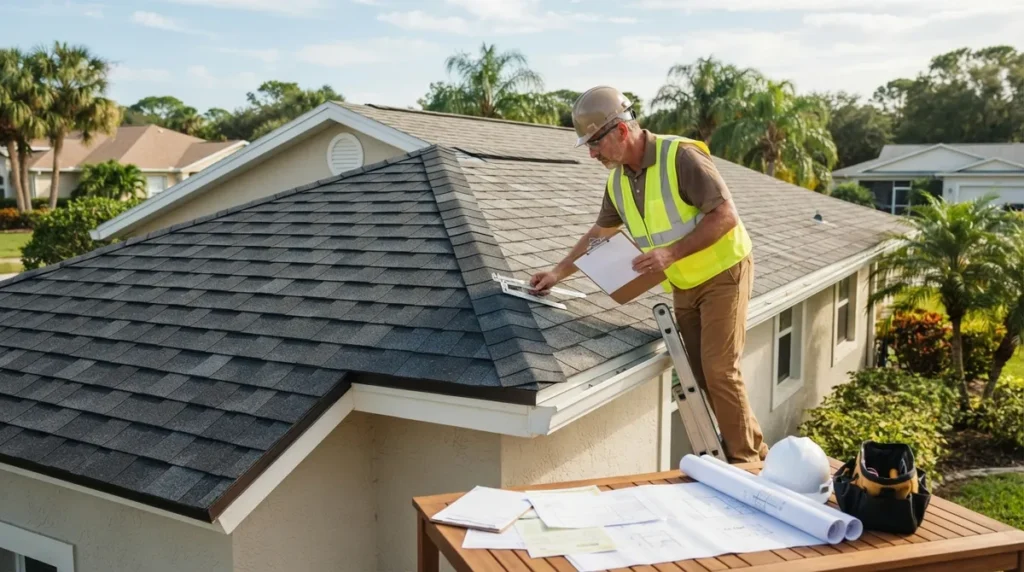
Key Takeaways
-
Florida has no statewide uniform procedure for legalizing existing roofs; each city and county sets its own rules, fees, and paperwork, so always confirm requirements directly with your local building department first.
-
Determine whether you have no permit, an open permit, or an expired permit before spending money—assuming you need a new after-the-fact permit when you just have an open one is a costly mistake.
-
The 25% rule limits repairs or replacements to 25% of roof area within 12 months; exceeding this threshold may require bringing the entire roof section into compliance with current code.
-
Some jurisdictions may require selective removal of shingles to inspect concealed work like underlayment and nailing patterns, but solid installation photos can often help you avoid full tear-offs.
-
Unpermitted roofs can block home sales, affect insurance claims, delay solar installations, and trigger code enforcement notices—legalizing early protects your property value and prevents closing delays.
-
Gather documentation like photos, product approvals, and contractor affidavits before submitting an application, as this reduces the chance of additional inspections or corrective work requirements.
Picture this: you're buying a lovely Florida home, or maybe you've owned one for years, and someone mentions that the roof was never permitted. Your stomach drops a little. Maybe a prior owner skipped the paperwork. Maybe a roofer told you a permit wasn't needed. Or maybe the permit was pulled but nobody ever called for the final inspection.
Take a breath. This is more common than you'd think, and it's very fixable. The process to legalize an existing roof in Florida is really about bringing the local record into line with what's actually on your house.
In this friendly guide, we'll walk through what "legalizing" actually means, how to figure out which situation you're in, what the building department will likely ask for, and how to avoid the mistakes that cost people time and money. Whether you're a homeowner, a general contractor, a realtor, or a solar company that just discovered an unpermitted roof under your panels, you'll find a clear path forward here.
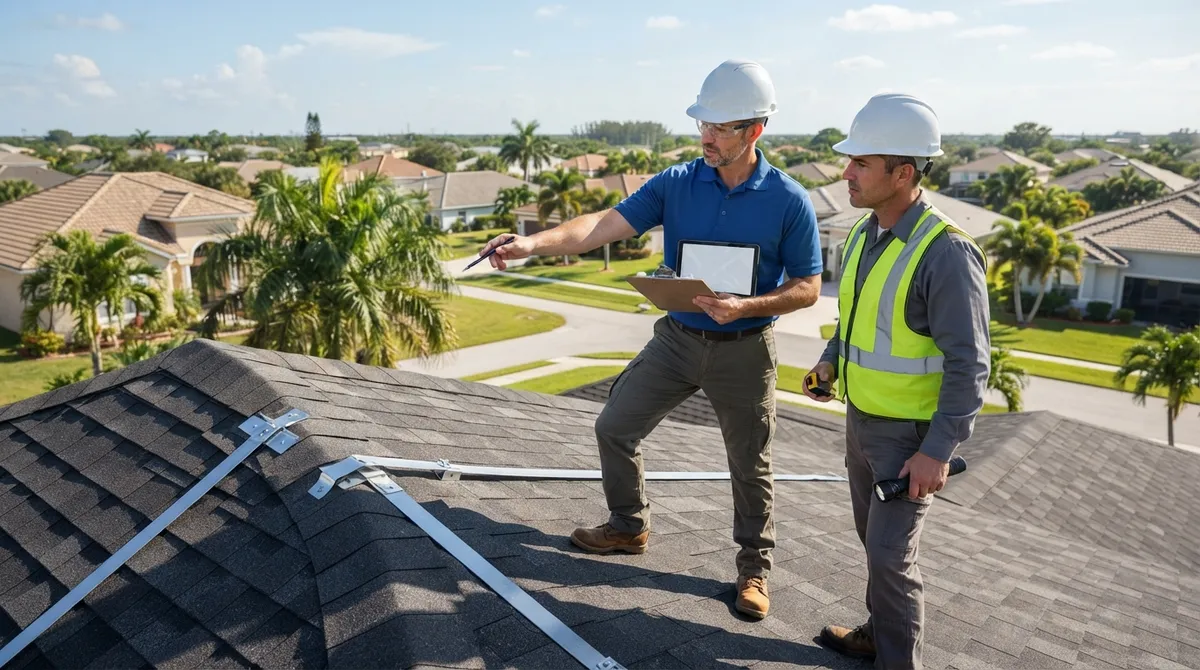
What Does It Mean to Legalize an Existing Roof in Florida?
When people say they need to legalize an existing roof in Florida, they usually mean one of two things: roofing work was completed without a required permit, or a permit was issued but never closed with a passing final inspection. Either way, the goal is the same. You want the local building department's records to show that the roof was properly permitted, inspected, and finished.
Here's the important part: Florida has no single statewide application or uniform procedure for this. Each city and county sets its own rules, fees, and paperwork. That's why the process in one jurisdiction can look quite different from the next.
The legal backbone is Florida Statutes §553.79, which generally prohibits covered building work without first obtaining a permit from the appropriate enforcing agency. The local building department decides whether your roofing work required a permit and what steps are needed to bring the record into compliance.
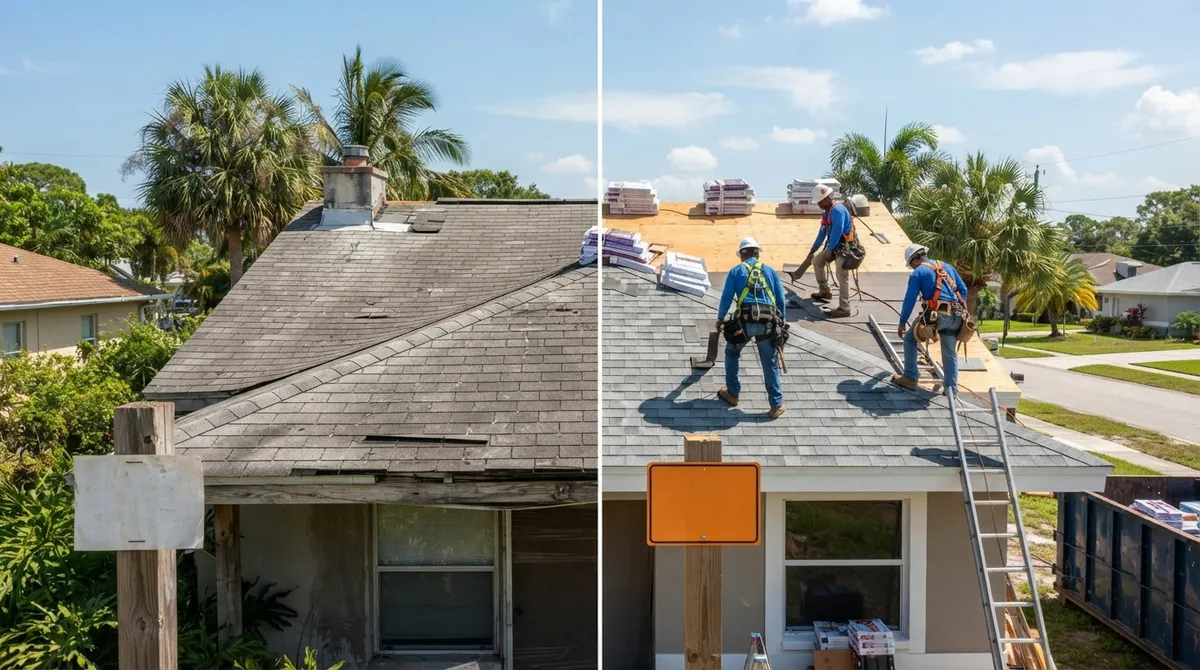
Unpermitted Roof vs. Open Permit: Know Which One You Have
Before you spend a dime, figure out your situation. These two problems sound similar but follow different routes. Assuming you need a brand-new after-the-fact permit when you really just have an open one is a classic (and avoidable) mistake.
| Situation | What It Means | Typical Path |
|---|---|---|
| No permit ever pulled | Roof was installed without any permit on record | After-the-fact permit application, inspections, documentation |
| Permit issued, no final inspection | Permit exists but was never closed out | Ask the jurisdiction about reopening or finalizing the existing permit |
| Permit expired | Permit lapsed before work was finalized | Reactivation, renewal, or new permit depending on local rules |
| Partial roof work | Repair or recover done without permit | Local review of scope and code thresholds |
Not sure which bucket you fall into? Start by checking the property's permit history with the city or county. Our open permit search tool is a handy first stop, and our building department lookup helps you confirm which office actually controls your address (which isn't always obvious near city lines).
Step-by-Step: How to Legalize an Existing Roof in Florida
Every jurisdiction does things a little differently, but most follow a similar rhythm. Here's the general roadmap:
- Research the permit history. Ask the building department (or use an online portal) to show every permit tied to the address.
- Identify the status. Determine whether you have no permit, an open permit, or an expired one.
- Talk to the authority having jurisdiction. Ask what they require before you hire anyone or commission more work.
- Gather your documentation. Collect roof details, contractor information, photos, and product approval data.
- Submit the application. File the after-the-fact permit or the closeout request, as directed.
- Pass the inspections. Coordinate site visits and address any findings.
- Close the permit. Get the final approval on record so it shows up cleanly in the system.
That order matters. Talking to the building department first can save you from paying for engineering or repairs that the jurisdiction wouldn't have required in the first place.
What Will the Building Department Ask For?
Expect the local authority to request an application along with information about the property, the scope of work, the contractor, and the roof covering and how it was installed. Beyond that, requirements vary. Depending on the jurisdiction and the circumstances, you may be asked for:
- Photographs of the roof and installation details
- Product approvals for the roofing materials used
- A contractor affidavit or inspection affidavit
- Engineering documentation for specific conditions
- Inspections, sometimes including selective removal of roofing to expose concealed work
Local rules can be surprisingly specific. Lee County's published roof guide, for example, calls for product approval information and describes the permit application, inspections, and closeout process. Nassau County's roofing materials call for a contractor inspection affidavit and installation photos. Always confirm current requirements directly with the authority having jurisdiction, because these details change.
Curious about your county? We work across all 67 Florida counties, including Lee County, Hillsborough County, and Miami-Dade County.
Will They Make You Tear Off Shingles?
This is the question everybody worries about, so let's talk about it honestly. Roofing is largely concealed work. Once the shingles or tile are on, an inspector can't see the underlayment, the nailing pattern, or the deck attachment without help.
Because of that, some jurisdictions may require selective removal of a small area to expose the concealed work. Others accept photos, affidavits, and documentation. An inspection or affidavit doesn't automatically establish compliance with concealed installation requirements, so the building official has the final say.
The good news? A small test opening is a far cry from a full tear-off. And if you have solid installation photos from the original job, you may avoid it altogether. If you're a contractor, this is a great reminder to photograph every roof as you go.
What If the Inspection Finds Problems?
If an inspection finds noncompliant or unverifiable work, don't panic. There are typically two ways forward:
- Corrections by a licensed roofing contractor to bring the work up to code.
- Engineering evaluation of specific conditions, where the jurisdiction accepts that approach.
This is where having engineering in house really pays off. A sealed engineer letter can document specific conditions, and our team handles structural engineering so that reviewer comments get resolved fast instead of bouncing between outside consultants.
The 25% Rule: Why It Matters for Your Roof
Here's a piece of code that trips up plenty of owners and contractors. Florida's 2023 Building Code, 8th Edition, includes roof-replacement and roof-recover provisions. In general, it limits repair, replacement, or recovery to 25% of a roof area or roof section within a 12-month period, unless the entire applicable roof system or section is brought into compliance.
In plain English: if you've been patching or replacing pieces of a roof over time, the cumulative work can trigger a requirement to bring the whole roof section up to current code. Applicability depends on the code provisions and the facts of your project, so it's worth having a professional review your situation.
How Much Does It Cost to Legalize an Existing Roof?
Nobody loves this question, and there's no single number. Costs vary by jurisdiction and by what your roof needs. Here are the main factors:
| Cost Factor | What Drives It |
|---|---|
| Permit and penalty fees | Set locally; after-the-fact permits may carry higher fees |
| Inspections | Number of visits and any re-inspections |
| Documentation | Photos, affidavits, product approvals |
| Engineering | Needed if work can't be verified or conditions need evaluation |
| Corrective work | Repairs required if the roof isn't compliant |
For more on how these numbers stack up, take a look at our guide on after-the-fact permit costs in Florida. The best way to control cost is to move early, ask the building department what they'll accept, and avoid paying for work they didn't require.
Why Legalizing Your Roof Matters for Sales, Insurance, and Peace of Mind
An unpermitted roof isn't just a paperwork problem. It can quietly cause headaches down the road:
- Home sales: Open or missing permits often surface during due diligence and can stall a closing.
- Insurance: Insurers may ask about roof age, permit history, and compliance, especially after a claim.
- Solar installs: Panels on an unpermitted roof can trigger delays or extra documentation.
- Code enforcement: Unpermitted work can lead to notices and fines.
If you're a realtor, our guide to open permits found at closing is a great companion read. And if the deal is already in motion, our realtor and closing support team knows how to move fast when the clock is ticking.
Tips for Each Type of Reader
Homeowners
Start with a permit history search and a friendly phone call to the building department. You don't need to have every answer before you reach out. Our homeowner resources can help you sort out the next steps.
General and Roofing Contractors
Keep installation photos, product approvals, and signed paperwork on every job. If a permit never got closed, fixing it now protects your reputation. Our roofing contractor services and Roof Permit Partnership Program are built for exactly this.
Solar Companies
Before you install on an existing roof, confirm its permit status. An unpermitted roof can hold up your solar approval. Learn more on our solar contractor page.
Realtors and Investors
Check permit history early in the deal. Finding an unpermitted roof before closing gives you negotiating power and time to fix it.
Why Work With a Florida Permitting Team?
Legalizing a roof involves research, paperwork, inspections, and sometimes engineering, all while dealing with a building department that has its own quirks. That's where a dedicated partner helps. 1 Contractor Solutions is Florida's outsourced permitting department. We handle after-the-fact and expired permits, filing, tracking, reviewer comments, revisions, and closeout, and our in-house engineer signs and seals the work. That means no waiting on an outside consultant to call someone back.
Want to see what other people say? Visit us on Google — 1 Contractor Solutions to read customer reviews, and you can also follow us on LinkedIn or follow us on Facebook for Florida permitting tips.
Common Mistakes to Avoid
- Hiring work before calling the building department. Ask what they require first.
- Assuming it's a new permit. Check whether an existing permit can simply be finalized.
- Ignoring the 25% rule. Piecemeal work can trigger full-roof compliance.
- Skipping documentation. Photos and product approvals are gold.
- Waiting for a problem. Dealing with it before a sale or claim saves stress.
If you're facing a code notice, our guide to unpermitted roofs in Florida goes deeper, and this overview of legalizing unpermitted work covers the bigger picture.
Ready to Legalize Your Roof?
Legalizing an existing roof in Florida sounds intimidating, but it's a well-worn path. Find out where you stand, talk to the right building department, gather your documentation, and handle any inspections or corrections in a calm, organized way. You've got this, and you don't have to do it alone.
If you'd like a hand, we respond within 30 minutes, day or night, and se habla español. Get a free quote today, and let's get your roof on the record so your project keeps moving.
FAQs
How do I legalize an unpermitted roof in Florida?
Start by checking the permit history with your city or county building department, then follow their instructions for an after-the-fact permit or permit closeout. Expect an application, documentation, and inspections. It's a very doable process when you take it one step at a time!
What should I do if my roof permit was issued but never got a final inspection?
Ask the building department to confirm the permit status and whether it can be reopened or finalized. Don't assume you need a brand-new after-the-fact permit, since the fix is often simpler than people expect.
Will Florida make me remove shingles or expose the roof deck?
It depends on the jurisdiction and the situation. Some building departments accept photos and affidavits, while others may require selective removal to check concealed work. Good installation photos can go a long way.
Does an unpermitted roof affect selling or insuring a Florida home?
It can. Open or missing permits often come up during a sale and may stall a closing, and insurers can ask about roof permit history. Legalizing the roof early helps keep both smooth.
Can a roofing contractor or engineer certify an existing roof?
Sometimes, where the jurisdiction accepts it. A licensed roofer can make corrections, and an engineer can evaluate specific conditions, but an affidavit or inspection alone doesn't automatically prove compliance. The building official decides what's acceptable.
We do this work every day across all 67 Florida counties. Call (866) 314-6931 and we will tell you what your situation actually requires — including when you do not need us.
Related services
Permit Facilitation & Filing
You have a crew scheduled, a client asking for dates, and a permit sitting somewhere in a queue you cannot see. We file it, w…
See the servicePlan Review Coordination
A permit in plan review is not one queue. On a commercial project it can be six queues, each with its own reviewer, its own c…
See the serviceReady to get your permit moving?
One call tells you which jurisdiction controls your project, what it will take, and what it will cost. Most of the time we can scope it on the phone.