
Blog
Permit vs. No Permit: Fixing a Few Shingles in Florida?
Wondering if a few shingles need a permit in Florida? Compare exempt vs. permitted repairs, local rules, and the 25% roof rule myth.
Key Takeaways
-
Florida has no statewide rule exempting small shingle repairs; your city or county building department decides whether a permit is required, so confirm jurisdiction before starting.
-
Many jurisdictions exempt repairs under about 100 square feet (one roofing square) that are like-for-like and don't involve trusses, rafters, or decking, but some, like the City of Miami, require permits for all roofing work.
-
A small repair can quickly grow once you find damaged underlayment or decking, potentially moving the job out of exemption territory, so describe your scope accurately to the building department.
-
The 25% roof rule in the Florida Building Code governs when the broader roof must meet current code, not whether a small repair is exempt from permitting.
-
Before starting, call your building department, get the answer in writing or note the staff member's name, and keep before-and-after photos and receipts for future resale or insurance questions.
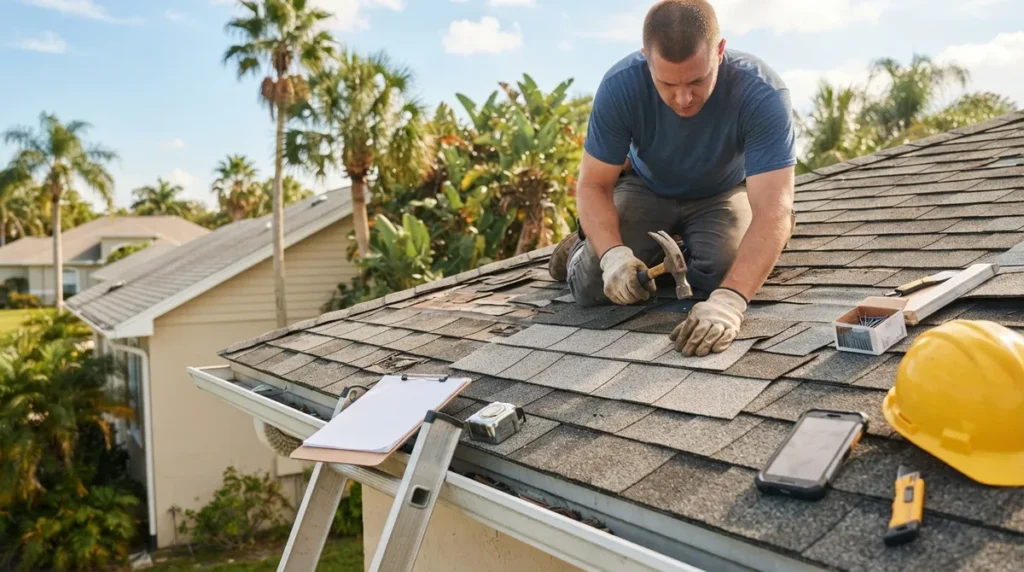
It happens to almost every Florida homeowner sooner or later. A summer thunderstorm rolls through, you walk outside the next morning, and there they are: three or four shingles lying in the yard. Your first thought is probably, "I can fix that in an afternoon." Your second thought is, "Wait... do I need a permit to repair a few shingles in Florida?"
Good news: you're asking the right question before climbing the ladder. The honest answer is that it depends on where your home sits and exactly what the repair involves. Some Florida jurisdictions treat a handful of replacement shingles as minor maintenance. Others, like the City of Miami, want a permit for virtually any roofing work.
In this friendly guide, we'll compare the two paths side by side: repairs that typically skip the permit versus repairs that need one. You'll learn how the famous 25% roof rule fits in (and why it isn't the permit loophole many people think it is), what documents to expect, and how to get a clear answer from your local building department in 2026. Whether you're a homeowner, a general contractor, a realtor, or a solar installer working around a roof, this will help you avoid headaches.
The Short Answer: It Depends on Your Jurisdiction
Let's get the big point out of the way. There is no single statewide rule that says every small shingle repair is permit-free. Florida's building codes set the technical standards, but your city or county building department decides when a permit is required.
That means the question "do I need a permit to repair a few shingles in Florida" has different correct answers in different places. Before you buy a single bundle of shingles, confirm who has jurisdiction over your address and what they say about small repairs.
Here's a quick snapshot of how local rules can differ:
| Jurisdiction | Published Position on Small Roof Repairs | What It Means for You |
|---|---|---|
| Charlotte County | Repairs under 100 sq. ft. (one roofing square) do not require a permit if trusses or rafters are not involved | A few shingles are typically fine without a permit |
| Fort Walton Beach | Replacing a few shingles is a minor repair that generally needs no permit; 100 sq. ft. or more likely does | Small repairs are usually exempt, larger ones are not |
| City of Miami | Building permit required for all residential and commercial roofing work, including repairs | Even a small repair needs a permit |
Notice the pattern? Same state, same shingles, three different answers. That's exactly why checking locally matters.
Path One: Small Repairs That Often Skip the Permit
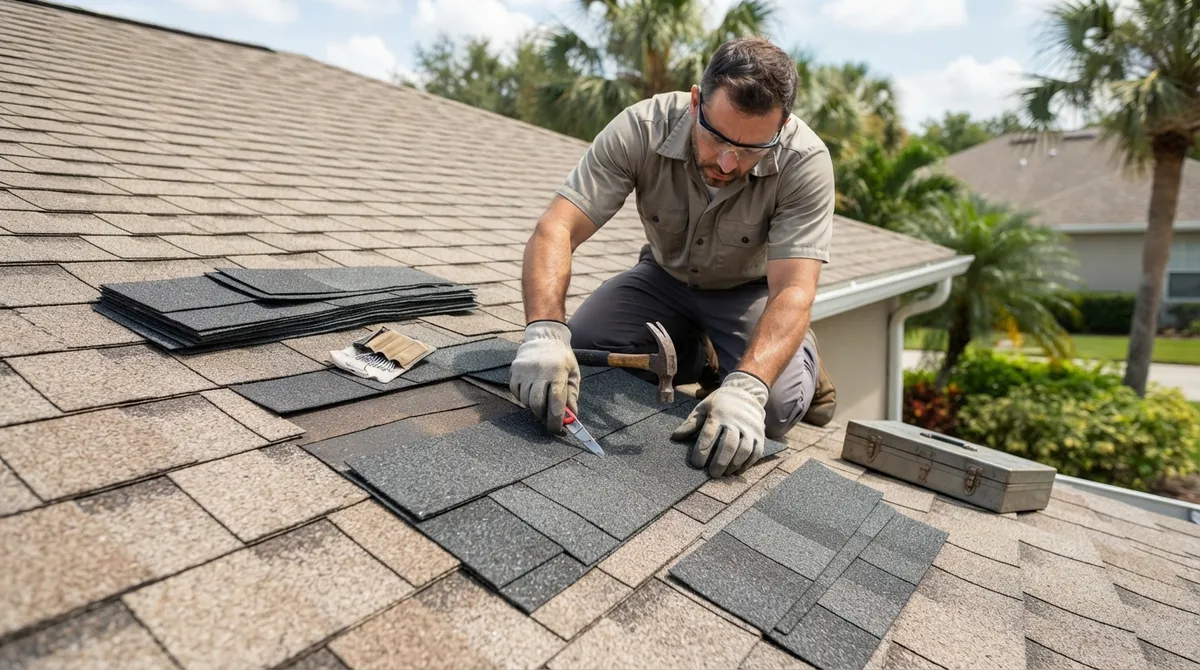
In jurisdictions that offer an exemption, the rules usually come with conditions. A typical exemption looks something like this:
- Limited area: The repair stays under a stated square-footage threshold, often 100 square feet (one roofing square).
- No structural work: You are not touching trusses, rafters, or decking.
- Like-for-like materials: You're swapping damaged shingles for matching ones, not changing the roof system.
- No change in scope: The job doesn't grow once you lift the first shingle and find soft wood underneath.
If your repair genuinely fits those conditions and your jurisdiction publishes an exemption, you may be able to proceed without a permit. But "may" is the key word. A published exemption in one county tells you nothing about the city next door.
Why "A Few Shingles" Can Quickly Become More
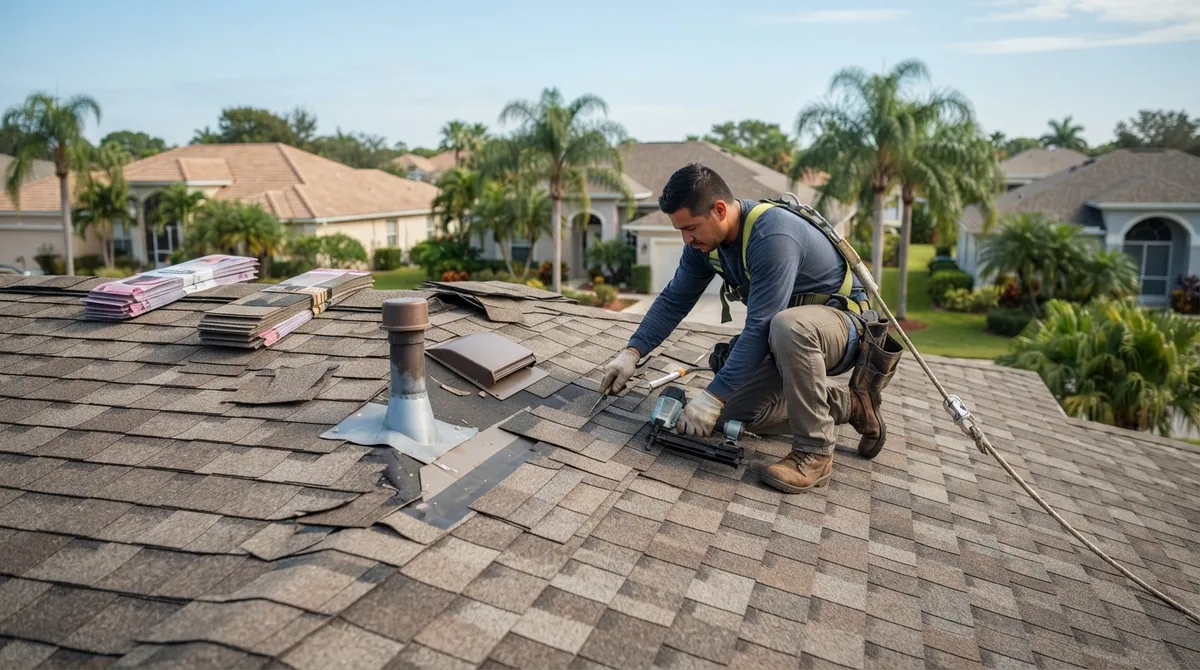
Here's something we see all the time. A homeowner plans to replace five shingles, then discovers the underlayment is brittle or the decking beneath is damp. Suddenly the repair is bigger than it looked. If decking replacement or structural repair enters the picture, you've likely moved out of exemption territory.
That's one more reason to describe your scope accurately when you call the building department. Telling them "I'm replacing a few shingles" and then doing a larger repair can leave you with an unpermitted job and a real problem later.
Path Two: Repairs That Need a Permit
On the other side of the comparison are repairs that clearly call for a permit. In many Florida jurisdictions, you'll need one when:
- Your city or county requires permits for all roofing work (the City of Miami is one example).
- The repair area meets or exceeds the local threshold, such as 100 square feet or more.
- The work involves roof decking, trusses, or rafters.
- You're replacing a roof section or the entire roof, not simply swapping a few shingles.
- You're changing materials or the roof system.
When a permit is required, expect to provide details like the roof type, area, number of stories, material, and job value. Some jurisdictions also need product approval documentation. If you've ever wondered what those numbers mean, our guide on how to read a Florida product approval number for roofing breaks it down in plain English.
Side-by-Side: Exempt Repair vs. Permitted Repair
| Factor | Likely Exempt (Where Allowed) | Likely Permitted |
|---|---|---|
| Scope | A few shingles, like-for-like | Larger area, decking, or structural repair |
| Area | Under local threshold (often 100 sq. ft.) | At or above threshold |
| Structural elements | None involved | Trusses, rafters, or decking involved |
| Inspections | None typically required | Inspections scheduled with the building department |
| Paperwork | Usually none | Application, work description, product approvals |
| Local rule | Exemption published by your jurisdiction | No exemption, or exemption doesn't apply |
The 25% Roof Rule: Not the Permit Pass You Think It Is
Many people hear about Florida's "25% rule" and assume it means anything under 25% of the roof is permit-free. That's one of the most common misunderstandings out there, so let's clear it up.
The 2023 Florida Building Code, Existing Building, Section 706.1.1 generally limits repair, replacement, or recovery to 25% of a roof area or roof section in any 12-month period, unless the entire roof system or section is brought into code compliance. That's a code-compliance threshold. It tells you when the larger roof has to be upgraded to current standards. It does not say that repairs below 25% are exempt from local permitting.
There's also a helpful exception. Under Florida Statutes Section 553.844(5) and the 2023 code, qualifying roof systems built, repaired, or replaced under the 2007 Florida Building Code or a later edition get some flexibility. When 25% or more is being worked on, only the portion being repaired, replaced, or recovered must meet the applicable current code. Again, this addresses code compliance, not whether you need a permit.
Think of it this way: the 25% rule answers "how much of my roof must meet today's code?" Your local building department answers "do I need a permit for this repair?" They're two separate questions.
How to Find Out What Your Address Requires
Ready to get a definitive answer? Follow these steps. It takes less time than most people expect.
- Identify the authority having jurisdiction. Is your address inside a city or in unincorporated county territory? Near city lines this isn't always obvious, so confirm it rather than guessing.
- Check the building department's roofing page. Many departments publish exemption thresholds, fee schedules, and application checklists online.
- Define your scope in writing. Note how many shingles, the approximate square footage, and whether decking, trusses, or rafters are involved.
- Contact the building department. Ask directly: "Does a repair of this size and type require a permit at this address?" Get the answer in writing or note the staff member's name.
- Document everything. Take before-and-after photos and keep receipts and any correspondence. This protects you if questions come up at resale.
If that feels like a lot, you're not alone. This is exactly where a Florida permitting service earns its keep. A team like 1 Contractor Solutions' roof permit service can identify the right jurisdiction, confirm the local threshold, and file the application if one is needed. Just remember that a reputable service won't promise you a permit is unnecessary without checking your property's specific jurisdiction and scope.
What a Roof Repair Permit Application Usually Includes
If your repair does need a permit, don't panic. The process is usually straightforward for a simple roofing job. While requirements vary, here's what departments commonly ask for:
- A completed roofing permit application
- A description of the work being performed
- Roof type, area, number of stories, and material
- Estimated job value
- Applicable product approval documentation
- Contractor license and insurance details (or owner-builder paperwork where allowed)
Orange County, for example, requests roof type, area, stories, material, and job value, while Miami requires applicable product approval documents. Some counties also require a Notice of Commencement when the job value passes a set amount; Brevard County and Orange County both reference a $5,000 threshold. Verify current local requirements before relying on any of these numbers, since rules and fees change.
What About Fees?
Fees are jurisdiction-specific. As one example, Brevard County's residential reroof page lists a $25 application processing fee and a $75 building-code review fee for the first $1,000 of job value, plus $3.25 per additional $1,000 or portion. Your local fees may look very different, so check your department's current schedule.
Why It's Worth Getting the Permit Question Right
A few shingles may feel like a small thing, but roofing sits at the center of Florida's wind and water protection. Doing the job without a required permit can create trouble down the road:
- Resale friction: Buyers' agents and lenders increasingly look for open or missing permits. If you ever sell, our article on how to sell a Florida house with unpermitted additions shows how stressful that can get.
- Insurance questions: After a storm, an insurer may ask about prior roof work and documentation.
- Code enforcement: A neighbor's complaint or an inspector's drive-by can trigger a stop work order.
- Fixing it later costs more: Legalizing work after the fact usually involves extra fees, inspections, and sometimes engineering.
If you've already made a repair and later learned a permit was required, take a breath. You have options. Our guide on how to legalize an existing roof in Florida walks through the path forward, and what to do if your reroof was done without a permit covers the bigger-picture scenario.
Tips for Different Readers
Homeowners
Call first, climb second. A five-minute conversation with your building department can save you from a costly mistake. If you hire a roofer, ask them whether they'll pull the permit and keep a copy for your records.
General Contractors and Roofers
Know your jurisdictions. Thresholds change from one city to the next, and what's exempt in Charlotte County may need a permit in Miami. If you run volume across multiple counties, tracking each rule yourself gets old fast. Our piece on roofing permit mistakes West Palm Beach pros avoid highlights the common slip-ups.
Solar Companies
If a roof repair is needed before or alongside an installation, the roofing scope and the solar scope may be permitted separately. Coordinating both avoids delays and failed inspections.
Realtors and Investors
When evaluating a property, ask for roof permit history, especially if the seller mentions "recent repairs." Missing paperwork can surface at appraisal or closing.
When to Bring in a Permitting Pro
You don't need a professional for every shingle repair. But it's smart to call one when:
- You're unsure which jurisdiction controls your address.
- The repair might involve decking, trusses, or rafters.
- You're managing multiple roofs across different counties.
- A permit is required and you'd rather not spend your weekend on paperwork.
- You've discovered past roof work with no permit on file.
A Florida permitting service can identify the authority having jurisdiction, confirm the local repair threshold, prepare and submit the application, and coordinate inspections. And because 1 Contractor Solutions keeps drafting and engineering in house, any plan or structural question that pops up gets handled without waiting on outside consultants. If you want to see what other customers have shared, Visit us on Google — 1 Contractor Solutions to read their reviews.
You can also stay connected and pick up more Florida permitting tips when you follow us on LinkedIn or follow us on Facebook. And for marketing help behind the scenes, our partners at Brain Buzz Marketing keep our content flowing.
Final Thoughts: Check Before You Patch
So, do you need a permit to repair a few shingles in Florida? Sometimes no, sometimes yes, and the deciding factor is your local building department. Charlotte County and Fort Walton Beach carve out room for minor repairs, while the City of Miami requires permits for all roofing work. The 25% roof rule is a code-compliance guideline, not a blanket exemption, and any repair that grows to include decking, trusses, or rafters likely changes the answer.
The smartest move is simple: confirm your jurisdiction, describe your scope honestly, and get the answer before the first nail goes in. That small bit of homework protects your roof, your insurance, and your future sale.
Not sure where your address lands? We'd love to help you sort it out. Reach out to get a free quote and let our team identify the right jurisdiction, confirm what your repair requires, and take the permit off your plate, so you can get back to enjoying your Florida home.
FAQs
Do I need a permit to replace a few shingles in Florida?
It depends on your city or county. Places like Charlotte County and Fort Walton Beach treat a few replacement shingles as minor repairs that generally don't need a permit, while the City of Miami requires one for all roofing work. Always confirm with the building department that has jurisdiction over your address before starting.
How many square feet of roof repair can I do without a permit in Florida?
There's no single statewide number. Some jurisdictions, such as Charlotte County, exempt repairs under 100 square feet (one roofing square) as long as trusses or rafters aren't involved. Others have no exemption at all, so check your local rule first.
Does the 25% roof rule mean small shingle repairs are permit-exempt?
No, and this is a common mix-up. The 25% rule in the Florida Building Code, Existing Building, is about when the broader roof must be brought into code compliance, not about skipping a permit. Your local building department decides whether a permit is required.
Do I need a permit to repair roof decking or rafters in Florida?
Most likely yes. Repairs that involve roof decking, trusses, or rafters typically go beyond a minor shingle repair and may trigger a permit plus inspections or additional documentation. Describe the full scope to your building department so you get an accurate answer.
Can a Florida permitting service tell me if my shingle repair needs a permit?
Absolutely. A permitting service can identify the authority having jurisdiction, confirm the local threshold, and file the application if one is needed. A trustworthy service will check your specific property and scope rather than promising a permit is unnecessary up front.
We do this work every day across all 67 Florida counties. Call (866) 314-6931 and we will tell you what your situation actually requires — including when you do not need us.
Related services
Permit Facilitation & Filing
You have a crew scheduled, a client asking for dates, and a permit sitting somewhere in a queue you cannot see. We file it, w…
See the servicePlan Review Coordination
A permit in plan review is not one queue. On a commercial project it can be six queues, each with its own reviewer, its own c…
See the serviceReady to get your permit moving?
One call tells you which jurisdiction controls your project, what it will take, and what it will cost. Most of the time we can scope it on the phone.