
Blog
12 Things to Know Before Getting a Fence Permit in Naples, FL
Planning a fence permit in Naples, FL? Learn jurisdiction rules, fees, height limits, easements, and documents you need before you file.
Key Takeaways
-
Confirm whether your property is inside City of Naples limits or unincorporated Collier County, since each has different application processes, forms, and rules. Check your property appraiser parcel record or tax bill.
-
City of Naples generally exempts fences under 50 feet from a permit, but not if the fence is part of a pool or spa barrier, and exempt fences must still follow City Code 56-37 on height and placement.
-
Fence height limits in the City of Naples are 6 feet in side and rear yards, and 3 feet in front yards outside the building envelope; chain-link is restricted in front yards.
-
Permanent fences generally cannot sit in public drainage or utility easements, and an encroaching fence may be removed at the owner's expense, so review your survey for easement lines before building.
-
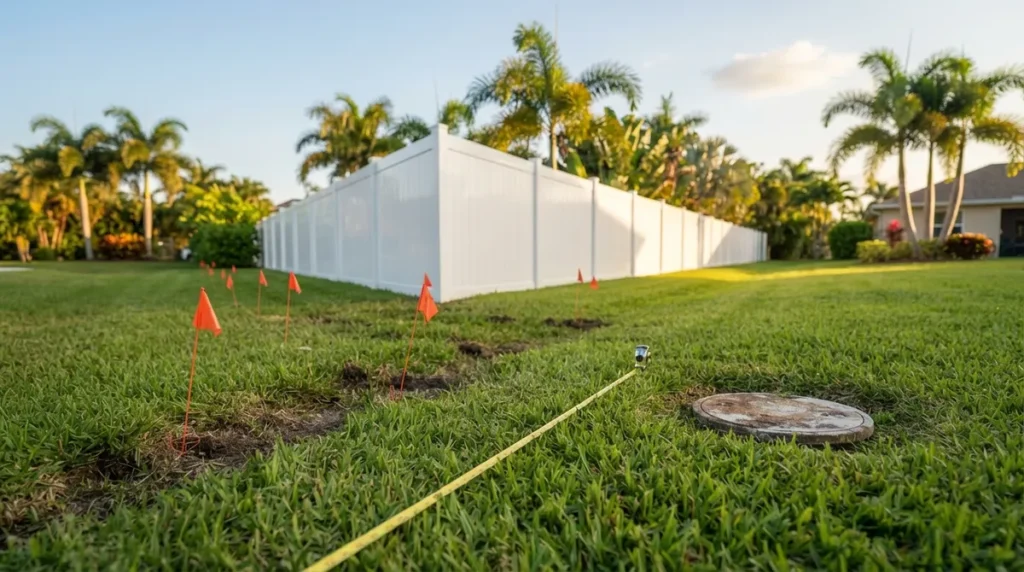
For properties on septic in Collier County, keep the fence at least 5 feet from the septic system, and mark the tank and drain field on your site plan.
-
City of Naples fence permit fee is published as $100 plus a 20% plan-review fee (about $120 base), and a boundary survey must mark the fence location with Xs, not highlighting.
Picture this: you've picked out the perfect fence, your installer has a open weekend, and then someone asks the question that stops everything. "Did you pull the permit?" If you're planning a fence permit Naples FL project, take a breath. You're in good company, and this one is very doable once you know where to start.
Here's the twist that trips up a lot of folks. "Naples" can mean two very different places on paper. It might be the City of Naples, or it might be unincorporated Collier County. Each has its own application process, its own forms, and its own rules. Mixing them up is the fastest way to a rejected application and a stalled crew.
In this friendly guide, we'll walk through 12 things worth knowing before you file. Whether you're a homeowner, a general contractor, a realtor helping a client, or a design pro, you'll find clear steps, a few handy tables, and honest tips. Let's get your fence moving.
1. Confirm Which Jurisdiction Actually Controls Your Property
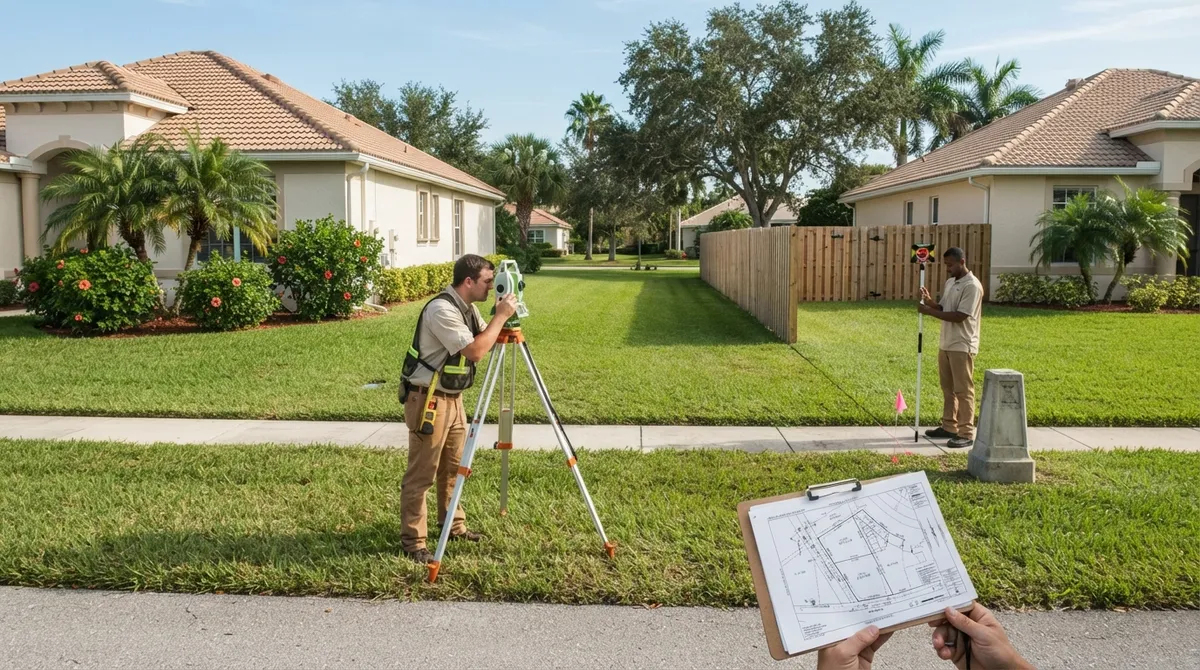
Before anything else, figure out whether your address sits inside the City of Naples or in unincorporated Collier County. Mailing addresses can say "Naples" for both, so don't trust the envelope.
Why it matters: the application, the submittal method, and the exemptions all differ. Filing with the wrong office costs you days you didn't plan to lose.
- Check your property appraiser parcel record for the taxing jurisdiction.
- Look at your tax bill or recent closing documents.
- When in doubt, call the building department with your parcel number.
Not sure? Our team confirms jurisdiction every day across all 67 Florida counties, and our building department lookup tool can point you in the right direction. You can also read how City of Naples and Collier County permits differ for another project type.
2. Know the City of Naples Fence Exemption (and Its Limits)
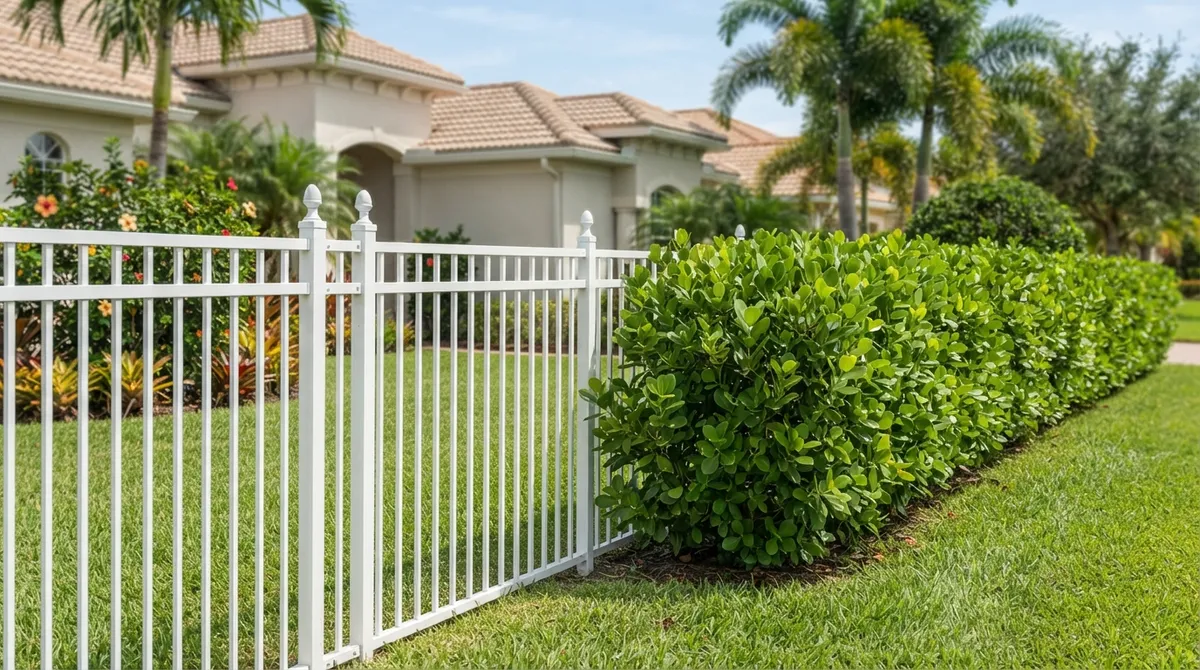
Here's some good news. The City of Naples published checklist says a fence under 50 feet long generally does not require a permit, unless it forms part of a swimming pool or spa safety barrier.
But "no permit" doesn't mean "no rules." An exempt fence must still comply with City Code 56-37. That means height, placement, and materials still count.
- Under 50 feet and not a pool barrier: generally exempt from a permit.
- Part of a pool or spa barrier: permit required, no matter the length.
- Always exempt or not: follow the City's code on height and location.
Small projects are where homeowners get surprised by code enforcement later. If you're even a little unsure, a quick call to the city or to a permitting pro is cheap insurance.
3. Gather the Right Documents for a City of Naples Application
Preparation is half the battle. The City's published materials call for a specific package, and showing up complete is how you avoid the dreaded resubmittal loop.
- Permit application completed in full.
- Acknowledgment of Naples regulations signed.
- Boundary survey with the proposed fence location marked using Xs.
- Fence details such as height, material, and any pool-barrier specifications.
That survey detail is a classic stumbling block. The City says to mark the fence location with Xs, and highlighting is not accepted. The survey should also show any public easements on the lot.
4. What the City Application Will Ask You
The City of Naples application asks for practical specifics. Having these answers ready speeds everything up.
- Fence material (wood, vinyl, aluminum, masonry, and so on).
- Total linear footage.
- Setbacks from property lines.
- Whether the fence will serve as a pool barrier.
- Gate details, including whether any gate is motorized.
If you're adding a motorized gate, the City requires an electrical subcontractor to be listed on the application. That's a detail plenty of first-timers miss, and it can hold up an otherwise clean submittal.
5. Understand City of Naples Fees
Let's talk money, because everyone wants to know. The City's published checklist lists a $100 fence permit fee, plus a plan-review fee equal to 20% of the permit fee.
| Fee Item | Published Amount | Notes |
|---|---|---|
| Fence permit fee | $100 | Per City of Naples checklist |
| Plan-review fee | 20% of permit fee (about $20) | Added to the permit fee |
| Estimated base total | About $120 | Before any extra approvals |
Fees and forms change, so always verify the current schedule with the City before filing. Extra approvals, such as right-of-way permits, can add cost and time.
6. Mind the Height Limits
Height is where a lot of beautiful fence designs run into reality. The City of Naples application lists limits that depend on where the fence sits on the lot.
| Fence Location | Published Height Limit |
|---|---|
| Side and rear yards | Up to 6 feet |
| Front yard, within the building envelope | Up to 6 feet |
| Front yard, outside the building envelope | Up to 3 feet |
Chain-link fencing is also restricted in front yards, with stated exceptions. Zoning district and site conditions can change how these limits apply, so confirm the rules for your specific lot before you finalize a design or sign a contract.
For unincorporated Collier County, fences must meet the height requirements of the applicable zoning district and property type. Your zoning designation drives the answer.
7. Unincorporated Collier County: What the County Wants to See
If your property is outside the city limits, Collier County's Wall/Fence permit requirements apply instead. The county's process centers on a clear site plan and fence details.
- Site plan showing the fence location.
- Gate locations and swing directions.
- Height and materials for the proposed fence.
- Fence details showing construction and design.
Think of the site plan as the story of your fence on paper. Reviewers should be able to look at it and instantly understand what's being built and where. If you'd like help turning a sketch into something a reviewer approves, our site plan services are built for exactly that.
8. Septic Systems Add a 5-Foot Rule
Many Collier County properties run on septic, and that changes the fence math. For properties on septic, the county page cites a minimum 5-foot separation between the fence and the septic system, referencing Florida Administrative Code 62-6.005(2).
Before you finalize your fence line, locate your tank and drain field. A fence that crosses that buffer can be flagged during review or, worse, after installation.
- Find your septic permit or as-built records.
- Mark the tank and drain field on your site plan.
- Keep the fence at least 5 feet from the system.
9. Easements Can Make or Break Your Fence
Easements are the quiet deal-breakers. Utility and drainage easements exist so crews and water can move freely, and permanent structures generally don't belong in them.
In the City of Naples, work in a public drainage or utility easement may require a right-of-way permit and letters of no objection. The checklist states permanent structures are not permitted in public drainage or utility easements. A fence or wall that encroaches into a platted utility easement or City right-of-way may be subject to removal at the owner's expense.
In Collier County, fences proposed in drainage easements may require an easement-use submittal. That package can include:
- A letter of no objection from the HOA.
- The recorded plat.
- The recorded deed.
Read your survey carefully for easement lines. Catching this early saves you from tearing out a brand-new fence later.
10. Pool Barriers Follow Their Own Rules
A fence around a pool or spa isn't just a privacy feature. It's a safety barrier, and that changes the permitting picture. Even a short fence under 50 feet needs a permit in the City of Naples when it's part of a pool or spa barrier.
Expect to provide pool-barrier specifications, and expect extra scrutiny on gates, latches, and heights. If your project also involves the pool itself, our guide to pool permits in Naples is a helpful companion read.
11. Submit Electronically and Prepare Your PDFs First
The City of Naples directs applicants to submit permit applications through its public online portal. The City's application guide recommends preparing complete PDF documents before you start.
A smooth electronic submittal usually looks like this:
- Scan or export your survey, marked with Xs, as a clean PDF.
- Complete and sign the application and acknowledgment.
- Add fence details and any pool-barrier specs.
- Gather any easement or right-of-way letters if they apply.
- Upload everything together and track the status in the portal.
Incomplete uploads are one of the most common reasons for delays. If a reviewer comments on your file, you'll want to respond fast and accurately. Our guide on resubmitting plans in Florida explains how that process works.
12. Know When to Call in a Permitting Pro
Plenty of fence permits are straightforward. But some situations really benefit from an extra set of experienced hands, especially for busy contractors and anyone on a deadline.
| Situation | Why Help Pays Off |
|---|---|
| Fence near an easement or right-of-way | Letters and extra approvals add steps |
| Pool or spa barrier | Specific specs and added scrutiny |
| Property on septic | 5-foot separation must be shown on plans |
| Fence already built without a permit | Needs after-the-fact legalization |
| Multiple jobs for a contractor | Tracking and revisions eat crew time |
Already built a fence without a permit? Don't panic. It happens more often than you'd think, and it's fixable. Check out our guide on after-the-fact fence permit mistakes to avoid and our overview of legalizing unpermitted work in Florida.
At 1 Contractor Solutions, we act as Florida's outsourced permitting department. We confirm the right jurisdiction, prepare the documents, file the application, track it, and work through reviewer comments. Our drafting and engineering are in house, so fixes don't wait on an outside consultant. You can see what customers say when you visit us on Google — 1 Contractor Solutions.
Quick Reference: City vs. County at a Glance
| Topic | City of Naples | Unincorporated Collier County |
|---|---|---|
| Permit exemption | Fences under 50 ft (not pool barriers) | Confirm with county; submit site plan |
| Key document | Boundary survey marked with Xs | Site plan with gates, height, materials |
| Height guidance | 6 ft side/rear; 3 ft front outside envelope | Per zoning district and property type |
| Easement handling | Right-of-way permit and no-objection letters | Easement-use submittal with HOA letter, plat, deed |
| Septic note | Check site conditions | 5-ft minimum separation from septic |
Final Thoughts
A fence permit in Naples really comes down to three things: knowing your jurisdiction, submitting a complete package, and respecting height, easement, septic, and pool-barrier rules. Get those right and your project glides through. Miss one and you could be redoing paperwork, or worse, redoing a fence.
Don't let paperwork slow down a project you're excited about. If you'd like a pro to confirm your jurisdiction, prepare your survey and site plan, and handle the filing, reach out today and get a free quote. We respond within 30 minutes, day or night, and we're glad to help. For more tips, you can also follow us on LinkedIn or follow us on Facebook, and if you're building out your own online presence, the folks at Brain Buzz Marketing can help you get found.
FAQs
Do I need a permit to install a fence in Naples, Florida?
Usually, yes, but it depends on where you live. The City of Naples says fences under 50 feet generally don't need a permit unless they're part of a pool or spa barrier, while unincorporated Collier County has its own submittal process. Either way, the fence still has to follow local code.
How much does a fence permit cost in the City of Naples?
The City's published checklist lists a $100 permit fee plus a plan-review fee equal to 20% of that amount, so about $120 as a base. Fees can change, so double-check the current schedule before you file.
What documents do I need for a Naples fence permit?
For the City of Naples, plan on a permit application, a signed acknowledgment of regulations, and a boundary survey with the fence location marked with Xs. Collier County asks for a site plan showing the fence, gates and swing, height, materials, and fence details.
What are the fence height limits in Naples, FL?
The City of Naples application lists up to 6 feet in side and rear yards and in front yards within the building envelope, and up to 3 feet in front yards outside the building envelope. Collier County limits depend on your zoning district, so confirm your zoning first.
Can I build a fence in a drainage or utility easement?
Generally, no. The City of Naples says permanent structures aren't permitted in public drainage or utility easements, and Collier County may require an easement-use submittal with an HOA no-objection letter, plat, and deed. A fence in the wrong spot can be removed at the owner's expense, so check your survey first.
We do this work every day across all 67 Florida counties. Call (866) 314-6931 and we will tell you what your situation actually requires — including when you do not need us.
Related services
Permit Facilitation & Filing
You have a crew scheduled, a client asking for dates, and a permit sitting somewhere in a queue you cannot see. We file it, w…
See the servicePlan Review Coordination
A permit in plan review is not one queue. On a commercial project it can be six queues, each with its own reviewer, its own c…
See the serviceReady to get your permit moving?
One call tells you which jurisdiction controls your project, what it will take, and what it will cost. Most of the time we can scope it on the phone.