
Blog
How to Handle Unpermitted Work You Found as a Florida Buyer
Found unpermitted work after buying in Florida? Follow this friendly step-by-step guide to verify permits, fix compliance, and protect your investment.
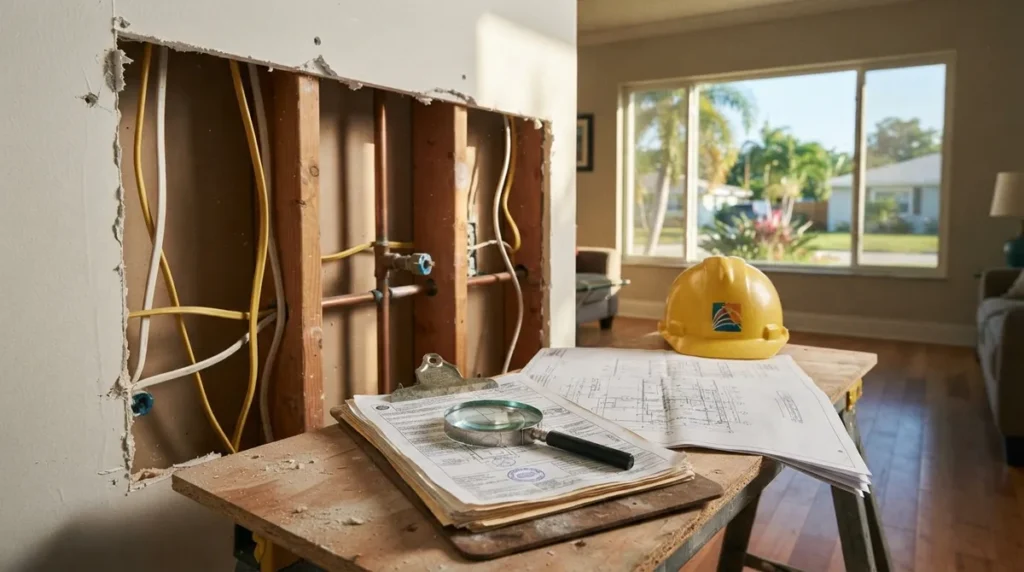
Key Takeaways
-
Document everything immediately, including the seller disclosure, inspection report, listing photos, contract addenda, and all communications, since these records matter for any later dispute.
-
Confirm which building department has jurisdiction over your exact address, because the county and a city may control permitting differently, and city-line properties can be confusing.
-
Pull the property's permit history and check for missing permits, open permits, expired permits, and applications that were never finalized, since each requires a different next step.
-
Ask the building department in writing whether after-the-fact permits are allowed, what plans or engineering reports are required, whether concealed work must be exposed, and what fees and penalties apply.
-
As the new owner, you may be responsible for resolving code violations even if a prior owner did the work, so contact the department promptly, ideally before closing.
-
Treat the permitting fix and the seller-disclosure question as separate tracks, and consult a Florida real estate attorney about any potential claim before assuming you have one or do not.
You finally got the keys, or maybe you are just days from closing, and then it happens. A home inspector, an appraiser, or a neighbor mentions that the screened lanai, the converted garage, or the shiny new kitchen was never permitted. Your stomach drops. Take a breath. A buyer who found unpermitted work in Florida is in a far more common situation than you might think, and there is almost always a path forward.
This guide walks you through exactly what to do, in order, so you can move from panic to a plan. We will cover how to verify permit history, who actually has authority over your property, how after-the-fact permitting generally works, and how to separate the permitting problem from the seller-disclosure question. We will keep it friendly and practical, because you do not need more stress right now.
One quick note before we dive in: rules, fees, and procedures vary a lot by jurisdiction, so treat this as a roadmap rather than legal advice. Ready? Let's get your plan in place.
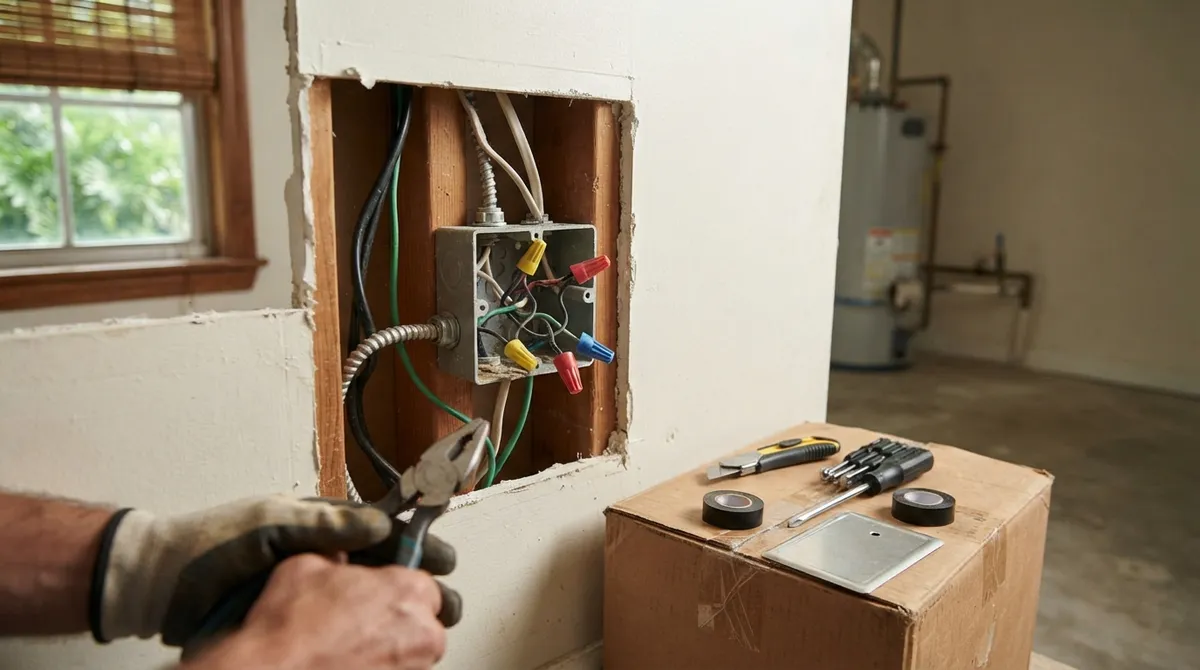
Why Unpermitted Work Matters to Florida Buyers
Florida law generally requires a permit before covered construction, alteration, repair, or demolition begins. That requirement comes from Florida Statutes §553.79, and your local building department administers permits and inspections. When work skips that process, nobody verified that it meets code at the time it was built.
That matters to you as the new owner for several practical reasons:
- Safety: Unpermitted structural, electrical, plumbing, or roofing work may not meet code, and no inspector ever confirmed it.
- Compliance: The current owner may be the one who has to resolve a code violation, even when a prior owner did the work.
- Insurance: Do not assume unpermitted improvements are covered. Ask your insurer directly.
- Financing and resale: Lenders, appraisers, and future buyers may flag the same issue you did.
The good news? Unpermitted does not automatically mean unfixable, and it does not automatically mean demolition. The local authority decides the correction path, and a qualified professional can help you assess what you actually have.

Step 1: Slow Down and Document Everything
Before you call anyone, gather your paper trail. If a dispute ever comes up, good records are your best friend. Preserve these items right away:
- The seller disclosure form, if you received one.
- The original listing, including photos and descriptions of the improvements.
- Your home inspection report and any appraisal.
- The purchase contract and any addenda.
- Emails, texts, and notes from conversations with the seller, agents, and inspectors.
- Your own dated photos of the work in question.
Store everything in one folder, digital or physical. It will make every later conversation faster, whether that is with a building department, a contractor, or an attorney.
Step 2: Identify the Building Department With Jurisdiction
Here is a trap that catches a lot of Florida buyers: the county is not always the right office. Florida has 67 counties, but permitting authority is not uniform statewide. Inside city limits, a municipal building department may control your property, and procedures differ from one to the next.
Property near a city line can be especially confusing. Confirm the authority for your exact address before you spend time on forms. Our building department lookup tool can help you point to the right office, and our guide on which Florida jurisdiction reviews my project explains why this step matters so much.
Step 3: Pull the Property's Permit History
Next, request the permit history for the property and compare it with what you can actually see. This is the heart of the investigation. You are looking for gaps between the visible improvements and the permit record.
Here is what to check for:
- Missing permits: Visible work with no matching permit on file.
- Open permits: Permits that were pulled but never closed out.
- Expired permits: Permits that lapsed before final inspection.
- Unfinished approvals: A permit application alone does not prove the work passed inspection or was finalized.
Try our open permit search tool as a starting point, and note that records can differ between agencies. If you discover an open permit instead of a missing one, our article on an open permit found at closing walks through that variation.
Quick Reference: What You Might Find
| Finding | What It Means | Typical Next Step |
|---|---|---|
| No permit on record | Work may have been done without approval | Ask about after-the-fact permitting |
| Open permit | Permit pulled, never finalized | Complete inspections and close it out |
| Expired permit | Permit lapsed before final | Ask the department about reinstatement or a new permit |
| Permit applied for only | No proof of inspection or approval | Confirm status with the building department |
Step 4: Ask the Building Department the Right Questions
Once you know who has jurisdiction, contact them and ask for their requirements in writing. A friendly, curious tone goes a long way. Ask for the department's checklist, fee schedule, and any violation-resolution steps. Specifically ask:
- Does your jurisdiction allow an after-the-fact or retroactive permit for this type of work?
- What plans, as-built drawings, or engineering reports will you require?
- Will any concealed work need to be exposed for inspection?
- What fees and penalties apply?
- Is there an open code case on the property?
No reliable statewide fee or penalty amount for after-the-fact permits exists, so do not trust a number you read online without checking locally. Fees, documentation, inspections, and penalties vary by jurisdiction and project scope. For a sense of the factors involved, see our breakdown of after-the-fact permit cost in Florida.
Step 5: Understand How After-the-Fact Permitting Works
Many Florida jurisdictions allow an after-the-fact permit, sometimes called a retroactive permit, but approval is never automatic. The exact process depends on your local agency, yet it generally looks like this:
- Application: The owner applies through the local permitting process.
- Documentation: You provide plans or as-built drawings showing what was actually built.
- Engineering, when required: Structural, electrical, plumbing, roofing, or other complex work may need plans or reports prepared or sealed by a Florida-licensed architect or engineer.
- Inspections: The local inspector evaluates the work, and concealed elements may need to be opened up.
- Corrections: Any deficiencies must be fixed before the permit can be closed.
- Final approval: The permit is closed once the work passes.
If this sounds like a lot, that is because it can be. The upside is that a clean, well-prepared package tends to move more smoothly. For a deeper walk-through, read how to get an after-the-fact permit in Florida and our overview of unpermitted work in Florida and how to legalize it.
Common Documents You May Need
| Document | Purpose | Who Usually Prepares It |
|---|---|---|
| As-built drawings | Show what was actually constructed | Drafter or design professional |
| Structural engineer letter or plans | Verify structural adequacy | Florida-licensed engineer |
| Site plan | Show placement and setbacks | Drafter or surveyor |
| MEP documentation | Verify electrical, mechanical, and plumbing work | Licensed MEP engineer or licensed trade contractor |
If you need drawings, these service pages can help you understand the options: as-built drawings, engineer letters, and after-the-fact and expired permit services.
Step 6: Handle the Compliance Piece Quickly
Here is the part that surprises many buyers. Once you own the property, you may be the one responsible for resolving an outstanding code violation, even if a prior owner performed the work. That is why timing matters. Contact the local building department promptly after discovery, ideally before closing if you are still in your option period.
If the building department has already issued a notice, do not ignore it. Our guides on how to respond to a Florida unpermitted work notice and code compliance violations can help you respond calmly and correctly. And if a prior owner skipped permits, here are some steps to follow if a prior owner skipped permits in Florida.
Step 7: Treat the Seller-Disclosure Question Separately
It is natural to wonder whether the seller should have told you. This is a legal question that is separate from permitting, and the answer depends on the facts. In general, Florida case law requires a seller to disclose known facts that materially affect a residential property's value and are not readily observable. Whether a particular seller knew about and failed to disclose unpermitted work is fact-specific.
Here is how to keep the two tracks separate:
- Permitting track: Fix the property with the building department. This is about code compliance.
- Legal track: Evaluate any potential claim with a Florida real estate attorney. This is about disclosure and remedies.
Your preserved records from Step 1 will matter here. Do not assume you have a claim, and do not assume you do not. A short consultation with an attorney can clarify your options. For more on the disclosure side, see what disclosures are required for unpermitted work in Florida.
Step 8: Decide Whether to Fix, Renegotiate, or Walk
Your best move depends on where you are in the transaction. Here is a simple comparison:
| Where You Are | Possible Options | Helpful Consideration |
|---|---|---|
| Still under contract | Negotiate repairs, price adjustment, or credit; request seller to permit; or terminate if your contract allows | Review your contract's inspection and financing contingencies with your agent or attorney |
| Closing is imminent | Seek an extension to gather permit information | Ask whether any escrow arrangement is workable; see how to handle escrow for a Florida after-the-fact permit |
| Already closed | Start the after-the-fact process and consult an attorney about disclosure | Act promptly and keep records |
If you are mid-transaction and a lender is involved, unpermitted work can sometimes cause delays. Our article on how to fix a Florida closing held up by unpermitted work offers ideas, and real estate pros may appreciate our realtor closing support page.
Step 9: Have the Work Evaluated by a Qualified Professional
Please do not guess whether the work is safe or acceptable. A qualified contractor or design professional can assess what was built and tell you what the local authority is likely to require. For structural concerns, a Florida-licensed engineer may need to review and seal documentation. Our structural engineering and MEP engineering teams handle exactly this kind of review.
Not sure whether you will need to open walls? It depends on the work and the jurisdiction, and concealed work can require exposure for inspection. Our piece on whether you will really have to demolish unpermitted work helps set realistic expectations.
Common Types of Unpermitted Work Buyers Discover
Certain improvements show up again and again in Florida homes. Here is a quick look at the usual suspects and what they may involve:
- Additions and enclosures: Often need structural and site documentation. See steps to legalize an existing addition.
- Garage conversions: May involve egress, electrical, and use-related review.
- Roofs: Often require product approvals and inspections. Read about an unpermitted roof in Florida.
- Electrical and plumbing: Can raise safety questions. See facts about unpermitted electrical work.
- Pools and pool cages: Frequently permitted separately from the house.
- Kitchen and bath remodels: Learn more about an unpermitted kitchen remodel.
Avoiding Common Buyer Mistakes
A few missteps can make a manageable situation harder. Try to avoid these:
- Ignoring the issue and hoping nobody notices.
- Assuming the work must be torn out without asking the building department.
- Hiring an unlicensed person to quietly patch it up.
- Throwing away inspection reports, listing photos, or messages.
- Mixing up the permitting fix with the legal disclosure question.
- Relying on a fee estimate from another city or county.
Keep in mind that a rushed, incomplete submission can slow things down. For more on pitfalls, check out unpermitted work mistakes Florida owners should avoid and what to know about penalties for building without a permit in Florida.
How 1 Contractor Solutions Can Help
If you are staring at a stack of unfamiliar forms, you do not have to figure this out alone. 1 Contractor Solutions works as Florida's outsourced permitting department, serving all 67 counties. We can identify the controlling jurisdiction, prepare as-built drawings and sealed engineering through our in-house team, file and track the application, and coordinate reviewer comments through approval and closeout.
We respond within 30 minutes, day or night, and se habla español. You can read feedback from other clients on our reviews page, or visit us on Google — 1 Contractor Solutions to see what customers say. You can also follow us on LinkedIn and follow us on Facebook for Florida permitting tips throughout 2026.
For the statute that underpins all of this, you can review Florida Statutes Section 553.79 on the Florida Legislature website.
Your Action Checklist
Here is a quick recap you can screenshot and keep handy:
- Document everything: disclosures, inspection reports, listings, and communications.
- Identify the building department that actually has jurisdiction.
- Request and review the property's permit history.
- Ask the department for its written checklist, fees, and violation steps.
- Learn whether after-the-fact permitting is available for your situation.
- Have the work assessed by a qualified contractor or Florida-licensed design professional.
- Consult a Florida real estate attorney about disclosure questions.
- Choose whether to negotiate, fix, or walk based on your stage in the transaction.
Final Thoughts
Finding unpermitted work as a Florida buyer is stressful, but it is rarely the end of the road. With a calm, step-by-step approach, you can understand what you have, learn what your local department requires, and move toward a clean, closed permit record. The key is acting early, keeping good records, and getting accurate local guidance.
Ready for help with the technical side? We would love to hear about your situation, so reach out to get a free quote and let our team map out your fastest path to compliance.
FAQs
What should I do first if I find unpermitted work after buying a house in Florida?
Start by gathering your documents, then identify which building department has jurisdiction over your exact address. From there, request the permit history and ask that office for its written checklist and fee schedule. It is a manageable process when you take it one step at a time.
Can a Florida buyer get an after-the-fact permit for work done by a previous owner?
Often, yes, but approval is never automatic and the process varies by jurisdiction. You will typically apply through your local building department, provide plans or as-built documentation, pass inspections, and correct any deficiencies. Some work may also need sealed engineering.
Does a Florida seller have to disclose known unpermitted renovations?
Florida case law generally requires sellers to disclose known facts that materially affect a home's value and are not readily observable. Whether that applies to your situation depends on the facts, so keep your records and talk with a Florida real estate attorney about any potential claim.
How much does an after-the-fact permit cost in Florida?
There is no reliable statewide fee or penalty amount, so costs vary by city, county, and project scope. Fees, documentation, inspections, and any penalties are set locally, so ask your building department for its current fee schedule before budgeting.
Will the building department make me open walls to inspect unpermitted work?
It depends on the type of work and the local jurisdiction. Concealed work, like framing, wiring, or plumbing, may need to be exposed so an inspector can verify it. A qualified contractor or design professional can help you anticipate what your department is likely to require.
We do this work every day across all 67 Florida counties. Call (866) 314-6931 and we will tell you what your situation actually requires — including when you do not need us.
Related services
Permit Facilitation & Filing
You have a crew scheduled, a client asking for dates, and a permit sitting somewhere in a queue you cannot see. We file it, w…
See the servicePlan Review Coordination
A permit in plan review is not one queue. On a commercial project it can be six queues, each with its own reviewer, its own c…
See the serviceReady to get your permit moving?
One call tells you which jurisdiction controls your project, what it will take, and what it will cost. Most of the time we can scope it on the phone.