
Blog
How to Self-Report Unpermitted Work in Florida (2026)
Learn how to self-report unpermitted work in Florida, apply for an after-the-fact permit, and avoid costly delays with this friendly 2026 guide.
Key Takeaways
-
There is no statewide office for self-reporting unpermitted work in Florida; start by contacting the local building department with jurisdiction over your property.
-
Confirm whether your property is in a municipality or unincorporated county, since applying to the wrong office wastes time and fees.
-
Request the after-the-fact permit checklist, current fee schedule, and any code enforcement instructions in writing to avoid outdated information.
-
Disclosing unpermitted work does not legalize it; only a permit, plan review, inspections, and final approval bring the work into compliance.
-
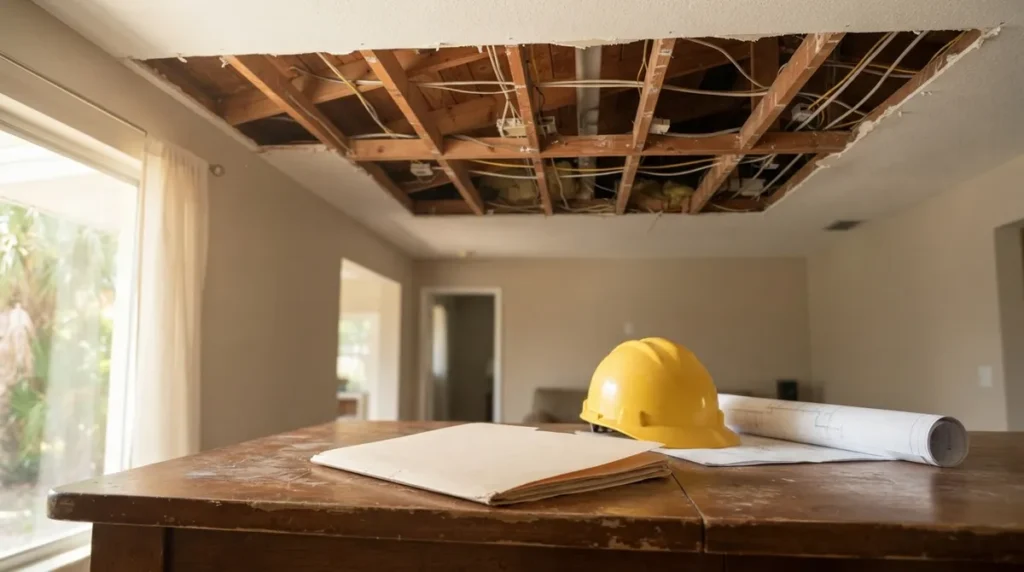
Concealed work may require opening walls or ceilings for inspection, so confirm with the agency before assuming an engineer's report will substitute.
-
Self-reporting on your own timeline gives more control over documentation and professionals than waiting for a sale, insurance claim, or code notice.
So you just found out that a deck, a re-roof, a garage conversion, or some wiring in your Florida property was built without a permit. First, take a breath. You are far from alone, and there is a path forward. Maybe a home inspector flagged it, maybe you bought the house and discovered it later, or maybe you did the work yourself and now want to make things right. Whatever brought you here, wanting to come clean is a smart move.
Here is the part that surprises people: there is no single statewide office where you self report unpermitted work in Florida. Permits are handled by your local building department, and the process for fixing unpermitted work varies by city and county. In this guide, we will walk through what self-reporting really means, how the after-the-fact permit process works, what documents you may need, and how to avoid the mistakes that slow people down. Whether you are a homeowner, a general contractor, a solar installer, or a real estate professional, you will find practical steps you can use right away.
What Does It Mean to Self-Report Unpermitted Work in Florida?
When people say they want to self-report, they usually mean they want to voluntarily contact the building department and bring unpermitted work into compliance before someone else forces the issue. It is not a formal statewide program, and it does not come with a guarantee of leniency.
Florida Statutes section 553.79 generally requires a permit from the appropriate local enforcing agency before covered construction, alteration, repair, or demolition begins, unless an exception applies. The local building department, not a state office, administers permits and inspections.
So in practice, self-reporting looks like this:
- Identifying which jurisdiction controls your property
- Contacting that building department to ask about its after-the-fact (sometimes called legalization) process
- Applying for a permit for work that is already built
- Passing review and inspections to get the work approved and closed out
Important reality check: disclosing the work does not approve or legalize it. The permit, plan review, inspections, and final approval are what bring the work into compliance. If you want to see how this plays out in detail, our guide on how to legalize unpermitted work in Florida goes deeper.

Step 1: Find Out Which Jurisdiction Controls Your Property
This sounds simple, but it trips up a lot of people. Your mailing address may say one city while your property actually sits in unincorporated county territory, or the other way around. Applying to the wrong office wastes time and can add fees.
Start by confirming whether your property is inside a municipality or in unincorporated county. You can use our free building department lookup tool to point you in the right direction. Our article on which Florida jurisdiction reviews my project explains the common pitfalls near city lines.
Once you know who has jurisdiction, ask for three things in writing:
- The current after-the-fact permit checklist
- The current fee schedule
- Any instructions for properties with an open code enforcement case or notice
Getting these in writing protects you from outdated information, which is common because local procedures change.
Step 2: Check for Open Permits, Notices, or Violations
Before you submit anything, find out whether there is already a record on the property. An open code enforcement case changes the process, and so does an expired permit from a prior project.
Run a quick search using our open permit search tool, then call the building department to confirm. If you discover a prior owner left things unfinished, you are not stuck. We cover that exact situation in 4 steps if a prior owner skipped permits in Florida.
If there is an active notice of violation, deadlines may apply. Respond promptly and keep copies of every communication. Our guide on code compliance violations can help you understand what to expect.
Step 3: Understand How After-the-Fact Permitting Works
An after-the-fact permit is simply a permit applied for once the work is already in place. The building department treats the work as if it were new, which means it must meet the Florida Building Code and any local requirements.
That means the agency may:
- Review plans, as-built drawings, or other documentation
- Require inspections of the finished work
- Order corrections where something does not meet code
- Withhold final approval until requirements are met
Here is a quick look at how this differs from a standard new-construction permit:
| Factor | Standard Permit | After-the-Fact Permit |
|---|---|---|
| Timing | Applied for before work starts | Applied for after work is built |
| Inspections | Done at each construction stage | Done on completed work; concealed items may need exposure or documentation |
| Documents | Plans and application | Application plus as-builts, possible engineer reports |
| Fees | Standard fee schedule | Varies by jurisdiction; may include added fees |
| Risk | Low | Corrections may be required |
No statewide fee amount or uniform timeline exists. Costs and processing depend on the local jurisdiction and the project itself. For a closer look at pricing factors, see our breakdown of after-the-fact permit costs in Florida.
Step 4: Gather the Right Documents
Requirements are project-specific, but most after-the-fact submittals include some combination of the following:
- The appropriate permit application for the type of work
- As-built drawings showing what was actually constructed
- A survey or site plan
- Product information, such as window, door, or roofing product approvals
- Reports or signed-and-sealed documents from a Florida-licensed architect or engineer
This is where having professional drafting and engineering support makes a real difference. Clean, accurate as-built drawings and a properly sealed engineer letter can be the difference between a smooth review and weeks of back-and-forth. If you want to understand the sealed documentation piece, read is a sealed drawing required for after-the-fact permits.
Some jurisdictions also prefer or require a Notice of Commencement. For example, Indian River County's published procedure states that a Notice of Commencement is preferred with the application and must be submitted before the first inspection when job value exceeds $2,500. That is one county's rule, not a statewide standard, so confirm what applies to you. Our overview of the Notice of Commencement in Florida explains the basics.
Step 5: Prepare for Inspections, Including Concealed Work
Here is where homeowners get nervous: what if the work is hidden behind drywall, under a roof, or inside a slab?
Concealed work can be difficult to inspect. Depending on the jurisdiction, the building department may:
- Require portions of walls, ceilings, or other assemblies to be opened for inspection
- Accept professional inspection and testing documentation where its rules allow
- Require certification from a Florida-licensed design professional for certain structural work
Do not assume a contractor letter or engineer report will substitute for an inspection. Always confirm with the agency first. Indian River County, for instance, calls for inspection and certification by a Florida-licensed design professional for certain concealed structural work, but that is only an example of local variation.
Want to know what to expect on inspection day? We walk through it in what happens during a Florida after-the-fact site inspection.
Step 6: Check for Other Local Approvals and Separate Trades
Building review is only part of the picture. Depending on the work and the jurisdiction, you may also need approvals from:
- Planning and zoning
- Public works or engineering
- Environmental health (for septic-related work)
- Utilities
- Flood zone or floodplain review
You may also need separate permits for individual trades, such as electrical, plumbing, mechanical, or roofing work. A single unpermitted remodel can easily involve several of these at once. If you are dealing with a major project, our guides on unpermitted electrical work and unpermitted roofs in Florida cover trade-specific issues.
Common Types of Unpermitted Work (and Who Usually Needs Help)
Different audiences run into different situations. Here is a snapshot of what we see most often:
| Who You Are | Typical Unpermitted Work | Why It Comes Up |
|---|---|---|
| Homeowner | Additions, enclosed patios, kitchen or bath remodels | Work done by a prior owner or an unlicensed handyman |
| General contractor | Work completed without a pulled permit, or permits that expired | Subcontractor missed filing or project closed without final |
| Solar company | Installations missing structural or electrical sign-off | Rushed installs or incomplete documentation |
| Real estate professional | Unpermitted work found during inspection or appraisal | Closing is delayed or a lender requires resolution |
| Designer or specialty trade | Missing sealed drawings or MEP documentation | Gaps between design and filing |
What Happens If the Work Does Not Meet Code?
This is the question everyone worries about but few people ask out loud. If the finished work does not meet the Florida Building Code, the building department can require corrections before it will approve the permit. In some cases, that means repairing or upgrading portions of the work. In more serious cases, it can mean removing noncompliant work.
The good news is that many projects can be brought into compliance with targeted fixes, supported by the right engineering. A structural engineer can evaluate existing conditions and recommend practical corrections, which is often far less drastic than people fear. For a realistic look at this, read will you really have to demolish unpermitted work.
Why Self-Reporting Sooner Is Usually Better
There is no promise that voluntarily coming forward will reduce fees or penalties, because local rules vary. Still, acting on your own timeline usually beats waiting for a surprise. Here is why:
- Selling: Unpermitted work can complicate a sale, delay closing, or trigger lender or title concerns. See how a permit hold can delay a Florida closing.
- Insurance: Unpermitted or expired permits can create problems when you file a claim. Read about expired permits and insurance claims in Florida.
- Safety: Permits and inspections exist to confirm that electrical, structural, and life-safety elements are sound.
- Control: Choosing your moment lets you hire the right professionals and prepare documentation without the pressure of a deadline.
If you are curious about what is at stake, our article on the penalty for building without a permit in Florida explains the range of consequences.
A Simple Game Plan to Self-Report and Resolve Unpermitted Work
Here is a straightforward roadmap you can follow:
- Document what exists. Take photos, note dates if known, and gather any receipts or contractor information.
- Confirm jurisdiction. Verify whether your property sits in a city or unincorporated county.
- Search for existing records. Check for open permits, expired permits, or code cases.
- Request the after-the-fact checklist. Ask the building department for current requirements and fees in writing.
- Prepare as-builts and engineering. Get accurate drawings and any needed sealed reports.
- File the application. Submit the permit application and supporting documents as directed.
- Schedule inspections and respond to comments. Address corrections promptly and resubmit as needed.
- Close out the permit. Obtain final approval and keep the paperwork for future sales or insurance needs.
If that feels like a lot, you are not wrong. It is a process with many moving parts, and each Florida jurisdiction has its own quirks. That is exactly why many people choose to bring in help.
How 1 Contractor Solutions Can Help
At 1 Contractor Solutions, we act as Florida's outsourced permitting department. We handle after-the-fact and expired permits across all 67 Florida counties, and we have filed in more than 400 municipalities. Our drafting and engineering are in house, and our own engineer signs and seals the work, so when a reviewer flags something, we fix it without waiting on an outside consultant.
Here is what that looks like for you:
- We identify the jurisdiction that actually controls your property
- We prepare as-builts, site plans, and sealed engineer letters
- We file and track your after-the-fact permit and handle revisions and resubmittals
- We coordinate through plan review and inspections to closeout
- We support realtor and closing situations where time matters
If you are facing a stop work order, a denial, or a closing that is slipping, our urgent permit rescue service is built for exactly that. You can also see what other clients say by visiting our 1 Contractor Solutions profile on Google, or follow us on Facebook and follow us on LinkedIn for permitting tips.
Final Thoughts: Coming Clean Is the First Step to Peace of Mind
Discovering unpermitted work feels stressful, but remember: wanting to resolve it properly already puts you ahead. There is no one-size-fits-all statewide process to self report unpermitted work in Florida, so the key is working with your local building department, preparing solid documentation, and meeting code through inspections. Disclosure alone does not legalize anything, but a completed permit and final approval do.
The sooner you start, the more options you have, and the less likely you are to be caught off guard by a sale, an insurance claim, or a code notice. You do not have to figure it out alone. If you are ready to move forward, reach out and get a free quote from our team. We respond within 30 minutes, day or night, and se habla español.
FAQs
How do I report unpermitted work on my Florida property?
There is no single statewide reporting office, so you start by contacting the building department that has jurisdiction over your property. Ask for its after-the-fact permit checklist, fee schedule, and instructions. Then apply for a permit for the existing work and be ready for review and inspections.
Does self-reporting unpermitted work protect me from fines in Florida?
Not automatically. Self-reporting is not a statewide program and does not guarantee leniency, and fees or penalties vary by city and county. Coming forward on your own, though, usually gives you more control and time than waiting for a code enforcement notice.
Will I have to open walls or ceilings to get an after-the-fact permit?
Possibly. If the work is concealed, the building department may require portions of walls or ceilings to be exposed, or it may accept professional inspection and testing documentation where its rules allow. Always confirm with the agency before assuming an engineer's report will replace an inspection.
What documents do I need for an after-the-fact permit in Florida?
It depends on the project and the jurisdiction, but submittals often include the permit application, as-built drawings, a survey or site plan, product information, and signed-and-sealed documents from a Florida-licensed architect or engineer. Get the current written checklist from your building department so you know exactly what to prepare.
Can unpermitted work affect selling or insuring my Florida home?
Yes, it can. Unpermitted work may delay a closing, raise lender or title concerns, or complicate an insurance claim. Resolving it before you list or file a claim helps keep things moving smoothly.
We do this work every day across all 67 Florida counties. Call (866) 314-6931 and we will tell you what your situation actually requires — including when you do not need us.
Related services
Permit Facilitation & Filing
You have a crew scheduled, a client asking for dates, and a permit sitting somewhere in a queue you cannot see. We file it, w…
See the servicePlan Review Coordination
A permit in plan review is not one queue. On a commercial project it can be six queues, each with its own reviewer, its own c…
See the serviceReady to get your permit moving?
One call tells you which jurisdiction controls your project, what it will take, and what it will cost. Most of the time we can scope it on the phone.