
Blog
14 Facts About Unpermitted Electrical Work Florida
Learn what unpermitted electrical work in Florida means, the penalties involved, and how after-the-fact permits fix it fast and safely.
Key Takeaways
-
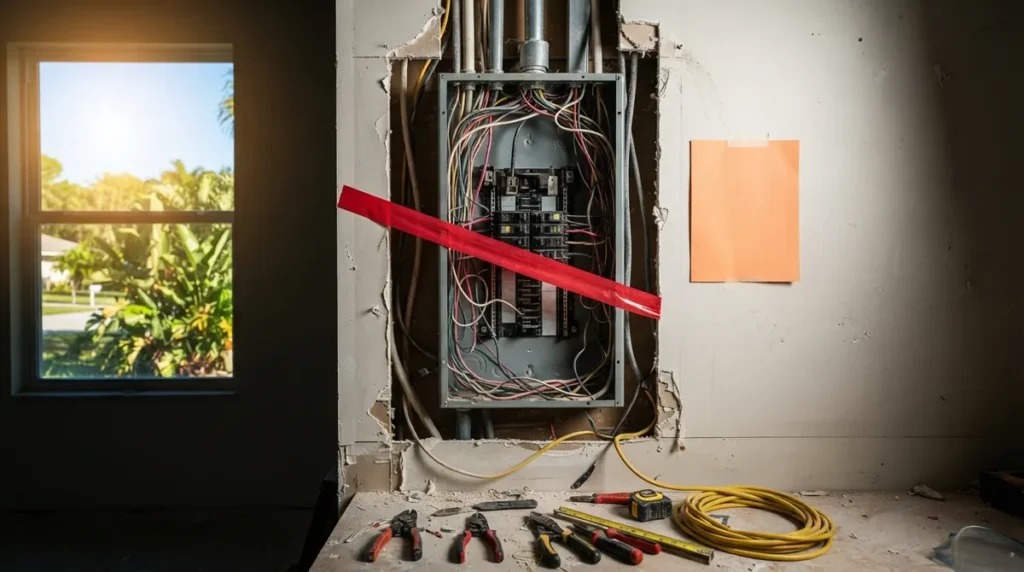
Florida allows penalties up to twice the normal permit cost for work started without a permit under Statutes 553.80, and building officials can issue immediate stop-work orders freezing entire projects until violations are corrected and inspections passed.
-
Permit requirements and exemptions vary significantly by county and city; Miami-Dade, Broward, Tampa, and Orlando have different rules, so verify requirements with your specific local building department rather than assuming statewide consistency.
-
After-the-fact permitting is the standard resolution for unpermitted electrical work and requires as-built drawings, licensed contractor documentation, and inspections that may require opening walls to verify concealed wiring, grounding, and connections.
-
Unpermitted electrical work discovered during home sales, insurance reviews, or solar interconnections can delay or cancel closings and complicate insurance claims, making upfront permit history checks and early legalization essential for real estate transactions.
If you've ever flipped a light switch and wondered whether the wiring behind that wall was ever inspected, you're not alone. Unpermitted electrical work Florida homeowners discover during a renovation, home sale, or insurance inspection is one of the most common headaches we help clients untangle. It's also one of the easiest problems to fix once you know the right steps.
Whether you're a general contractor who inherited a job with questionable wiring history, a solar installer trying to get a clean interconnection approval, a realtor with a closing on the line, or a homeowner who just found out grandma's sunroom addition never had inspections, this guide is for you. We're walking through everything you need to know about permits, penalties, and the after-the-fact process, Florida-style, with a friendly hand on your shoulder the whole way.
1. Electrical Permits Are Required in Almost Every Florida Jurisdiction
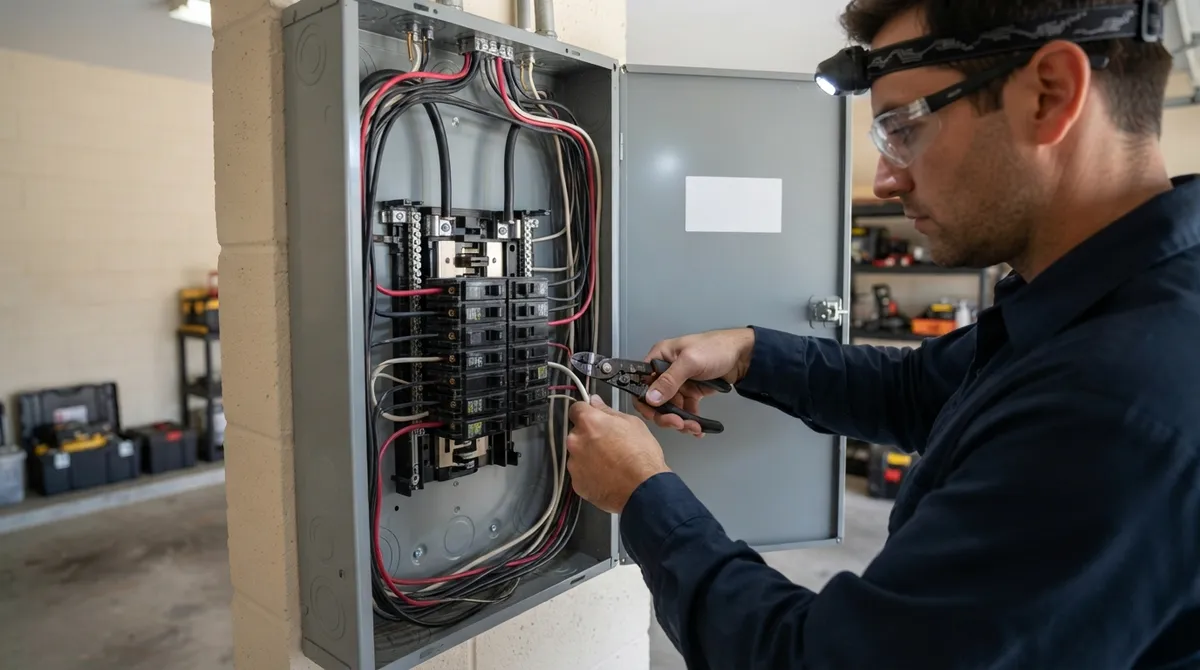
In Florida, most electrical installations, alterations, repairs, and replacements need a permit before work begins. This applies whether you're wiring a new addition, upgrading a panel, or adding circuits for a pool heater. Miami-Dade County, for example, states plainly that an electrical permit exists to make sure the work is done safely and correctly, and that principle holds true across nearly all 67 counties.
2. Permit Rules Are Local, Not Statewide
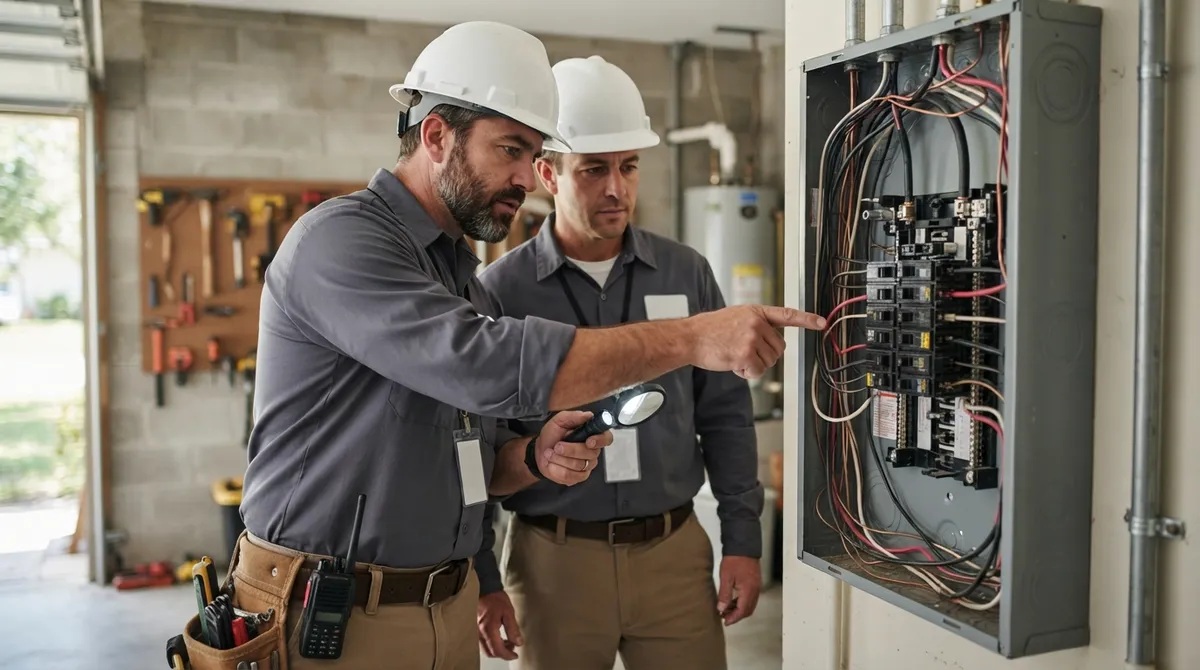
Here's the part that trips people up: Florida doesn't have one single rulebook for electrical permitting. Each city or county building department sets its own application process, plan requirements, inspection schedule, and exemption list. That means requirements in Miami-Dade County can look different from Broward County, Tampa, Orlando, or Jacksonville. If you're not sure which building department actually has jurisdiction over your property, our building department lookup tool is a great place to start.
3. Starting Work Without a Permit Can Double Your Fees
Florida Statutes section 553.80 gives local enforcement agencies the authority to charge an additional fee of up to twice the normal permit cost when work started before a permit was obtained. That penalty is jurisdiction-dependent, but it's real, and it adds up fast on larger electrical projects like service upgrades or full rewires.
4. Stop-Work Orders Can Halt Your Entire Project
When a building official discovers unpermitted electrical work, they can issue a stop-work order on the spot. Everything freezes until the proper permit is obtained, plans or documentation are submitted, violations are corrected, and inspections are passed. For general contractors juggling subcontractor schedules, this is exactly the kind of delay that eats margin and patience.
Common Triggers for Discovery
- A home inspection during a real estate sale
- An insurance company reviewing a claim
- A neighbor complaint or code enforcement sweep
- A permit pulled for an unrelated remodel that exposes old wiring
- A solar interconnection review that flags an unpermitted panel upgrade
5. Plenty of Everyday Projects Require Permits You Might Not Expect
Many property owners are surprised by how broad the permit requirement really is. Common examples of work that typically needs a permit include:
- New circuits or panel upgrades
- Electrical service changes
- Whole or partial home rewiring
- Hardwired lighting installations
- Generator installations
- EV charger installations
- Pool or spa electrical work
- Electrical changes tied to a remodel
- New outlets or switches when existing wiring is modified
6. Exemptions Exist, But They're Narrow and Location-Specific
It's tempting to assume that if a small job was exempt in one county, it's exempt everywhere. That assumption can get you in trouble. Here's a quick comparison of how a few Florida jurisdictions handle exemptions:
| Jurisdiction | Example Exemption | Key Condition |
|---|---|---|
| Miami-Dade County | Limited repairs by licensed electrical contractor | Valued at $500 or less; certain 120V/20A switch and receptacle swaps |
| Hillsborough County | Low-voltage work in existing single-family homes | Total labor and materials under $5,000 |
| City of Miami | Bulb and identical switch/receptacle replacement | No modification to existing wiring; portable generators 5kW or less |
Notice that pool electrical equipment repairs, even minor ones, still require a permit in Miami-Dade. That's the kind of detail that catches people off guard, which is exactly why checking with the actual authority having jurisdiction matters more than relying on general assumptions.
7. The $7,500 Exemption Doesn't Automatically Cover Electrical
Florida law includes a single-family-residence exemption for certain non-structural work valued below $7,500. However, local governments can still require permits for electrical, plumbing, structural, mechanical, or gas work regardless of that dollar threshold. Don't let a rough project estimate convince you a permit isn't needed. Verify it first.
8. After-the-Fact Permitting Is the Standard Fix
If electrical work was completed without the required permit, most jurisdictions offer a path called after-the-fact permitting. It typically involves:
- Submitting an application identifying the completed work
- Providing permit drawings or as-built plans showing what was installed
- Supplying licensed-contractor information
- Including engineering documentation where required
- Opening walls or ceilings if concealed wiring can't be visually verified
- Passing one or more inspections before final approval
This is exactly the kind of project our team handles daily. We prepare the as-built drawings, coordinate with licensed electricians, and manage the entire after-the-fact and expired permit process from start to finish.
9. Sometimes Walls Have to Come Open
If an inspector can't visually confirm the wiring, grounding, connections, and overcurrent protection, they may require opening portions of finished walls or ceilings. It's not fun news to deliver, but it's far better to know upfront than to be surprised mid-inspection. Requirements vary by jurisdiction, so having someone who knows the local inspector's expectations saves real time.
10. Licensed Contractors Face Real Professional Risk
Florida Statutes section 489.531 prohibits licensed contractors from commencing or performing work that requires a permit when no permit is in effect. Violations can lead to disciplinary action under Florida's contractor licensing laws. For general contractors managing multiple crews and subcontractors, this is one more reason permit tracking needs to be airtight, not an afterthought.
11. Unpermitted Work Creates Real Estate and Insurance Headaches
Beyond code enforcement, unpermitted electrical work can cause:
- Failed home inspections during a sale
- Delayed or canceled closings
- Difficulty securing homeowners insurance
- Trouble restoring utility service after a disconnection
- Inaccurate property records that follow the home for years
Realtors and title companies dealing with this on a deadline often reach out for realtor and closing support because a stalled closing over a $200 electrical permit fee feels absurd, but it happens more often than you'd think.
12. Solar Projects Have Their Own Electrical Permit Layer
Solar companies face a double challenge: the panel installation itself and the electrical interconnection work behind it. An unpermitted panel upgrade discovered mid-solar-project can stall interconnection approval for weeks. Coordinating MEP engineering documentation upfront, before submission, helps avoid this exact scenario, and it's a big part of why solar contractors partner with permitting specialists rather than handling filings solo.
13. A Local Permitting Partner Makes the Process Far Less Stressful
Here's the honest truth: you don't have to become a permitting expert overnight. A Florida permitting-service provider can identify the correct authority having jurisdiction, pull permit history, prepare the after-the-fact application, coordinate licensed electrical contractors and engineers, schedule inspections, and respond to correction notices. At 1 Contractor Solutions, we do this across all 67 counties, with in-house sealed drawings so corrections happen fast instead of bouncing between outside consultants. We serve homeowners in St. Petersburg, Bradenton, and Tampa just as readily as general contractors managing multi-property portfolios statewide.
14. Checking Permit History Before You Buy or Build Saves Money Later
Whether you're a real estate investor eyeing a fixer-upper or a homeowner planning a kitchen remodel that touches existing wiring, checking permit history first is smart money. Our open permit search tool helps you see what's on file before you commit to a purchase or start demolition. It's a small step that prevents a very large surprise down the road.
Quick Reference: What to Do If You Suspect Unpermitted Electrical Work
| Step | Action |
|---|---|
| 1 | Identify the correct local building department |
| 2 | Search existing permit records for the property |
| 3 | Hire a licensed electrical contractor to assess the installation |
| 4 | Prepare as-built drawings or plans if required |
| 5 | Submit the after-the-fact permit application |
| 6 | Complete required corrections and inspections |
We've walked hundreds of Florida property owners through this exact sequence, and it almost always goes smoother than people fear once there's a clear plan. You can read more about the broader process in our guide on how to legalize unpermitted work in Florida.
For additional background on Florida's statutory framework, the Florida Statutes on contractor licensing offer helpful context, and county-level guidance like Hillsborough County's permit exemption page is worth bookmarking if you're managing multiple properties.
You Don't Have to Untangle This Alone
Unpermitted electrical work Florida properties carry doesn't have to derail your renovation, your closing, or your solar installation timeline. With the right documentation, the right licensed professionals, and a permitting partner who knows exactly which jurisdiction to work with, most situations resolve faster than people expect. Our team has guided general contractors, solar companies, realtors, and homeowners through this process for over 15 years, and we genuinely enjoy turning a stressful permit situation into a solved one. If you want to see how our clients feel about working with us, check out 1 Contractor Solutions reviews on Google, or follow us on Facebook for updates on Florida permitting changes. You can also follow us on LinkedIn for industry insights. Ready to get your electrical permit situation sorted out the right way? Request your free quote today, and let's get your project back on track.
FAQs
Do I need a permit for electrical work in Florida?
In almost every case, yes! Florida generally requires a permit before you install, alter, repair, or replace electrical systems, unless a specific local exemption applies. Since exemptions vary so much by county, it's always worth double-checking with your local building department before you start.
What happens if electrical work was done without a permit in Florida?
The building department can issue a stop-work order, and you may face an additional fee of up to twice the normal permit cost under Florida Statutes section 553.80. The good news is there's a clear fix: an after-the-fact permit application gets you back on the right track.
How do I get an after-the-fact electrical permit in Florida?
You'll typically submit an application, provide as-built drawings or plans, supply licensed-contractor information, and pass inspections that may require opening concealed areas. It sounds like a lot, but a permitting professional can walk you through each piece so it feels much more manageable.
Can I sell a Florida home with unpermitted electrical work?
You can, but it often creates complications during inspections, appraisals, or closing, and buyers or their insurers may ask questions. Many sellers choose to resolve the permit issue before listing so the sale moves smoothly without last-minute surprises.
Can unpermitted electrical work be grandfathered in?
Generally, no. Florida jurisdictions typically require after-the-fact permitting rather than grandfathering unpermitted electrical work, since safety verification is the whole point of the inspection process. The friendly news is that legalizing it is usually very achievable once you have the right documentation.
We do this work every day across all 67 Florida counties. Call (866) 314-6931 and we will tell you what your situation actually requires — including when you do not need us.
Related services
Permit Facilitation & Filing
You have a crew scheduled, a client asking for dates, and a permit sitting somewhere in a queue you cannot see. We file it, w…
See the servicePlan Review Coordination
A permit in plan review is not one queue. On a commercial project it can be six queues, each with its own reviewer, its own c…
See the serviceReady to get your permit moving?
One call tells you which jurisdiction controls your project, what it will take, and what it will cost. Most of the time we can scope it on the phone.