
Blog
How to Handle Escrow for a Florida After-the-Fact Permit
Confused about escrow held for a Florida after-the-fact permit? Learn how it works, who controls the funds, and how to get your permit closed.
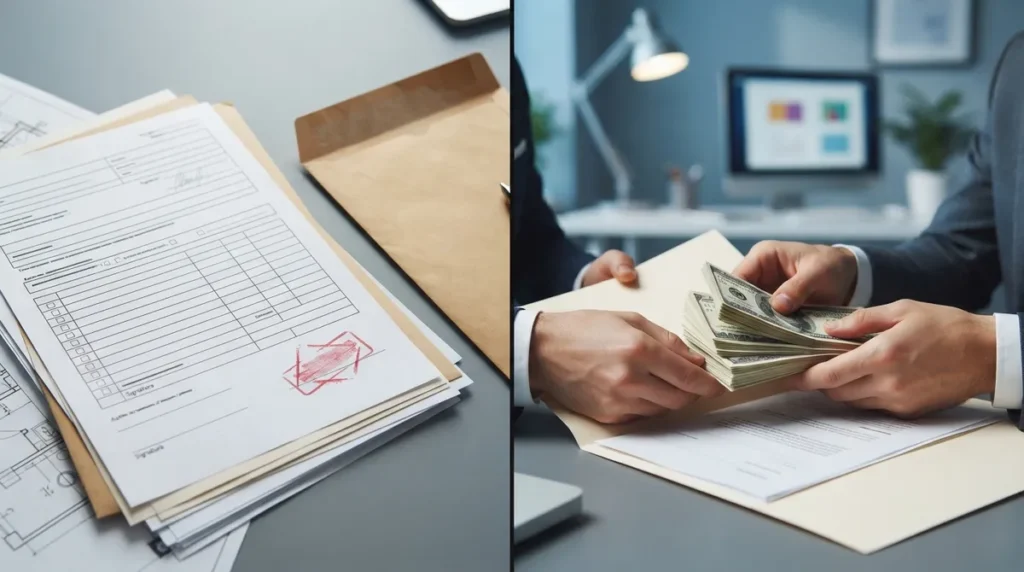
Key Takeaways
-
Florida has no single statewide after-the-fact permit escrow program; instead, escrow can mean either a private title company closing holdback or a separate local government escrow account with different rules and purposes.
-
Escrow held for an after-the-fact permit is a financial guarantee only—it does not equal an approved permit, and the permit must be fully finalized and closed by the building department before escrow release typically occurs.
-
Escrow amounts should cover permit fees, after-the-fact penalties (often 2-3x standard rate), professional engineering/drafting fees, corrective construction costs, exploratory work, and a contingency buffer—never rely on guesswork without a written scope of work.
-
Every Florida county has different after-the-fact permit fees and requirements; for example, Seminole County doubles standard fees while Orange County requires a $150 initial escrow deposit, so always verify locally before closing.
-
If corrective work costs exceed the escrow holdback amount, the escrow agreement must clearly specify who covers the shortfall (usually the seller) before closing, otherwise this becomes a post-closing legal dispute.
-
Engage a permitting professional and request sealed as-built drawings before the closing date, not after, to avoid weeks of delays and ensure the local building department's actual documentation requirements are met from the start.
If you've ever gotten to the closing table and heard the words "we need to hold money in escrow for that permit issue," you know exactly how fast a happy moment can turn into a stressful one. Take a breath — you're not alone, and this situation is far more common than most buyers, sellers, and even seasoned contractors realize. Unpermitted work shows up in Florida real estate transactions all the time, and escrow is simply the tool everyone reaches for to keep the deal moving while the permit gets sorted out.
Here's the good news: escrow held for an after-the-fact permit isn't some scary, mysterious statewide rule you have to decode on your own. It's a practical financial safety net, and once you understand how it actually works, you'll feel a lot more confident walking into that closing (or that renovation, or that permit application). Whether you're a general contractor trying to keep a project on schedule, a Realtor trying to save a sale, or a homeowner who just found out grandma's old sunroom was never permitted, this guide will walk you through what escrow really means here, who holds it, how much it usually takes, and what has to happen before that money gets released.
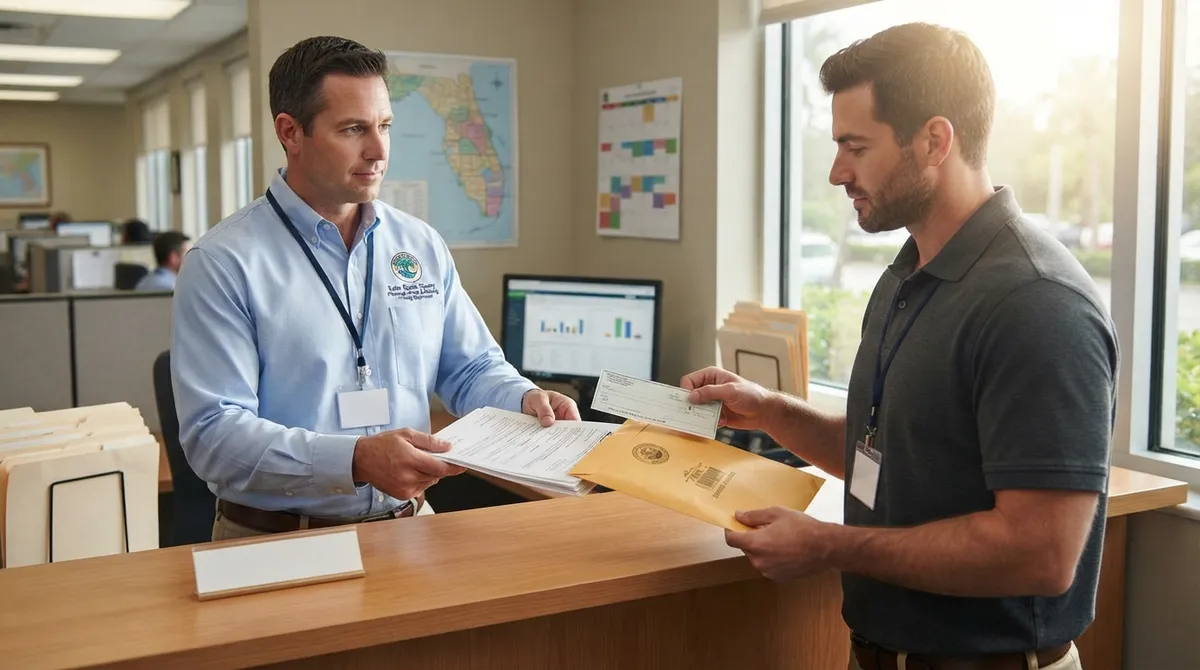
What "Escrow Held for an After-the-Fact Permit" Actually Means in Florida
Let's clear up the biggest point of confusion right away: there is no single, statewide Florida program called "after-the-fact permit escrow." Instead, the phrase usually points to one of two very different things, and mixing them up is where a lot of stress (and wasted phone calls) comes from.
- Real estate closing holdback: Money set aside by a title company, closing attorney, or escrow agent at the time of sale to fund the resolution of an unpermitted improvement.
- Local government escrow account: A jurisdiction-specific account, sometimes tied to impact fees or permit administration, that a county or city uses as a financial guarantee before it will issue or finalize a permit.
Both use the word "escrow," but they serve different purposes and answer to different rules. A title company holdback is a private contractual arrangement between the buyer, seller, and escrow agent. A county impact-fee escrow, on the other hand, is a government process governed by that county's own fee resolution. Confusing the two — or assuming one automatically satisfies the other — is a common and costly mistake.
Why Escrow Comes Up in the First Place
Florida law generally requires a permit before you construct, alter, repair, modify, or demolish regulated building work, per Florida Statutes §553.79(1)(a). When a home inspection, appraisal, or title search reveals that a pool enclosure, kitchen remodel, or electrical panel upgrade was never permitted, everyone involved wants a way to keep the transaction moving without ignoring the problem. Escrow is that bridge. It doesn't fix the permit issue itself — it simply guarantees that money will be available to fix it later.

Real Estate Escrow Holdback vs. Local Government Escrow: A Side-by-Side Look
| Feature | Real Estate Closing Holdback | Local Government Escrow Account |
|---|---|---|
| Who controls the funds | Title company, closing attorney, or escrow agent named in the closing agreement | The county or city building/finance department, per local resolution |
| Purpose | Fund permit resolution, penalties, corrective work, professional fees | Secure payment of impact fees or permit-related administrative charges |
| Governed by | Private contract between buyer, seller, and escrow agent | Local ordinance or fee resolution (varies by jurisdiction) |
| Typical amount | Based on scope of work, penalty estimates, and contingency reserve | Set by published fee schedule (example: Orange County's $150 initial deposit) |
| Release trigger | Permit finalized, inspections passed, agreed-upon conditions met | Disbursed per agreement, often within days of a written fee notice |
Because these two systems don't automatically talk to each other, it's smart to confirm expectations with both your closing professional and the local building department before you assume a holdback covers everything the county might require.
How the After-the-Fact Permit Process Actually Works
An after-the-fact permit is essentially a way to legalize construction that already happened without the proper paperwork. Every Florida jurisdiction handles the fine details a little differently, but the general roadmap looks like this:
- Disclose the unpermitted work. This usually happens during a home inspection, a code enforcement complaint, or a title search ahead of closing.
- Gather documentation. As-built plans, site plans, photographs, contractor information, and sometimes sealed engineering drawings are needed to show what was actually built.
- Submit the after-the-fact application. The specific form, fee, and required attachments vary by city or county — there's no single statewide form.
- Pay applicable fees and penalties. Some jurisdictions double the standard fee; others apply flat penalties. Seminole County, for example, lists an after-the-fact variance fee at double the standard rate, though it may be reduced at the division manager's discretion.
- Complete required inspections. If concealed work (like framing or wiring) can't be visually verified, exploratory demolition or additional documentation may be required.
- Finalize and close the permit. Only once the permit is fully approved and closed does the underlying issue actually get resolved — escrow release usually depends on this final step.
This is exactly the kind of multi-step process where having an experienced team matters. After-the-fact and expired permit specialists know which documentation each jurisdiction actually wants, which saves you from submitting the wrong thing and starting the clock over.
What If the Work Is Already Covered Up?
This is one of the most common — and most anxiety-inducing — questions homeowners and Realtors ask. If drywall, concrete, or siding is already hiding the work in question, the building department may require exploratory demolition (sometimes called a "reveal") to verify code compliance. In some cases, sealed engineering documentation and photographic evidence from the original installer can substitute for tearing things open, but that's entirely up to the reviewing jurisdiction.
How Much Should Be Held in Escrow?
There's no magic formula, but a well-structured escrow holdback typically accounts for several cost categories. Getting this number wrong — too low — is one of the biggest reasons deals stall mid-process.
| Cost Category | What It Covers |
|---|---|
| Permit and penalty fees | Application fee, after-the-fact penalty (often 2–3x standard rate), plan review fees |
| Professional fees | Engineering, architectural drafting, or as-built drawing preparation |
| Corrective construction | Repairs needed to bring the work up to current code |
| Exploratory work | Demolition or inspection access if concealed work can't be verified visually |
| Contingency reserve | Buffer for unexpected findings once the permit review begins |
A written scope of work — ideally reviewed by whoever is preparing your as-built drawings or handling your engineer letters — helps everyone agree on a realistic number before funds get locked up. The escrow agreement should also spell out who controls the funds, the deadline for resolving the permit, the exact release conditions, and what happens if costs run over the deposit.
Local Fee Examples Worth Knowing
Because escrow and after-the-fact fees are set locally, it helps to see real numbers from actual Florida counties. These are current published figures, though you should always verify with the jurisdiction directly since fee resolutions change.
- Seminole County: After-the-fact variance fee is double the standard variance fee, plus double fees for additional variances (may be reduced at the division manager's discretion). The county also lists an annual escrow-account administration fee of $1 per request or payment.
- Orange County: Permit escrow deposit accounts require a $150 initial deposit and a $32 annual fee.
- Palm Beach County: Impact-fee escrow agreements typically require the escrow agent to disburse funds within 10 days of receiving the county's written notice of the amount due.
These examples show just how different one county's process can look from another — which is exactly why confirming details with the specific Florida county handling your project is so important. Whether your property sits in Hillsborough County, Pinellas County, or Palm Beach County, the rules for after-the-fact permits and any related escrow will be locally specific.
When Does Escrow Get Released?
Escrow release almost always hinges on the permit being fully finalized — not just submitted or "in review." That typically means:
- The after-the-fact application has been approved
- All required fees and penalties have been paid
- Every required inspection has passed
- The building department has officially closed or finalized the permit
An escrow holdback itself does not equal a permit, an approval, or a passed inspection — it's simply a financial guarantee that the resolution will happen. Until the permit is closed, the underlying compliance issue technically still exists, even with money sitting safely in an account somewhere.
What Happens If Costs Exceed the Escrow Amount?
This is where a well-written agreement really earns its keep. If corrective work, engineering, or penalties end up costing more than what's held in escrow, the agreement should specify who covers the shortfall — typically the seller, unless negotiated otherwise. Without that language spelled out in advance, this can turn into a legal headache well after closing has already happened.
Who Should Be Involved in Resolving the Permit
Because after-the-fact permitting touches legal, financial, and technical issues all at once, it really does take a team. Here's who typically plays a role:
- Closing attorney or title company — structures the escrow agreement and controls the holdback funds.
- Local building department — determines application requirements, fees, and inspection needs.
- Permitting and engineering professionals — prepare as-built drawings, sealed engineering documents, and handle the actual filing and follow-up with reviewers.
- Realtor or real estate agent — coordinates timelines and keeps the transaction moving without overpromising what escrow can cover.
This is exactly the kind of coordination that 1 Contractor Solutions handles every day across all 67 Florida counties. Our in-house drafting and engineering team prepares sealed drawings, files the application, tracks it through review, and works every reviewer comment until the permit is closed — which is the milestone that actually triggers escrow release. If you're a Realtor trying to save a closing, a homeowner staring down a code violation, or a general contractor picking up someone else's unfinished mess, our realtor and closing support team and permit facilitation and filing specialists can help you move from "stuck" to "closed" much faster than trying to figure it out solo.
Practical Tips for a Smoother Escrow-to-Permit Process
- Never assume a real estate escrow holdback satisfies a county's separate impact-fee or permit escrow requirement — confirm both independently.
- Ask for a written scope of work before agreeing to an escrow amount, so the number reflects real costs, not guesswork.
- Request sealed as-built drawings early; many jurisdictions won't even review an after-the-fact application without them.
- Set a firm deadline in the escrow agreement so the permit issue doesn't linger indefinitely after closing.
- Loop in a permitting professional before the closing date, not after — it saves weeks of back-and-forth.
If you'd like to see how other Florida property owners and contractors have handled similar situations, visit us on Google — 1 Contractor Solutions and read through real client feedback. You can also follow us on LinkedIn or follow us on Facebook for regular updates on Florida permitting changes that affect escrow timelines and after-the-fact rules.
Bringing It All Together
Escrow held for an after-the-fact permit in Florida isn't a single rulebook — it's a flexible tool shaped by local building departments, closing agreements, and the specific unpermitted work involved. The permit itself still has to go through disclosure, documentation, fees, review, and inspection before anyone can call the issue resolved. Knowing that upfront takes a lot of the mystery (and the anxiety) out of the process.
Whether you're navigating this as a homeowner in Bradenton, a Realtor closing a deal in St. Petersburg, or a general contractor managing multiple projects across Tampa, the fastest path forward is getting the right documentation and the right team involved early. Our friendly, experienced staff at 1 Contractor Solutions is ready to review your situation, tell you exactly what your local jurisdiction requires, and carry the permit through to closeout — so that escrow money can finally go where it's supposed to. Reach out today to get a free quote and let's get your after-the-fact permit resolved together.
FAQs
What does escrow held for an after-the-fact permit mean in Florida?
It usually means money is being set aside — either by a title company at closing or by a local government — to guarantee that an unpermitted construction issue will get resolved. It's not a single statewide program, so the exact meaning depends on whether it's a private closing holdback or a county-specific escrow account, and it's always worth double-checking which one applies to you.
Can a Florida home sale close with an unresolved after-the-fact permit?
Yes, many closings move forward with an escrow holdback in place, as long as everyone agrees on the amount and the resolution plan. Just remember that escrow is a financial guarantee, not a substitute for actually getting the permit approved and closed with the local building department.
Who holds the escrow money for an unpermitted construction issue in Florida?
For real estate transactions, it's typically the title company, closing attorney, or a designated escrow agent named in the closing documents. For government-related escrow, like impact-fee accounts, the county or city itself controls the funds according to its own fee resolution.
How much should be held in escrow for an after-the-fact permit?
There's no fixed formula, but a solid estimate should cover permit fees, penalties, professional fees for drawings or engineering, possible corrective construction, and a contingency reserve for surprises. We always recommend getting a written scope of work first so the number reflects reality instead of a rough guess.
What happens if the cost of correcting unpermitted work exceeds the escrow holdback?
This really depends on what the escrow agreement says, so it's important to spell out responsibility for overages before signing anything. In most cases, the seller is expected to cover the shortfall, but without clear language in the agreement, this can turn into a frustrating dispute down the road.
We do this work every day across all 67 Florida counties. Call (866) 314-6931 and we will tell you what your situation actually requires — including when you do not need us.
Related services
Permit Facilitation & Filing
You have a crew scheduled, a client asking for dates, and a permit sitting somewhere in a queue you cannot see. We file it, w…
See the servicePlan Review Coordination
A permit in plan review is not one queue. On a commercial project it can be six queues, each with its own reviewer, its own c…
See the serviceReady to get your permit moving?
One call tells you which jurisdiction controls your project, what it will take, and what it will cost. Most of the time we can scope it on the phone.