
Blog
13 Unpermitted Work Mistakes Florida Owners Should Avoid
Found unpermitted work on your Florida property? Avoid these 13 common mistakes and learn the practical steps to legalize it the right way.
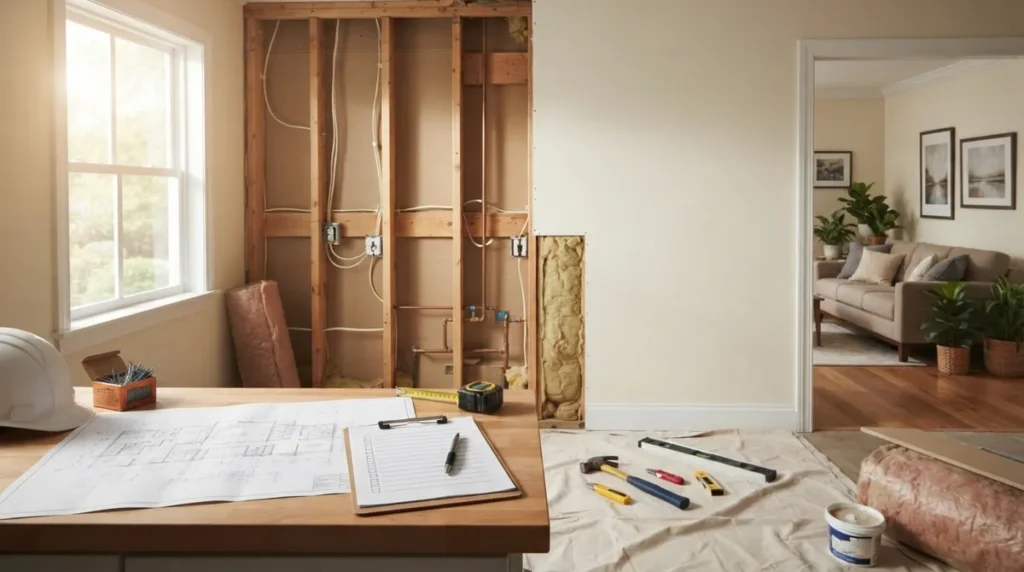
Key Takeaways
-
Contact your local building department immediately to understand their specific after-the-fact permit process, fees, and required documentation—do not assume statewide rules apply, as every Florida jurisdiction handles unpermitted work differently.
-
Before applying for an after-the-fact permit, pull your property's complete permit and inspection history to determine whether work was truly unpermitted or if old permits expired—these require different solutions.
-
Submitting an after-the-fact permit application does not automatically legalize the work; inspectors will still review and potentially require corrections, wall openings for concealed systems, or code compliance fixes before approval.
-
Address unpermitted work proactively on your own timeline rather than waiting for discovery during a sale, refinance, or code enforcement notice—early action gives you more control and typically costs less.
-
Do not panic and demolish unpermitted work immediately; most Florida work can be documented, inspected, and approved with modest corrections, potentially saving significant money versus full removal and rebuild.
-
If you received a code enforcement notice or violation, respond promptly to all deadlines and consider professional help for structural, electrical, or plumbing work rather than handling it alone.
So you just found out that the deck, the garage conversion, or the water heater swap at your Florida property never got a permit. First, take a breath. You are far from alone, and in most cases this is fixable. Florida building departments see after-the-fact situations every single day, and the path forward is usually a lot more manageable than the horror stories suggest.
That said, what you do next matters. The wrong move can turn a paperwork problem into a bigger, costlier one. If you are searching for property owner unpermitted work help Florida style guidance, this article walks you through the 13 most common mistakes owners make, and what to do instead. We will keep it friendly, practical, and grounded in how Florida's permitting system actually works in 2026.
One quick note before we dive in: permitting in Florida is local. There is no single statewide after-the-fact form or fee schedule. Your city or county building department controls the process, so always confirm details with them.
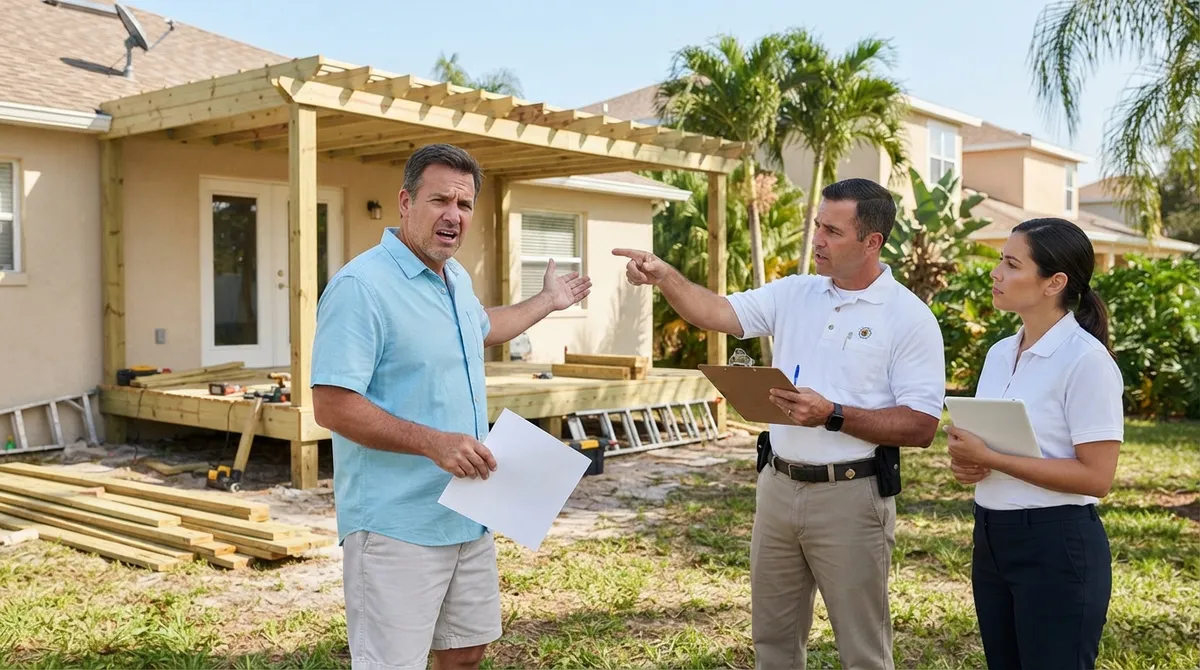
First, Understand How Florida Handles Unpermitted Work
Florida Statutes §553.79 generally requires a permit from the local enforcing agency before covered construction, alteration, repair, or demolition begins. The local building department, not a statewide office, decides how applications and inspections work. That is why two owners with similar problems can have very different experiences depending on the jurisdiction.
When work is already finished, most departments will let you apply for the permit type that would have been required originally, while disclosing that the work is complete. From there, they set the requirements. To see how this works in practice, our guide on how to get an after-the-fact permit in Florida is a helpful companion read.
| Question | Who Decides | What Varies |
|---|---|---|
| Is a permit required? | Local building department | Scope, value thresholds, exemptions |
| What documents are needed? | Local building department | Plans, photos, measurements, engineer letters |
| What does it cost? | Local building department | Fees and any additional charges for work begun without a permit |
| Must walls be opened? | Building official or inspector | Depends on concealed framing, wiring, plumbing |
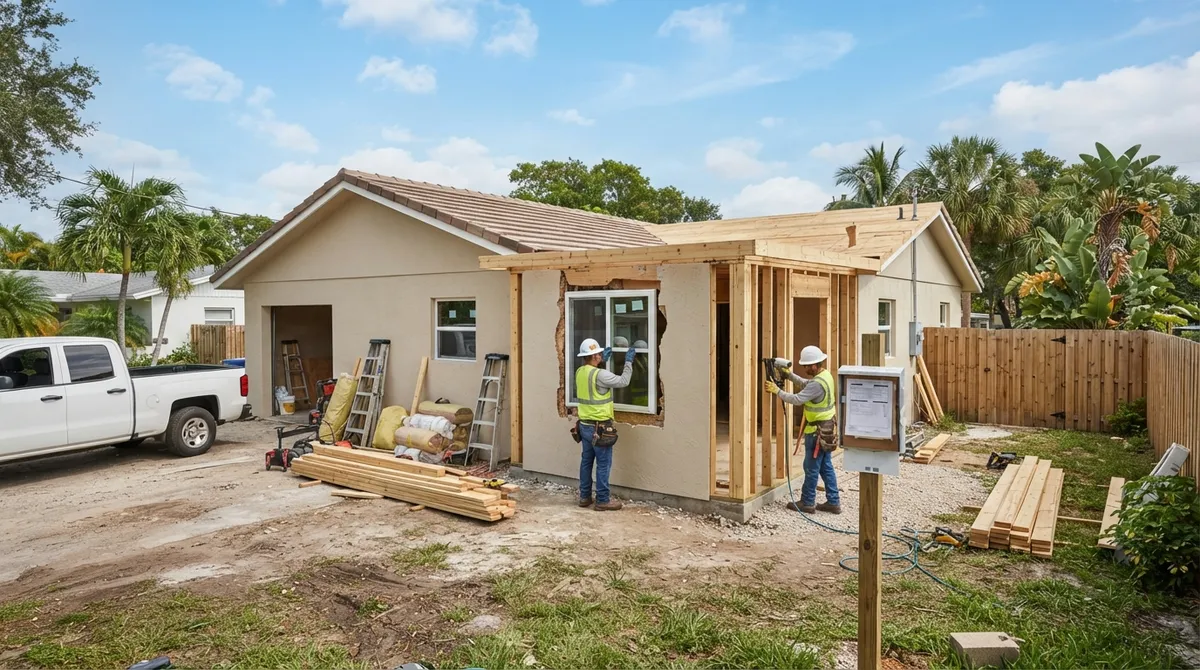
The 13 Mistakes (and What to Do Instead)
1. Ignoring the Problem and Hoping It Goes Away
Unpermitted work has a funny way of resurfacing. It shows up during a sale, a refinance, an insurance claim, or a neighbor complaint. Waiting rarely makes it cheaper or easier.
The better move is to get ahead of it. Identify the work, understand your jurisdiction, and start the conversation on your timeline rather than waiting for a notice.
2. Assuming There Is One Statewide Fix
Many owners search for a single Florida after-the-fact form or fee chart. It does not exist. Every city and county runs its own process, and penalty fees are set locally.
Start by confirming which building department actually has jurisdiction over your address. Near city lines, that is not always obvious. Our building department lookup tool can help you figure it out.
3. Skipping the Permit History Check
Before you change anything, find out what is already on record. Pull the property's permit and inspection history and compare it against the work that physically exists. You may discover open permits, expired permits, or work that was permitted but never closed.
Try our open permit search to get a head start. If you find an old permit that never closed, see our guide on how to close an expired permit in Florida.
4. Confusing Expired Permits with No Permit at All
These are two different problems with two different fixes. An expired permit means paperwork was started but never finished. Unpermitted work means there was never a permit. Treating one like the other wastes time and money.
If you are not sure which situation you are in, our breakdown of expired permit vs. after-the-fact will clear it up.
5. Assuming Applying Makes the Work Legal
Here is a point that catches people off guard. Submitting an application does not mean the work is compliant, and it does not close an existing violation. The department still has to review and inspect it.
If the work does not meet the Florida Building Code, you may need to correct it, add documentation, or remove and rebuild portions before approval. Go in with realistic expectations and you will be much less stressed.
6. Tearing Out the Work in a Panic
Some owners demolish everything the moment they discover it was unpermitted. That is often unnecessary. In many cases, the work can be documented, inspected, and approved, sometimes with modest corrections.
Before you grab a sledgehammer, read will you really have to demolish unpermitted work? You might save yourself a lot of money.
7. Refusing to Expose Concealed Work
An inspector cannot approve what they cannot see. If framing, electrical, plumbing, or other components are hidden behind drywall or ceilings, the authority may require openings so they can verify the work.
It feels like a hassle, but it is a normal part of the process. Plan for it, budget for patching, and keep your good humor. Drywall repair is the easy part of this journey.
8. Guessing at What Documents You Need
Every jurisdiction asks for different things. You might need plans, photographs, measurements, contractor information, or documentation from a Florida-licensed design professional. Guessing leads to rejections and resubmittals.
Ask the building department exactly what they require for your specific situation. For structural or system questions, an engineer letter or as-built drawings may be part of the package.
9. Assuming the Penalty Is Always Double
You may have heard that after-the-fact permits cost twice as much. Some departments do add extra fees for work begun without a permit, but the amount and process are local. Do not assume a fixed multiple applies everywhere.
Get the actual fee information from your jurisdiction. Our article on after-the-fact permit costs in Florida breaks down what tends to drive the price.
| Cost Driver | Why It Matters |
|---|---|
| Permit type and project value | Base fees are often tied to scope or valuation |
| Additional fees for work begun without a permit | Set locally, not statewide |
| Plans or engineering documentation | Professional drawings and letters add cost |
| Opening and repairing walls | Exposure for inspection plus patching |
| Corrections to meet code | Depends on what inspectors find |
10. Misreading the Under-$7,500 Exemption
A 2025 amendment reflected in §553.79 requires local governments that issue building permits to exempt an owner of a single-family dwelling, or the owner's contractor, from a permit for work valued at less than $7,500 on the owner's property. That is welcome news for small projects.
But do not treat it as a free pass. The exemption has terms, and other approvals may still apply. Confirm applicability with your local building department before relying on it.
11. Thinking a Sale Wipes the Slate Clean
If you bought a home and later found unpermitted work, there is some protection, but it is narrower than many people think. Section 553.79(17)(a) limits certain enforcement against an arms-length purchaser for value solely because a prior owner's permit was never closed. The agency keeps its rights against the owner and contractor listed on that permit.
It is not a general exemption for all unpermitted work or code violations. If you inherited a mess from a prior owner, our guide on what to do if a prior owner skipped permits walks through your options.
12. Waiting Until the Closing Table
Sellers, buyers, and agents all feel the squeeze when unpermitted work surfaces right before closing. Lenders, title companies, and insurers may flag it, and timelines can stretch fast.
The smarter play is to address it early. Our realtor and closing support exists for exactly this, and our article on open permits found at closing shows how it typically plays out.
13. Going It Alone When the Stakes Are High
Plenty of owners handle simple after-the-fact permits on their own, and that is perfectly fine. But if you have a violation notice, a stop work order, a failed inspection, or a pending sale, the process gets complicated quickly. Missed comments and incomplete packets can cost weeks.
This is where outside help earns its keep. Our after-the-fact and expired permit service is built for these situations, and if things are urgent, urgent permit rescue can help stabilize a stressful case.
A Simple Step-by-Step Path to Legalizing Unpermitted Work
Here is the practical sequence most Florida owners follow. Think of it as a roadmap rather than a rigid rulebook, since your jurisdiction sets the final steps.
- Identify the jurisdiction. Confirm which city or county building department controls your property.
- Review the permit history. Check for open, expired, or missing permits compared with the actual work.
- Document the work. Gather photos, measurements, dates, and any contractor details you have.
- Ask what they require. Request the specific after-the-fact process, fees, and documentation list.
- Prepare plans and engineering if needed. Use licensed professionals where the jurisdiction calls for sealed documents.
- Submit and respond to comments. Answer every reviewer question completely to avoid repeat rounds.
- Schedule inspections and correct issues. Expose concealed work if asked, and fix anything that falls short of code.
- Close out the permit. Get final approval so the record is clean for future sales or refinances.
For a deeper walkthrough, see 7 steps to legalize unpermitted work in Florida.
When Code Enforcement Gets Involved
Sometimes the first sign of trouble is a letter, not a discovery. If you received a notice, do not panic and do not ignore it. Deadlines matter, and responding promptly often gives you more room to work out a solution.
- Read the notice carefully and note every deadline.
- Contact the department listed to confirm what they need.
- Gather documentation before you call, so the conversation is productive.
- Consider professional help if the violation involves structural, electrical, or plumbing work.
Our code compliance and violations service handles these cases daily, and our guide on what to do after a code enforcement notice is a great place to start.
Why Local Knowledge Matters So Much
Because Florida's process is local, local experience pays off. A packet that sails through one jurisdiction may bounce in another. That is especially true in busy markets like Hillsborough County, Miami-Dade County, and Broward County, where requirements and review practices differ noticeably.
At 1 Contractor Solutions, we work across all 67 Florida counties, and our in-house drafting and engineering means reviewer comments get fixed fast instead of bouncing between outside consultants. Want to see what customers say? Visit us on Google — 1 Contractor Solutions to read reviews, and you can also follow us on LinkedIn or follow us on Facebook for ongoing Florida permitting tips.
If you want to read the law yourself, the official Florida Statutes §553.79 is publicly available and worth a skim.
Who Benefits Most From Getting This Right
- Homeowners: Protect your investment and avoid surprises at sale or refinance.
- Real estate professionals: Keep deals on track by clearing permit issues early.
- General contractors: Resolve inherited or incomplete jobs without derailing schedules.
- Solar and trade companies: Legalize past installations and keep documentation code-compliant.
Wrapping Up: You Have More Options Than You Think
Discovering unpermitted work is stressful, but it is rarely the end of the world. Most Florida owners resolve it by working with their local building department, documenting what exists, correcting what needs correcting, and closing the permit properly. The biggest mistakes come from panic, guesswork, and waiting too long.
If you would rather have an experienced team handle the heavy lifting, we are happy to help. From permit filing to sealed drawings to reviewer comments, we carry it through approval and closeout. Ready to take the stress off your plate? Get a free quote today and let's get your property back in good standing.
FAQs
How do I get a permit for work that was already completed in Florida?
Contact the city or county building department with jurisdiction over your property and ask how to apply retroactively. You will generally apply for the permit type that would have been required originally, disclose that the work is complete, and then follow their requirements for plans, inspections, and corrections.
Can a Florida inspector make me open walls to inspect completed work?
Yes, it is possible. If framing, electrical, plumbing, or other components are concealed, the authority may require them to be exposed so they can be verified. It is a normal part of the process, so it helps to budget for patching and repairs.
How much does an after-the-fact permit cost in Florida?
There is no single statewide fee. Permit fees and any additional charges for work begun without a permit are set locally, so the amount varies by jurisdiction and project. Ask your building department for their current fee schedule and what other costs, like plans or engineering, might apply.
Does Florida's under-$7,500 permit exemption apply to my home project?
A 2025 amendment to §553.79 requires local governments to exempt qualifying work valued under $7,500 on an owner's single-family dwelling, subject to the statute's terms. Because other approvals may still apply, confirm with your local building department before relying on it.
Can I sell or refinance a Florida home with unpermitted work?
It is sometimes possible, but unpermitted work or open permits can complicate lender, title, and insurance steps. Addressing the issue before listing or applying for financing usually makes everything smoother and less stressful.
We do this work every day across all 67 Florida counties. Call (866) 314-6931 and we will tell you what your situation actually requires — including when you do not need us.
Related services
Permit Facilitation & Filing
You have a crew scheduled, a client asking for dates, and a permit sitting somewhere in a queue you cannot see. We file it, w…
See the servicePlan Review Coordination
A permit in plan review is not one queue. On a commercial project it can be six queues, each with its own reviewer, its own c…
See the serviceReady to get your permit moving?
One call tells you which jurisdiction controls your project, what it will take, and what it will cost. Most of the time we can scope it on the phone.