
Blog
How to Fix an Unpermitted Kitchen Remodel in Florida
Learn how Florida homeowners and pros legalize completed kitchen remodels through after-the-fact permitting, step by step.
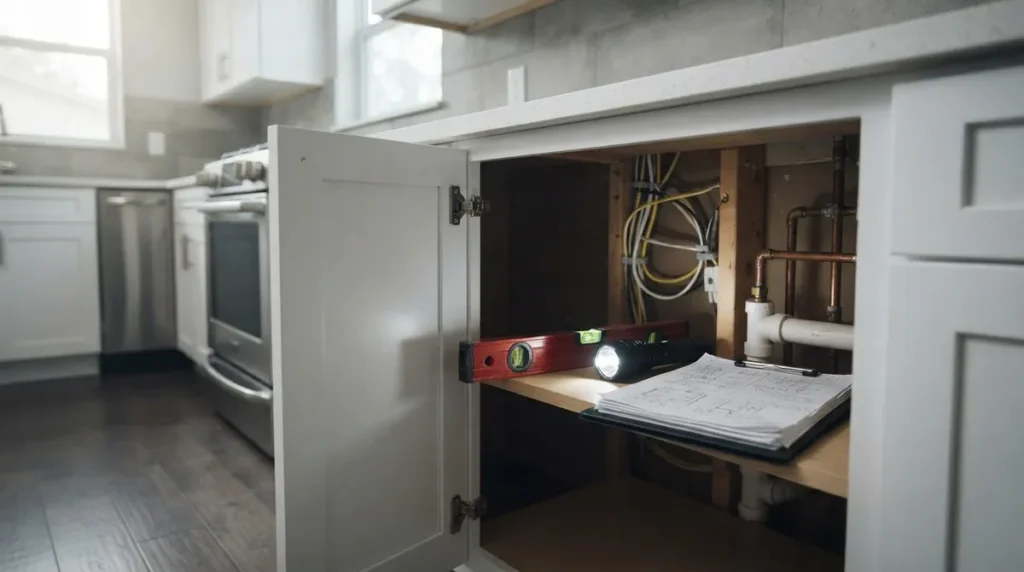
Key Takeaways
-
Florida has a defined legal process for after-the-fact kitchen permitting; thousands of homeowners have successfully legalized unpermitted work through their local building departments.
-
Unpermitted kitchen work can surface unexpectedly during home sales, insurance claims, or future renovations—addressing it proactively is far less costly than waiting for code enforcement to discover it.
-
Kitchen work requiring permits includes structural changes, electrical/plumbing/gas/mechanical system modifications, wall removal or addition, and full cabinet removal paired with trade work.
-
After-the-fact permitting involves submitting standard building, electrical, plumbing, or mechanical permits with documentation that work is already completed; costs vary by jurisdiction but typically include base fees plus penalty fees (often 2-3x normal).
-
Inspectors may require opening walls or removing cabinets to verify code compliance of concealed work, and non-compliant original work must be corrected—professional permitting services can minimize demolition needs.
-
Florida's 400+ municipalities have varying permit requirements; confirming your specific jurisdiction's rules with the local building department or using a permitting service prevents costly delays and ensures compliance.
So you finished that gorgeous kitchen remodel — new cabinets, maybe you moved a wall, added an island with fresh plumbing, upgraded the electrical panel — and then someone mentioned the dreaded "P word." Permit. If your stomach just dropped a little, take a breath. You are far from alone, and this is genuinely fixable. Every week, homeowners, real estate agents, and even general contractors reach out looking for kitchen remodel after the fact permitting Florida help because a beautiful renovation got ahead of the paperwork.
Here's the good news: Florida has a defined path for legalizing completed work, and thousands of homeowners have walked it successfully. This guide will walk you through exactly what triggers a permit requirement, what an after-the-fact process actually looks like, what it might cost, and how to avoid turning a fixable situation into a bigger headache. Whether you're a homeowner who DIYed a kitchen update, a real estate agent trying to close a sale, or a contractor cleaning up a client's project, we're going to make this feel a lot less scary.

What Counts as "After the Fact" Permitting in Florida?
Let's clear up some confusion right away: there is no special statewide form called an "after-the-fact kitchen permit." Instead, you apply for the exact same building, electrical, plumbing, or mechanical permits that should have been pulled before construction started — you're just telling the building department upfront that the work is already done.
The Florida Building Code, specifically Section 105.1, requires permits for alterations and for installing, altering, repairing, or replacing regulated systems. That rule doesn't disappear just because the drywall is already painted. Section 110.1 also requires that permitted work stay accessible for inspection until it's approved, which is exactly why after-the-fact cases sometimes involve opening things back up.
Why This Matters More Than You Might Think
Unpermitted work isn't just a technicality. It can quietly follow your property around for years, popping up at the worst possible moments — like during a home sale, an insurance claim, or a future renovation. We've seen deals nearly fall apart at the closing table because an old kitchen remodel never got its paperwork. If you're a real estate professional, this is exactly the kind of surprise you want to catch early, and our realtor and closing support team exists specifically for these situations.
Which Kitchen Renovation Work Actually Requires a Permit?
Not every kitchen tweak needs a permit — swapping a faucet or repainting cabinets usually doesn't. But once you start touching structural, electrical, plumbing, gas, or mechanical systems, you're in permit territory. Local jurisdictions spell this out a bit differently, but the pattern is consistent statewide.
For example, Fort Walton Beach's building department specifies that alteration permits are required for kitchen remodels involving removal of all cabinets combined with plumbing, gas, or electrical fixture changes, plus any project involving drywall removal or wall additions and removals. Meanwhile, Hollywood's residential kitchen remodel checklist notes that separate permits may be needed for structural, electrical, plumbing, and mechanical trades, and that a Notice of Commencement is generally required once a project crosses the $5,000 threshold.
Common Kitchen Remodel Triggers
- Moving, adding, or removing a wall — even a "non-structural" one that turns out to be load-bearing
- Relocating plumbing lines for a sink, dishwasher, or island
- Adding new electrical circuits, outlets, or a subpanel for appliances
- Installing or moving gas lines for a range or cooktop
- Changing HVAC ductwork or vents to accommodate a new layout
- Full cabinet removal paired with any trade work behind the walls
- Structural changes to support new islands, beams, or header modifications
If your project touched two or more of these items, chances are good you needed multiple trade permits — not just one general building permit.
How to Legalize an Unpermitted Kitchen Remodel: Step by Step
Ready to fix things? Here's the general roadmap most Florida jurisdictions follow, though the exact steps can vary by city or county.
- Identify the correct authority having jurisdiction. This sounds simple, but Florida has over 400 municipalities, and boundary lines aren't always obvious. Our building department lookup tool can save you a frustrating phone-tag session trying to find the right office.
- Contact the building department before doing anything else. Describe the completed work honestly and completely. Downplaying scope tends to backfire once an inspector actually sees the project.
- Gather or create documentation. This often includes as-built plans, photographs taken during construction, contractor records, and product information for anything like windows, appliances, or fixtures.
- Determine if sealed drawings are needed. Structural changes — like a removed wall or new beam — typically require a Florida-licensed engineer's seal. Our in-house engineering team handles this daily, since our own engineer signs and seals the work rather than outsourcing to a third party.
- Submit the after-the-fact application and pay applicable fees. Expect both the standard permit fee and a local after-the-fact penalty fee, which we'll break down below.
- Respond to plan review comments. Reviewers may ask for clarifications, revisions, or additional documentation before approving anything.
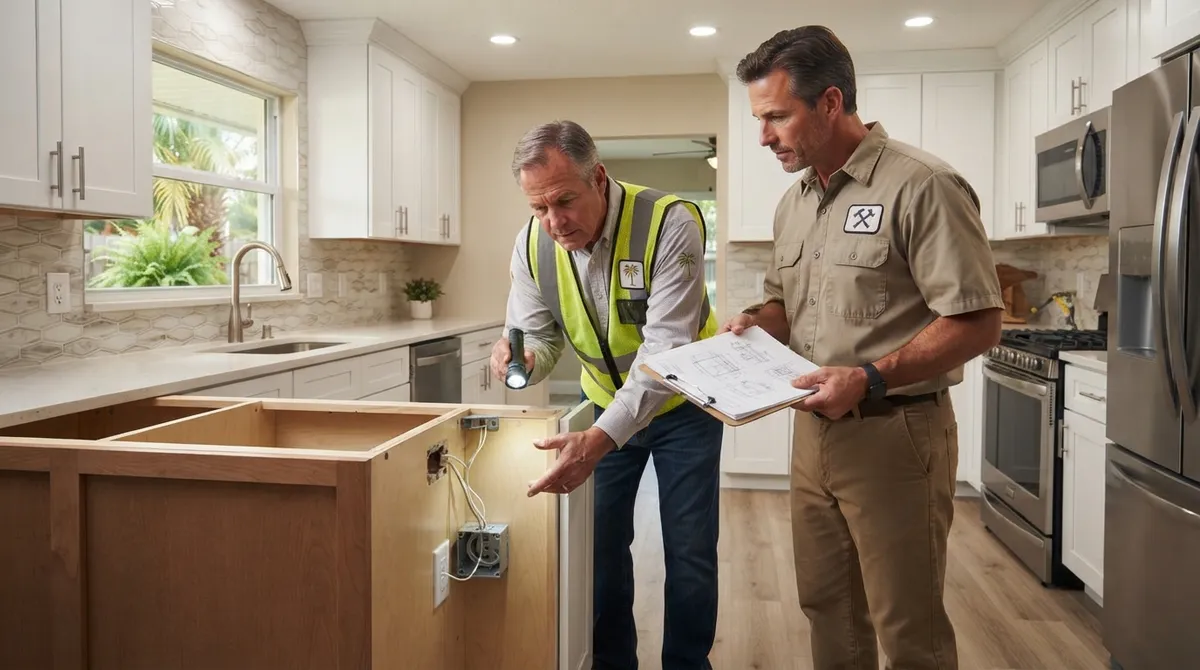
- Schedule and pass inspections. Because kitchen finishes hide wiring, plumbing, and framing, inspectors may require limited demolition to visually confirm the concealed work meets code.
- Correct any deficiencies. If something doesn't meet current code, you may need to repair, replace, or expose additional areas before final approval.
What If the Work Doesn't Pass Inspection?
This is the part nobody loves to hear, but it's important: an after-the-fact permit does not automatically legalize noncompliant construction. If the original work was done incorrectly — say, undersized wiring or a beam that can't support the load — you may need to make corrections, even if that means removing new cabinetry or drywall to fix what's behind it.
This is precisely why so many homeowners and contractors turn to a permitting service before opening that first wall panel. Our team at 1 Contractor Solutions has handled these after-the-fact and expired permit situations across the state, and we know how to minimize the amount of demolition and rework needed. You can learn more about how we approach these cases through our after-the-fact and expired permits service page.
What Does After-the-Fact Kitchen Permitting Cost?
This is one of the most common questions we get, and unfortunately there's no single statewide number. Florida Building Code Section 109.4 allows local building officials to establish an additional fee when work starts before a permit is issued — but the amount is entirely jurisdiction-specific.
| Cost Factor | What Influences It |
|---|---|
| Base permit fee | Set by the local building department, varies by project value and trade type |
| After-the-fact penalty fee | Often reported as roughly double or triple the standard fee in some jurisdictions, but not universal |
| Engineering or architectural fees | Required for structural changes, sealed drawings, or as-built documentation |
| Demolition/exposure costs | If inspectors require opening walls or removing cabinets to verify concealed work |
| Code upgrade corrections | If original work doesn't meet current code and must be redone |
Because inspection and correction costs are so project-specific, it's smart to get a professional review of your situation before assuming the worst. Our team can often give you a realistic estimate after a quick conversation about your specific remodel.
Kitchen Permit Requirements: A Quick Jurisdiction Comparison
To show just how much local rules can vary, here's a simplified look at how a couple of Florida jurisdictions define permit triggers for kitchen remodels.
| Jurisdiction | Permit Trigger Highlights |
|---|---|
| Fort Walton Beach | Alteration permit required for full cabinet removal plus plumbing/gas/electrical changes; also required for drywall removal or wall changes |
| Hollywood, FL | Separate permits possible for structural, electrical, plumbing, mechanical; Notice of Commencement generally required over $5,000 |
| Statewide baseline (FBC) | Permits required per Section 105.1 for alterations and regulated system work, applied locally |
This variation is exactly why we always recommend confirming requirements with the correct local building department — or letting a permitting service like ours handle that research for you across Florida's 67 counties.
Selling a Home With an Unpermitted Kitchen Remodel
If you're a real estate agent, investor, or buyer, unpermitted kitchen work can absolutely complicate a transaction. Title companies and lenders sometimes flag open or missing permits during due diligence, and buyers may request repairs or credits once they discover the issue. It's far better to identify and resolve this before listing than to have it surface during an inspection contingency.
We regularly help agents in markets like Tampa, St. Petersburg, and Miami untangle these permit questions quickly so closings stay on schedule. If you'd like a preview of common pitfalls, our article on what happens when an open permit is found at closing is a great starting point.
Do You Need Separate Permits for Each Trade?
Often, yes. A comprehensive kitchen remodel might trigger a building permit for structural or wall changes, an electrical permit for new circuits, a plumbing permit for relocated fixtures, and a mechanical permit for HVAC modifications. Each trade permit typically requires its own application, inspection, and sign-off, though many jurisdictions allow you to submit them together as a package.
This is where working with a team that handles permit facilitation and filing across multiple trades really pays off. Instead of juggling four separate applications and four separate inspectors, everything gets coordinated under one roof.
Bringing in Professional Help
Whether you're a homeowner who's a little overwhelmed, a general contractor managing a client's cleanup, or a solar company that stumbled onto an unpermitted kitchen during a separate project, professional guidance genuinely makes this smoother. At 1 Contractor Solutions, we've spent more than 15 years navigating Florida's permitting landscape, and we've handled over 5,000 permits and projects across more than 400 municipalities.
Because our drafting and engineering happen in-house, and our own engineer signs and seals the work, we can respond fast when a reviewer asks for a correction — no waiting on a third-party consultant to call back. We're also a licensed private provider, meaning we can perform plan review ourselves in many cases instead of leaving you stuck in a county queue. You can browse our full range of permitting and engineering services to see how this fits your situation.
Curious what actual clients think? Feel free to see what our 1 Contractor Solutions customers say on Google, or check out our reviews page for more detail. You can also visit us on Google — 1 Contractor Solutions to see our service area and community feedback firsthand.
A Few Encouraging Final Thoughts
We know this topic can feel stressful — nobody wants to hear that their beautiful new kitchen might need an inspector poking around behind the drywall. But here's the truth: after-the-fact permitting is a normal, well-established process in Florida, and building departments handle these cases regularly. You are not the first person this has happened to, and you won't be the last.
The key is acting proactively rather than waiting for a problem to surface at the worst possible moment, like a home sale or insurance claim. According to guidance summarized by Permit Notebook's overview of Florida penalties, addressing unpermitted work early tends to be far less costly and stressful than waiting for code enforcement to find it first.
We're proud of the relationships we've built with contractors, agents, and homeowners across the state, and we love sharing helpful updates and success stories — feel free to follow us on LinkedIn or follow us on Facebook to stay in the loop on Florida permitting news.
Ready to Get Your Kitchen Remodel Legalized?
If you're looking for kitchen remodel after the fact permitting Florida assistance, you don't have to figure this out alone. Our team can identify your jurisdiction, prepare the right documentation, coordinate sealed engineering drawings if needed, and manage the entire application from filing through final inspection. Reach out today to get a free quote and take the first confident step toward getting your kitchen fully legal and worry-free.
FAQs
Do I need an after-the-fact permit for a kitchen remodel in Florida?
If your remodel involved electrical, plumbing, gas, mechanical, structural, or wall changes, then yes, you likely need to legalize that work through your local building department's after-the-fact process. The good news is this is a well-established path, and plenty of Florida homeowners have successfully gotten through it!
What kitchen remodeling work requires a permit in Florida?
Generally, anything touching plumbing, electrical, gas, HVAC, or structural elements needs a permit, and many jurisdictions also require one for drywall removal or wall changes. Cosmetic updates like painting cabinets or swapping a faucet usually don't trigger a permit, but it's always smart to double-check with your local building department.
Will I have to open walls or remove cabinets for an after-the-fact inspection?
It's possible, since inspectors need to verify that concealed wiring, plumbing, and framing meet code. We know that sounds stressful, but a good permitting team can often help minimize how much needs to be exposed by preparing thorough documentation upfront.
Can I sell a Florida home with an unpermitted kitchen remodel?
You can, but it may complicate the sale if the issue surfaces during inspection or title review, sometimes causing delays or requiring price negotiations. Resolving the permit before listing tends to save everyone a lot of stress at the closing table.
How much does an after-the-fact permit cost in Florida?
Costs vary widely by jurisdiction and typically include the standard permit fee plus an additional after-the-fact penalty fee, which some areas set at roughly double or triple the normal rate. Add in potential engineering, inspection, or correction costs, and it's best to get a project-specific estimate rather than assume a flat number.
We do this work every day across all 67 Florida counties. Call (866) 314-6931 and we will tell you what your situation actually requires — including when you do not need us.
Related services
Permit Facilitation & Filing
You have a crew scheduled, a client asking for dates, and a permit sitting somewhere in a queue you cannot see. We file it, w…
See the servicePlan Review Coordination
A permit in plan review is not one queue. On a commercial project it can be six queues, each with its own reviewer, its own c…
See the serviceReady to get your permit moving?
One call tells you which jurisdiction controls your project, what it will take, and what it will cost. Most of the time we can scope it on the phone.