
Blog
Unpermitted Roof Florida: What Owners Need to Know
Learn what to do about an unpermitted roof in Florida, from permit thresholds to retroactive approval, inspections, and insurance impacts.
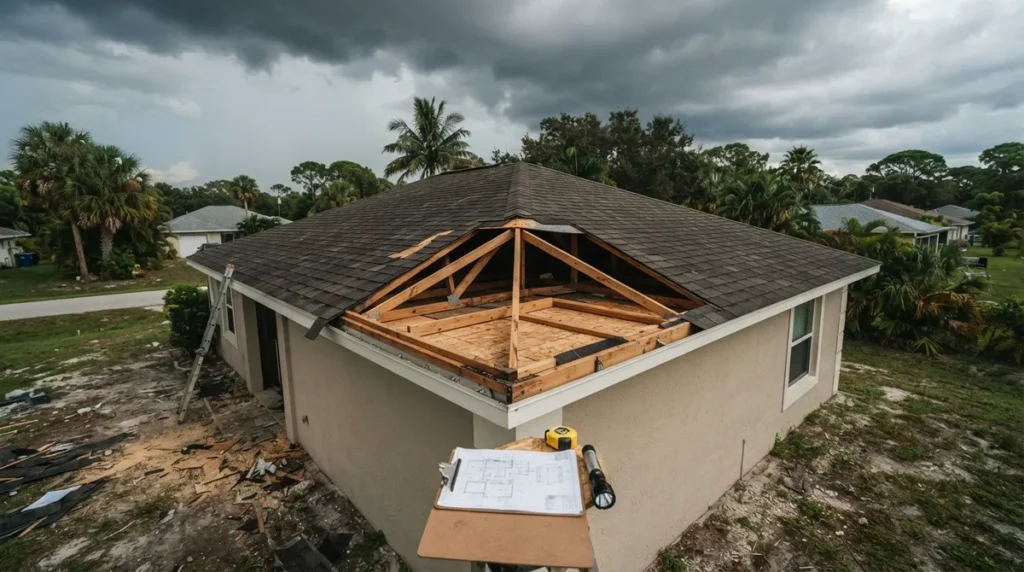
Key Takeaways
-
Unpermitted roofs can cause insurance claim denials, stalled home sales, financing delays, and code enforcement action—contact your local building department immediately to pursue a retroactive permit.
-
Florida has no statewide permit threshold; requirements vary significantly by county and city, so always confirm directly with your local building department before assuming a roof repair is exempt.
-
Retroactive permits typically require gathering documentation, opening concealed work for inspection, obtaining sealed drawings or affidavits, and passing multiple inspections with additional fees or penalties.
-
Unpermitted roofs can block solar panel installations, refinancing, and real estate closings since buyers, lenders, and insurers require proof of proper permitting and final inspection.
-
Standard residential reroof permits cost $150–$500, but after-the-fact permits add penalties and potential structural engineering costs, which vary by jurisdiction and scope of work.
-
High-Velocity Hurricane Zones like Miami-Dade and Broward require stricter Miami-Dade Notice of Acceptance documentation instead of standard statewide product approval for roof materials.
So you just found out your roof doesn't have a permit on file. Maybe it came up during a home sale, an insurance renewal, or a storm-damage inspection. Take a breath — you are definitely not alone, and this is a fixable situation. Every week, we talk to homeowners, real estate agents, and contractors across Florida who are staring down the exact same problem: a roof that was installed, replaced, or repaired without the proper paperwork.
An unpermitted roof in Florida can quietly cause big headaches down the road — insurance claim denials, stalled home sales, financing delays, and even code enforcement action. But here's the good news: local building departments have a process for making this right, and you have options. In this guide, we'll walk through why permits matter, what happens when they're missing, and how to get your roof legalized without losing your mind (or your closing date) in the process.
Why Roof Permits Matter in Florida
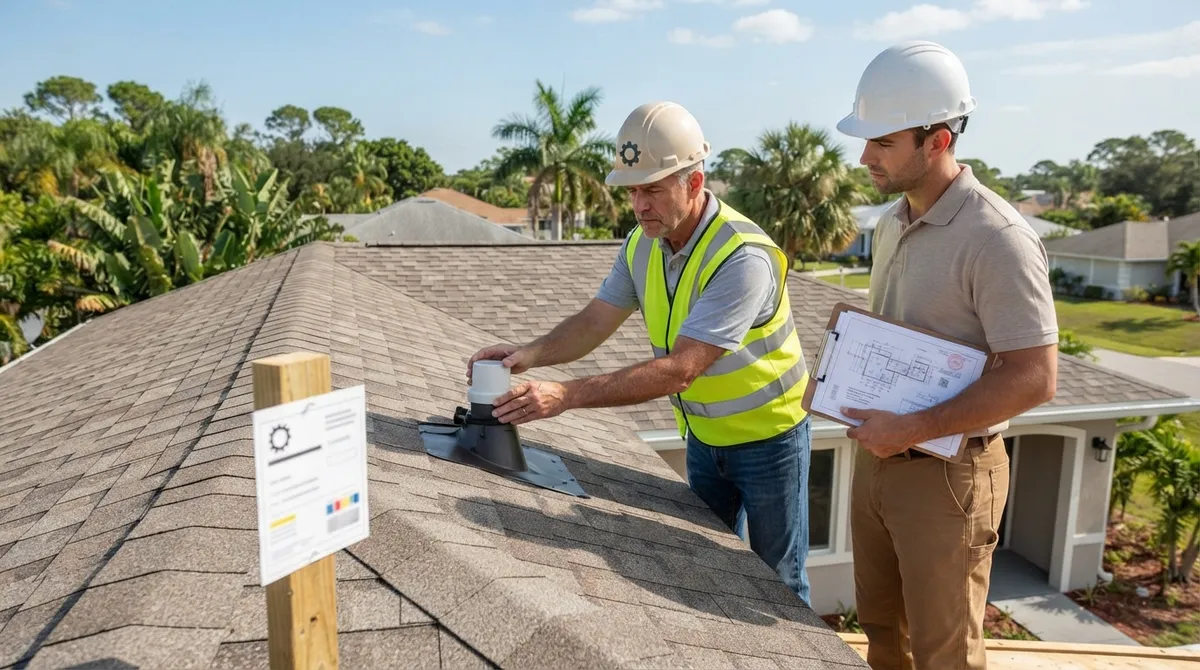
Florida isn't shy about its roofing rules, and for good reason. This state gets hit by hurricanes, tropical storms, and intense UV exposure that most other states never have to think about. A permitted roof means a licensed inspector has verified the decking, underlayment, and covering materials meet current wind-resistance and water-intrusion standards.
Roof replacement, reroofing, recovering, and many substantial repairs generally require a permit from your local building department before work begins. That said, exact thresholds and exemptions vary quite a bit depending on where you live, so it always pays to check with your property's specific permitting authority before assuming a small repair is exempt.
What a Roofing Permit Application Typically Requires
Most Florida jurisdictions ask for a fairly standard packet of information when you apply for a roofing permit:
- Project scope describing the type of roof work being performed
- Roof plans or supporting documentation showing the layout and materials
- Florida product approval numbers or Miami-Dade Notice of Acceptance documentation for the materials being installed
- Contractor licensing details, including active state or local registration
- Applicable permit fees, which vary by jurisdiction and project value
If your roof touches structural components — think trusses, rafters, roof-to-wall connections, or rotted decking — you may need a broader remodeling or structural permit instead of a basic reroof permit. That usually means more plan review, which is where working with a team that offers in-house structural engineering can save you weeks of back-and-forth.
How Roof Inspections Work
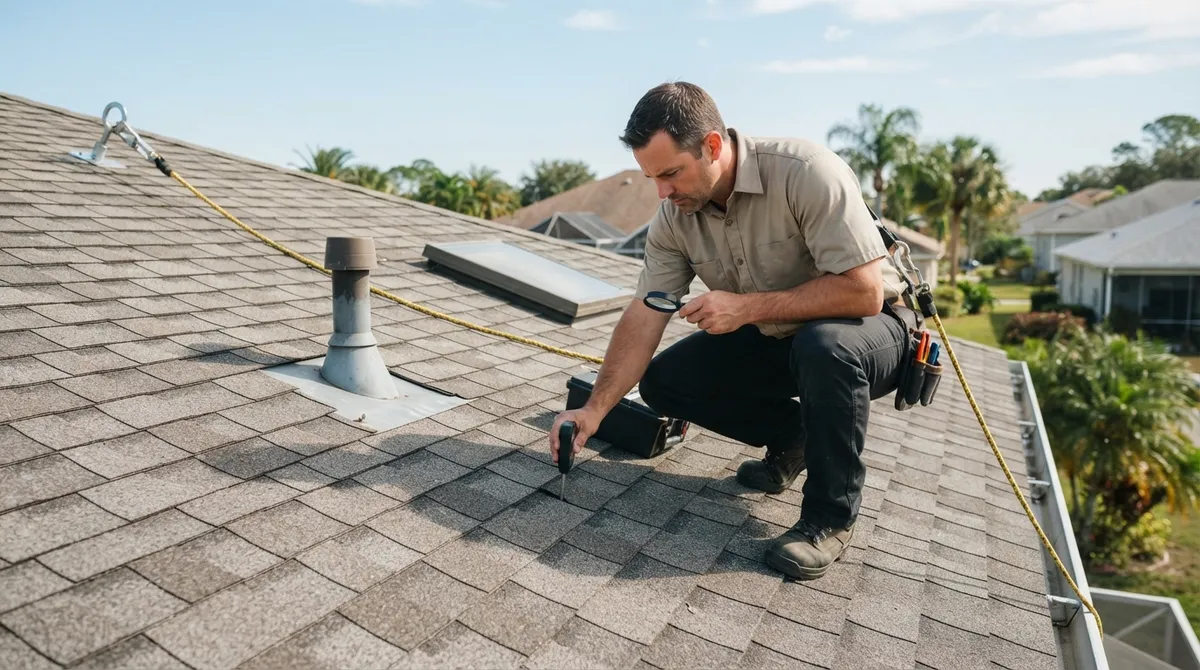
Once your permit is issued, the work isn't done until it passes inspection. Florida roofing projects commonly go through a few checkpoints:
- Decking or sheathing inspection — verifies the roof deck is sound and properly fastened before it gets covered up (some counties allow affidavits or photos instead of an in-person visit for qualified applicants)
- Dry-in or underlayment inspection — confirms the water-resistant barrier is installed correctly before the final roof covering goes on
- Final inspection — confirms the completed roof matches the approved permit and product specifications
Skipping any of these steps is exactly how a roof ends up "unpermitted" even if a permit was technically pulled at some point. If the final inspection was never called in or never passed, the permit may still show as open — which creates its own set of problems, especially at closing.
City and County Rules Are Not the Same
Here's something that trips up a lot of homeowners and even some contractors: there is no single statewide rule for exactly when a roof repair needs a permit. Local jurisdictions set their own thresholds, and they can be surprisingly different from one county line to the next.
| Jurisdiction | Permit Threshold or Requirement | Notes |
|---|---|---|
| Tampa (Hillsborough County) | Required for new roofing, reroofing, recovering, or repairs exceeding 500 square feet | Structural roof component work requires a remodeling permit |
| St. Lucie County | Required when reroofing exceeds 25% of existing roof area within 12 months | Dry-in and final inspections are required steps |
| Statewide baseline | Florida Statute 553.79 governs permits for construction, alteration, and repair generally | Local building departments administer and interpret specifics |
Because these numbers shift by city and county, we always recommend confirming directly with the local building department before assuming your project is exempt. Our building department lookup tool is a quick way to find the right office for your address, whether you're in Tampa, St. Petersburg, or a smaller municipality you've never had to deal with before.
What Happens If Your Roof Was Never Permitted
Let's talk about the real-world consequences, because pretending an unpermitted roof isn't a big deal rarely ends well.
Selling a Home With an Unpermitted Roof
Real estate professionals see this constantly: a home inspection or title search turns up a roof with no permit history, and suddenly the closing timeline is in jeopardy. Buyers, their agents, and lenders often ask for proof the work was legally permitted and passed final inspection. If you're a realtor navigating this with a client, our realtor closing support services exist specifically to sort this out fast, before it derails a sale.
Insurance and Storm Claims
An unpermitted roof can also complicate an insurance review or a storm-damage claim. Insurers may deny coverage or reduce a payout if they can't confirm the roof was installed to code with proper permitting and inspection. That's a rough surprise to get after a hurricane, when you're already dealing with damage.
Refinancing and Financing Delays
Lenders sometimes flag unpermitted work during an appraisal or underwriting review, which can stall or even sink a refinance. If you're a homeowner trying to tap equity for renovations, this is one more reason to get ahead of the issue rather than wait for it to surface.
How to Legalize an Unpermitted Roof
The process for fixing this is called a retroactive or "after-the-fact" permit, and while it varies by jurisdiction, it generally follows a similar path:
- Contact the local building department to confirm whether a permit exists and, if not, what the retroactive process requires
- Gather documentation including contractor licensing information, product approval numbers, and any available photos or receipts from the original work
- Prepare plans or affidavits as required — some jurisdictions may ask for a roof-decking affidavit or sealed drawings depending on the scope
- Open up concealed work if requested so an inspector can verify decking, fastening, and underlayment that would normally have been checked during construction
- Schedule and pass required inspections, which may include decking, dry-in, and final inspection steps
- Pay additional fees or penalties that many jurisdictions apply for after-the-fact permitting
If this sounds like a lot of moving parts, that's because it usually is — and it's exactly the kind of process our team handles every day. We help homeowners and investors work through after-the-fact and expired permits across all 67 Florida counties, coordinating with the building department so you're not stuck guessing what they want next.
Typical Costs to Expect
Costs for legalizing an unpermitted roof vary widely depending on your jurisdiction, the scope of the original work, and whether any structural issues turn up during the opening-up process.
| Cost Component | Typical Range |
|---|---|
| Standard residential reroof permit fee | Approximately $150–$500 (varies by local fee schedule) |
| After-the-fact permit penalty | Often an additional percentage or flat fee on top of standard permit costs |
| Engineering or affidavit documentation | Varies by scope; structural review adds cost |
| Opening-up inspection repairs | Project-dependent, based on findings |
Because local fee schedules control the final number, it's worth verifying current fees with your specific building department — or letting a permitting professional handle that research for you.
Who Should Care About This
Unpermitted roofs aren't just a homeowner issue. Several groups run into this regularly:
- General contractors managing renovation projects who discover a prior roof was never permitted and need it resolved before new work can proceed
- Solar companies whose panel installations require a sound, permitted roof structure underneath before racking can be approved
- Real estate professionals trying to close a sale where an unpermitted roof surfaced during due diligence
- Homeowners who inherited a property or bought a home without realizing the roof lacked proper permitting
- Property managers and investors overseeing multiple units where permit history is inconsistent
If you're a solar installer, this is especially important — a roof without valid permit history can hold up your entire interconnection timeline. Our solar contractor support services help make sure the structural documentation is solid before you ever schedule an install.
Working With a Permitting Professional
We get it — permitting isn't anyone's favorite part of a construction or real estate project. But an experienced team can make this process dramatically less painful. At 1 Contractor Solutions, we handle roof permits and retroactive permitting in jurisdictions from Bradenton to Miami, and everywhere in between.
Because our drafting and engineering teams work in-house, we can produce sealed drawings or affidavits quickly when a jurisdiction requires them — no waiting on an outside consultant to call back. We're also a licensed private provider, which means we can sometimes handle plan review ourselves instead of leaving you stuck in a county queue for weeks.
If you're dealing with code enforcement pressure on top of the permit issue, our code compliance and violations team can help you address both at once. And if you just need to double-check whether a property has an open permit before you buy, sell, or renovate, try our open permit search tool first.
Curious what past clients say about working with us? You can visit us on Google — 1 Contractor Solutions to read real reviews, or connect with our team on follow us on LinkedIn and follow us on Facebook for updates on Florida permitting changes.
A Few Things to Keep in Mind
Before you dive into fixing an unpermitted roof, keep these points in your back pocket:
- Florida's building code editions and requirements are updated on a recurring cycle, so always confirm the current edition with your local building department, per guidance available through the Florida Building Commission
- High-Velocity Hurricane Zones (Miami-Dade and Broward) often require Miami-Dade Notice of Acceptance documentation, which is stricter than standard statewide product approval
- Retroactive permits sometimes require opening up finished ceilings or walls to verify concealed structural work — plan for this possibility
- Working with an unlicensed contractor on the original roof can complicate the retroactive process significantly
Ready to Get Your Roof Legalized?
An unpermitted roof doesn't have to derail your sale, your insurance renewal, or your peace of mind. With the right documentation and a clear plan, most Florida jurisdictions have a straightforward path to bringing a roof back into compliance. Whether you're a homeowner in Clearwater, a contractor in Tampa, or a realtor trying to save a closing anywhere across the state, we're here to help you sort it out quickly and correctly.
Ready to get started? Get a free quote from our team today, and let's get your permit issue resolved before it becomes a bigger problem.
FAQs
Do I need a permit to replace a roof in Florida?
In almost all cases, yes! Roof replacement, reroofing, and many substantial repairs require a permit from your local building department before the work begins. Exact thresholds vary by city and county, so it's always worth a quick call to your local permitting office to confirm.
What happens if my roof was installed without a permit in Florida?
Don't panic — this is more common than you'd think, and it's fixable. You'll typically need to work with the local building department on a retroactive or after-the-fact permit, which may involve providing documentation, opening up concealed areas for inspection, and paying additional fees.
Can I sell a Florida home with an unpermitted roof?
You can, but it often complicates the closing process since buyers, lenders, and title companies may ask for proof of proper permitting. Getting the roof legalized before listing (or quickly during escrow) tends to keep the sale on track and stress-free.
Will homeowners insurance cover an unpermitted roof in Florida?
It depends on your insurer, but unpermitted work can absolutely complicate a claim or even lead to a denial if the insurance company can't verify the roof meets code. It's much better to get ahead of this before a storm hits rather than find out during a claim.
How much does it cost to get a retroactive permit for an unpermitted roof?
Costs vary by jurisdiction, but standard residential reroof permits often run around $150 to $500, with additional after-the-fact penalties on top. The best way to get an accurate number is to have your specific address and project reviewed by your local building department or a permitting professional.
We do this work every day across all 67 Florida counties. Call (866) 314-6931 and we will tell you what your situation actually requires — including when you do not need us.
Related services
Permit Facilitation & Filing
You have a crew scheduled, a client asking for dates, and a permit sitting somewhere in a queue you cannot see. We file it, w…
See the servicePlan Review Coordination
A permit in plan review is not one queue. On a commercial project it can be six queues, each with its own reviewer, its own c…
See the serviceReady to get your permit moving?
One call tells you which jurisdiction controls your project, what it will take, and what it will cost. Most of the time we can scope it on the phone.