
Blog
How to Fix a Florida Closing Held Up by Unpermitted Work
A closing held up by unpermitted work in Florida is fixable. Learn the exact steps to legalize the work and get back to the closing table.
Key Takeaways
-
Unpermitted work stalls closings because lenders won't fund loans against unrecognized structures, title companies may refuse insurance, and buyers get cold feet—pull complete permit history immediately to determine if you're dealing with missing, expired, or open permits.
-
After-the-fact permits aren't rubber stamps; expect additional fees (often 2-3x normal costs), sealed engineering documents, wall exposures for inspection, and multiple visits before approval—the process typically takes weeks to months depending on complexity.
-
Florida law requires sellers to disclose unpermitted work in writing under the Johnson v. Davis standard; describing work as 'permitted' without verification creates serious liability, so buyers should independently confirm permit status.
-
Cost responsibility for fixing unpermitted work must be negotiated in writing between buyer and seller through a contract amendment—there's no automatic rule, but sellers commonly cover most costs since the issue predates the sale.
-
A dedicated permitting service can research history across all 67 Florida counties, coordinate licensed engineers for as-built drawings, file applications, manage revisions, and provide direct closing support—saving weeks by having in-house resources rather than waiting on outside consultants.
-
The resolution sequence—pull history, identify the gap, hire a licensed professional for drawings, file after-the-fact application, pass inspections, and deliver final documents to lender and title company—works for most Florida properties but timeline varies significantly by jurisdiction.
You're days from the finish line. Boxes are packed, movers are booked, and then your agent calls with those dreaded words: unpermitted work discovered during the title search. If you're staring down a closing held up by unpermitted work in Florida right now, take a breath — you're not the first person this has happened to, and this is genuinely fixable. We talk to buyers, sellers, and agents in exactly this spot every week, and the good news is that once you understand what's actually blocking the sale, the path forward becomes a lot clearer.
This guide walks you through why unpermitted work stalls closings, how Florida's permitting system treats missing versus expired permits, and what steps get you back on track without losing your buyer, your rate lock, or your sanity. Whether you're a homeowner selling your first house, a real estate agent managing a nervous client, or a contractor trying to help a seller clean things up fast, this one's for you.
Why Unpermitted Work Stalls a Florida Closing
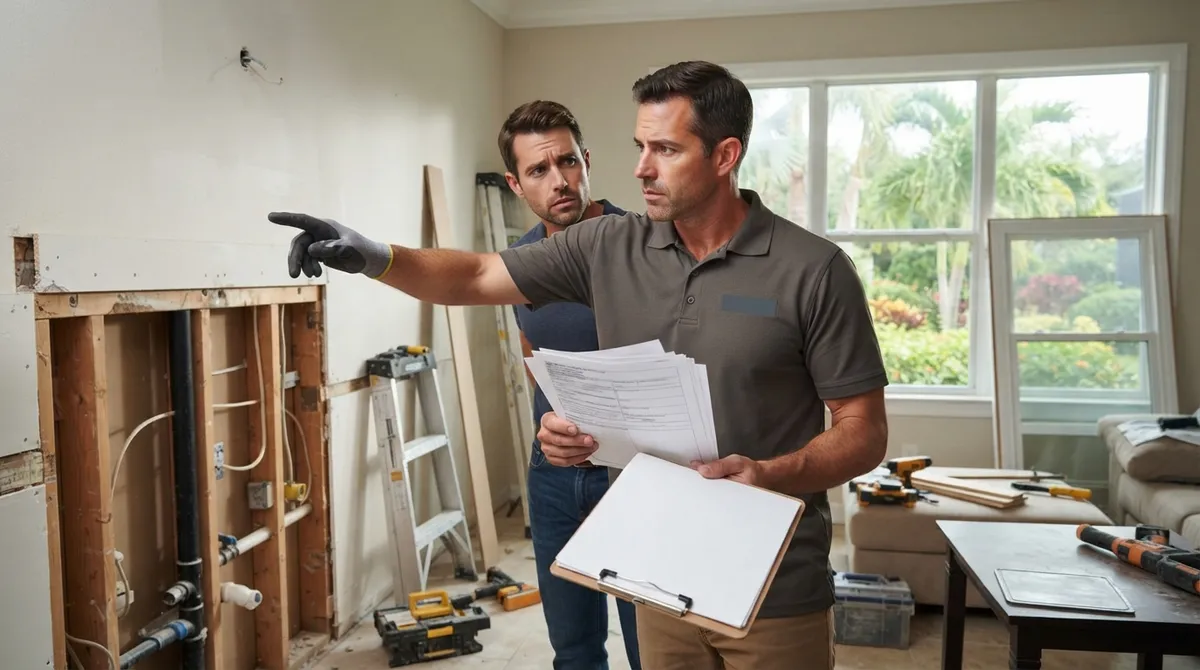
Lenders, title companies, and insurers all have skin in the game when it comes to property condition. If an appraiser or home inspector spots a converted garage, an added bedroom, a suspicious electrical panel, or a pool that never shows up in county records, that raises a flag nobody can ignore.
Here's what typically triggers the hold:
- The lender's underwriter won't fund a loan against a structure that isn't legally recognized
- Title insurance may exclude coverage for unpermitted improvements or refuse to insure at all
- Homeowners insurance carriers sometimes deny claims tied to unpermitted work, which spooks buyers
- Local code enforcement may have an open case or lien attached to the property
- Buyers, understandably, get cold feet once they learn the true condition of what they're purchasing
Under Florida Building Code section 105.1, most construction, alteration, or structural work requires a permit before it begins, with only limited exemptions. When that step gets skipped, the paperwork trail buyers and lenders rely on simply doesn't exist — and that gap is what stops the transaction cold.
Missing Permit vs. Expired Permit: Know the Difference
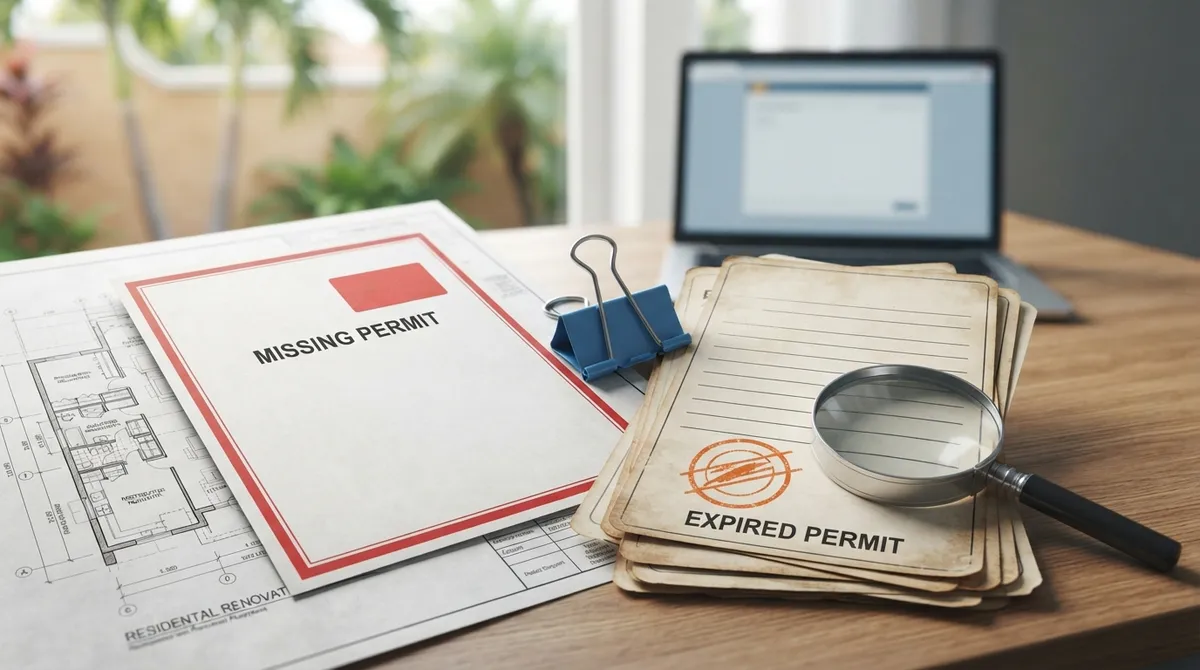
Not all permit problems are created equal, and the fix depends entirely on which situation you're facing.
| Situation | What It Means | Typical Fix |
|---|---|---|
| No permit ever pulled | Work was completed without applying for any permit | After-the-fact permit application, as-built drawings, inspections |
| Open or active permit | Permit was pulled but never finaled or inspected | Complete outstanding inspections, contractor documentation, permit closeout |
| Expired permit | Permit lapsed before work was finished or approved | Permit renewal or reapplication, updated plans if code changed |
| Code violation or lien | Enforcement action or municipal lien tied to the work | Resolve violation, satisfy lien, obtain compliance letter |
A permitting specialist's first move should always be pulling the property's full permit history from the local building department. That single step tells you whether you're dealing with a simple paperwork gap or a more complex enforcement matter. Our team at Open Permit Search handles exactly this kind of research across all 67 counties.
Step-by-Step: Resolving Unpermitted Work Before Closing
Here's the general sequence that works for most Florida properties, though your local jurisdiction will dictate specifics.
- Pull the permit history. Request records from the county or city building department to confirm what's on file versus what's actually built.
- Identify the gap. Determine whether you're dealing with no permit, an expired permit, an open permit, or an active code case.
- Bring in a licensed professional. A Florida-licensed engineer or architect typically needs to prepare as-built drawings or sealed plans documenting the existing construction.
- File the after-the-fact application. This retroactive permit request goes to the building department along with supporting documentation.
- Open up for inspection if required. Florida Building Code section 110.1 generally requires work to remain accessible for inspection, so inspectors may ask to see behind drywall or under flooring.
- Complete corrections. If the work doesn't meet code, expect to make repairs before approval is granted.
- Obtain final sign-off. Once inspections pass, the department issues final approval, closing out the permit.
- Deliver documentation to the title company and lender. This paperwork is what actually unlocks the closing.
Depending on complexity, this process can take anywhere from a few weeks to a few months. Florida permitting professionals often estimate several weeks for straightforward cases involving drawings, plan review, and inspections — but structural issues or zoning conflicts can stretch that timeline considerably.
What After-the-Fact Permitting Actually Involves
A lot of sellers assume an after-the-fact permit is a rubber stamp. It isn't. The building department still has to verify the work meets current code, and that review can be more demanding than a standard permit because the construction is already in place.
Expect these possibilities:
- Additional fees — Florida Building Code section 109.4 allows jurisdictions to charge extra for work started before permitting, and industry sources commonly report two to three times normal fees, though this varies by county
- Requests to expose concealed areas, like opening a wall to verify wiring or framing
- Sealed engineering documents from a Florida-licensed architect or engineer
- Multiple inspection visits before final approval
- In rare, serious cases, partial demolition or reconstruction if the work can't be brought into compliance
Our After The Fact Expired Permits team handles this exact process daily, and our in-house engineering department means sealed drawings and corrections happen without waiting on an outside consultant to call back.
Seller Disclosure: What Florida Law Actually Requires
Even if a buyer is willing to purchase a property with known unpermitted work, sellers can't just wave it away. Florida's material-defect disclosure standard — established in the landmark case Johnson v. Davis — generally requires sellers to disclose known facts that materially affect a property's value and aren't obvious to the buyer through a normal walkthrough.
That means:
- Sellers should disclose unpermitted additions or alterations in writing
- Describing work as "permitted" without verifying that claim can create serious liability later
- Buyers should independently confirm permit status rather than relying solely on seller representations
For more background on Florida real estate disclosure law, resources like the Florida Bar offer helpful legal context, though every situation should be reviewed with a qualified attorney.
Who Pays to Fix It? Negotiating the Cost
This is often the sticking point that drags out closings longer than the permitting work itself. There's no single right answer under Florida law — it comes down to negotiation between buyer and seller, typically formalized in an amendment to the purchase contract.
| Cost Item | Common Approach |
|---|---|
| Permit fees and after-the-fact charges | Often seller-paid, since the issue predates the sale |
| Engineering and drafting costs | Negotiated; sometimes split or credited at closing |
| Corrective repairs | Frequently seller responsibility if defects are found |
| Reinspection fees | Varies by jurisdiction and negotiated terms |
| Closing delay costs (rate lock extension, etc.) | Case-by-case, sometimes shared |
Whatever you decide, get it in writing. A verbal handshake agreement doesn't hold up when the title company needs proof of who's responsible for what.
How a Florida Permitting Service Helps You Close Faster
Trying to coordinate a building department, an engineer, a title company, and a nervous buyer all at once is a lot to juggle — especially when you're also trying to sell a house or manage a real estate transaction. This is where bringing in a dedicated permitting team pays off.
1 Contractor Solutions works across all 67 Florida counties, including Hillsborough County, Pinellas County, and Manatee County, and we've filed in more than 400 municipalities. That matters because permitting rules, fees, and enforcement procedures vary significantly from one jurisdiction to the next — what works in Tampa might not fly in Sarasota.
Our team can:
- Research complete permit history for a property before you list or make an offer
- Coordinate As Built Drawings prepared by our in-house licensed engineers
- File the Permit Facilitation Filing and track it through approval
- Manage Revisions Resubmittals if the building department requests changes
- Provide Realtor Closing Support so agents have a direct line to permitting status updates
- Address any Code Compliance Violations tied to the property
Because our drafting and engineering happen in house, when a reviewer flags something, we fix it immediately rather than waiting on an outside consultant. As a licensed private provider, we can also perform plan review ourselves through our Private Provider Inspections service, which often shaves real time off the county queue.
A Quick Word for Real Estate Agents and Investors
If you're a real estate professional managing multiple deals, unpermitted work discoveries can feel like they come out of nowhere. Building a relationship with a permitting team before you need one is one of the smartest moves you can make. Check our Realtors resource page for tools built specifically for your workflow, and browse our Building Department Lookup tool to quickly confirm which jurisdiction actually governs a given address — because county lines aren't always where you'd expect.
We also work closely with solar installers, homeowners, and general contractors who run into similar timing pressure. If you're a Solar Contractors company racing to finalize a system before a home sale, or a Homeowners reader trying to sell a property with a DIY addition, the same principles apply: get the permit history, involve a licensed professional early, and communicate clearly with everyone at the closing table.
Bringing It All Together
A closing held up by unpermitted work in Florida feels overwhelming in the moment, but it's a solvable problem with a known process. Pull the permit history, figure out exactly what's missing, bring in licensed professionals for drawings and inspections, file the right application, and keep every party — lender, title company, buyer, and building department — in the loop the entire way.
We've guided sellers, agents, and contractors through this exact scenario more times than we can count, and we know the shortcuts that actually work versus the ones that just create new problems. You can visit us on Google — 1 Contractor Solutions to see how we've helped folks across the state get back on track, and we'd genuinely love to hear from you if you're staring down a stalled closing right now.
Ready to get your closing moving again? Request Your Free Quote and let's map out exactly what your property needs. You can also follow us on LinkedIn or follow us on Facebook for more permitting tips and real Florida case updates.
FAQs
Can I close on a Florida house if it has unpermitted work?
It's possible, but it depends on your lender, title company, and how the buyer and seller agree to handle the issue. Sometimes closing proceeds with a documented plan and escrow holdback, while other times the unpermitted work needs to be legalized first — either way, getting the permit history pulled early gives everyone options instead of surprises.
How do I find out whether a Florida property has open or expired permits?
You can request permit history directly from the local building department, though the process and turnaround time vary by county. A permitting service can pull that history quickly and interpret what it actually means for your closing timeline, which saves a lot of guesswork.
What is an after-the-fact permit in Florida, and how do I obtain one?
An after-the-fact permit is a retroactive application for work that was completed without the required permit in the first place. You'll generally need as-built drawings, possibly sealed by a licensed engineer or architect, plus inspections to confirm the work meets current code before the building department signs off.
Who pays to legalize unpermitted work before closing in Florida?
There's no automatic rule — it's a negotiation between buyer and seller, often resolved through a contract amendment. In our experience, sellers commonly cover the bulk of it since the issue existed before the sale, but every deal is a little different.
How long does it take to resolve unpermitted work before a Florida closing?
Simple cases can wrap up in a few weeks once drawings, applications, and inspections move smoothly. More complex situations involving structural corrections or code violations can take considerably longer, so starting the process the moment you discover the issue really pays off.
We do this work every day across all 67 Florida counties. Call (866) 314-6931 and we will tell you what your situation actually requires — including when you do not need us.
Related services
Permit Facilitation & Filing
You have a crew scheduled, a client asking for dates, and a permit sitting somewhere in a queue you cannot see. We file it, w…
See the servicePlan Review Coordination
A permit in plan review is not one queue. On a commercial project it can be six queues, each with its own reviewer, its own c…
See the serviceReady to get your permit moving?
One call tells you which jurisdiction controls your project, what it will take, and what it will cost. Most of the time we can scope it on the phone.