
Blog
How to Respond to a Florida Unpermitted Work Notice
Received a code enforcement notice for unpermitted work in Florida? Learn what it means, your rights, and how to legalize the work step by step.
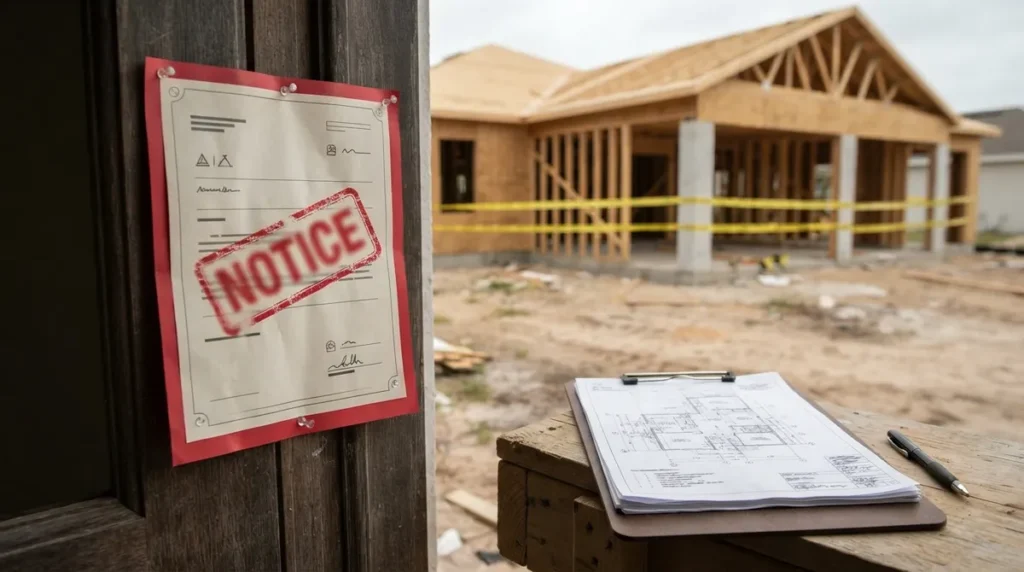
Key Takeaways
-
Under Florida Statutes 553.79, nearly all construction work requires a permit before starting; after-the-fact permits can legalize completed work but may require sealed plans, inspections of concealed areas, and correction of code violations discovered during review.
-
Stop work immediately if issued a stop-work order, as continuing work triggers steeper penalties or criminal referral; respond in writing before the deadline on the notice, even if you need more time to gather documents.
-
Unpermitted work discovered during title search, appraisal, or refinance can stall or kill a closing entirely, with lenders refusing to fund and insurers denying coverage for damage tied to unpermitted construction.
-
Florida's HB 803 exemption (2026) only covers work under $7,500 on single-family homes and excludes electrical, plumbing, structural, and mechanical work; it does not retroactively legalize existing unpermitted work.
-
Ignoring enforcement notices results in accumulating daily fines, property liens that complicate future sales, and potential repair or removal orders; responding early leads to smoother outcomes.
-
Common unpermitted work includes screened patios, pool enclosures, kitchen/bathroom remodels with plumbing or electrical, roof replacements without inspection, and solar installations missing structural documentation.
Finding a code enforcement notice tucked into your door or mailbox can send your stomach into your shoes. Take a breath — you're in good company. Every year, thousands of Florida homeowners, investors, and even seasoned general contractors get caught off guard by a code enforcement notice unpermitted Florida property owners dread seeing. The good news? This is a solvable problem, and you don't have to figure it out alone.
Whether you're a homeowner who inherited a mystery patio enclosure, a realtor trying to close a sale, or a solar contractor whose crew got flagged mid-install, this guide walks you through exactly what these notices mean, why they happen, and — most importantly — how to fix things the right way. We'll lean on Florida Statutes, real enforcement examples from cities like Tampa, and practical next steps you can start today.

What Is a Code Enforcement Notice for Unpermitted Work?
Under Florida Statutes section 553.79, nearly all construction, alteration, repair, or demolition work requires a permit from the local building department before the first hammer swings — unless a specific exemption applies. When a local building department or code enforcement office discovers work that skipped this step, they issue a formal notice. It might arrive as a warning letter, a notice of violation, or in more serious cases, an immediate stop-work order.
These notices typically show up after:
- A neighbor or passerby files a complaint
- A routine inspection uncovers unrelated unpermitted work
- A permit history review during a sale or refinance
- An inspector notices new construction without a posted permit card
Because Florida has 67 counties and hundreds of municipalities, the exact notice format, appeal window, and penalty structure will differ depending on where the property sits. That's why checking your specific building department jurisdiction is always step one.
Why Unpermitted Work Happens (And Why It's So Common)
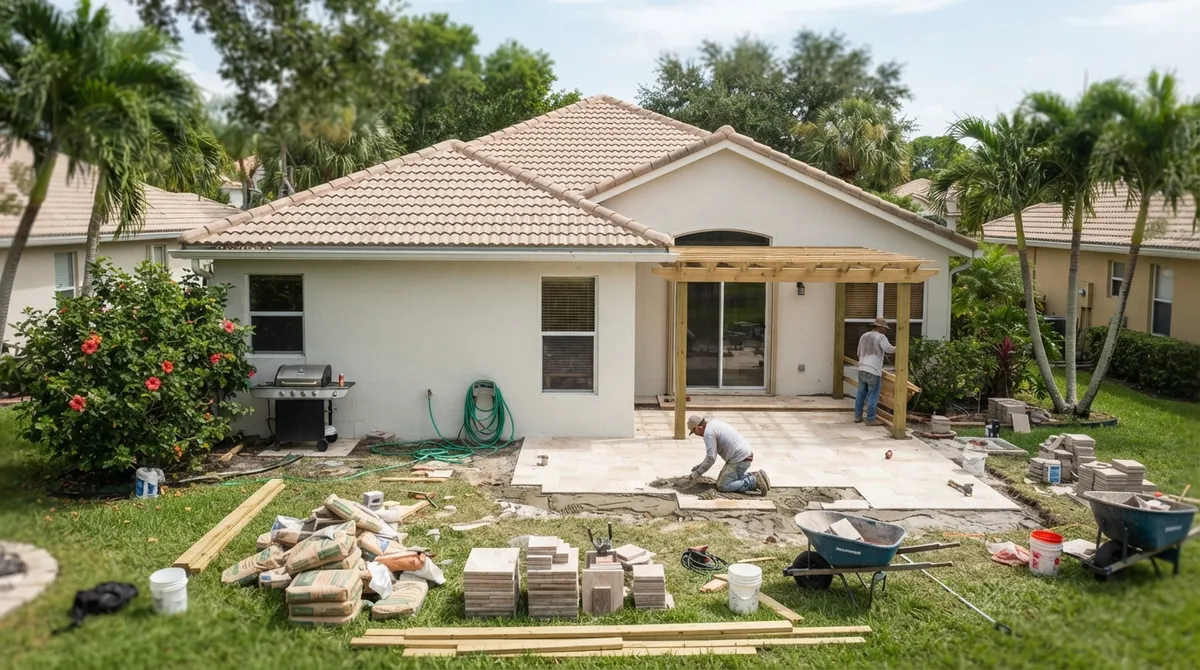
Let's be honest — most unpermitted work isn't malicious. It's usually a well-meaning homeowner who didn't realize a shed or lanai needed a permit, or a previous owner who cut corners years ago and left the current owner holding the bag. Sometimes a contractor promised to "pull the permit" and never did.
Common unpermitted culprits we see across Florida include:
- Screened patios and pool enclosures
- Kitchen and bathroom remodels involving plumbing or electrical
- Sheds and detached structures over the size exemption
- Roof replacements done without inspection sign-off
- Additions or converted garages
- Solar panel installs missing structural or electrical documentation
If any of this sounds familiar, you're far from alone — and there's a clear path forward.
Step-by-Step: What to Do After Receiving the Notice
Here's the game plan we recommend to clients across Hillsborough County, Pinellas County, and beyond:
- Read the notice carefully. Note the deadline, the cited code section, and whether it's a warning, notice of violation, or stop-work order.
- Stop any active work immediately if a stop-work order was issued. Continuing work can trigger steeper penalties or even criminal referral in extreme cases.
- Identify the correct enforcing jurisdiction. City and county lines can be confusing, especially near borders — our building department lookup tool helps pinpoint exactly who has authority over your address.
- Pull the permit history using our open permit search to see what's already on file and what's missing.
- Document existing conditions with photos and measurements before anything gets covered up or altered further.
- Apply for an after-the-fact permit if the work is legalizable — more on that below.
- Schedule required inspections and respond to reviewer comments promptly.
- Respond in writing before the deadline stated on the notice, even if you need more time to gather documents.
Can You Get an After-the-Fact Permit?
In many cases, yes. An after-the-fact (ATF) permit lets you legalize work that's already been completed. But here's the catch: obtaining one doesn't automatically wipe the slate clean. The local building official may require:
- Sealed plans showing what was actually built
- Opening up walls, ceilings, or slabs for inspection of concealed work
- Correction of any code violations discovered along the way
- Payment of permit fees plus investigation or penalty fees
- Passing all standard inspections, just like a normal permit
This is where having in-house drafting and engineering makes a real difference. When a reviewer flags a structural or MEP issue, you want a team that can revise sealed drawings same-day rather than waiting weeks for an outside consultant. Our after-the-fact and expired permits service exists specifically for these situations — including files other firms decline to touch.
What About the New HB 803 Exemption?
Florida's 2026 HB 803 created a narrow exemption for certain work valued under $7,500 on a single-family home. It's a helpful update, but it comes with real limits worth understanding before you assume you're off the hook.
| HB 803 Detail | What It Means |
|---|---|
| Dollar threshold | Work valued under $7,500 on a single-family dwelling may qualify |
| Excluded work types | Electrical, plumbing, structural, mechanical, and gas work are NOT exempt |
| Flood zone properties | Exemption does not apply if the property sits partially or fully in a flood-hazard area |
| Contractor filing requirement | If someone other than the owner performs the work, a notice of exemption must be filed within 30 days |
| Retroactive effect | Does not automatically legalize existing unpermitted work performed before the exemption applied |
In other words, HB 803 helps with small future projects — it's not a free pass for existing violations. If you're unsure whether your situation qualifies, it's worth a quick conversation with a permitting professional before you assume anything.
Penalties, Stop-Work Orders, and Serious Enforcement Actions
Florida's enforcement tools go beyond a friendly letter. Depending on the jurisdiction and severity, you might encounter:
| Enforcement Action | What It Typically Involves |
|---|---|
| Notice of Violation | Formal notice citing the code section violated and a correction deadline |
| Stop-Work Order | Immediate halt to all cited work until conditions are resolved (see Tampa's code as an example) |
| Daily/Scheduled Fines | Penalties that accrue until the violation is corrected |
| Liens | Unpaid fines or fees can attach to the property title |
| Repair or Removal Order | For unsafe construction, officials may order repair, removal, or even vacating the structure |
For example, Tampa's code authorizes a written stop-work order whenever regulated work is unsafe or contrary to code, and it must specify what conditions must be met before work can resume. Other counties, like Sarasota County, actively investigate unpermitted construction, unlicensed contractor activity, and unsafe structures through dedicated code enforcement programs. Ignoring a stop-work order or notice deadline rarely ends well — fines accumulate, and liens can complicate a future sale.
How Unpermitted Work Affects Selling, Refinancing, and Insurance
This is where realtors, buyers, and investors really feel the pinch. Unpermitted work discovered during a title search or appraisal can stall or kill a closing entirely. Lenders may refuse to fund a loan, and insurance carriers may deny or limit coverage for damage tied to unpermitted construction.
If you're a real estate professional navigating this, our realtor and closing support service is built to move fast — researching permit history, coordinating engineers, and pushing after-the-fact permits through before your closing date slips. We also help with Certificate of Occupancy and Certificate of Use issues that often surface alongside unpermitted work.
How Different Professionals Should Approach This
General Contractors
If your crew inherited a job with prior unpermitted work, don't just build over it. Loop in a permitting partner who can pull history, prepare sealed drawings, and get the after-the-fact filing moving before inspections stall your schedule. Learn more through our resources for general contractors.
Solar Companies
Unpermitted structural or electrical work discovered mid-installation can delay interconnection approval for weeks. Coordinating compliant, code-ready documentation upfront through our solar contractor services helps avoid this entirely.
Homeowners
You don't need to become a building code expert overnight. Our homeowner support services walk you through the paperwork, plans, and inspections step by step.
How 1 Contractor Solutions Helps You Resolve a Notice
We built our entire business around being the team contractors, homeowners, and realtors call when a permit problem threatens to derail a project or closing. As Florida's outsourced permitting department, we identify the correct enforcing jurisdiction, research permit history, prepare or revise sealed plans in-house, file the after-the-fact application, and carry it through every inspection and reviewer comment until it's closed out.
Because our drafting and engineering teams work under one roof — with our own engineer sealing the work — we don't wait on outside consultants when a reviewer flags an issue. We fix it same day. We're also a licensed private provider, meaning we can often perform plan review ourselves instead of leaving you stuck in a county queue.
We've handled more than 5,000 permits across all 67 Florida counties and over 400 municipalities, including tricky cases in Miami-Dade, Broward, and Manatee County. Curious what past clients think? You can visit us on Google — 1 Contractor Solutions to read real reviews, or check out our reviews page directly.
A Quick Checklist Before You Respond
- Confirm the deadline and required response format stated on the notice
- Verify which jurisdiction issued it and their specific process
- Gather any existing permit records or contractor paperwork
- Take photos of current conditions before making changes
- Consult a permitting professional, licensed contractor, or engineer as needed
- Keep copies of everything you submit and every inspection scheduled
Staying organized from day one makes the entire after-the-fact process smoother and faster.
Bringing It All Together
A code enforcement notice can feel like a gut punch, but it's rarely the end of the road. Florida's process — while it varies county by county — is designed to bring unpermitted work into compliance, not just punish property owners. With the right documentation, sealed plans, and a clear understanding of your local requirements, most situations resolve successfully.
If you'd like a second set of eyes on your notice, your permit history, or your next steps, our team is ready to help — day or night, with a 30-minute response time and se habla español. You can also follow us on LinkedIn or follow us on Facebook for ongoing permitting tips across Florida. For general background on statewide permitting rules, the Florida Statutes online library is a solid public resource.
Ready to get your notice resolved without the stress? Get a free quote and let's turn that stressful envelope into a closed, compliant permit.
FAQs
What should I do first after receiving a code enforcement notice for unpermitted work in Florida?
Take a deep breath — this is fixable! Start by reading the notice closely to understand your deadline and the cited violation, then stop any active work if a stop-work order was issued. From there, identify the correct jurisdiction and start gathering permit history, because that's the foundation for everything that follows.
Can I get an after-the-fact permit for unpermitted construction in Florida?
In many cases, yes! An after-the-fact permit can legalize completed work, though the building official may still require sealed plans, inspections of concealed areas, and correction of any code issues found along the way. It's not an automatic approval, but it's a very achievable path with the right documentation.
Will code enforcement make me remove an unpermitted addition, shed, or pool?
undefined
What happens if I ignore a stop-work order or code enforcement notice in Florida?
Ignoring it tends to make things worse — fines can accumulate daily, liens can attach to your property, and in serious cases officials can order repair, removal, or even vacating a structure. The good news is that responding early, even just to ask for guidance, almost always leads to a smoother outcome.
Can unpermitted work affect selling, refinancing, or insuring my Florida property?
Absolutely — unpermitted work discovered during a title search or appraisal can delay or derail a closing, and insurers may limit coverage tied to unpermitted construction. That's exactly why resolving the notice before you list or refinance saves everyone a lot of headaches down the line.
We do this work every day across all 67 Florida counties. Call (866) 314-6931 and we will tell you what your situation actually requires — including when you do not need us.
Related services
Permit Facilitation & Filing
You have a crew scheduled, a client asking for dates, and a permit sitting somewhere in a queue you cannot see. We file it, w…
See the servicePlan Review Coordination
A permit in plan review is not one queue. On a commercial project it can be six queues, each with its own reviewer, its own c…
See the serviceReady to get your permit moving?
One call tells you which jurisdiction controls your project, what it will take, and what it will cost. Most of the time we can scope it on the phone.