
Blog
Do After-the-Fact Permits Need Field Verification in FL?
Do after-the-fact permits require field verification in Florida? Learn what inspectors, engineers, and building officials expect before you apply.
Key Takeaways
-
Field verification is required in most Florida after-the-fact permits, but requirements vary by jurisdiction—contact your local building department first to confirm what specific inspections, certifications, or documentation they need for your type of work.
-
An engineer's sealed report can sometimes substitute for part of verification, especially for concealed structural work, but it typically does not replace building department inspections; most projects require both.
-
Exposure of concealed work like drywall, framing, or wiring is possible but not automatic—good as-built documentation, accurate drawings, and smart engineering can minimize or eliminate the need for costly openings.
-
Verification requirements differ significantly by trade type: structural work needs sealed engineer inspection, electrical requires testing, plumbing needs pressure testing, and roofing requires system inspection plus product documentation.
-
After-the-fact permits do not automatically legalize work; you must complete the full process including jurisdiction confirmation, as-built plans, plan review, inspections, corrections, and final closure before the property record is clean.
-
Failing a field verification is not final—inspectors typically list deficiencies that can be corrected and reinspected, though some corrections may be minor fixes while others require more substantial work.
So you found out that a deck, a reroof, or a bathroom remodel was done without a permit. Take a breath. It happens to Florida property owners all the time, and it is usually fixable. The next question is almost always the same: do after the fact permits require field verification in Florida, or can you just mail in some paperwork and call it a day?
The short answer is that field verification is very common, but there is no single statewide checklist that applies to every project. Your local building official decides what proof is needed. That might be an inspection, a design professional's sealed report, testing, or even opening up a wall. In this friendly guide, we will walk through what to expect, why it varies, and how to prepare so your retroactive permit moves smoothly in 2026.
Whether you are a homeowner, a general contractor, a solar company, or a real estate pro closing a deal, you will find practical steps below.
The Short Answer: Usually Yes, But It Depends on Your Jurisdiction
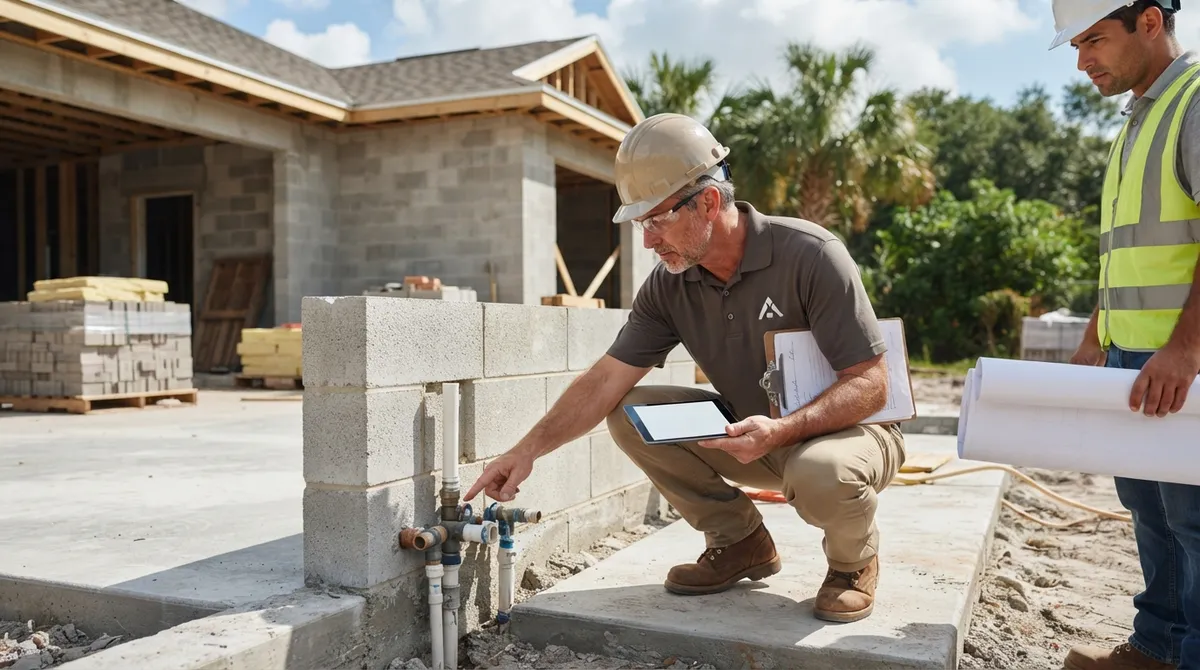
Generally, an after-the-fact permit means the building department has to confirm that the existing work meets applicable building requirements. That confirmation commonly includes one or more field inspections. However, the exact process depends on the authority having jurisdiction (the city or county that controls your address) and the type of work involved.
Florida Statutes section 553.79 is the main state law on building permits and inspections. Still, local departments run the day-to-day process. That means forms, fees, required documents, and acceptable verification methods differ from one county or municipality to the next. We have not found any statewide percentage or uniform count of after-the-fact permits that require field verification, because it is so project-specific.
One helpful way to think about it: the building department was not there when the work was built. Field verification is how they catch up on what they missed.
What Does Field Verification Actually Mean?
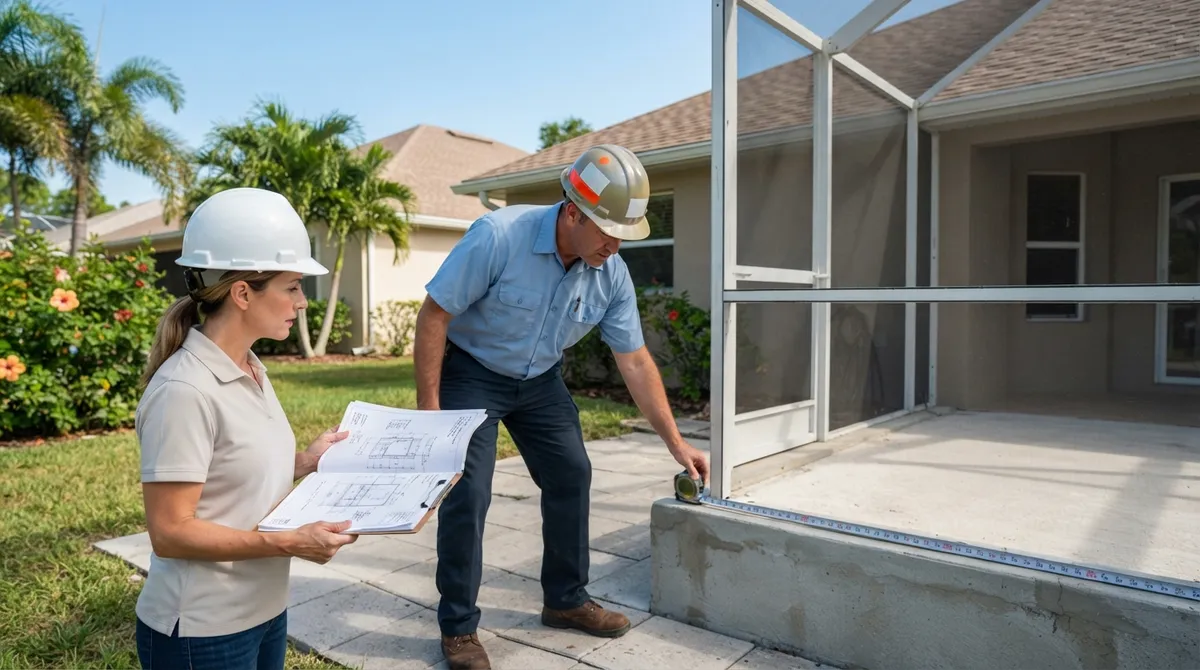
Field verification is any process that confirms, on the ground, that existing work matches the plans and meets code. It is not always a single inspector walking your property with a clipboard. Depending on the project, it can take several forms.
- Building department inspection: An inspector visits the site and checks accessible work against code.
- Sealed engineer or architect inspection: A Florida-licensed design professional inspects and certifies the work, then issues a signed and sealed report.
- Testing or measurements: Examples include electrical testing, pressure tests on plumbing, or load verification for structural elements.
- Exposure of concealed work: Removing a small section of drywall, soffit, or flooring so framing, wiring, or plumbing can be seen.
- Contractor certification letters: Some jurisdictions accept notarized letters from licensed trades for work that can no longer be seen.
For a deeper look at the on-site portion, see our guide on what field verification means for after-the-fact permits in Florida and what to expect when a Florida ATF site inspection takes place.
Why Requirements Vary So Much Across Florida
Florida has 67 counties and hundreds of municipalities, and each one administers permits its own way. Two neighbors on opposite sides of a city line may face different procedures. That is why the very first step is confirming which building department actually controls your property.
Our building department lookup tool can help, and our article on which Florida jurisdiction reviews your project explains why this is not always obvious near city boundaries.
| Factor | How It Affects Field Verification |
|---|---|
| Type of work | Structural, electrical, plumbing, and mechanical work each carry different proof requirements. |
| Whether work is concealed | Hidden framing or wiring may require exposure, testing, or a sealed engineering report. |
| Local procedure | Each county or city sets its own forms, fees, and acceptable evidence. |
| Age and scope of work | Larger or older alterations often trigger more documentation and review. |
| Zoning and other agencies | Setbacks, flood rules, or environmental approvals may add separate requirements. |
A Real Local Example: Indian River County and Vero Beach
To show how detailed these procedures can get, consider the published after-the-fact procedure from Indian River County and the City of Vero Beach. For structural alterations or additions that are no longer open for inspection, they require a Florida-licensed design professional to inspect and certify the work.
Their procedure calls for a detailed report describing the inspection methods, equipment, and locations, plus a signed and sealed compliance letter and plans. They also call for notarized contractor letters certifying certain concealed plumbing, electrical, mechanical, roofing, and insulation work.
Please treat this as a local example, not a statewide rule. Your county may be stricter, more relaxed, or simply different. It does show, though, how seriously building departments take work they could not watch being built.
Can an Engineer's Letter Replace an Inspection?
This is one of the most common questions we hear, and the honest answer is: sometimes, but do not assume so. A field visit is not necessarily the only acceptable verification method. For completed or concealed structural work, many jurisdictions allow or require a sealed report from a Florida-licensed engineer or architect.
However, the building official decides what evidence is acceptable. Photographs or a simple letter may not automatically stand in for an inspection. In many cases you will need both: the engineer's findings and the department's own inspections to close the permit.
If you are weighing this path, read more about whether a sealed drawing is required for after-the-fact permits and how an engineer letter can support your application.
Will You Have to Tear Out Drywall?
Nobody likes this question, but it deserves a straight answer. If an inspector or design professional cannot verify concealed framing, wiring, plumbing, or other components from available records and testing, the owner may be required to expose portions of the work. Sometimes a small inspection opening is enough. Other times, corrections are needed.
The good news is that exposure is not automatic. Good documentation, accurate as-built drawings, and a smart engineering approach can reduce how much needs to be opened. Our team often helps owners plan targeted openings so damage stays minimal. You can learn more about truss verification after the fact and foundation verification after the fact for two common examples.
What Happens Beyond the Inspection: The Full Process
Here is an important reality check. An after-the-fact permit does not automatically legalize the work. Passing a field visit is only one piece of the puzzle. The overall path typically looks like this:
- Confirm the jurisdiction. Identify exactly which building department has authority over the address.
- Research open or expired permits. Our open permit search tool is a good starting point.
- Document the existing conditions. This usually means as-built drawings showing what was actually built.
- Submit the application and plans. Include any required engineering and trade documentation.
- Complete plan review. Answer reviewer comments and file revisions if needed.
- Pass field verification and inspections. Correct any deficiencies the inspector finds.
- Close the permit. Obtain final approval so the record is clean.
Along the way you may also need to satisfy zoning rules, pay higher fees, and handle other agency requirements. See our breakdown of after-the-fact permit costs in Florida for budgeting help.
Verification Needs by Type of Work
Different trades face different expectations. The table below gives a general picture. Always confirm specifics with your local department, because these are common patterns rather than guaranteed rules.
| Type of Work | Common Verification Approach |
|---|---|
| Structural additions or alterations | Sealed engineer inspection, as-built plans, possible exposure of framing, department inspections |
| Electrical | Licensed electrician involvement, testing, and inspection of accessible components |
| Plumbing | Pressure or fixture testing, inspection of visible lines, possible contractor letter for concealed piping |
| Mechanical (HVAC) | Equipment and duct inspection, load or sizing documentation as required |
| Roofing | Inspection of installed system, product approval documentation, possible contractor certification |
| Windows and doors | Product approval verification and installation inspection |
For specific scenarios, we have guides on unpermitted electrical work, unpermitted plumbing, and unpermitted roofs.
How Different Readers Can Prepare
Your role in the project shapes what you should do first. Here are some quick pointers.
- Homeowners and residential property owners: Gather any old receipts, photos, or contractor names. They help engineers and inspectors reconstruct what was built.
- General contractors: Keep a record of materials, product approvals, and subcontractor info. Our services for general contractors cover filing and tracking across jurisdictions.
- Solar companies: Retain structural calculations and electrical documentation. See how we help solar contractors stay code compliant.
- Real estate professionals: Start early when an appraisal or inspection flags unpermitted work. Closings can stall quickly, so check our realtor and closing support.
- Architects, designers, and trades: Outsourcing drafting and engineering keeps your workload manageable. Explore our drafting-only service.
What If the Work Fails Verification?
Failing a field verification is not the end of the road. The inspector will typically list deficiencies, and you correct them and request reinspection. Sometimes corrections are minor, like adding a missing strap or fixing a receptacle. Other times they are larger.
The key is to respond methodically rather than panicking. Our article on what to do when a Florida final inspection fails walks through next steps, and if code enforcement is already involved, review our guidance on code compliance violations.
How to Find Out What Your Property Needs
Since rules are local, the most reliable move is to contact the building department that has authority over your address before you start. Ask what inspections, certifications, and documents they require for a retroactive permit on your type of work.
You can also get a free quote from our team, and we will help identify the right jurisdiction and the quickest path. We are Florida's outsourced permitting department, and our in-house drafting and engineering means sealed documents come from the same team handling your file. Take a look at what neighbors say when you visit us on Google — 1 Contractor Solutions.
For the bigger picture, our guides on how to get an after-the-fact permit in Florida and how to legalize unpermitted work are great next reads. You can also keep up with new tips if you follow us on LinkedIn or follow us on Facebook.
Final Thoughts: Verification Is Normal, and You Can Handle It
So, do after the fact permits require field verification in Florida? In most cases, yes in some form, whether that is an inspection, an engineer's sealed report, testing, or exposure of hidden work. The exact recipe is set locally, which is why one size never fits all.
The most important thing you can do is start with the right jurisdiction, document existing conditions carefully, and bring in the right professionals early. Done well, verification is simply a step on the road to a clean, closed permit and a property you can sell, insure, and enjoy with confidence.
Ready to turn an unpermitted headache into a closed permit? Our team handles after-the-fact and expired permits across all 67 Florida counties. Get a free quote today, and let us do the heavy lifting while you get back to your project.
FAQs
Do I need an inspection for an after-the-fact permit in Florida?
In most cases, yes. The local building department generally needs to verify that the existing work meets code, and that often includes one or more field inspections. The exact process depends on your jurisdiction and the type of work, so check with the department that controls your address.
Can an engineer's report replace a building inspection for unpermitted work?
Sometimes it can stand in for part of the verification, especially for concealed structural work, but it does not automatically replace inspections. The building official decides what evidence is acceptable. Many projects need both a sealed engineering report and the department's own inspections.
Will I have to remove drywall to get an after-the-fact permit in Florida?
Not always, but it is possible. If framing, wiring, or plumbing cannot be verified from records and testing, you may be asked to open a portion of the work. Good as-built documentation and a thoughtful engineering plan can help keep any openings small.
Do Florida counties have different requirements for retroactive permits?
Yes, they do. Florida Statutes section 553.79 sets the general framework, but each county and municipality runs its own forms, fees, documents, and verification methods. That is why confirming your local requirements first saves time and money.
Does an after-the-fact permit automatically legalize the work?
No. You may still need as-built plans, plan review, zoning approvals, corrections, and passed inspections before final approval. Only once the permit is closed is the work considered fully resolved.
We do this work every day across all 67 Florida counties. Call (866) 314-6931 and we will tell you what your situation actually requires — including when you do not need us.
Related services
Permit Facilitation & Filing
You have a crew scheduled, a client asking for dates, and a permit sitting somewhere in a queue you cannot see. We file it, w…
See the servicePlan Review Coordination
A permit in plan review is not one queue. On a commercial project it can be six queues, each with its own reviewer, its own c…
See the serviceReady to get your permit moving?
One call tells you which jurisdiction controls your project, what it will take, and what it will cost. Most of the time we can scope it on the phone.