
Blog
What Happens During a Florida ATF Site Inspection?
Learn what happens during a Florida after-the-fact permit site inspection, from as-built plans to code compliance checks and final approval.
Key Takeaways
-
Each Florida city and county has its own ATF permit forms, fees, and requirements, so research your specific jurisdiction's documentation needs and fee schedule before applying to avoid delays.
-
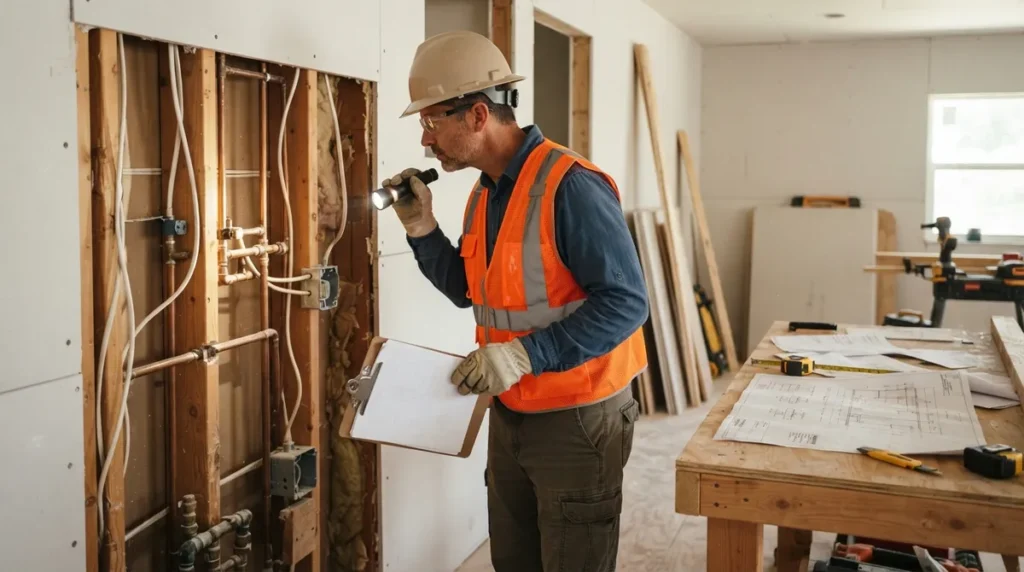
Site inspections are mandatory to verify unpermitted work meets Florida Building Code; inspectors may require opening walls or ceilings to verify concealed structural, electrical, or plumbing work if photos and engineer letters cannot confirm compliance.
-
After-the-fact permitting typically requires as-built plans sealed by a licensed engineer or architect, proof of ownership, property survey, photos of existing conditions, and jurisdiction-specific ATF application forms.
-
Costs include standard permit fees plus local penalty fees for unpermitted work, with final amounts depending on scope complexity, required engineering review, and number of separate trade inspections needed.
-
If inspections reveal code violations, you must hire licensed contractors to make corrections, modify non-compliant work, or submit revised as-built plans for follow-up inspection before final permit closure.
-
A professional permitting service can coordinate engineers, prepare documentation, manage submissions, and track inspections, but cannot guarantee approval since the local building official makes the final decision.
So you've discovered that a previous owner (or maybe even you, in a rush a few years back) added a lanai, converted a garage, or swapped out an electrical panel without pulling a permit. Now you're staring down the words "after-the-fact permit" and wondering what on earth a site inspection for after the fact permitting Florida actually involves. Take a breath. You're not alone, and this is more common than you'd think in a state where sunshine, renovations, and the occasional shortcut go hand in hand.
Here's the good news: an after-the-fact (ATF) permit is simply Florida's official pathway for legalizing work that should have had a permit from the start. The not-so-simple part is that every city and county handles the process a little differently, and the site inspection is usually the moment of truth. This guide walks you through exactly what to expect, who needs to be involved, and how to make the process as painless as possible, whether you're a general contractor buttoning up a job, a homeowner untangling a surprise, or a realtor trying to save a closing.
What Is an After-the-Fact Permit in Florida?
An after-the-fact permit is the formal process used when construction, electrical, plumbing, mechanical, or structural work was started (or completed) without the required permit being issued first. Florida doesn't have one single statewide ATF form. Instead, each local building department, whether that's Hillsborough County, Pinellas County, or a small municipality, sets its own documentation requirements, review steps, and fees.
Under Florida Statutes section 553.79, local enforcement agencies are responsible for administering permitting and inspections, and permit records must be available for review by the building official. That means the site inspection isn't just a formality. It's the mechanism the jurisdiction uses to confirm that unpermitted work actually meets the Florida Building Code before it can be legally closed out.
Why the Site Inspection Is the Heart of ATF Permitting
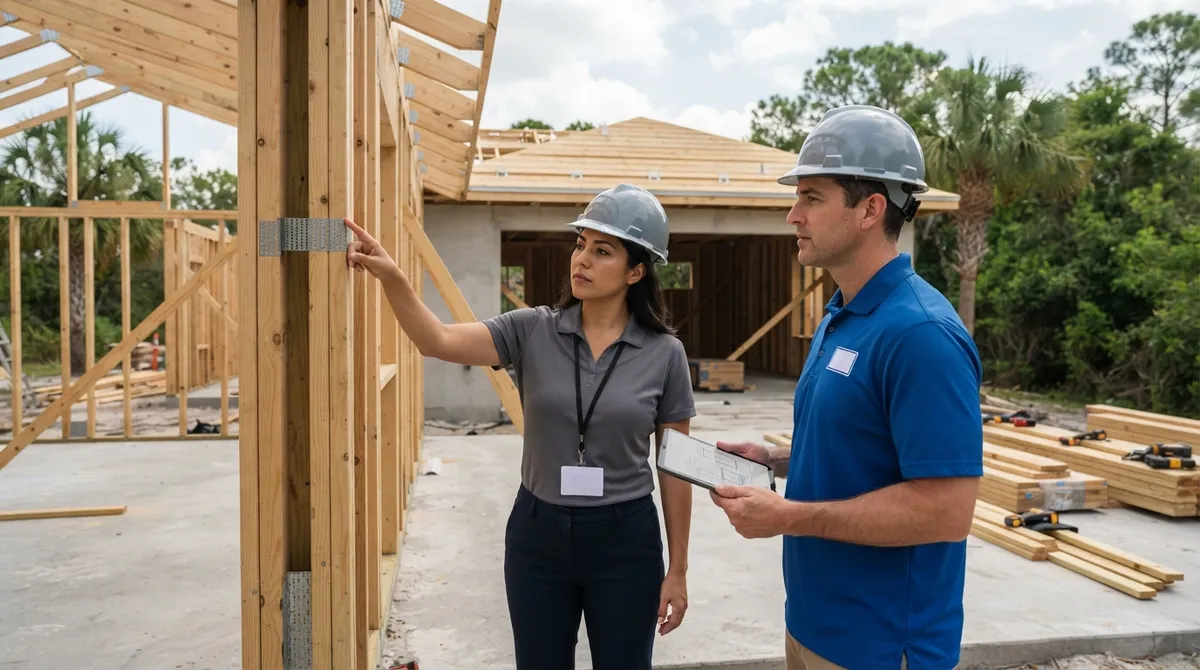
Think of the site inspection as the building department's way of saying, "Show me." Since the work was done without a permit, there was no inspector present during framing, wiring, or plumbing rough-in. The site visit is the department's first real chance to verify what's actually there.
During this inspection, an official may:
- Compare the as-built conditions against submitted as-built plans
- Check structural connections, framing, or foundation work for code compliance
- Review electrical panels, wiring, and grounding for safety issues
- Inspect plumbing, gas lines, or mechanical systems
- Verify that the work matches zoning and floodplain requirements
- Determine whether concealed areas need to be opened for further review
If everything checks out, you're on the path to approval. If not, you'll likely be asked to correct deficiencies, sometimes by opening up finished walls or ceilings so the inspector can see what's behind them.
The Typical ATF Process, Step by Step
While every jurisdiction has its quirks, most Florida ATF permitting journeys follow a similar sequence:
- Stop any ongoing unpermitted work immediately once it's identified.
- Contact the local building department to confirm which jurisdiction has authority (this isn't always obvious near county or city lines, which is why tools like a building department lookup come in handy).
- Request the department's ATF or retroactive permit instructions, since forms and required documentation vary widely.
- Prepare as-built plans and supporting documents, often requiring a licensed engineer or architect to inspect and seal the drawings.
- Submit the application and pay applicable fees, which may include a standard permit fee plus an additional after-the-fact penalty fee.
- Schedule and complete the required site inspections, which might include separate building, electrical, plumbing, or mechanical visits.
- Correct any deficiencies flagged during inspection.
- Obtain final approval and permit closure once everything passes.
It sounds like a lot, and honestly, it can be. That's exactly why so many general contractors, solar installers, and homeowners bring in a permitting partner instead of tackling it solo.
What Documents Are Usually Required?
Every jurisdiction sets its own list, but most ATF applications ask for a similar core set of documents. Here's a general overview:
| Document Type | Purpose |
|---|---|
| As-built plans | Show existing conditions of the unpermitted work |
| Engineer or architect letter | Certifies structural or design compliance with code |
| Property survey | Confirms setbacks, zoning compliance, and lot boundaries |
| Photos of existing conditions | Documents visible construction before any changes |
| Proof of ownership | Verifies applicant authority to apply for the permit |
| Completed ATF application | Jurisdiction-specific form initiating the process |
Need help pulling this all together? Our team at 1 Contractor Solutions prepares as-built drawings and coordinates engineer letters daily across Florida, so we know exactly what each county tends to expect.
Will You Have to Open Walls or Ceilings?
This is one of the most common (and understandably stressful) questions homeowners ask. The honest answer is: it depends. If the concealed work, like framing, structural connections, wiring, or plumbing, can be verified through photos, permits from similar work, or an engineer's sealed opinion, you might avoid demolition. But if there's no reliable way to confirm code compliance, the building official may require sections of drywall, flooring, or ceiling to be opened for direct inspection.
It's not personal. It's just how ATF permitting protects future occupants and buyers from hidden hazards. If you're preparing for this possibility, having a structural or MEP engineer involved early can sometimes reduce how much needs to be exposed.
How Much Does an ATF Permit Cost in Florida?
There's no single statewide number here, and anyone who tells you otherwise is guessing. Florida Statutes section 553.79 allows local agencies to charge an additional fee for work that began before permit issuance, on top of the standard permit fee, but the exact formula is set locally.
Generally, expect costs to be influenced by:
- The scope and complexity of the unpermitted work
- Whether structural or MEP engineering review is required
- The specific jurisdiction's fee schedule and penalty multiplier
- Whether code violations are discovered during inspection
- Number of separate trade inspections needed
If you want a clearer sense of what to budget, it helps to research your specific city or county fee schedule ahead of time, or work with a permitting service familiar with that jurisdiction's typical costs.
Comparing ATF Permitting Paths by Property Type
| Property Type | Common ATF Triggers | Typical Inspection Focus |
|---|---|---|
| Single-family home | Additions, enclosed lanais, garage conversions | Structural, electrical, floodplain |
| Solar installation | Panels or inverters installed without permit | Structural attachment, electrical connections |
| Investment/rental property | Unpermitted remodels found during sale | Zoning, occupancy, general code compliance |
| Commercial space | Tenant improvements done without filing | MEP systems, occupancy classification |
Who Needs This Process the Most?
Just about every corner of the Florida real estate and construction world runs into ATF permitting sooner or later:
- General contractors inheriting a job where prior work wasn't permitted correctly
- Solar companies needing to retroactively document structural and electrical installations
- Realtors and investors who discover open or missing permits during a title search
- Homeowners who bought a property with unknown unpermitted improvements
- Design professionals asked to certify existing conditions for a client
If you're a realtor trying to close a deal on a tight timeline, an unresolved ATF issue can absolutely stall things. Our realtor and closing support service exists specifically to help untangle these situations before they blow up a transaction.
Can a Florida Permitting Service Handle This For You?
Yes, and honestly, this is where most people find real relief. A knowledgeable permitting partner can:
- Identify the correct jurisdiction and applicable code requirements
- Coordinate licensed engineers to inspect and seal as-built drawings
- Prepare permit-ready documentation tailored to that specific building department
- File the application and track it through plan review coordination
- Respond to reviewer comments and manage revisions and resubmittals
- Schedule required inspections and follow through to permit closure
What no legitimate permitting service should ever do is promise guaranteed approval before the local building official actually reviews the work. That decision always rests with the jurisdiction, not the consultant. At 1 Contractor Solutions, we're upfront about that reality while still doing everything possible to make the path smooth, since our in-house drafting and engineering team can turn around revisions quickly instead of waiting on outside consultants. We're also a licensed private provider, meaning we can sometimes handle plan review ourselves rather than leaving you stuck in a county queue. Learn more about our private provider inspection services if speed is a priority for your project.
What Happens If the Inspection Reveals a Problem?
Nobody loves hearing that something failed inspection, but it's rarely the end of the world. Typically, the building department will issue a list of corrections needed. Depending on severity, this might mean:
- Hiring a licensed contractor to fix substandard work
- Removing or modifying additions that violate zoning or setback rules
- Bringing electrical or plumbing systems up to current code
- Resolving floodplain compliance issues for elevation or venting
- Re-submitting corrected as-built plans for a follow-up inspection
ATF permitting isn't a rubber stamp. It's a legitimate compliance process, and the goal is a safe, legal structure at the end, not just a piece of paper.
Do You Need an Engineer or Architect?
Often, yes, especially for structural changes, additions, or anything involving load-bearing walls, roof framing, or foundation work. Many building departments specifically require a signed and sealed letter from a Florida-licensed engineer or architect confirming the as-built condition meets code. Our in-house structural engineering and MEP engineering teams handle this daily, which means faster turnaround than waiting on a third-party consultant's schedule.
Scheduling Your Inspection Electronically
Florida law generally requires local enforcement agencies to accept inspection requests electronically, though the exact scheduling portal and notice requirements differ by jurisdiction. Some counties use online portals with same-day slots; others require more lead time. If you're unsure where your property falls, our open permit search tool is a great starting point.
For further reading on the statutory framework behind these requirements, you can review the Florida Statutes section 553.79 directly, and the U.S. Department of Housing and Urban Development also publishes helpful guidance on building code compliance resources for property owners nationwide.
A Friendly Reminder Before You Begin
We know this whole process can feel overwhelming, especially if you're a homeowner who had no idea the work wasn't permitted in the first place. Take heart: thousands of Florida properties go through ATF permitting every year, and most come out the other side just fine with the right documentation and a cooperative approach with your local building official.
If you're local to the Tampa Bay area, we'd love for you to visit us on Google — 1 Contractor Solutions to see how we've helped neighbors just like you. You can also follow us on LinkedIn or follow us on Facebook for regular updates on Florida permitting rules, since they do shift from time to time.
Final Thoughts: You've Got This
A site inspection for after the fact permitting in Florida might sound intimidating, but it's really just the building department's way of making sure everyone stays safe and everything's above board. With the right as-built plans, a cooperative attitude, and maybe a little help from folks who do this every single day, you can move from "uh oh" to "approved" without losing your sanity along the way.
Whether you're a contractor juggling multiple jobs, a solar installer needing fast structural documentation, a realtor racing a closing deadline, or a homeowner just trying to do right by your property, you don't have to figure this out alone. Our team across all 67 Florida counties handles exactly these situations every week, from Manatee County to Miami-Dade County and beyond. If you're ready to get your unpermitted work sorted out the right way, request your free quote today, and let's get that permit closed for good.
FAQs
What is an after-the-fact permit in Florida?
It's the process Florida property owners use to legalize construction, electrical, plumbing, or structural work that was started or finished without the required permit. Each local building department sets its own forms and fees, so what happens in Tampa might look a little different than in Miami, but the goal everywhere is the same: bring the work into compliance with the Florida Building Code.
How do I schedule a site inspection for an after-the-fact permit in Florida?
Once your ATF application is submitted and accepted, you'll typically request the inspection through your local building department's online portal, since Florida law generally requires electronic scheduling options. If you're not sure which jurisdiction covers your property, a quick building department lookup can save you a lot of guesswork.
Will I have to open walls or ceilings for an after-the-fact inspection?
Maybe, but not always! If concealed work like framing or wiring can be verified through photos or a sealed engineer's letter, you might avoid opening anything up. If there's no reliable way to confirm compliance, though, the inspector may ask for a section of drywall or ceiling to be opened so they can see it directly.
How much does an after-the-fact permit cost in Florida?
There's no single statewide price tag here, since fees are set locally and can include the standard permit fee plus an additional penalty for unpermitted work. Costs really depend on your specific city or county, the scope of the project, and whether engineering review is required, so it's worth checking your local fee schedule early.
Can a Florida permitting service obtain an after-the-fact permit for me?
A good permitting partner can absolutely handle the heavy lifting, from preparing as-built plans to coordinating engineers and managing the whole submission and inspection process. Just know that no honest service can guarantee approval before the local building official actually reviews the work, since that decision always belongs to the jurisdiction.
We do this work every day across all 67 Florida counties. Call (866) 314-6931 and we will tell you what your situation actually requires — including when you do not need us.
Related services
Permit Facilitation & Filing
You have a crew scheduled, a client asking for dates, and a permit sitting somewhere in a queue you cannot see. We file it, w…
See the servicePlan Review Coordination
A permit in plan review is not one queue. On a commercial project it can be six queues, each with its own reviewer, its own c…
See the serviceReady to get your permit moving?
One call tells you which jurisdiction controls your project, what it will take, and what it will cost. Most of the time we can scope it on the phone.