
Blog
What to Do When a Florida Final Inspection Fails?
Learn how to resolve a failed final inspection tied to unpermitted work in Florida, from as-built plans to after-the-fact permits.
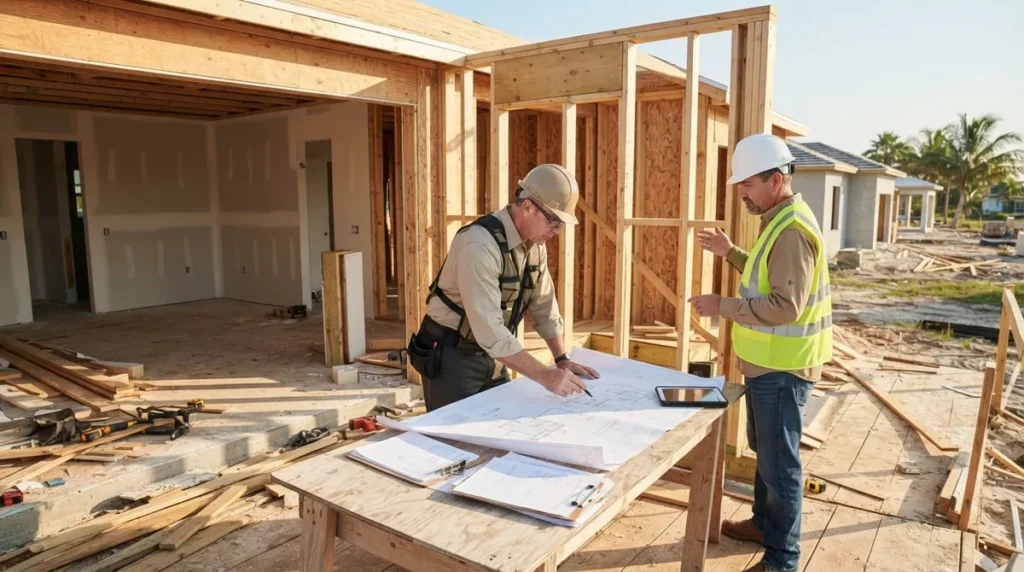
Key Takeaways
-
A failed final inspection and unpermitted work are distinct issues that often appear together; you must formally apply for an after-the-fact permit for any work done without permits, as passing inspection later doesn't retroactively legalize unpermitted construction.
-
Request the written correction notice from your local building department immediately, as this document specifies exactly what needs fixing and determines whether you need simple repairs or a full after-the-fact permit application.
-
Building officials may require access to concealed construction (walls, ceilings, floors) to verify code compliance for unpermitted work, so have as-built drawings prepared in advance to streamline this verification process.
-
After-the-fact permit fees, penalties, and procedures vary significantly by county and municipality in Florida; contact your specific building official directly to understand their exact requirements rather than assuming statewide rules apply.
-
For real estate transactions, unresolved permits and failed inspections can stall closings since title companies and lenders refuse to accept properties with open code violations; resolve issues before listing or making offers.
-
If the original contractor is unavailable, you can hire a new licensed contractor or qualify as an owner-builder to apply for the after-the-fact permit, though each path has specific legal requirements worth confirming locally.
Picture this: you've just found out a final inspection failed, and to make matters more complicated, part of the work was never permitted in the first place. Your stomach drops. Maybe you're a homeowner who inherited a patio enclosure from a previous owner, or a general contractor juggling five other jobs who just got a call from a nervous client. Take a breath. This happens more often than you'd think across Florida, and it is absolutely fixable. You just need the right roadmap and, honestly, a little patience with the process.
At 1 Contractor Solutions, we've walked alongside general contractors, solar installers, realtors, and homeowners through this exact scenario in all 67 Florida counties. So let's talk through what a failed final for unpermitted work actually means, why it happens, and how you can move from stressed-out to sorted with a clear, step-by-step plan.
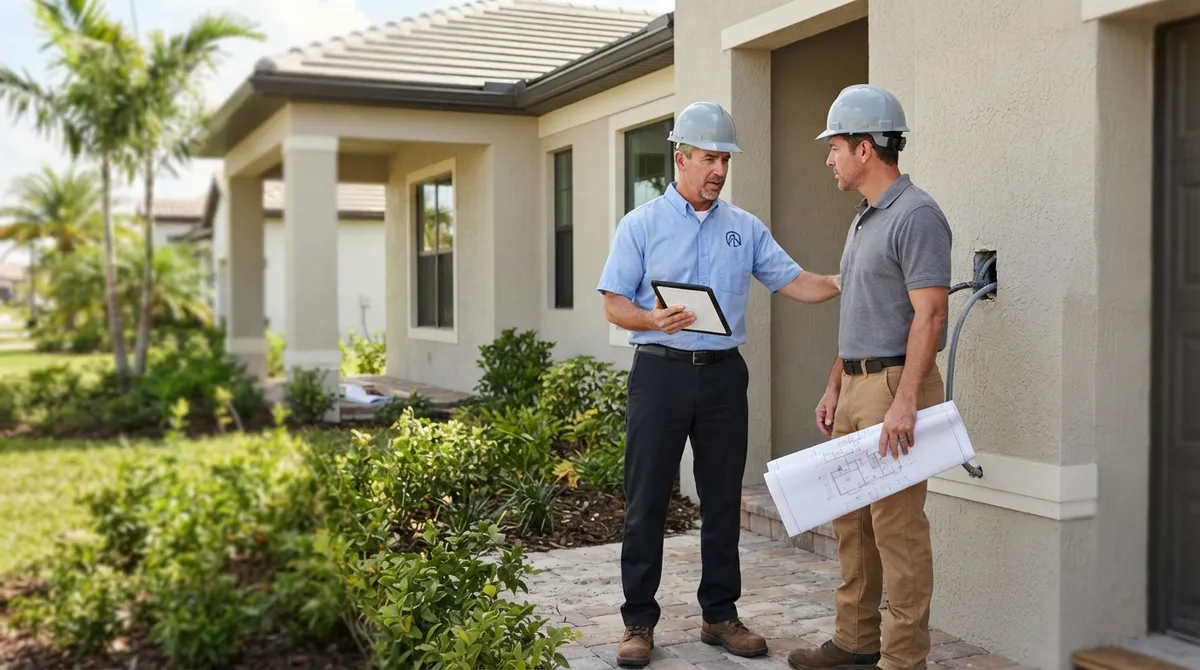
Understanding What a Failed Final Really Means
First, let's clear up some confusion. A "failed final" simply means the building department's inspector came out to close the permit and found something that didn't meet code, or the work didn't match what was originally approved. That's different, though related to, unpermitted work, which means the construction happened without any permit application at all.
Sometimes these two problems show up together. A contractor pulled a permit for a bathroom remodel, but somewhere along the way, a wall got moved or electrical got added that was never part of the approved plans. When the inspector shows up for the final, they catch the discrepancy, and now you're dealing with both a failed inspection and an unpermitted scope of work in the same project.
Under Florida Statutes Section 553.79, covered construction, alteration, repair, or demolition generally requires a permit before work begins. A failed final inspection doesn't erase that requirement retroactively. In other words, you can't simply pass an inspection later and pretend the unpermitted portion never happened. The local building department will require you to formally apply for the permit that should have existed from the start.
Why This Distinction Matters for Your Next Steps
Knowing exactly what kind of problem you have changes everything about your strategy. If you have an open permit that simply failed its final inspection, your job is narrower: fix what the inspector cited and schedule a reinspection. If you have unpermitted work discovered during that process, you're now looking at a two-part fix.
- Determine whether an active permit exists for the property or whether the work was done completely off the books
- Pull the failed-inspection report or correction notice from the local building department
- Check whether the scope of work matches what was originally approved, if any permit exists at all
- Identify which specific code sections or ordinance items caused the failure
- Confirm which department or municipality has jurisdiction over your specific address
Because permitting rules and procedures vary significantly by city and county, using a tool like our building department lookup or open permit search can save you hours of phone tag trying to figure out who actually handles your file.
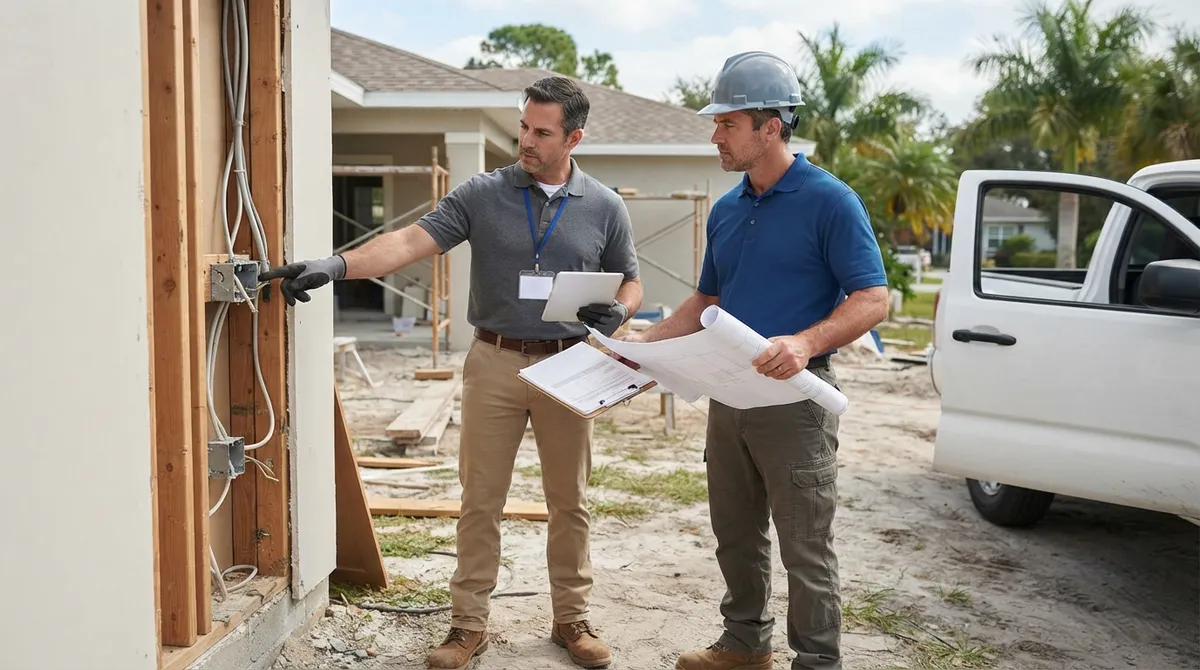
Step-by-Step: How to Handle a Failed Final for Unpermitted Work
Here's the process we walk clients through, whether they're a homeowner in Bradenton or a general contractor managing a dozen properties across Tampa Bay.
- Get the official documentation. Request the written correction notice or failed inspection report from the local building department. This document tells you exactly what needs fixing.
- Verify the permit status. Confirm whether there's an open permit needing a passing final, or whether the flagged work was never permitted at all.
- Contact the building official directly. Ask specifically how to apply for an after-the-fact permit for work already completed. Every jurisdiction handles this a little differently.
- Prepare as-built documentation. You'll likely need drawings or plans that accurately reflect what was actually built, not what was originally approved.
- Address every cited deficiency. Correct each item listed in the inspection report, one by one, and keep a written record of each fix.
- Schedule required trade inspections. Electrical, plumbing, mechanical, or structural components may each need their own sign-off before the final can pass.
- Request reinspection. Once corrections are complete, formally ask the local agency to send an inspector back out.
- Confirm the permit is officially closed. Don't assume it's done until you get written confirmation from the building department.
This process can feel like a maze, especially if you're managing it solo. That's exactly why services like after-the-fact and expired permit assistance exist. We handle the phone calls, the paperwork, and the back-and-forth with reviewers so you don't have to become a part-time permitting expert overnight.
What Happens During the As-Built Review
One thing that surprises a lot of homeowners is that the building official may require access to concealed construction. That means opening up walls, ceilings, or floors so an inspector can physically verify what's behind the finished surfaces. It sounds invasive, and honestly, it kind of is. But it's how the department confirms that framing, wiring, and plumbing actually meet code, since they couldn't inspect it during construction the first time around.
| Scenario | Typical Requirement | Who Usually Handles It |
|---|---|---|
| Open permit, failed final only | Correct cited items, request reinspection | Original contractor or owner |
| Unpermitted work discovered | Apply for after-the-fact permit, submit as-built plans | Licensed contractor, engineer, or owner-builder |
| Concealed work needs verification | Open walls/ceilings for inspector access | Contractor with structural/MEP support |
| Original contractor unavailable | Hire new licensed contractor or qualify as owner-builder | Property owner with permitting support |
Having in-house sealed drawings ready to go makes this part dramatically smoother. Our as-built drawings team and structural engineering staff can document existing conditions accurately, which helps avoid additional delays during plan review.
Fees, Penalties, and What the Law Actually Says
A lot of people assume there's a flat, statewide penalty for unpermitted work, like a fixed double fee everyone pays. That's actually a myth. Local agencies set their own fee structures and enforcement policies, so what you'll pay in Miami-Dade might look completely different from what someone pays in Pinellas County.
That said, Florida law does offer one piece of good news for homeowners and contractors dealing with a failed inspection. Under Florida Statutes Section 553.79(7)(a), if an inspection fails and the local enforcement agency doesn't provide a code- or ordinance-based reason within five business days, they're required to refund 10% of the permit and inspection fees. It's a narrow provision, and it doesn't waive your obligation to make corrections, but it's worth knowing your rights.
There's also a lesser-known rule under Section 553.79(16) that allows a local agency to close a permit six years after issuance without a final inspection, but only if they determine there's no apparent safety hazard. This is entirely discretionary on the agency's part, so don't count on it as your escape hatch. It's much better to actively resolve the issue than to hope time quietly takes care of it.
Common Fee and Enforcement Variables
- Whether the jurisdiction charges an additional after-the-fact permit fee on top of standard permit costs
- Whether code enforcement has already issued a citation, which may involve separate fines
- Whether the property is in a flood zone, which can trigger additional review under FEMA-related rules
- Whether multiple trades (electrical, plumbing, structural) each require separate after-the-fact applications
If you're already facing a code compliance violation, it's worth addressing both issues together rather than piecemeal, since building departments often want to see the whole picture resolved at once.
Who Can Actually Apply for the After-the-Fact Permit
This question comes up constantly, especially from realtors and property buyers. The answer depends on your situation and local rules, but generally you have a few paths:
- The original contractor who performed the work, if they're still licensed and available
- A newly hired, appropriately licensed contractor who takes over responsibility for the permit
- The property owner, qualifying as an owner-builder under applicable Florida law, though this comes with its own responsibilities and limitations
If the original contractor has vanished, retired, or lost their license, don't panic. This is one of the most common situations we handle through our owner-builder permits service and permit facilitation and filing team. We help you figure out which path makes the most sense given your timeline and budget.
How This Affects Real Estate Transactions
For realtors and buyers, a failed final tied to unpermitted work can absolutely stall or kill a closing. Title companies and lenders get nervous when there's an open permit or unresolved code issue attached to a property, and rightfully so. Nobody wants to inherit someone else's permitting headache.
If you're representing a buyer or seller in Miami, Tampa, St. Petersburg, or anywhere else in the state, it's smart to run a permit history check before the deal moves too far along. Our realtor and closing support service exists specifically to untangle these situations quickly, so a closing date doesn't slip by weeks or months.
Practical Tips for Contractors and Solar Companies
General contractors managing multiple projects across counties, and solar companies racing to meet installation timelines, face a unique version of this problem. A failed final on one job can ripple into scheduling delays for crews waiting on the next site.
- Keep digital copies of every permit, inspection report, and correction notice organized by property address
- Build in buffer time for as-built documentation whenever a project involves any deviation from original plans
- Loop in a structural or MEP engineer early if concealed work needs verification, rather than waiting for the inspector to demand it
- Use a private provider option where available to avoid sitting in a lengthy municipal review queue
Our private provider inspections service can significantly speed up this process in counties where it's permitted, since we're not stuck waiting in line behind every other application in the queue.
When It's Time to Bring in Permitting Support
Some property owners genuinely enjoy the DIY route, and honestly, for small, straightforward corrections, that can work fine. But when you're juggling multiple deficiencies, unclear jurisdiction rules, or a building official asking for engineering documentation you don't have on hand, that's usually the moment to call in reinforcements.
We've supported general contractors, solar installers, realtors, and homeowners across Manatee County, Broward County, and dozens of other jurisdictions statewide. Whether you need engineer letters, full plans and engineering, or simply someone to manage the plan review coordination so you're not stuck on hold with the county, we're here for it.
Curious what other property owners and contractors have experienced working with us? You can visit us on Google — 1 Contractor Solutions to see reviews firsthand, or check out what we're sharing when you follow us on LinkedIn and follow us on Facebook for ongoing permitting tips.
Quick Reference: Failed Final vs. Unpermitted Work
| Issue Type | What It Means | First Action Step |
|---|---|---|
| Failed final inspection | Permit exists, but work didn't pass final review | Get correction notice, fix cited items, request reinspection |
| Unpermitted work | No permit was ever obtained for the work performed | Contact building department, ask about after-the-fact permit process |
| Both combined | Permit exists but scope exceeds what was approved | Clarify actual scope, submit as-built plans, correct deficiencies |
Bringing It All Together
Here's the honest truth: a failed final tied to unpermitted work in Florida is stressful, but it is absolutely a solvable problem. Thousands of homeowners, contractors, and real estate professionals across the state work through this exact scenario every year, and the path forward is well-documented once you know which questions to ask and which department to ask them to.
Start by confirming your permit status, get the official correction notice in writing, and don't be afraid to ask your local building official direct questions about their specific after-the-fact process. And if the back-and-forth starts eating into your time, your peace of mind, or your project timeline, remember you don't have to navigate it solo.
We'd genuinely love to help you sort this out, whether you're dealing with a single-family remodel in Sarasota or a commercial property portfolio spread across five counties. Reach out today and get a free quote from our team, and let's get that permit closed and that final passed for good.
FAQs
What should I do after a final inspection fails in Florida?
First, get the written correction notice so you know exactly what the inspector flagged. From there, verify whether you have an open permit needing repairs or unpermitted work that needs a whole new application, then contact your local building department to confirm next steps.
How do I get an after-the-fact building permit in Florida?
You'll want to reach out to your local building department and ask about their specific process, since it varies by city and county. Generally, you'll need to submit as-built plans showing the work as it currently exists, and the department may require access to concealed areas like walls or ceilings to verify code compliance.
Can I pass a final inspection for work that was done without a permit?
Not exactly, and this trips up a lot of homeowners. A failed final doesn't legalize unpermitted work automatically; you'll need to formally apply for a permit covering that work before the inspection process can move forward properly.
Will Florida inspectors require me to open walls for unpermitted work?
It's possible, and honestly pretty common when concealed construction needs verification. Building officials want to confirm framing, electrical, and plumbing meet code, and sometimes the only way to check is by opening up finished surfaces.
Who can apply for an after-the-fact permit in Florida, the homeowner or a licensed contractor?
Both options exist depending on your situation. The original contractor can apply if they're still available and licensed, you can hire a new licensed contractor, or in many cases you can qualify as an owner-builder, though each path has its own requirements worth confirming with your local department.
We do this work every day across all 67 Florida counties. Call (866) 314-6931 and we will tell you what your situation actually requires — including when you do not need us.
Related services
Permit Facilitation & Filing
You have a crew scheduled, a client asking for dates, and a permit sitting somewhere in a queue you cannot see. We file it, w…
See the servicePlan Review Coordination
A permit in plan review is not one queue. On a commercial project it can be six queues, each with its own reviewer, its own c…
See the serviceReady to get your permit moving?
One call tells you which jurisdiction controls your project, what it will take, and what it will cost. Most of the time we can scope it on the phone.