
Blog
What Is Field Verification for After-the-Fact Permits in FL?
Learn what field verification means for after-the-fact permits in Florida, what it proves, and how to move from unpermitted work to closeout in 2026.
Key Takeaways
-
Field verification documents existing unpermitted construction through measurements, photos, and as-built drawings so the building department can review it, but this documentation alone does not guarantee code compliance or permit approval.
-
Each Florida jurisdiction sets its own field verification requirements and fees, so confirm local procedures and costs with your building department before investing in documentation work.
-
Concealed work may require small targeted inspection openings, engineer assessments, or sealed drawings depending on scope and jurisdiction, but major wall demolition is often avoidable with smart planning.
-
Unpermitted work must pass plan review and inspections just like permitted work; deficiencies found during verification must be corrected before final permit closeout.
-
Starting the after-the-fact process early prevents surprises during appraisals, inspections, insurance reviews, or real estate transactions that can delay closings and complicate timelines.
-
Match the professional to project complexity: simple interior work needs a drafter, while structural changes, electrical work, or roof modifications require a Florida-licensed engineer or architect with sealed documentation.
Picture this: you're about to sell your home, refinance, or finally finish that renovation, and someone mentions the words "unpermitted work." Your stomach drops. Maybe a prior owner enclosed the patio. Maybe a crew swapped out a panel and never called the building department. Now you need to make it right.
Here's the good news. Florida has a path forward, and it often starts with something called field verification for after the fact Florida permits. In plain English, that means someone visits the property, measures what was built, photographs what is visible, and documents the work exactly as it exists today. That record helps your local building department decide what happens next.
Does it guarantee approval? No. It's not a shortcut around plan review or inspections. But it is the foundation that makes everything else possible. In this guide, we'll walk through what field verification really involves, what it can and cannot prove, when concealed work becomes a problem, and how to move from "uh-oh" to a closed permit in 2026.
What Does Field Verification Mean for an After-the-Fact Permit?
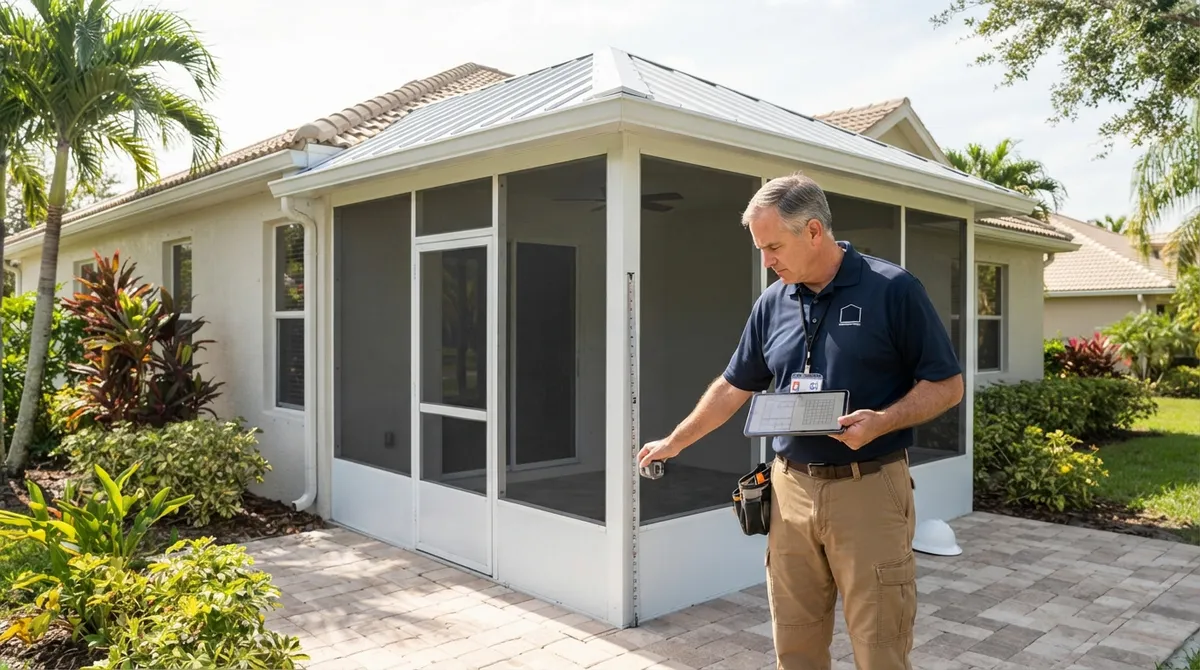
Field verification is the site-based documentation and assessment of construction that was completed without the required permit. A qualified professional visits the property, records existing conditions, and turns those observations into drawings or a report the building department can review.
It's important to know that "field verification" is not a single, statewide Florida permit category. Each local building department sets its own application procedures and documentation requirements. So the exact paperwork in one city may look different from the paperwork two counties over.
Think of it as telling the true story of your property. The reviewer can't evaluate what they can't see, so the field visit brings the building to the paper.
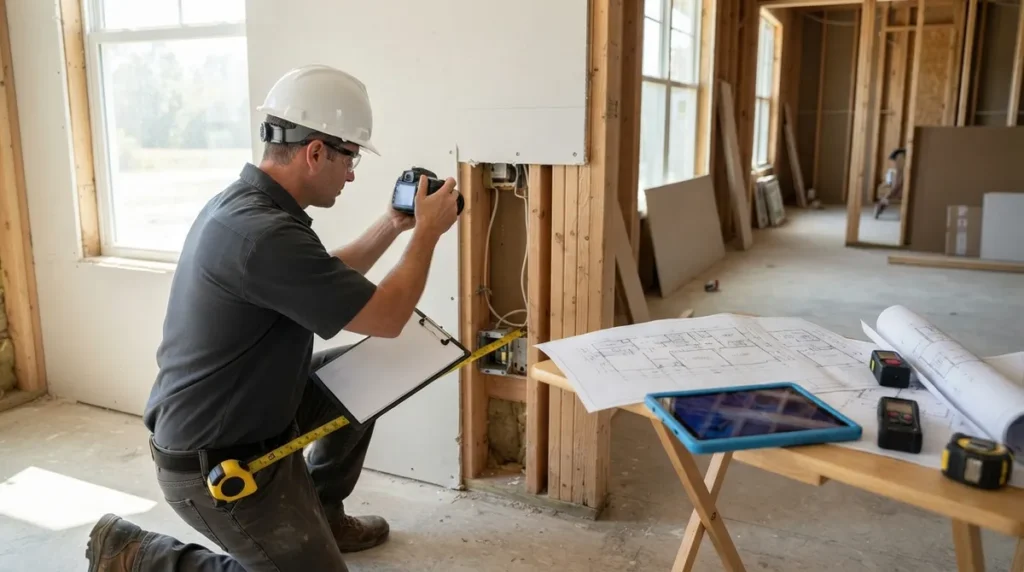
What a Field Visit Typically Includes
- Measurements of the accessible structure, room dimensions, heights, and setbacks
- Photographs of framing, finishes, connections, and equipment that can be seen
- Observations of electrical, plumbing, and mechanical components in plain view
- Notes on materials, anchors, fasteners, and attachment methods where accessible
- A comparison to any existing permit history or prior approved plans
From that data, a drafter or engineer prepares as-built drawings that accurately describe what's there. Accuracy matters more than polish. The drawings should reflect reality, not the way the project was supposed to look.
Why Florida Law Makes This Step Necessary
Florida Statutes §553.79 is the principal statewide reference for building permits and inspections. It generally requires a permit before covered construction or alteration begins. When that didn't happen, the work is considered unpermitted, even if it was done well.
Here's the part many owners miss. Filing a retroactive application does not legalize the work by itself. The local authority must still review it, require the applicable inspections, and grant approval. Field verification simply gives the department the information it needs to do that review. Always verify the current statutory text and the applicable code edition before relying on any summary, including this one.
If you want a deeper look at how the whole process fits together, our guide on how to get an after-the-fact permit in Florida is a helpful companion read.
What Field Verification Can and Cannot Prove
This is where expectations need a gentle reset. A survey or field report is a record of what exists. It is not a certificate of code compliance, and that distinction trips up a lot of well-meaning owners.
| Item | Field Verification Can Show | Field Verification Cannot Show Alone |
|---|---|---|
| Room size and layout | Accurate measured dimensions | Whether zoning allows it |
| Visible framing | Member sizes and spacing | Hidden connections or load path |
| Exposed wiring and panels | Visible components and labeling | Concealed wiring quality |
| Plumbing fixtures | Fixture locations and types | Pipe slope and buried lines |
| Overall finished work | Existing conditions | That the work meets code |
In short, field verification documents. The building official, supported by plan review and inspections, decides whether the work is acceptable.
What About Concealed Work?
This is the question we hear most often: "Do I have to tear open my walls?" The honest answer is, it depends.
If work is concealed and can't be verified from records or accessible conditions, the building official may ask for additional evidence. That could mean exploratory openings, photos taken during opening, or other supporting documentation. Depending on scope and jurisdiction, you may also be asked for sealed drawings, calculations, or a report from a Florida-licensed architect or engineer.
Don't panic. Many projects can be verified through attic access, crawl spaces, panel covers, and small, targeted openings rather than major demolition. Smart planning keeps the damage small and the cost reasonable.
Common Ways Concealed Work Gets Verified
- Reviewing any available original plans, invoices, or product records
- Inspecting accessible areas such as attics, garages, and utility rooms
- Making small, targeted inspection openings in drywall or ceilings
- Using engineer observations to evaluate structural conditions
- Submitting an engineer letter where the jurisdiction accepts one
Whether an engineer is needed also varies. If you're wondering who has to sign what, this breakdown on sealed drawings for after-the-fact permits explains the common scenarios.
Step-by-Step: How the After-the-Fact Process Usually Works
Every jurisdiction is a little different, but the typical workflow follows a recognizable pattern. Here's the roadmap most owners and contractors follow.
- Identify the jurisdiction and permit history. Confirm whether your property falls under a city or county authority, and check for open or expired permits.
- Disclose the unpermitted scope. Be upfront about what was built. Honesty makes the process smoother.
- Perform field verification. Document existing conditions with measurements, photos, and notes.
- Prepare plans and supporting documents. This includes as-built drawings and, when required, sealed engineering.
- Submit the permit application. File with the proper authority using their required forms.
- Complete plan review and inspections. Respond to reviewer comments and schedule required inspections.
- Correct any deficiencies. Fix what doesn't meet code before closeout.
- Receive final approval or permit closeout. The record is finally clean.
Not sure who controls your address? Try our building department lookup tool to point you to the right office before you spend a dime on field work.
Who Should Do the Field Verification?
Different situations call for different professionals. A simple enclosed porch may need a skilled drafter. A modified roof structure or removed wall may need a Florida-licensed engineer. The key is matching the expertise to the risk.
| Project Type | Likely Professional | Typical Documentation |
|---|---|---|
| Interior remodel, non-structural | Drafter or designer | As-built floor plans |
| Added room or enclosure | Drafter plus engineer | As-builts, structural review |
| Altered roof framing | Structural engineer | Sealed letter or drawings |
| Electrical or HVAC changes | MEP engineer or licensed contractor | Diagrams, load calculations |
| Solar or exterior equipment | Engineer and installer | Structural and electrical documentation |
Whoever you hire, confirm the requirements with the authority having jurisdiction first. That single phone call can prevent paying for field work that the department won't accept.
What Does After-the-Fact Cost?
Let's talk money, because it's usually on your mind. After-the-fact fees and enforcement consequences are local, not a uniform statewide multiplier. Some jurisdictions charge additional or doubled fees. Others simply charge the normal permit fee.
For example, Seminole County's 2025 fee resolution lists an after-the-fact variance fee at double the standard variance fee, with possible discretionary reduction or waiver by the Planning & Development Division Manager. That's a variance fee in one county, not a statewide building-permit penalty, so don't assume it applies to your situation.
Your total investment usually includes several moving parts:
- Field verification and measuring time
- Drafting of as-built plans
- Engineering, if the building department requires it
- Permit application and plan review fees set by the jurisdiction
- Inspection fees and any corrective work
To see how these pieces typically add up, check out our overview of after-the-fact permit costs in Florida.
What Happens if Field Verification Finds Problems?
Sometimes the field visit reveals something that doesn't meet code. That can feel discouraging, but it's actually valuable information. It's far better to find a problem now than to have an inspector or buyer find it later.
Deficiencies must be resolved before final permit closeout. Fixes might be minor, like adding a missing fastener schedule or correcting a receptacle. Or they might be larger, like reinforcing framing. Your design team can propose corrections, and the building department will review them.
Staying calm and organized is half the battle. Document the problem, get a clear scope of corrections, and work through them one at a time. Most issues have a solution, and the earlier you start, the more options you keep.
Why Timing Matters for Sellers, Buyers, and Contractors
Unpermitted work has a habit of surfacing at the worst moments. Appraisals, inspections, insurance reviews, and title searches can all bring it to light. When it appears mid-transaction, the clock gets stressful fast.
If you're a real estate professional or investor, early field verification helps you price repairs, plan timelines, and avoid surprises. If you're a contractor, it protects your client relationship and your reputation. If you're a homeowner, it protects your equity and your peace of mind. Our guide on how permit holds can delay a Florida closing shows just how quickly things can snowball.
Getting Help From a Team That Handles the Whole Process
You don't have to figure this out alone. At 1 Contractor Solutions, we act as Florida's outsourced permitting department. Our drafting and engineering are in house, and our engineer signs and seals the work, so when a reviewer raises a question, we can answer it without waiting on an outside consultant.
We handle after-the-fact and expired permits across all 67 Florida counties, from filing and tracking through reviewer comments, revisions, and closeout. We also respond within 30 minutes, day or night, and se habla español. You can see what clients say by reading our 1 Contractor Solutions reviews on Google.
If your situation feels urgent, such as a stop work order or a delayed closing, our urgent permit rescue service is built for exactly that moment. And if you want to keep up with Florida permitting news and tips, follow us on LinkedIn or follow us on Facebook.
Final Thoughts: Start With the Truth of What's Built
Field verification is the first honest step toward a clean permit record. It captures what exists, gives your building department the information it needs, and sets up the plans, engineering, and inspections that follow. It doesn't replace review, and it doesn't promise approval, but it turns a murky situation into a manageable plan.
Every property, jurisdiction, and scope is different, so the smartest move is to confirm local requirements early and document carefully. You've got this, and you don't have to do it alone. Ready to take the first step? Get a free quote and let our team map out the fastest, cleanest path to closeout.
FAQs
What does field verification mean for an after-the-fact permit in Florida?
It means a professional visits the property to measure, photograph, and document construction that was built without a permit. That record helps your local building department evaluate the work, but it doesn't replace plan review or guarantee approval.
Will I have to open walls or ceilings for an inspection of unpermitted work?
Not always! If work is concealed and can't be verified from records or accessible areas, the building official may ask for small exploratory openings or other evidence. Many projects can be verified through attics, panels, and targeted openings rather than major demolition.
Do I need a Florida-licensed engineer or architect to document existing construction?
It depends on the scope and your jurisdiction. Simple, non-structural work may only need as-built drawings, while structural, electrical, or mechanical changes may require sealed drawings, calculations, or a report from a Florida-licensed professional.
How much do after-the-fact permit fees and penalties cost in Florida?
Fees and enforcement are set locally, so there's no single statewide multiplier. Some jurisdictions charge extra for after-the-fact work, like Seminole County's doubled variance fee, while others charge standard permit fees, so confirm with your building department.
What happens if field verification finds that the work does not meet code?
Deficiencies must be corrected before final permit closeout. Your design team can propose fixes, such as added reinforcement or corrected wiring, and the building department will review and inspect them before approving the permit.
We do this work every day across all 67 Florida counties. Call (866) 314-6931 and we will tell you what your situation actually requires — including when you do not need us.
Related services
Permit Facilitation & Filing
You have a crew scheduled, a client asking for dates, and a permit sitting somewhere in a queue you cannot see. We file it, w…
See the servicePlan Review Coordination
A permit in plan review is not one queue. On a commercial project it can be six queues, each with its own reviewer, its own c…
See the serviceReady to get your permit moving?
One call tells you which jurisdiction controls your project, what it will take, and what it will cost. Most of the time we can scope it on the phone.