
Blog
Milestone vs. SIRS in Clearwater: Which Does Your Condo Need?
Compare Florida's milestone inspection and SIRS for Clearwater condos, plus deadlines, phases, and how permits fit into repairs.
Key Takeaways
-
Florida's milestone inspection (§553.899) checks for substantial structural deterioration and is performed by a Florida-licensed architect or engineer, while the SIRS plans and funds future repairs; neither is a permit.
-
Milestone inspections generally apply to residential condo and co-op buildings three or more habitable stories tall, with the first due at 30 years from the certificate of occupancy, but local agencies can require it at 25 years, especially for coastal Clearwater.
-
Confirm your building's exact trigger with the local building official rather than assuming the 30-year date, and record the answer in association records.
-
Once notice arrives, the association must notify owners within 14 days and generally complete phase one within 180 days, so calendar both windows immediately.
-
The association arranges and pays for the inspection of portions it maintains, while owners are notified; repairs recommended afterward will generally require plans and permits before construction begins.
-
Verify whether your SIRS deadline overlaps with milestone timing, since qualifying associations may combine both studies, but confirm current statutory language and deadlines with qualified counsel before relying on them.
If you own a condo in Clearwater, or sit on the board of an association, you have probably heard a lot of talk about structural inspections lately. The conversation can get confusing fast. One neighbor says the building needs a milestone inspection. Another says it needs a reserve study. A third swears it is the same thing with two names. Take a deep breath, because you are not alone, and the answer is much friendlier than the rumor mill makes it sound.
When people search for a condo structural inspection in Clearwater, they usually mean Florida's statutory milestone inspection. That is a separate requirement from the Structural Integrity Reserve Study, often called the SIRS, and neither one is a repair permit. In this guide, we will compare the milestone inspection and the SIRS side by side, explain how each one works, and show where permitting enters the picture once repairs are needed. Since 2026 deadlines are on many associations' minds, we will keep the focus practical.
What a Clearwater Condo Structural Inspection Really Means
In Clearwater, a condo structural inspection is normally the milestone inspection required by Florida Statutes §553.899. It applies to condominium and cooperative buildings that are three or more habitable stories tall. It is not a routine home inspection, and it is not the kind of inspection a city inspector performs on a permitted job.
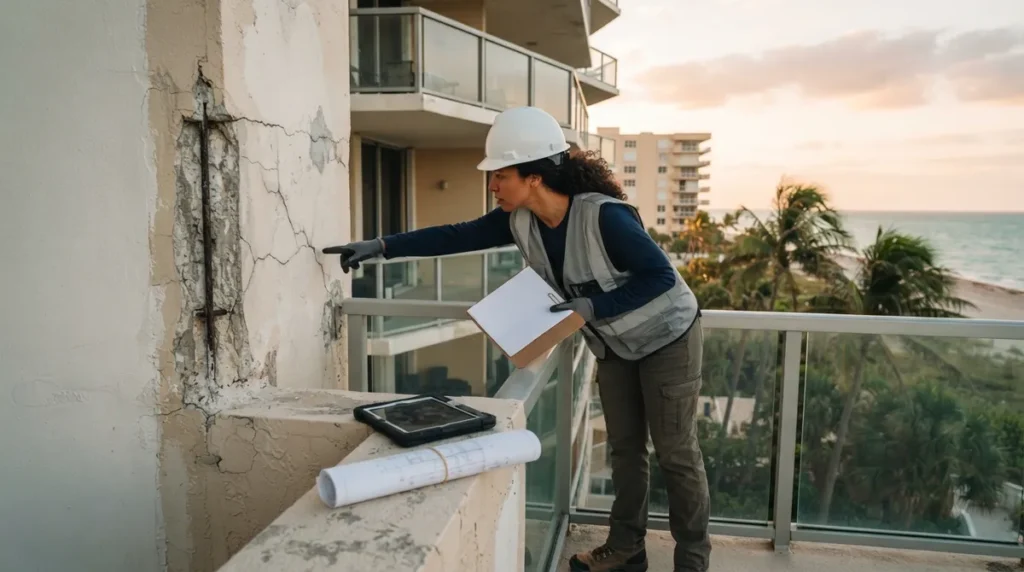
A Florida-licensed architect or engineer performs the milestone inspection. Their job is to look for signs of substantial structural deterioration in the major structural components of the building. Think of it as a health checkup for the bones of your building.
Here is the part that surprises many owners: the inspection is arranged by the association, not by individual unit owners. Your board hires the professional, and the association handles the cost for the portions of the building it is responsible for maintaining under its governing documents.
Milestone Inspection vs. SIRS: The Big Comparison
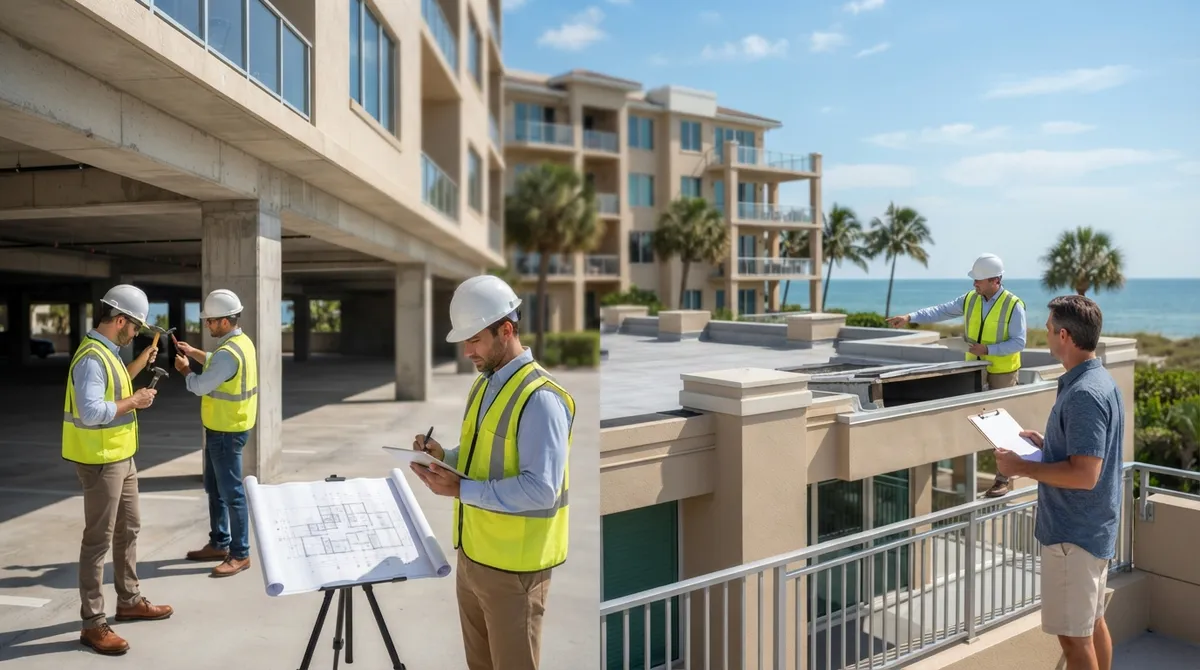
These two requirements are cousins, not twins. They are often discussed together because they involve the same kinds of buildings and, in some cases, similar timing. The table below shows how they differ.
| Feature | Milestone Inspection | Structural Integrity Reserve Study (SIRS) |
|---|---|---|
| Main purpose | Check for substantial structural deterioration | Plan and fund future repair and replacement of specified components |
| Who performs it | Florida-licensed architect or engineer | Qualified professional preparing the study under the statute |
| What it examines | Major structural components, starting with a visual examination | Specified building components, remaining useful life, and projected costs |
| Frequency | First at 30 years, then every 10 years (or earlier if locally required) | At least every 10 years for covered buildings |
| Output | Sealed report plus a separate summary of findings and recommendations | Study with reserve funding schedule |
| Is it a permit? | No | No |
The simplest way to remember it: the milestone inspection asks, "Is the structure showing serious deterioration right now?" The SIRS asks, "What will it cost to keep these components in good shape, and are we saving enough?"
Which Clearwater Buildings Are Covered?
Florida Statutes §553.899 generally covers residential condominium and cooperative buildings that are three or more habitable stories tall. If your Clearwater building is a two-story garden-style complex, the milestone requirement may not apply, though you should still confirm with the local building official.
Here are the quick checks most boards start with:
- Count the habitable stories in each building, not just the tallest one on the property.
- Find the date on the original certificate of occupancy.
- Confirm whether the building is residential condominium or cooperative.
- Ask the local enforcement agency whether any earlier local trigger applies.
That last point matters a great deal, and we will cover it next.
The 30-Year Rule and the 25-Year Possibility
Under the statute, the first milestone inspection is generally due by December 31 of the year the building reaches 30 years from its certificate of occupancy. After that, it repeats every 10 years.
However, a local enforcement agency can require the first inspection at 25 years when local conditions warrant it. Environmental conditions, including proximity to salt water, are specifically part of that conversation. Clearwater sits right on the Gulf coast, so owners here should never assume a single statewide age answers the question.
Here is a friendly rule of thumb: do not guess. Contact the building official with jurisdiction over your property and ask what trigger applies to your specific building. Then write the answer down, share it with your board, and keep it in the association records.
Phase One and Phase Two, Explained Simply
The milestone inspection has two possible phases. Many buildings only ever need the first one.
Phase One: The Visual Examination
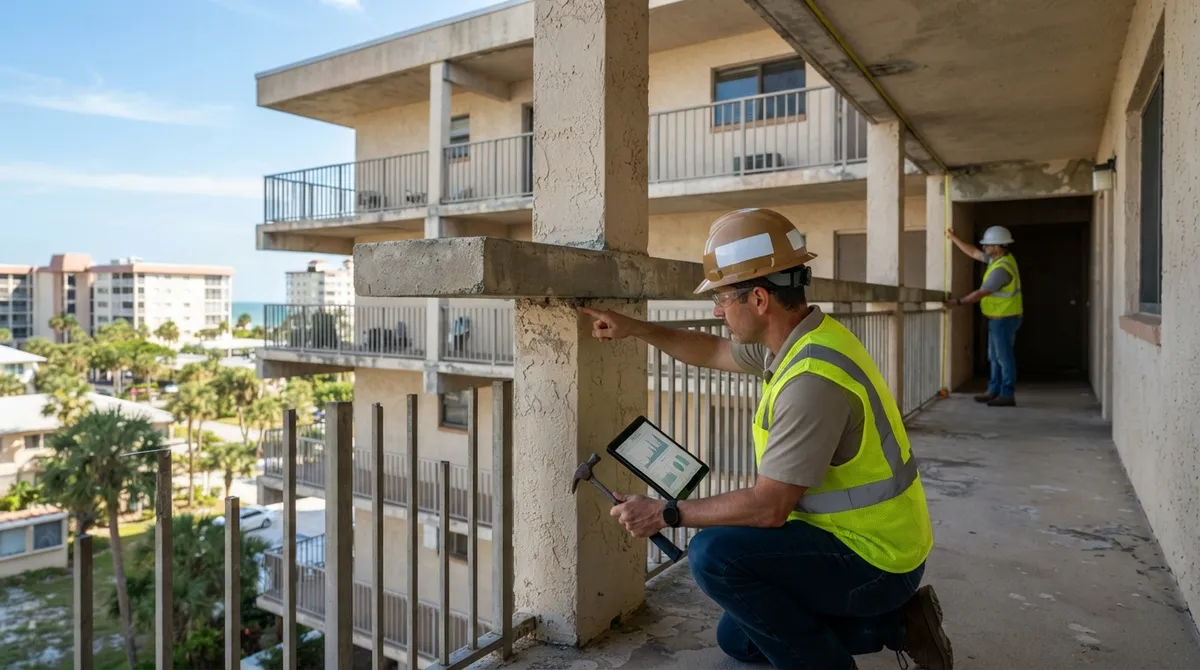
In phase one, the architect or engineer visually examines the major structural components for signs of substantial structural deterioration. This is usually less invasive than owners expect. It is a careful walk-through with trained eyes, not demolition.
Phase Two: Deeper Testing When Needed
If the professional finds evidence that warrants further evaluation, phase two begins. This can involve more detailed testing or analysis to determine how extensive and how urgent a condition is. Phase two is not a punishment. It is simply how the professional gets the facts before making recommendations.
If you want a deeper side-by-side look, our article on Phase 1 vs. Phase 2 milestone inspection in Florida (2026) walks through the differences in detail.
The Timeline Every Board Should Know
Deadlines are where associations get into trouble, so let us lay out the sequence in order. Remember to verify exact dates with the local enforcement agency and qualified counsel.
- Written notice arrives. The local enforcement agency sends written notice that a milestone inspection is required.
- Notify owners within 14 days. The association generally has 14 days after receiving the notice to tell unit owners about the requirement and the deadline.
- Hire the professional. The board engages a Florida-licensed architect or engineer to perform the inspection.
- Complete phase one within 180 days. Phase one generally must be completed within 180 days after the owner receives the written notice.
- Receive the sealed report. The professional provides a sealed report and a separate summary of material findings and recommendations to the association, any other owner of a portion outside the condominium or cooperative ownership, and the local building official.
- Move on any repairs. If repairs are recommended, the association plans, permits, and completes them.
Missing a deadline can bring real consequences. If your building is in that spot, read what happens if a Florida condo misses its milestone deadline before the next board meeting.
Who Pays and Who Does What
Money questions come up at every condo meeting, so here is a clear breakdown. The responsibilities below follow the general statutory framework, and your governing documents can affect the details.
| Task | Who Handles It |
|---|---|
| Arranging the milestone inspection | The condominium association |
| Paying for inspection of portions the association maintains | The association |
| Notifying unit owners after written notice | The association (generally within 14 days) |
| Performing the inspection | Florida-licensed architect or engineer |
| Receiving the sealed report and summary | Association, certain other owners, and the local building official |
| Permitting repairs that follow | The association and its contractors, with permitting support as needed |
If you are curious about budgeting, our guide on how much a milestone inspection costs in Florida is a helpful companion read.
The SIRS Deadline Question for 2026
Now for the part many boards are watching closely. A Structural Integrity Reserve Study is generally required at least every 10 years for covered residential condominium buildings that are three habitable stories or higher.
The 2026 statute search result indicates that qualifying associations with a milestone inspection due on or before December 31, 2026 may complete the SIRS at the same time as the milestone inspection, but not later than December 31, 2026. Because statutory text can change and applicability depends on your building, verify the current language and your association's specific deadline with qualified counsel or the relevant authority before relying on any date.
Why does coordinating them make sense? The same professionals are often already on site examining the same structure. Combining the work can reduce disruption for residents and make it easier for the board to see the full picture of building condition and reserve needs at once.
Where Permitting Enters the Picture
This is where a Florida permitting team becomes a valuable partner. A milestone inspection is not a repair permit. It also does not replace any permit required for the work that follows. If the inspector's report recommends concrete restoration, structural reinforcement, or other repairs, the association will generally need properly prepared plans and permits before construction begins.
That is the moment boards sometimes feel stuck. The report is in hand, the recommendations are clear, but now someone has to turn those recommendations into permit-ready documents. Typical needs include:
- Sealed structural drawings that describe the repair scope.
- Site plans and supporting documentation for the work area.
- Permit filing, tracking, and reviewer-comment responses.
- Revisions and resubmittals when the building department asks questions.
- Coordination so contractors can schedule crews with confidence.
This is exactly the kind of work 1 Contractor Solutions handles. Our drafting and engineering are in house, and our own engineer signs and seals the work, so when a reviewer flags something we can fix it quickly. You can learn more about our structural engineering services, our permit facilitation and filing, and our milestone inspection and recertification support. For those working in Pinellas County, our Clearwater page has local details.
Who Benefits Most from Understanding This Process
Different readers come to this topic with different goals. Here is how the milestone and SIRS conversation lands for each.
- Condo associations and boards: You carry the notice, the owner communication, and the hiring decisions. Staying organized now prevents scrambles later.
- General contractors: Post-inspection repair work is a growing source of projects. Knowing the sequence helps you quote realistically and schedule around permits.
- Real estate professionals and buyers: A building's inspection status and reserve picture can influence value and closing conversations. Our realtor and closing support can help when permits become part of a deal.
- Design trade professionals: Architects and engineers who need reliable outsourced drafting and permit administration can lean on a team built for that.
- Homeowners and unit owners: Understanding your association's obligations helps you ask better questions at meetings and plan for assessments.
If you want a regional comparison, we also covered related guidance in our posts on 40-year recertification in Tampa and how to find who can perform a milestone inspection in Florida.
A Practical Checklist for Clearwater Boards
Here is a straightforward action list to keep your association on track. Think of it as a gentle nudge in the right direction.
- Confirm your building's habitable story count and certificate of occupancy date.
- Contact the local building official to confirm whether a 25-year or 30-year trigger applies.
- Calendar the 14-day owner notification window and the 180-day phase one window as soon as notice arrives.
- Verify whether your SIRS deadline overlaps with your milestone inspection timing.
- Interview and hire a Florida-licensed architect or engineer early.
- Prepare your permitting plan before the report lands, so repairs do not stall.
You can also see how local review timing works in our guide to how long a building permit takes in Clearwater, and learn about the local support available from a Clearwater permit expediter.
Why Local Knowledge Makes a Difference
Florida has 67 counties and hundreds of municipalities, and each one runs its process a little differently. Near city lines it is not always obvious which jurisdiction controls a property. Getting that wrong can cost weeks. Our team has filed in more than 400 municipalities, so we know how to find the right authority and move your paperwork through it.
Want to see what other property owners say about working with us? You can read what our customers share by visiting us on Google through this link: Visit us on Google — 1 Contractor Solutions. We also share updates on social, so feel free to follow us on LinkedIn or follow us on Facebook for Florida permitting tips.
Final Thoughts: Two Requirements, One Healthier Building
The milestone inspection and the SIRS are both designed to keep Florida condo buildings safe and financially prepared. The milestone inspection checks the structure's current condition. The SIRS plans for the future cost of keeping it that way. Neither is a permit, and both can lead to repair work that absolutely does require one.
For a condo structural inspection in Clearwater, the smartest move is to start early, confirm your local deadline, and line up permitting support before the report arrives. You do not have to navigate this alone, and you do not have to feel overwhelmed. Take it one step at a time.
Ready to turn your inspection findings into permit-ready plans? Reach out today and get a free quote from the team that serves as Florida's outsourced permitting department. If your project involves marketing a service business, our friends at Brain Buzz Marketing support growth-minded companies too.
FAQs
Does my Clearwater condo building need a Florida milestone inspection?
Most likely, if it is a residential condominium or cooperative building that is three or more habitable stories tall. The first inspection is generally due by December 31 of the year the building reaches 30 years from its certificate of occupancy. Check with the building official to confirm your building's specific requirement and deadline.
Can Clearwater require a condo milestone inspection at 25 years instead of 30?
Yes, it is possible. A local enforcement agency can require the first inspection at 25 years when local circumstances, such as proximity to salt water, warrant an earlier timeline. Because Clearwater is coastal, it is smart to confirm the exact trigger with the building official rather than assume 30 years.
Is a milestone inspection the same as a Structural Integrity Reserve Study?
Nope, they are related but different. The milestone inspection checks for substantial structural deterioration, while the SIRS studies specified building components, their remaining useful life, and the reserve funding needed to repair or replace them. Neither one replaces the permits needed for actual repair work.
Do repairs found during a condo inspection need building permits in Clearwater?
Generally, yes. A milestone inspection is not a repair permit, so any construction work that follows typically needs properly prepared plans and permits. A permitting team can prepare sealed drawings, file the application, and handle reviewer comments so your repairs keep moving.
Who is qualified to perform a Florida condominium milestone inspection?
A Florida-licensed architect or engineer performs the inspection. They examine the major structural components, may recommend a more detailed second phase if warranted, and deliver a sealed report with a separate summary of findings to the association and the local building official.
We do this work every day across all 67 Florida counties. Call (866) 314-6931 and we will tell you what your situation actually requires — including when you do not need us.
Related services
Permit Facilitation & Filing
You have a crew scheduled, a client asking for dates, and a permit sitting somewhere in a queue you cannot see. We file it, w…
See the servicePlan Review Coordination
A permit in plan review is not one queue. On a commercial project it can be six queues, each with its own reviewer, its own c…
See the serviceReady to get your permit moving?
One call tells you which jurisdiction controls your project, what it will take, and what it will cost. Most of the time we can scope it on the phone.