
Blog
6 Steps for Foundation Verification After the Fact in Florida
Learn how foundation verification after the fact in Florida works, with 6 practical steps for owners, contractors, and realtors.

Key Takeaways
-
Foundation verification after-the-fact in Florida requires identifying your correct local building department first, as procedures, fees, and documentation requirements vary significantly by county and city, not statewide.
-
A Florida-licensed professional engineer must evaluate the as-built foundation and prepare signed, sealed documentation comparing it to code requirements—this engineering package is often the most persuasive evidence for approval.
-
Before spending money on engineering, search for existing permits, violations, and property history, as an expired permit may offer a simpler path than a brand-new after-the-fact application.
-
Gather all available evidence including construction photos, concrete invoices, original plans, surveys, and prior inspection records; together these documents help reduce destructive investigation requirements.
-
Most after-the-fact applications receive at least one round of reviewer comments requesting revised calculations, additional testing, exposure of concrete edges, or corrections—fast responses keep the process moving.
-
Foundation verification approval does not automatically legalize unpermitted structures above it; if the foundation supports an undocumented addition or other work, the building department may review the entire structure.
Here's a scenario we hear more often than you'd think: a homeowner buys a property, the survey looks fine, and then a lender, an appraiser, or a code officer asks one simple question. "Where's the foundation permit?" Suddenly, concrete that has been sitting happily for years becomes the biggest roadblock to a closing, a refinance, or a new addition.
Take a breath. This is a very common problem, and it is very fixable. Foundation verification after the fact in Florida is the process of getting local building-department approval for foundation work that was built without a permit or poured before the required inspection. It is not always quick, and it is not identical in every county, but there is a clear path through it.
In this guide, we'll walk through six practical steps, from finding the right building department to getting your engineering package ready. Whether you're a general contractor, a solar company eyeing a roof-mounted or ground-mount install, a realtor with a deal on the line, or a homeowner who just wants to sleep well, you'll find something useful here.
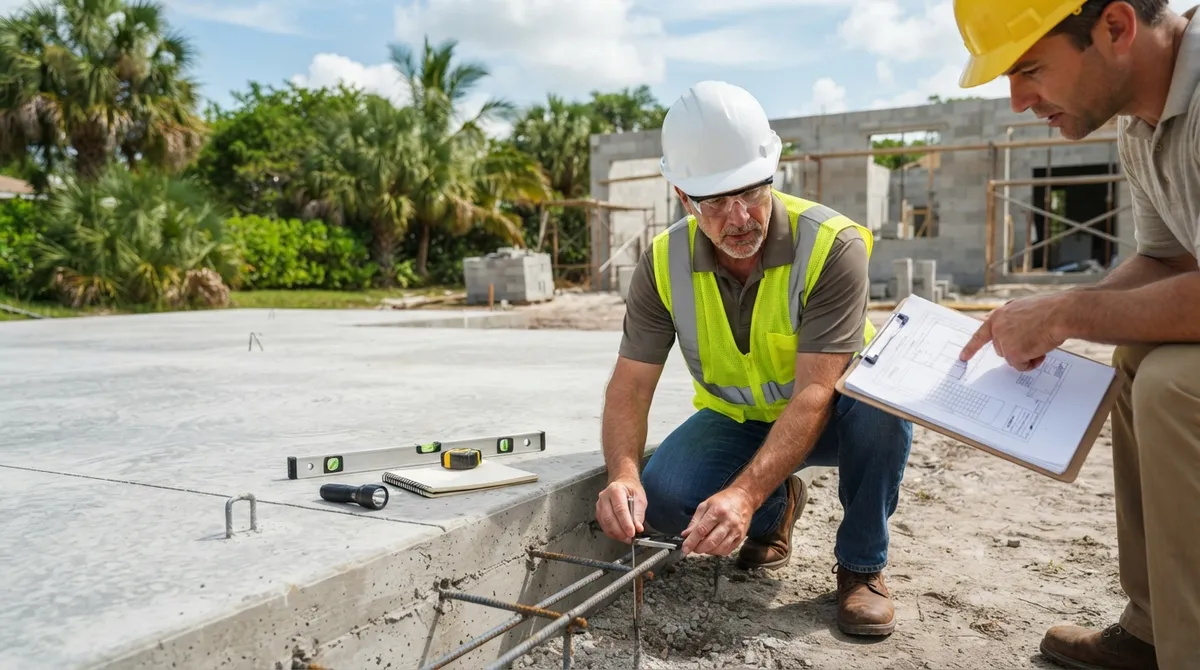
What "Foundation Verification After the Fact" Actually Means
Before we dive into the steps, let's get the terminology straight. In Florida, "foundation verification after the fact" generally means seeking approval for foundation work that was completed without the required permit or before required inspections.
Here's the important part: Florida does not appear to have a single, statewide, uniform application for this. The local enforcing agency, usually your city or county building department, sets its own procedures, documentation requirements, inspection steps, and fees. That's why two neighbors in two different counties can have very different experiences.
Florida Statutes §553.79 generally requires a permit for covered construction and plan review before issuance. The statute does allow a building official to issue a foundation-only permit before the plans for the entire building are complete. But that is a forward-looking, at-risk option. It does not automatically bless concrete that is already poured and hidden.
Why the Inspection Normally Matters
Under the 2023 Florida Building Code, Building, §110.1, permitted work must remain exposed and accessible until it is approved. The standard foundation inspection usually happens after excavation and forms are in place, but before concrete goes in. It typically covers items like:
- Footings and grade beams
- Stem walls
- Monolithic slabs-on-grade
- Piles and pile caps
Once the concrete is placed, that original look is gone. So the building official has to decide what other evidence will satisfy the code. That is exactly the gap we are trying to close.
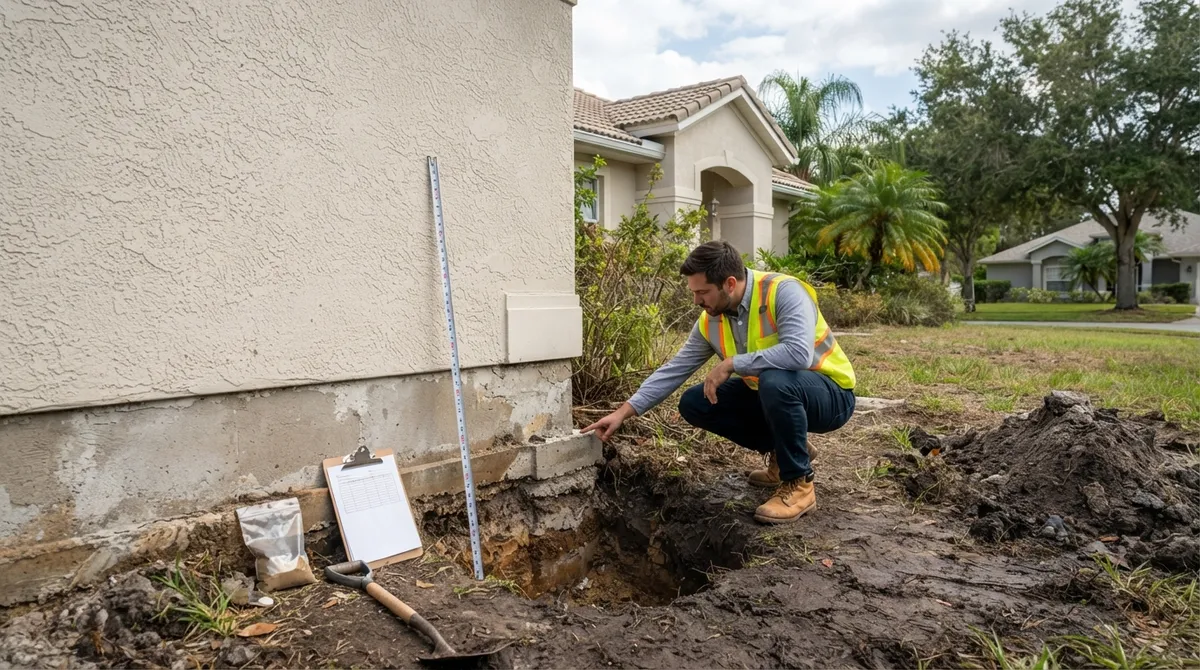
6 Steps for Foundation Verification After the Fact
1. Identify the Right Building Department
This sounds simple, but it trips people up constantly. Near city limits, the jurisdiction that controls your parcel is not always the one on your mailing address. A property with a Tampa mailing address may sit in unincorporated Hillsborough County, and a "Sarasota" address may belong to a different municipality entirely.
Start by confirming your authority having jurisdiction (AHJ). Our building department lookup tool is a handy place to begin, and it can save you from filing with the wrong office. If you're unsure, read our guide on which Florida jurisdiction reviews my project.
Why does this matter so much? Because every requirement in the remaining steps, from forms to fees to what counts as acceptable evidence, comes from that office.
2. Check for Open Permits, Violations, and History
Before you spend a dollar on engineering, learn what is already on record. You may find an old permit that was never finaled, a partial permit that covered only part of the work, or an active code case.
Run a search on the property using our open permit search tool. If you find an expired permit tied to the foundation, you may be dealing with a different (and sometimes easier) path than a brand-new application. Our article on how to close an expired permit in Florida explains how those cases differ.
Also look at the bigger picture. If the foundation supports an unpermitted addition, garage conversion, or enclosed patio, the building department may review the whole structure, not just the slab. Knowing that up front prevents unpleasant surprises later.
3. Gather Your Records and Evidence
Now comes the detective work, and honestly, it's kind of fun when you find the good stuff. Collect everything that shows what was built and when. Helpful items include:
- Original plans, sketches, or engineering from the builder or prior owner
- Photos taken during construction (even old phone pictures can help)
- Concrete delivery tickets, invoices, and contractor agreements
- Survey or boundary documents showing the structure's footprint
- Prior inspection reports, insurance records, or appraisal notes
- Any correspondence with the building department
None of these items automatically earns approval. But together they help the engineer and the building official understand what is under the surface, and sometimes they reduce the amount of destructive investigation required.
4. Get a Florida-Licensed Engineer to Evaluate the As-Built Foundation
This is the heart of the process. A Florida-licensed professional engineer typically evaluates the as-built foundation against the applicable approved or proposed plans and the code requirements, then documents the basis and limits of that evaluation.
Depending on the site and local rules, that evaluation might involve:
- Reviewing records, photos, and field measurements
- Opening or exposing portions of the footing, stem wall, or slab edge
- Using non-destructive or limited testing where appropriate
- Comparing what was built to the code-required size, depth, and reinforcement
- Preparing signed and sealed drawings, calculations, or a letter documenting the findings
Here is a friendly but important reality check: an engineer's report supports the review, but it does not replace the building official's approval. It is also not a universal statewide substitute for a missed inspection. The local authority decides what it will accept. That said, a well-prepared engineering package is often the single most persuasive piece of the puzzle.
At 1 Contractor Solutions, our drafting and engineering team works in house, and our own engineer signs and seals the work. Related services include structural engineering, as-built drawings, and engineer letters. If you want to understand how these letters are used, see our guide on how to use an engineer letter to save your permit.
5. Prepare and File the After-the-Fact Permit Application
With your evidence and engineering in hand, it's time to assemble the application. Expect the local authority to request items such as:
- An after-the-fact permit application with property and project details
- Scope of work and construction documents
- Contractor or owner information
- Required engineering documents, often signed and sealed
- Site plans or surveys showing the structure
Requirements vary widely. For example, Putnam County's after-the-fact application includes an owner affidavit, while Charlotte County's foundation permit guidance calls for signed and sealed drawings for its specified foundation-repair work. Those are local examples, not statewide rules, so always confirm with your own building department.
If you are an owner doing the filing yourself, read up on owner-builder permits and on who can pull a permit in Florida. And if you'd like a deeper walk-through of the application itself, our after-the-fact permit application guide covers the paperwork in detail.
Our team handles permit facilitation and filing across all 67 Florida counties, including tracking and reviewer comments, so you are not stuck guessing what the plan reviewer meant.
6. Respond to Reviewer Comments and Complete Inspections
Most after-the-fact files get at least one round of comments. Don't take it personally! It's part of the normal rhythm. The reviewer may ask for revised calculations, additional detail, or clarification on what the engineer actually verified.
The building official may also require:
- Opening or exposing portions of the concrete for a physical look
- Additional testing or field measurements
- Corrections or reinforcement where the as-built condition falls short
- Revised plans or supplemental inspections
- Removal or replacement of concealed work in worst-case situations
Fast, complete responses keep things moving. Our revisions and resubmittals and plan review coordination services exist for exactly this stage. If you want to know what to expect on site, read what happens during a Florida ATF site inspection.
What to Expect: Common Verification Paths at a Glance
Every property is different, but most cases follow one of a few patterns. This table shows how the evidence typically lines up with what the building official may ask for.
| Situation | Typical Evidence | What the Official May Require |
|---|---|---|
| Slab poured, no permit, no records | As-built measurements, engineer evaluation | Exposure of edges or footings, signed and sealed report |
| Permit existed but expired before inspection | Original permit, photos, plans | Reinstatement or new permit, engineer letter, final inspections |
| Foundation supports an unpermitted addition | Plans of entire structure, engineering | Review of the full structure, possible corrections |
| Foundation conflicts with approved plans | Comparison drawings, calculations | Revised plans, reinforcement, or removal of nonconforming work |
What Will It Cost, and How Long Will It Take?
This is the question everyone asks, and the honest answer is: it depends on your jurisdiction. The sources we reviewed did not establish a statewide fee, a fixed review timeline, or a uniform after-the-fact foundation checklist. Fees, investigation or reinspection charges, and enforcement consequences are all set locally.
The cost tends to be driven by a handful of variables:
- The size and complexity of the foundation
- Whether concrete must be opened for inspection
- The amount of engineering and drafting required
- Local permit fees, which can be higher for after-the-fact work
- Whether corrections or additional inspections are needed
Because the numbers vary so much, call the building department before you commission work or assume a particular penalty. For a broader look at pricing, see our breakdown of after-the-fact permit costs in Florida and our article on penalties for building without a permit in Florida.
How This Affects Different Readers
General Contractors and Design Professionals
If you inherited a job with an unpermitted slab, or you're bidding on an addition built over undocumented concrete, verification comes first. Getting the foundation resolved early keeps your framing crew from sitting idle. Our general contractor services and drafting-only option are built for teams that already have their own engineer or need dependable outsourced help.
Solar Companies
Ground-mount arrays and carports depend on footings and foundations. If the supporting concrete was never permitted, your structural documentation will raise questions. Early verification protects your installation schedule. Learn more on our solar contractor page.
Realtors, Investors, and Buyers
A missing foundation permit can stall a closing fast. If a title company or lender flags it, the sooner you start, the better your odds. See our guides on open permits found at closing and realtor closing support.
Homeowners
You likely did nothing wrong, especially if a prior owner skipped the paperwork. Our article on what to do if a prior owner skipped permits is a comforting place to start, and our homeowner resources are written with you in mind.
Will a Verified Foundation Legalize the Rest of the Building?
Not automatically, and this is a point worth repeating. Approval of the foundation does not mean the walls, roof, electrical, or plumbing sitting on top are approved too. If the foundation supports a larger unpermitted structure, the authority may review the broader scope.
That is why a smart plan often addresses everything at once. Our guide on how to legalize unpermitted work in Florida explains how to bundle the pieces, and our after-the-fact and expired permits service is built to handle the files that other people decline.
Ready for Next Steps? Here's How We Can Help
Foundation verification after the fact in Florida can feel like a maze, but it is one we walk every day. Find your jurisdiction, check the record, gather your evidence, get a thorough engineering evaluation, file a complete application, and respond to comments promptly. That's the formula.
Not sure where to begin? Our urgent permit rescue team steps in when a closing, stop work order, or denial is looming. You can also see what customers say, since you can visit us on Google — 1 Contractor Solutions, and you can follow us on LinkedIn or follow us on Facebook for Florida permitting tips.
Ready to get moving? Get a free quote and let us tell you which jurisdiction controls your property, what it will take, and how fast we can help. We respond within 30 minutes, day or night, and se habla español.
FAQs
How do I get an after-the-fact foundation permit in Florida?
Start by confirming which building department has jurisdiction over your property, then ask what it requires for an after-the-fact application. Most will want property details, a scope of work, construction documents, and often a signed and sealed engineering evaluation of the as-built foundation. Requirements vary by county and city, so a quick call up front saves a lot of time.
Can a Florida engineer certify a foundation that was poured without an inspection?
A Florida-licensed engineer can evaluate the as-built foundation and document the findings, which is often a key part of the submittal. However, the engineer's report supports the review and does not replace the building official's approval. The local authority decides what evidence it will accept, which may include exposing portions of the work or additional testing.
Will the building department make me expose or remove the concrete?
Sometimes, but not always. Depending on the site and local rules, the official may accept records, photos, and engineering, or they may ask you to open parts of the footing or slab edge for inspection. If the as-built work does not meet code, corrections or removal of nonconforming work may be required.
Can I sell or refinance a Florida property with an unpermitted foundation?
You may be able to, but an unpermitted foundation often raises red flags with lenders, appraisers, insurers, and title companies. Resolving it before closing usually makes the transaction smoother and can prevent last-minute delays. If a closing is already at risk, getting help quickly is the best move.
Does an after-the-fact permit legalize an unpermitted addition or building?
Not automatically. An approved foundation verification covers the foundation, but if it supports a larger unpermitted structure, the building department may review the entire scope of work. Planning for the whole project at once helps you avoid surprises and extra rounds of review.
We do this work every day across all 67 Florida counties. Call (866) 314-6931 and we will tell you what your situation actually requires — including when you do not need us.
Related services
Permit Facilitation & Filing
You have a crew scheduled, a client asking for dates, and a permit sitting somewhere in a queue you cannot see. We file it, w…
See the servicePlan Review Coordination
A permit in plan review is not one queue. On a commercial project it can be six queues, each with its own reviewer, its own c…
See the serviceReady to get your permit moving?
One call tells you which jurisdiction controls your project, what it will take, and what it will cost. Most of the time we can scope it on the phone.