
Blog
Roofing Permit Volume vs. After-the-Fact: Which Wins?
Compare high-volume roofing permits with after-the-fact filing in Florida, and learn how to choose a combo partner that handles both.
Key Takeaways
-
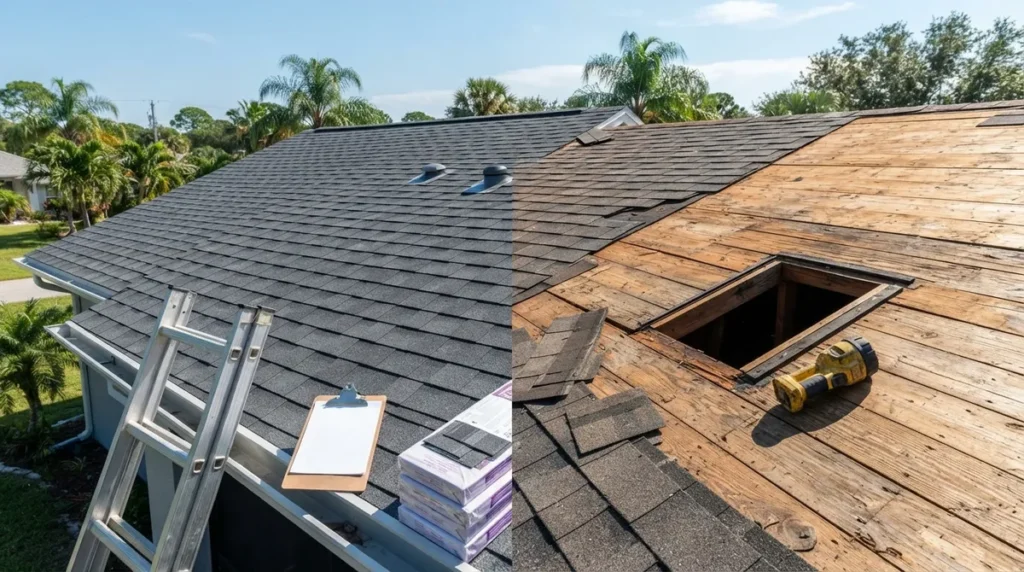
"High volume roofing and after the fact combo" is not an official Florida permit category; it describes a permitting partner that handles both routine re-roof filings and unpermitted roof legalizations.
-
High-volume roofing permits reward speed and standardization, while after-the-fact permits depend on investigation, documentation, and what inspectors find, so outcomes are far less predictable.
-
Florida permit rules are set locally by city and county building departments, so a partner must know each jurisdiction's forms, fees, and review steps rather than relying on one generic process.
-
An after-the-fact permit does not automatically legalize an unpermitted roof; inspectors may require exposed areas, corrective repairs, photos, product proof, or sealed engineer documentation.
-
Before hiring a combo partner, confirm exactly what is included, since permit administration, engineering, inspections, and remediation are separate responsibilities and no service can guarantee approval or timing.
-
Spring permit surges are significant in Florida, so a partner needs strong checkpoints like verifying jurisdiction, licensing, product approvals, and status tracking to avoid costly rejections and delays.
If you run a roofing company in Florida, you already know the permit is never the exciting part of the job. But it is often the part that decides whether your crew rolls out on Monday or sits in the yard. Now add a second headache: a roof that was started or finished without a permit. Suddenly you are juggling a pile of routine applications and a file that nobody wants to touch.
That is where people start searching for the best high volume roofing and after the fact combo Florida has to offer. Here is the friendly truth up front: that is not an official permit category. It is shorthand for a permitting partner that can process lots of roofing applications every week and also rescue jobs that skipped the permit step. Those are two different skills, and the best partners are strong at both.
In this guide, we compare the two sides head to head, show you where they overlap, and help you decide what to look for. Whether you are a contractor, a realtor, or a homeowner with a surprise on your hands, you will leave with a clear plan. Let's dig in.
What the "Combo" Actually Means in Florida Permitting
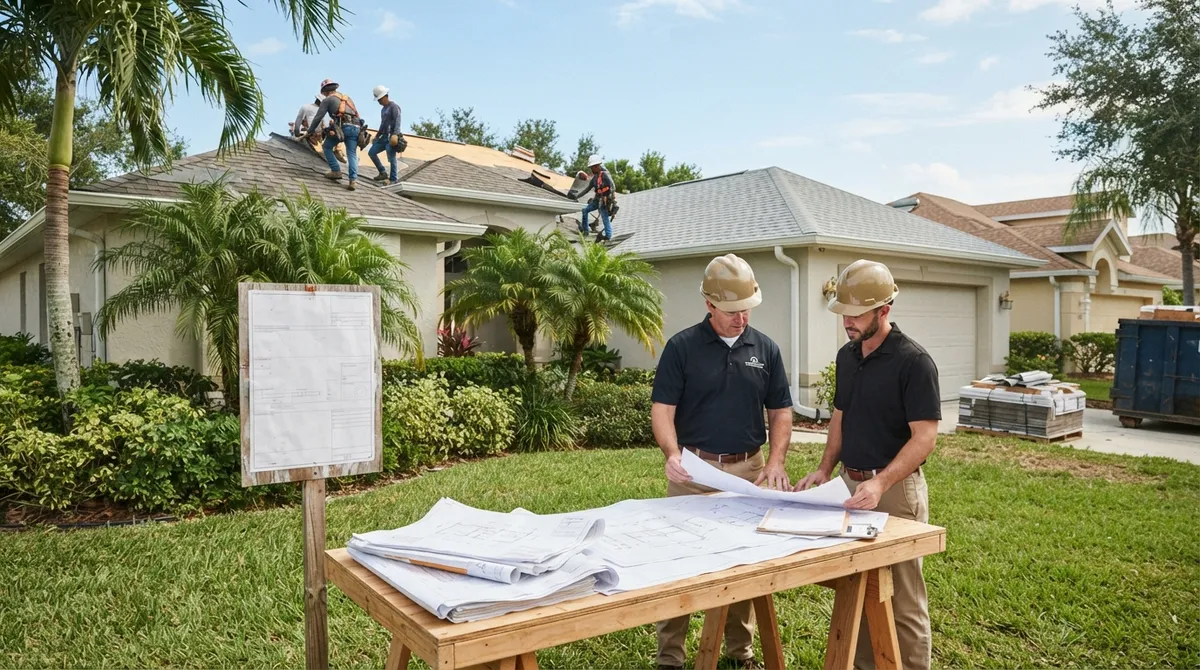
Let's clear up the phrase first, because it trips a lot of people up. There is no statewide permit labeled "high volume roofing and after the fact combo." Florida roofing permits are handled by local city and county building departments, and each one sets its own forms, fees, review steps, and inspection procedures.
The Florida Building Code, 8th Edition (2023), which took effect December 31, 2023, supplies the statewide technical framework. But the day-to-day paperwork lives at the local level. So a true combo service is really two workflows under one roof:
- High-volume roofing permitting: repeatable, fast, standardized filing for many re-roof jobs across many jurisdictions.
- After-the-fact permitting: careful, documentation-heavy work to resolve roofs installed without a permit.
One is a speed game. The other is a detective game. Knowing which game you are playing saves you a lot of stress.
Head-to-Head: High-Volume Roofing vs. After-the-Fact Permitting
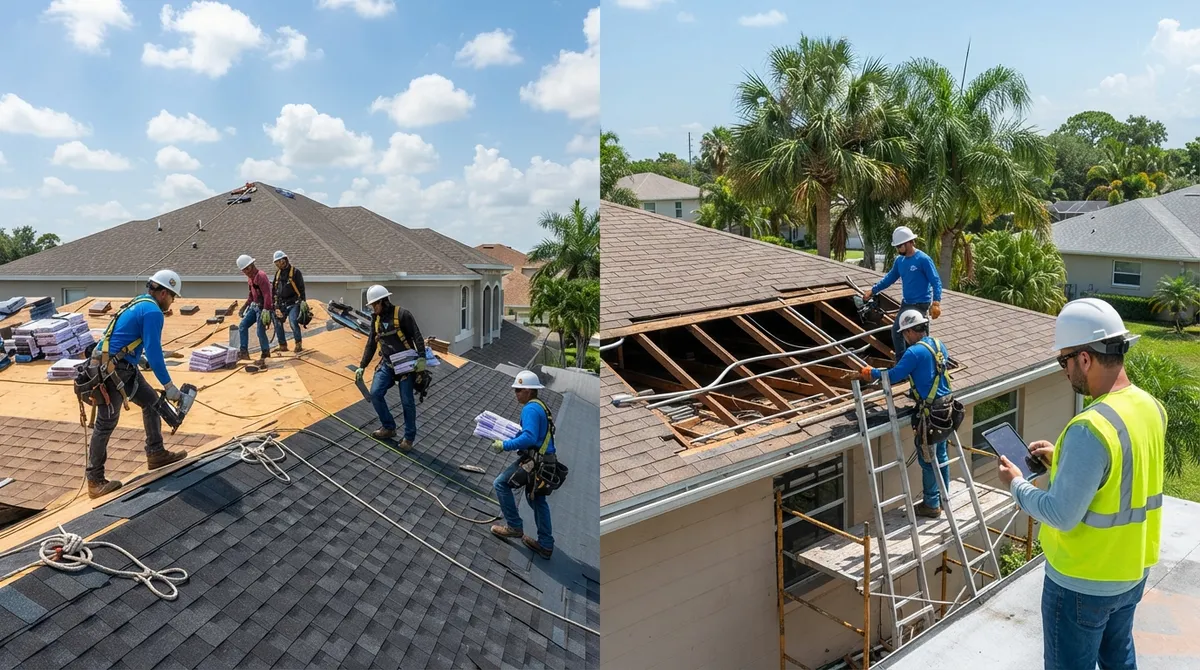
Here is a side-by-side look at how these two services really differ in practice.
| Factor | High-Volume Roofing Permits | After-the-Fact Roofing Permits |
|---|---|---|
| Main goal | Move many standard re-roofs through review quickly | Legalize work already started or completed |
| Process style | Repeatable, templated, jurisdiction-specific workflows | Case-by-case investigation and documentation |
| Typical documents | Application, product approvals, scope, license info | Existing roof details, photos, materials proof, possible engineer letter |
| Inspection path | Standard scheduled inspections | May require verification, exposure of work, or corrective repairs |
| Outcome certainty | Fairly predictable when the packet is complete | Not guaranteed; depends on what inspectors find |
| Best for | Roofing contractors with steady job flow | Owners, buyers, and contractors with unpermitted roofs |
Notice the biggest difference: certainty. A clean re-roof application is usually straightforward. An after-the-fact file can surprise everyone, which is why experience matters so much.
Why High Volume Is a Skill of Its Own
Processing one roofing permit is simple. Processing dozens a week across several counties is a logistics challenge. Every jurisdiction wants slightly different paperwork, and one missed attachment can bounce an application and stall a crew.
Roofing demand also comes in waves. One commercial permit-tracking source reported 2,847 Florida roofing permits for the week ending May 12, 2025, with monthly totals of 10,234 in January, 9,876 in February, 11,456 in March, and 12,089 in April 2025. That is one provider's tracked dataset, not an official statewide count, but it paints a clear picture of busy spring seasons. A separate analysis of five Palm Beach County cities reported 6,737 roofing permits in 2025 and 7,572 in 2024, with March through May accounting for 28.1% of permits across 2023 to 2025. Again, that is a limited local dataset, so treat it as a helpful hint rather than a statewide rule.
The takeaway? Spring surges are real, and a partner without a solid system will drown right when you need them most. If you are scaling, this is worth a look: how to scale roofing and solar permits across Florida.
The Quality Controls That Separate Good From Great
Speed without accuracy just creates faster rejections. A strong high-volume partner builds checkpoints into every file. Here is what to look for:
- Verify the property and jurisdiction. City limits and county lines are not always obvious, and filing in the wrong place wastes days.
- Confirm contractor license and authorization. The applicant must be properly licensed and authorized to pull the permit.
- Validate product approvals and scope. Roofing products need the right approvals, and the scope must match what is on the application.
- Track every status and inspection outcome. Nothing should sit in a queue unnoticed.
- Escalate incomplete or rejected files fast. A clear process for corrections keeps small issues from becoming week-long delays.
If you want to see how this plays out in a big market, check out these rules for high volume roofing permits in Orange County. Our roof permits service is built around exactly this kind of repeatable discipline.
What After-the-Fact Roofing Really Involves
Now for the other side. Maybe a prior owner skipped the permit. Maybe a contractor vanished. Maybe a storm repair got rushed. Whatever the story, an unpermitted roof can pop up at the worst moment, often during a sale or an insurance claim.
Here is the part many people get wrong: an after-the-fact permit does not automatically legalize the work. The building department may require an application, documentation of the existing roof assembly and materials, and inspections. If the work cannot be verified or is noncompliant, they may ask for portions to be exposed, removed, or corrected.
That is not meant to scare you. It is meant to set honest expectations. Many of these files do get resolved, but the path depends on what is actually on the roof. For a deeper walkthrough, our guide to an unpermitted roof in Florida covers what owners need to know, and our after-the-fact and expired permits service handles these files every day.
Common Documents for an After-the-Fact Roof File
- Photos and field documentation of the existing roof
- Proof of materials and product approvals, where available
- A description of the roof assembly and fastening
- An engineer letter or sealed documentation when the jurisdiction requires it
- Contractor or owner authorization paperwork
If an engineer letter is part of your path, see how an engineer letter can support the file.
Where the Two Services Overlap
Here is where the combo idea starts to make real sense. Roofing companies that do volume work inevitably run into after-the-fact situations. A customer calls about a neighbor's roof. A storm-damaged home turns out to have an old unpermitted layer. A realtor needs a roof legalized before closing.
Having one partner who understands both lanes means you do not have to hunt for a new vendor each time something unusual lands on your desk. It also means consistent communication with building departments, which counts for more than most people realize.
| Situation | Right Service Lane | Why |
|---|---|---|
| Routine re-roof, permit not yet pulled | High-volume roofing | Standard filing, tracking, and inspections |
| Roof finished, no permit ever pulled | After-the-fact | Needs documentation and possible verification |
| Permit pulled but expired | Expired permit resolution | May need reinstatement or a new application |
| Closing held up by a roof issue | After-the-fact plus urgent support | Time-sensitive; coordination with all parties |
Not sure which bucket you are in? An expired permit and an after-the-fact permit are not the same thing. This breakdown of expired permit vs. after-the-fact makes the difference easy to see.
What a Permitting Service Can and Cannot Do
Let's keep this honest, because good partners always are. A permitting service can prepare and submit applications, track reviews, coordinate inspections, and communicate with building departments. That saves you serious time and keeps files moving.
What it cannot do is replace the licensed roofing contractor's responsibility for code-compliant work. It also cannot guarantee approval, inspection results, or a specific turnaround time. Anyone promising a fixed approval date is overselling.
Before you hire anyone for a "combo" service, ask them to spell out exactly what is included. Does it cover only permit administration? Or does it also include engineering, inspections, or remediation? Those are separate responsibilities and may require different licenses or qualified professionals. A clear scope up front prevents nasty surprises later.
Who Benefits Most From a Combo Partner
Roofing and General Contractors
You want fewer rejections, faster starts, and one reliable contact for every county. Our roofing contractor support and the Roof Permit Partnership Program are designed for steady-volume shops.
Realtors and Investors
A roof surprise at closing can sink a deal. Having a partner who can identify the path quickly helps you protect timelines. Learn more about realtor and closing support.
Homeowners and Residential Owners
You may not know a thing about permits, and that is perfectly okay. You just want a clear answer and a path forward. A good partner explains your options in plain language without making you feel silly for asking.
Solar Companies and Design Trades
Roof condition often affects solar installs. If the underlying roof is unpermitted, it can complicate your own approvals, so working with a team that understands both sides keeps projects from stalling.
How to Choose the Best Combo Partner: A Quick Checklist
- Ask about jurisdiction knowledge. Do they know the local rules where your job is, or do they use one generic process?
- Check their engineering access. After-the-fact files often need sealed documentation. In-house engineering means faster fixes.
- Confirm response times. Roofing schedules are tight, so quick answers matter.
- Request a clear scope. Know what is covered and what is not.
- Look for honest expectations. Be wary of anyone who guarantees approval.
It also helps to understand the cost side. Our guide to estimating after-the-fact roof permit costs in Florida can help you budget realistically.
Why 1 Contractor Solutions Fits Both Lanes
At 1 Contractor Solutions, we act as Florida's outsourced permitting department. We are not a roofing contractor. We are the team roofers call when the permit is the thing standing between them and a scheduled crew. We work across all 67 Florida counties and have filed in more than 400 municipalities, so we know which jurisdiction actually controls your address.
Our drafting and engineering are in house, and our own engineer signs and seals the work. When a reviewer flags something, we fix it directly instead of waiting on an outside consultant. We also work as a licensed private provider, which can help keep reviews moving. If you want to see what customers say, visit us on Google — 1 Contractor Solutions, and you can also follow us on LinkedIn or follow us on Facebook for updates.
For a broader look at how roofing companies handle this, see our roofing company permit services guide for 2026.
The Verdict: Which Wins?
So, which one wins, high-volume roofing or after-the-fact? Honestly, neither wins alone. They are two halves of the same coin for any Florida roofer who has been in business long enough. High volume keeps your pipeline flowing. After-the-fact expertise rescues the messy files that would otherwise stall your sales or your customers.
The best high volume roofing and after the fact combo Florida offers is a partner who treats both with equal care: fast and organized on the routine, patient and thorough on the tricky. If you need help with either, we would love to hear from you. Reach out today to get a free quote and let us take the permit stress off your plate.
FAQs
Do I need a permit to replace a roof in Florida?
In most cases, yes. Florida roof replacements are typically permitted through your local city or county building department, and requirements can vary by jurisdiction. It is always smart to confirm with your local authority before work begins.
Can I get an after-the-fact roofing permit in Florida?
Often you can apply, but approval is never automatic. The building department may require documentation, inspections, and sometimes corrective work if the roof cannot be verified or does not meet code.
Can a permitting service apply for a roofing permit on behalf of a contractor?
Yes, a permitting service can prepare and submit applications, track reviews, and coordinate inspections for the contractor. The licensed roofer still remains responsible for code-compliant work, and no service can guarantee approval or a set timeline.
Do Florida roofing permit requirements vary by city or county?
They really do. The Florida Building Code sets the statewide technical standard, but forms, fees, review steps, and inspection procedures are controlled locally. That is why a jurisdiction-specific workflow beats a one-size-fits-all approach.
What happens if I replaced my roof without a permit in Florida?
You may be able to resolve it through an after-the-fact permit, but you could also face inspections, documentation requests, or corrective work. The sooner you address it, the more options you usually have, especially before a sale or insurance claim.
We do this work every day across all 67 Florida counties. Call (866) 314-6931 and we will tell you what your situation actually requires — including when you do not need us.
Related services
Permit Facilitation & Filing
You have a crew scheduled, a client asking for dates, and a permit sitting somewhere in a queue you cannot see. We file it, w…
See the servicePlan Review Coordination
A permit in plan review is not one queue. On a commercial project it can be six queues, each with its own reviewer, its own c…
See the serviceReady to get your permit moving?
One call tells you which jurisdiction controls your project, what it will take, and what it will cost. Most of the time we can scope it on the phone.