
Blog
5 Retroactive Building Permit Florida Mistakes to Avoid
Avoid 5 common retroactive building permit Florida mistakes. Learn how after-the-fact permits really work and how to legalize unpermitted work in 2026.
Key Takeaways
-
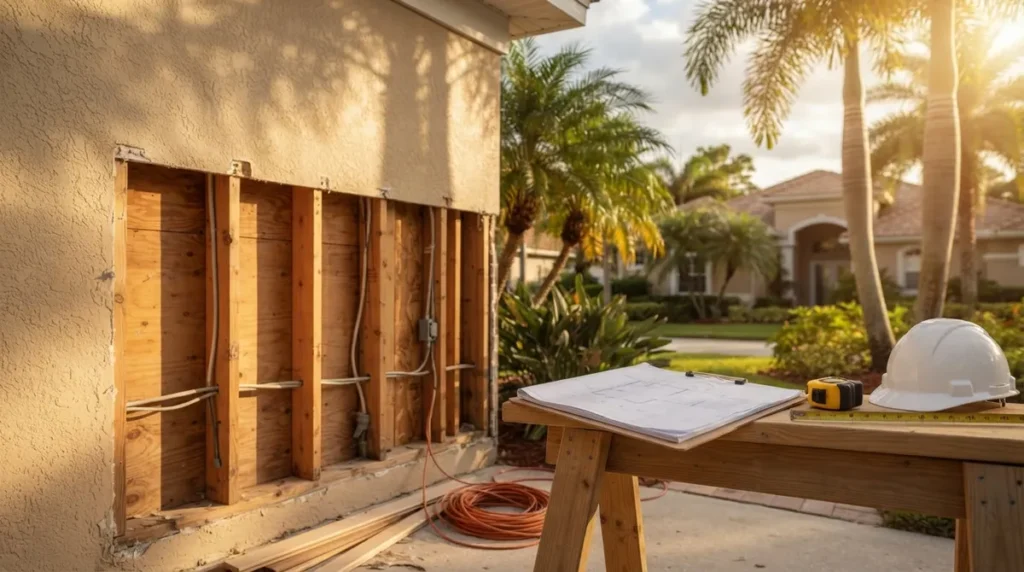
Florida has no statewide retroactive permit program; the local city or county building department controls the after-the-fact process, fees, inspections, and enforcement.
-
A permit issued after work is done does not prove compliance with the Florida Building Code; failed inspections may require corrections, extra documentation, or removal and rebuilding.
-
Do not finish or conceal unpermitted work. Pause further work, take dated photos, gather receipts and plans, and contact the building department early.
-
Confirm which jurisdiction controls your property, since fees, documents, and inspection sequences vary by city and county, even across a city line.
-
Ask the building department for its fee schedule and penalties, and budget for drafting, engineering, opening concealed areas, and corrections.
-
Verify that any contractor is licensed and that required permits are active, because performing permitted work without a valid permit is a prohibited act under Florida Statutes §489.531.
Let's be honest: finding out that a deck, remodel, roof, or addition went up without a permit is a stomach-dropping moment. Maybe a prior owner skipped the paperwork. Maybe a contractor promised to "take care of it" and then vanished. Maybe an inspector or an appraiser just pointed it out. Whatever the story, take a breath. You are far from the first person in this spot, and there is usually a path forward.
Here is the part that surprises people. A retroactive building permit in Florida is not a single statewide program that wipes the slate clean. It is a local process, run by the city or county building department, that deals with work started or finished without a required permit. Because every jurisdiction handles applications, fees, inspections, and enforcement a little differently, small missteps can snowball into big delays and bigger bills.
In this friendly guide, we walk through five common mistakes people make when trying to legalize unpermitted work, plus what to do instead. Whether you are a homeowner, a general contractor, a solar company, or a real estate pro, you will find practical steps you can use today.
First, What Is a Retroactive Building Permit in Florida?
A retroactive permit, often called an "after-the-fact" permit, is a permit application submitted after covered work has already begun or been completed. Florida law generally requires a permit before covered construction, alteration, repair, or demolition starts. Under Florida Statutes §553.79(1)(a), performing covered work without first obtaining the permit is unlawful, and the local building department is the enforcing agency.
That means there is no automatic "retroactive" button. Instead, the local authority having jurisdiction decides how to handle the application, plan review, inspections, corrections, fees, and enforcement. If you want a deeper walkthrough of the legal and practical side, our guide on unpermitted work in Florida and how to legalize it is a great companion read.
Key Facts at a Glance
- Florida requires a permit before covered work begins, not after.
- Local building departments, not the state, run the after-the-fact process.
- Fees, documentation, and inspections vary by city and county.
- Getting a permit issued does not prove the work meets the Florida Building Code.
- Failed inspections can mean corrections, added documentation, or even removal and rebuilding.
Mistake #1: Assuming a Retroactive Permit Is a Rubber Stamp
This is the most common misunderstanding we see. People assume that paying a fee and filing an application will automatically make the work legal. Not so. A permit issued after work has started does not, by itself, establish that the work complies with the Florida Building Code.
If the work fails plan review or inspection, you may need to make corrections, submit extra documentation, or in some cases remove and reconstruct portions of the work before the department will approve and close the permit.
What to Do Instead
Go into the process expecting a real review. Treat it like a regular permit application, except that the reviewer is also evaluating work that already exists. Gathering good documentation up front, including as-built drawings and, where needed, engineering verification, makes a huge difference. Our team prepares as-built drawings and engineer letters for exactly this reason.
Mistake #2: Hiding the Work or Continuing Construction
When someone realizes a permit is missing, the temptation can be to quietly finish the job, close up the walls, and hope nobody notices. Please do not do this. Concealing work makes everything harder, because the building official may require concealed work to be exposed so inspectors can verify it.
Continuing questionable work can also lead to a stop work order, additional enforcement, and more cost. If you have already received a notice, our article on what to do after a code enforcement notice in Florida lays out calm, practical next steps.
What to Do Instead
- Pause any further work on the unpermitted portion of the project.
- Take dated photos of what is visible now.
- Gather any receipts, contracts, or plans you already have.
- Contact your local building department, or a permitting professional who works with it daily, to learn the correct process.
Approaching the department early, and with a plan, generally goes better than waiting to be found.
Mistake #3: Treating Florida as One Big Set of Rules
Florida has 67 counties and hundreds of municipalities, and each one can run its own after-the-fact process. Fees, required documents, inspection sequences, and even which office handles the file can change from one side of a city line to the other.
A good example: the City of Fort Lauderdale's permitting guidance refers to after-the-fact building-code review and notes that these permits are not eligible for its walk-through service. That is a local rule, and a neighboring city may do things differently.
How Local Processes Can Differ
| Item | Why It Varies by Jurisdiction | What to Ask the Department |
|---|---|---|
| Application route | Some offices have a dedicated after-the-fact review; others use standard permit intake | "Which application type do I use for work already done?" |
| Plans and documents | Required drawings and engineering vary by scope | "What documentation is needed for plan review?" |
| Inspections | Concealed work may need to be opened for review | "What inspections are required, and in what order?" |
| Fees and penalties | Not uniform statewide | "What fees, citations, or penalties apply?" |
| Service options | Some fast-track services exclude after-the-fact permits | "Are expedited or walk-through services available?" |
What to Do Instead
Confirm which jurisdiction truly controls your property. This is not always obvious near city boundaries. Our building department lookup tool can help, and our guide to which Florida jurisdiction reviews your project explains how to sort it out. If you are in a busy market, local pages like Miami-Dade County, Hillsborough County, and Orange County give a helpful starting point.
Mistake #4: Guessing at the Penalties and Fees
You will find plenty of online chatter claiming that after-the-fact permits cost "double" or "triple" the normal fee. Sometimes that is true locally; sometimes it is not. Florida does not set one statewide penalty for unpermitted work. Local governments may impose penalties or other enforcement measures, and the amounts and processes are not uniform.
Guessing can lead you to either panic unnecessarily or, worse, underestimate the budget you need. If cost is on your mind, our breakdown of after-the-fact permit costs in Florida and our overview of the penalty for building without a permit in Florida can help you plan.
Budget Items to Plan For
- Application and plan review fees set by the local department
- Possible penalty multipliers or citations, depending on the jurisdiction
- Drafting and as-built drawing costs
- Engineering letters or sealed drawings, if the department requires verification
- Costs to open concealed areas and restore finishes afterward
- Potential corrective work if something fails inspection
What to Do Instead
Ask the building department directly about the fee schedule and enforcement process for your specific situation. Then build a realistic budget that includes a buffer for corrections. A little cushion goes a long way toward keeping stress levels down.
Mistake #5: Going It Alone When the Stakes Are High
Plenty of simple permit questions can be handled by an owner or contractor. But after-the-fact files are different. You are dealing with existing conditions, possible hidden work, local enforcement, and sometimes a closing date, a lender, or an insurance issue ticking in the background.
Common trouble spots include:
- Not knowing whether you need sealed plans or an engineer letter
- Submitting incomplete packages that get rejected and restart the clock
- Missing a correction notice deadline
- Hiring an unlicensed contractor who cannot legally pull the permit
On that last point, Florida Statutes §489.531 identifies commencing or performing work that requires a building permit without an effective permit as a prohibited act for a certified or registered contractor. Always verify licensing and confirm that required permits are active. Our guide on who can pull a permit in Florida is worth a read before you hire anyone.
What to Do Instead
Bring in a permitting team that does this every day. At 1 Contractor Solutions, we act as Florida's outsourced permitting department. We prepare or review plans, file the application, track it, work every reviewer comment, and carry the permit through approval and closeout. Because our drafting and engineering are in house and our own engineer seals the work, corrections do not wait on an outside consultant. You can learn more about our after-the-fact and expired permit services and our permit facilitation and filing.
A Step-by-Step Path to Legalizing Unpermitted Work
While every jurisdiction differs, most successful after-the-fact projects follow a similar rhythm. Here is a general roadmap you can adapt.
- Identify the correct jurisdiction. Confirm which city or county building department controls the property.
- Contact the department. Ask about their after-the-fact application route, required documents, fees, and inspection process.
- Document existing conditions. Photos, measurements, and any records of the original work help your drafter and engineer.
- Prepare plans. Create as-built drawings that accurately show what exists, with engineering where required.
- File the application. Submit the package through the department's required channel.
- Respond to review comments. Address each reviewer note quickly and completely to avoid repeat rounds.
- Schedule inspections. Be ready to expose concealed work if the inspector requires it.
- Correct and close out. Fix any deficiencies, pass final inspection, and close the permit.
If you are racing a deadline, such as a closing, our urgent permit rescue service is built for exactly that kind of pressure.
What About Small Jobs and Permit Exemptions?
Many readers ask whether their project might simply be exempt. Exemptions are limited, and they do not create a general pass for work already done without a permit. The 2025 version of §553.79 includes a possible exemption for certain single-family-dwelling work valued at less than $7,500, but it comes with important exclusions and requirements.
Among other things, the exemption excludes specified electrical, plumbing, structural, mechanical, or gas work, and it does not apply to property in a flood hazard area. A written request and supporting documentation are also required by the local enforcement agency. Because the details are specific, do not assume your project qualifies. Ask the building department before relying on any exemption.
Quick Exemption Reality Check
| Question | Short Answer |
|---|---|
| Is there a general exemption for work already completed? | No. Exemptions are limited and do not cover past unpermitted work as a category. |
| Does the under-$7,500 exemption cover everything? | No. It excludes certain trades and flood hazard area properties, among other limits. |
| Is a written request required? | Yes, with supporting documentation submitted to the local enforcement agency. |
| Who decides? | The local building department, so confirm with them first. |
Who Benefits Most From Getting This Right
Different readers feel this problem in different ways. A few examples:
- Homeowners and residential property owners often discover issues during a refinance, insurance claim, or sale.
- General contractors may inherit a client's unpermitted past work when taking on a new phase of a project. See our page for general contractors.
- Solar companies need clean, code-compliant documentation to keep distributed energy projects moving. Learn more for solar contractors.
- Real estate professionals frequently face open permits or unpermitted additions that threaten a closing. We support realtors and title companies, and our guide on open permits found at closing is a handy resource.
- Architects, designers, and specialty trades can lean on outsourced drafting only services when they need dependable permit sets without growing in-house staff.
Helpful Tips Before You Pick Up the Phone
A little preparation makes your first call with the building department, or with a permitting pro, much smoother. Try to have these items ready:
- The property address and parcel number
- A short description of the work and approximate dates
- Any existing permits, open or expired, tied to the property (our open permit search can help)
- Photos of the work from several angles
- Names of any contractors involved and their license numbers
- Any notices, citations, or correspondence you have received
And remember, you are not being judged for asking. Building departments handle after-the-fact requests regularly, and most staff would much rather help you do the right thing than chase you later.
Ready to Legalize Your Project With Confidence?
Getting a retroactive building permit in Florida takes patience, good documentation, and a clear understanding of how your local jurisdiction works. Avoid the five mistakes above, and you will be well ahead of most people who walk into this situation unprepared.
If you are working in the Tampa Bay area, our team knows the local landscape well. You can see what customers say on Google by choosing to visit us on Google — 1 Contractor Solutions, and you can stay connected with project tips if you follow us on LinkedIn or follow us on Facebook. For official statutory language, you can review Florida Statutes Chapter 553, Section 79.
We answer 24/7, respond within 30 minutes day or night, and se habla español. Whether your file is a quiet clean-up or a closing-day emergency, we are happy to help you map out the next step. When you are ready, get a free quote and let us take the permitting weight off your shoulders.
FAQs
How do I get an after-the-fact building permit in Florida?
Start by contacting the local city or county building department that controls your property, since each one runs its own process. You will typically apply for the relevant permit and submit plans or other documentation for review, then pass any required inspections. A permitting professional can help you prepare the package and keep it moving.
Will inspectors make me open walls to check unpermitted work?
Possibly, yes. The building official may require concealed work to be exposed so inspectors can verify it meets code. The exact documentation and inspection sequence depend on your jurisdiction and project, so ask the department what they expect before you start.
How much does a retroactive building permit cost in Florida?
There is no single statewide price. Fees and any penalties are set locally, so the cost depends on your city or county and the scope of the work. Ask your building department for the fee schedule, and plan for drafting, engineering, and possible corrective work too.
Can unpermitted work be approved if it does not meet current code?
Not automatically. A permit issued after the fact does not prove the work complies with the Florida Building Code, and failed reviews or inspections may require corrections or additional documentation. In some cases, removal and reconstruction may be needed before approval.
Do I need a permit for small repairs under $7,500 in Florida?
Maybe not, but do not assume. The 2025 statute allows a possible exemption for certain single-family-dwelling work under $7,500, but it excludes specified electrical, plumbing, structural, mechanical, and gas work, plus property in a flood hazard area. A written request with supporting documentation is also required, so check with your local department first.
We do this work every day across all 67 Florida counties. Call (866) 314-6931 and we will tell you what your situation actually requires — including when you do not need us.
Related services
Permit Facilitation & Filing
You have a crew scheduled, a client asking for dates, and a permit sitting somewhere in a queue you cannot see. We file it, w…
See the servicePlan Review Coordination
A permit in plan review is not one queue. On a commercial project it can be six queues, each with its own reviewer, its own c…
See the serviceReady to get your permit moving?
One call tells you which jurisdiction controls your project, what it will take, and what it will cost. Most of the time we can scope it on the phone.