
Blog
How to Fix a Lanai Enclosure Built Without a Permit in FL
Built a lanai enclosure without a permit in Florida? Learn the steps to confirm, document, engineer, and legalize it in 2026.
Key Takeaways
-
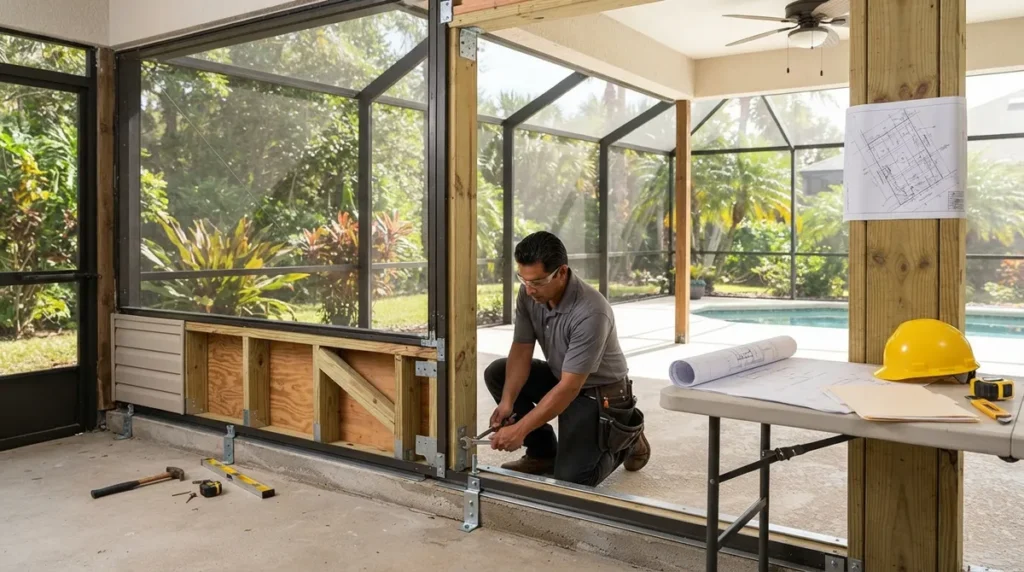
Florida has no statewide fix for an unpermitted lanai enclosure; your city or county building department sets the rules, so call them before covering or altering any of the work.
-
Start by checking your property's permit history and confirming which jurisdiction controls your address, since a permit that was issued but never finaled is a different problem than no permit at all.
-
Expect to provide a site plan or survey, construction plans meeting the current Florida Building Code, and possibly sealed engineering covering wind-load design, since wind resistance is the core of the review.
-
Ask the building department whether inspections will require exposing anchors, connections, or framing, because sealing up the work first can mean costly demolition and rework.
-
Permit issuance isn't the finish line: required inspections must be passed and the permit closed out, and you should keep the approved plans, inspection results, and final closeout in one folder.
-
Unpermitted lanai work often surfaces during home sales, appraisals, or insurance claims, so resolving it before listing or closing helps avoid delays and stronger insurance footing.
So you enclosed your lanai, and now someone has asked, "Was that permitted?" Take a breath. You are far from alone. Florida homeowners enclose lanais all the time, and plenty of them discover the paperwork gap later, often during a sale, an insurance review, or a neighbor's complaint.
Here is the encouraging part: a lanai enclosure without a permit in Florida is usually fixable. It takes some honest detective work, a handful of documents, and the right local process. It also takes patience, because Florida has no single statewide fix. Your city or county building department sets the rules for your property.
In this guide, we will walk through exactly how to confirm whether you have a problem, what to gather, how after-the-fact permitting generally works, and what mistakes to avoid. Whether you are a homeowner, a real estate professional, a general contractor, or a designer helping a client, you will leave with a clear game plan for 2026.
Why a Lanai Enclosure Without a Permit in Florida Is a Real Issue
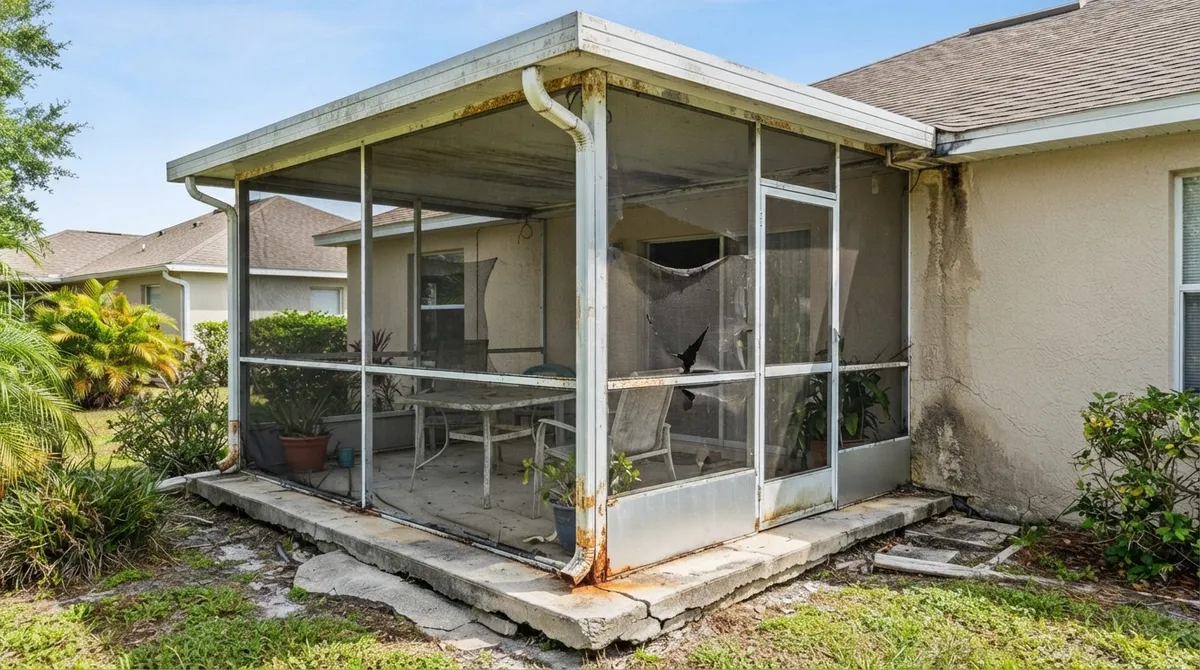
A lanai enclosure, whether it is a new screen room or an existing patio closed in with screen, glass, or panels, generally needs a building permit before construction. Florida Statutes §553.79 sets the general requirement to obtain a permit from the local enforcing agency for covered construction. Your local building department decides how that applies to your specific project.
Why does it matter so much? Because screen enclosures must be designed for wind loads, and Florida takes that seriously. A permit is how the community confirms the structure is anchored, engineered, and built to hold up when a storm rolls through.
Skipping the permit can lead to real headaches:
- Stop-work orders or code citations
- Added permit, reinspection, or penalty charges
- Required corrections or even removal of the work
- Delays at closing when a buyer or lender asks about permits
- Insurance questions after a claim
No source establishes one statewide penalty amount. Consequences vary by jurisdiction, which is why the first move is always local.
Step 1: Confirm Whether Your Enclosure Is Actually Unpermitted
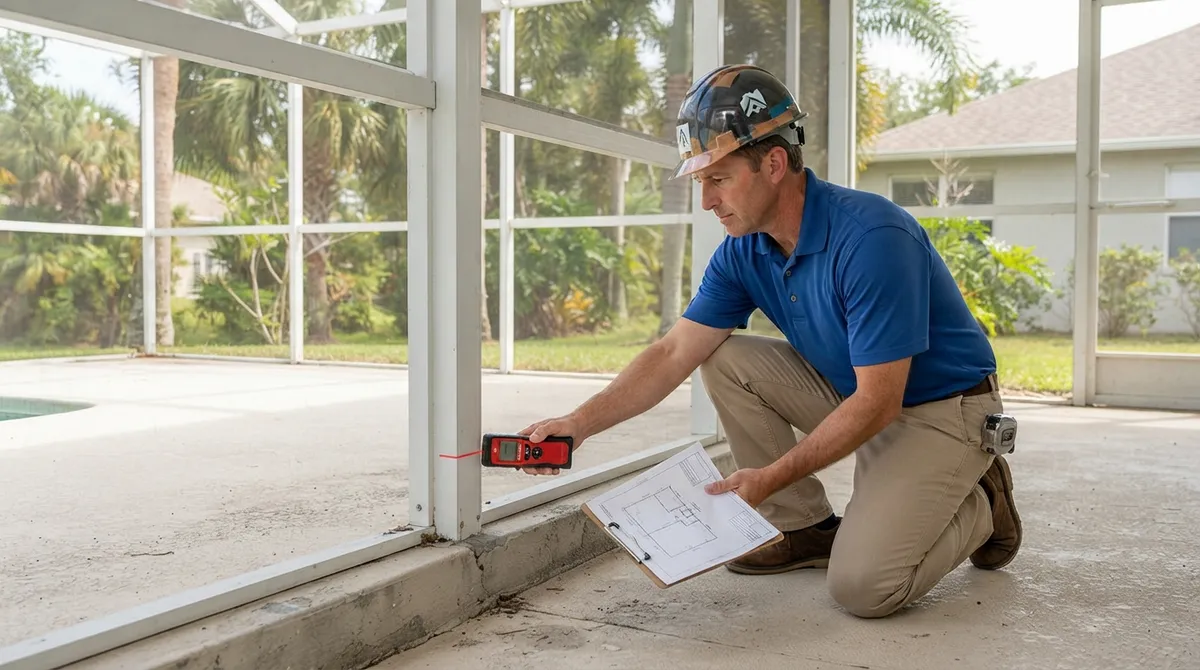
Before you assume the worst, verify. Sometimes a previous owner did pull a permit and nobody told you. Other times, a permit exists but was never closed out with a final inspection.
- Search your property's permit history. Start with your building department's online portal, or use our open permit search tool.
- Identify the right authority. Properties near city lines can be tricky. Our building department lookup helps you confirm who really controls your address.
- Compare the record to reality. If the permit covered a screen cage but you now have glass panels and a roof tie-in, the permit may not match what is built.
- Check for expired or open permits. A permit that was issued but never finaled is a different problem than no permit at all. See our guide on how to close an expired permit in Florida.
If you are buying a home and suspect the seller's lanai was never permitted, our article on open permits found at closing is worth a read.
Step 2: Call the Building Department Before You Touch Anything
This one surprises people, but it matters. If the enclosure is already built, contact the local building department and ask about its after-the-fact permitting process before you cover, paint, or alter any of the work.
Why the caution? Because the jurisdiction may require you to expose concealed connections, anchors, or framing so an inspector can see them. If you have already sealed everything up, that can mean more cost and more demolition.
Here is what to ask:
- Do you accept after-the-fact applications for screen or glass enclosures?
- What plans, survey, or engineering documents do you require?
- Will inspections be required, and will any work need to be exposed?
- What fees or penalties apply to work started without a permit?
- Is a licensed contractor required, or can the owner apply?
Be friendly and honest. Building departments deal with this every day, and a cooperative owner usually has a smoother path than one who goes quiet.
Step 3: Gather the Documents Your Jurisdiction Will Expect
Every county and city has its own checklist, so treat the list below as a typical starting point rather than a guarantee. Hillsborough County's guidance for screen enclosures, glass rooms, lanais, and vinyl windbreaks calls for a scaled site plan and plans that meet the current Florida Building Code. Flagler County's owner-builder checklist lists a permit application, site plan, and construction drawings, among other items.
| Document | What It Shows | Why Reviewers Want It |
|---|---|---|
| Site plan or survey | Enclosure location, existing structures, property lines, setbacks, easements | Confirms the structure respects setbacks and easements |
| Construction plans | Framing, anchors, panels, connections, materials | Demonstrates compliance with the current Florida Building Code |
| Structural and wind-load design | How the enclosure resists wind | Proves it was designed for applicable loads |
| Permit application | Owner, contractor, and project details | Starts the official record |
| Notice of Commencement (if applicable) | Recorded notice for qualifying projects | Required in some checklists above a cost threshold |
On that last item, Flagler County's 2025 owner-builder screen-enclosure checklist calls for a Notice of Commencement when the project exceeds $5,000. That is a checklist-specific threshold, so verify it against current law and your local instructions. You can read more in our explainer on the Notice of Commencement in Florida.
Step 4: Understand the Engineering Side
Here is where lanai projects get technical, and where many after-the-fact applications stall. Screen enclosures have to be designed for the applicable structural and wind loads. Some jurisdictions require plans signed and sealed by a Florida-registered architect or engineer, depending on the project and locality.
The Florida Building Commission's screen enclosure materials describe code-compliant design provisions, including wind-load design. For certain screen-removal design alternatives, they call for site-specific engineering and instructions for removing, retracting, or cutting panels when wind speeds are forecast to exceed 75 mph. Keep in mind that applies to that specific design alternative, not every enclosure.
For an existing, already-built enclosure, an engineer typically has to evaluate what was actually installed. That may involve:
- Field measurements of the framing and panel layout
- Verification of anchors and connections to the slab or home
- Review of materials and fasteners
- Sealed drawings or an engineer letter documenting compliance
If you want to understand when a letter is enough and when full plans are needed, our guide on who seals structural drawings for Florida permits breaks it down. And if the structure was built in a way that cannot be verified from the outside, the jurisdiction may ask for deeper checks.
Step 5: Prepare As-Built Drawings and Submit
Once you know the local requirements, the next job is turning what exists into a clean, reviewable plan set. That usually means documenting the enclosure as it was actually built, then showing how it meets code.
- Document the existing conditions. Measure, photograph, and note every material and connection.
- Draft as-built plans. These show the enclosure exactly as it stands. Learn more about as-built drawings and how they support permit closeout.
- Add engineering. Structural calculations and sealed drawings go with the package when required.
- Prepare the site plan. Show the enclosure relative to property lines, setbacks, and easements.
- Submit the application. File through the local portal or counter, then track it.
- Respond to reviewer comments. Expect at least some. Quick, complete answers keep things moving.
If you want a full walkthrough of the overall process, see how to get an after-the-fact permit in Florida and our deeper look at engineering items for after-the-fact screen enclosures.
Step 6: Pass Inspections and Close Out the Permit
Getting a permit issued is not the finish line. Required inspections must be passed and the permit closed out under your local process. This is the part people forget, and it is the part that protects you later.
Inspectors may ask to see anchors, connections, and framing. If anything does not match the approved plans, you may be asked to make corrections and schedule a reinspection. Approval is not guaranteed, which is why it helps to have the engineering right the first time.
When you finish, keep a folder with:
- The approved plans and any sealed drawings
- The permit record and application
- Inspection results and correction notices
- Final approval or closeout documentation
That folder becomes gold when you sell, refinance, or file an insurance claim.
What It Can Cost and How Long It Can Take
Everyone wants a number, so here is the honest version. Fees, penalties, and timelines are jurisdiction-specific, and the available sources do not establish one statewide after-the-fact fee or penalty schedule. Cost drivers generally include permit and reinspection fees, drafting, engineering, any exposure or correction work, and any local penalty for starting without a permit.
| Factor | Typical Effect on Cost or Time |
|---|---|
| Local after-the-fact fees or penalties | Varies by city and county |
| Engineering and sealed drawings | Depends on size, complexity, and documentation available |
| Exposing concealed work | Adds repair and finishing costs |
| Corrections to meet code | Depends on what the review finds |
| Review turnaround | Differs by jurisdiction and workload |
For a closer look at budgeting, check our article on after-the-fact permit costs in Florida, and our broader piece on how to legalize unpermitted work in Florida.
Special Situations to Watch For
Selling or Buying a Home
Unpermitted lanai enclosures often surface during inspections, appraisals, or title review. If you are the seller, resolving the issue before listing keeps your closing on track. If you are the buyer, ask for permit history early. Our realtor closing support is built for exactly this situation, and you can read about how a permit hold can delay a Florida closing.
Insurance Concerns
Unpermitted structures can create questions during an insurance review or claim. Having a closed permit and sealed documentation gives you a much stronger footing. See how expired permits can affect insurance claims in Florida for related context.
Code Enforcement Notices
If you have already received a notice, do not ignore it. Respond promptly, and consider getting help with code compliance violations so you meet your deadlines.
A Prior Owner Skipped the Permit
Inheriting someone else's unpermitted lanai is common. The responsibility often lands on the current owner, so it is worth tackling early.
Common Mistakes to Avoid
- Covering or altering the work first. This can force exposure and rework later.
- Assuming a generic statewide checklist applies. Always verify with your local building department.
- Ignoring the engineering. Wind-load design is the heart of the review.
- Skipping closeout. An issued permit that is never finaled is still a problem.
- Waiting until closing week. Rushed fixes cost more and stress everyone out.
Who Can Help (and How We Fit In)
You do not have to figure this out solo. Different people carry different pieces of the puzzle:
- Homeowners and residential owners can handle simple questions themselves, but often benefit from help with drawings and engineering. See our page for homeowners and owner-builders.
- General contractors can use outsourced drafting, sealed engineering, and permit tracking to keep crews scheduled. Learn more for general contractors.
- Realtors and investors need fast answers on what a property needs before closing.
- Architects, designers, and trades can hand off drafting, engineering, and permit administration without adding staff.
At 1 Contractor Solutions, we act as Florida's outsourced permitting department. We handle permit facilitation and filing, in-house drafting, and sealed engineering, and we work across all 67 Florida counties. We respond within 30 minutes, day or night, and se habla español. If you want a closer read on how we handle these files, our after-the-fact and expired permits page explains the process. You can also visit us on Google — 1 Contractor Solutions to see what customers say, or follow us on LinkedIn and follow us on Facebook for updates.
Your Quick Action Checklist
- Search your permit history and identify the correct jurisdiction.
- Call the building department and ask about the after-the-fact process.
- Do not cover or alter the enclosure until you know what will be inspected.
- Gather your site plan or survey and any original paperwork.
- Get as-built drawings and engineering prepared.
- Submit, answer comments, pass inspections, and close out the permit.
- Save every record in one folder.
Ready to Legalize Your Lanai?
A lanai enclosure without a permit in Florida is stressful, but it is a solvable problem. The key is moving early, working with your local building department, and putting solid engineering behind the paperwork. Do that, and you protect your home's value, your insurance, and your peace of mind.
If you would rather hand the whole thing to a team that does this every day, we are here for you. Get a free quote and tell us your address, and we will tell you which jurisdiction controls it, what it will take, and then go do it. Permits approved. Projects moving.
FAQs
Do I need a permit to enclose a lanai in Florida?
Generally, yes. A lanai or screen enclosure typically needs a building permit before construction under the local enforcing agency's rules, which stem from Florida Statutes §553.79. Your city or county building department decides how that applies to your exact project, so always confirm locally before you start.
What happens if I enclose my lanai without a permit in Florida?
Consequences vary by jurisdiction and can include stop-work orders, citations or fines, added permit and reinspection charges, and required corrections or removal. It can also complicate a home sale or insurance review. The good news is that contacting your building department early often leads to a clearer path forward.
How do I get an after-the-fact permit for an unpermitted lanai enclosure?
Start by calling your local building department and asking about its after-the-fact process before covering or altering any work. You will typically need a site plan or survey, as-built plans, and possibly sealed engineering, followed by inspections and closeout. Approval is not guaranteed, so accurate documentation really helps.
What documents are needed for a Florida lanai or screen enclosure permit?
Commonly, you will need a permit application, a site plan or survey showing setbacks and easements, and construction plans that meet the current Florida Building Code. Some jurisdictions also require plans signed and sealed by a Florida-registered architect or engineer. Checklists differ by locality, so verify yours.
Can an unpermitted lanai enclosure cause problems when selling or insuring a Florida home?
Yes, it can. Unpermitted work often surfaces during inspections, appraisals, or lender and insurance reviews, and it may delay a closing until it is resolved. Holding a closed permit with approved plans and inspection records gives you much stronger footing.
We do this work every day across all 67 Florida counties. Call (866) 314-6931 and we will tell you what your situation actually requires — including when you do not need us.
Related services
Permit Facilitation & Filing
You have a crew scheduled, a client asking for dates, and a permit sitting somewhere in a queue you cannot see. We file it, w…
See the servicePlan Review Coordination
A permit in plan review is not one queue. On a commercial project it can be six queues, each with its own reviewer, its own c…
See the serviceReady to get your permit moving?
One call tells you which jurisdiction controls your project, what it will take, and what it will cost. Most of the time we can scope it on the phone.