
Blog
Expired Permit vs. After-the-Fact: Which Fix Do You Need?
Confused about expired vs. after-the-fact permits in Florida? Here's how they differ and how combo help resolves both fast.
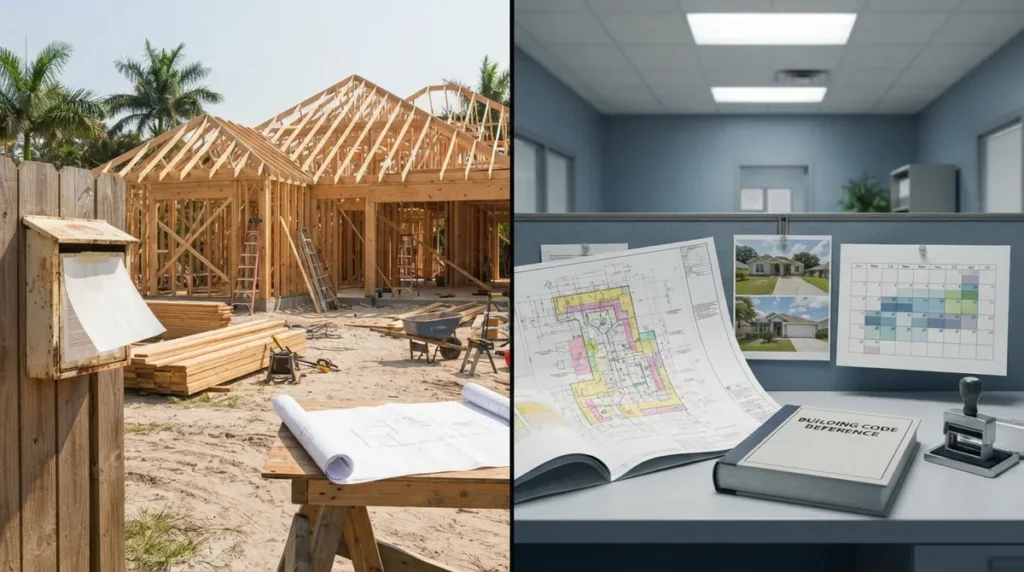
Key Takeaways
-
Florida Building Code §105.4.1 establishes a 180-day rule: permits expire if work doesn't begin within 180 days of issuance or sits abandoned for 180 days, though local officials may grant extensions for justifiable cause.
-
Expired permits (original permit issued but lapsed) and after-the-fact permits (work completed without permit) require different processes and documentation; combo situations demand simultaneous handling to streamline review and avoid duplicate timelines.
-
Stop unpermitted work immediately, pull permit history with original permit number, confirm jurisdiction, and assemble documentation including surveys, product approvals, engineering letters, and photos before submitting combined applications.
-
Most Florida counties require sealed engineering drawings, structural documentation for load-bearing work, property surveys, product approvals, and photographs for concealed work exposure when resolving expired and unpermitted permits together.
-
Hillsborough County and other jurisdictions impose penalties up to $500 per violation for continuing unpermitted work; resolving issues proactively through official channels is faster and less costly than waiting for code enforcement action.
-
A 2026 Florida Statutes §553.79 update sets one-year expiration for single-family dwelling permits (or next Florida Building Code edition, whichever is later), allowing local government extensions under their own rules.
If you're staring at an old permit card that expired years ago, or you just found out a previous owner added a room without ever pulling paperwork, you're probably wondering if these two headaches require the same fix. Good news: you're not alone, and yes, plenty of Florida property owners end up needing help with both an expired permit and an after-the-fact permit at the same time. Let's walk through what each one actually means, how they're different, and how a combined approach can save you months of back-and-forth with your local building department.
Whether you're a general contractor juggling multiple job sites, a solar installer racing a customer's connection deadline, a realtor trying to save a closing, or a homeowner who just wants to sleep easy again, this guide breaks it down in plain English. We'll also show you where a Florida permitting service like 1 Contractor Solutions fits into the picture, because sometimes you just need someone who's done this a thousand times to handle the phone calls for you.
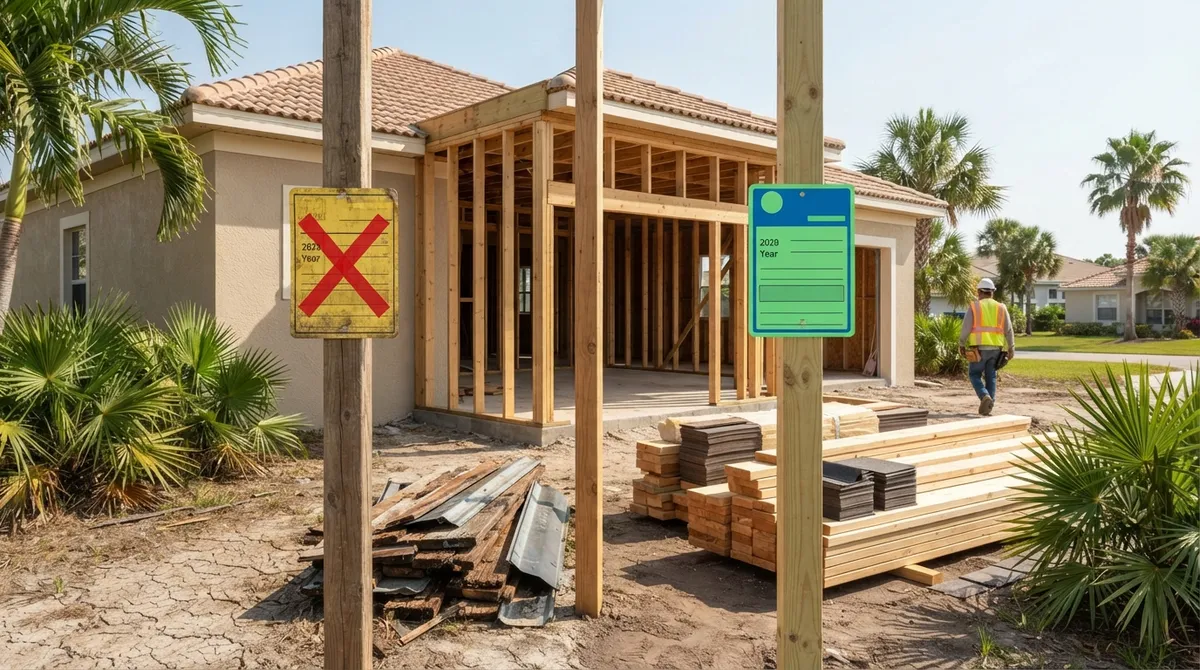
Expired Permit vs. After-the-Fact Permit: What's the Real Difference?
These two terms get tossed around interchangeably, but they describe different problems. Understanding which one (or both) applies to your situation is the first step toward fixing it.
What Counts as an Expired Permit
An expired permit is one that was properly issued, but the work either never started or stalled out before the county closed it. Florida Building Code §105.4.1 generally holds that a permit becomes invalid if work doesn't begin within 180 days of issuance, or if it sits abandoned for 180 days at any point. Some local building officials will grant an extension for a justifiable reason, but that's their call, not an automatic right.
Here's something worth flagging for anyone watching Florida legislation: a 2026 update to Florida Statutes §553.79 reportedly sets a one-year expiration window for single-family dwelling permits, or the effective date of the next Florida Building Code edition, whichever comes later, while still letting local governments extend permits under their own rules. This is a recent change, so it's smart to confirm the current effective date and how your specific county is applying it before you assume anything.
What Counts as an After-the-Fact Permit
An after-the-fact permit, sometimes called a retroactive or ATF permit, covers work that was completed (or partially completed) without ever getting a permit in the first place. Maybe a prior owner enclosed a lanai, added electrical, or converted a garage without telling anyone. Now the building department wants that work documented, inspected, and brought up to code, after the fact.
Why People Search for Both at Once
Here's where it gets messy. Sometimes a permit expired years ago, the job was left "half done," and additional unpermitted work happened after that. Or a homeowner tries to pull a new permit for a renovation and discovers an old, expired permit still open on the property, tied to work nobody remembers finishing. That's when you genuinely need combo help: someone who can untangle the expired history and handle the after-the-fact application simultaneously.
| Factor | Expired Permit | After-the-Fact Permit |
|---|---|---|
| Original permit pulled? | Yes, but lapsed | No permit was ever obtained |
| Governing rule | FBC §105.4.1 (180-day rule) | Local ATF ordinance/process |
| Typical fix | Reactivate, extend, or reapply | New application, plans, inspections |
| Risk of penalty | Reapplication fees | Citations up to $500/violation in some counties |
| Inspection needs | Continue where left off | May require exposing concealed work |
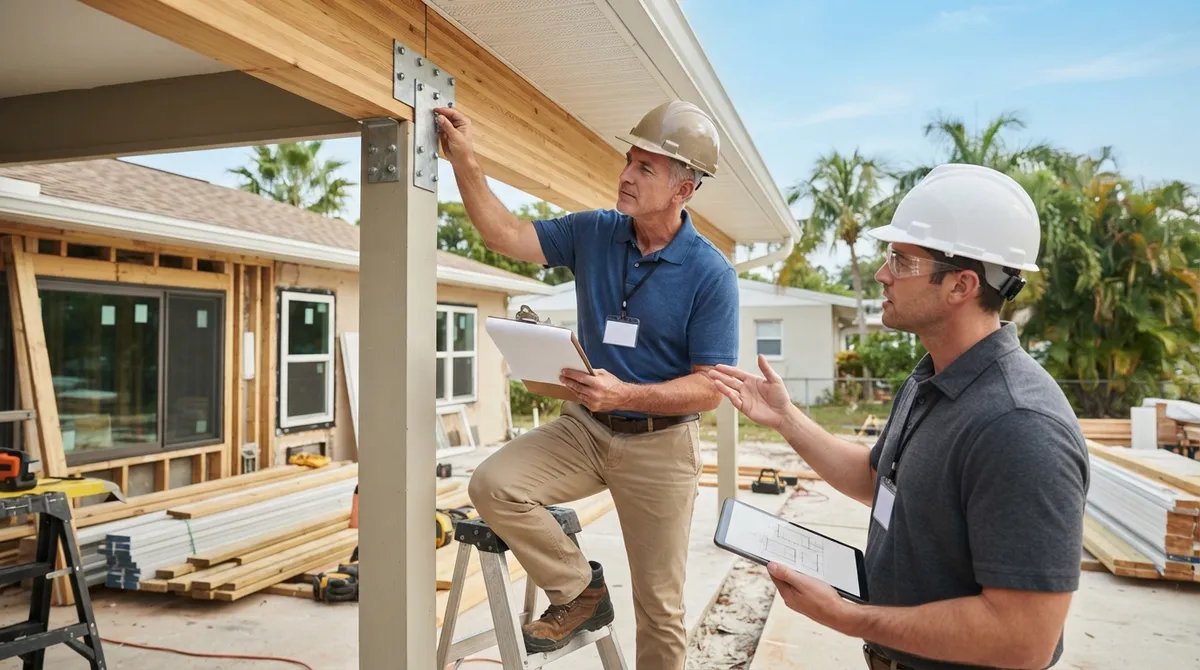
Step-by-Step: How Combo Help Actually Works
When both issues exist on the same property, the process usually follows a similar sequence no matter which Florida county you're in. Here's the general roadmap:
- Stop any unpermitted work immediately. Continuing to build without a permit only adds risk and can increase the cost of resolution later.
- Pull the permit history for the property. This means finding the original permit number, its status, and any notes about what was inspected versus what was left open.
- Confirm jurisdiction. Not every address falls under the county you'd expect, especially near city boundaries, so it pays to verify which office actually controls your parcel using a tool like the building department lookup.
- Determine if the expired permit can be reactivated or must be replaced. Some jurisdictions allow reinstatement with updated fees; others require starting from scratch.
- Assemble documentation for the unpermitted scope. This often includes surveys, product approvals, engineering letters, and photos of the completed work.
- Submit the after-the-fact application alongside the expired permit resolution. Filing them together, when the department allows it, can streamline review instead of juggling two separate timelines.
- Coordinate inspections. Concealed work, like wiring behind drywall, may need to be exposed or verified through a licensed design professional's documentation.
- Close out both permits. Once approvals and inspections are complete, the county should finalize the record so the property is clean for future sales or renovations.
What Building Departments Typically Ask For
Every jurisdiction has its own forms, but most Florida building departments will request a similar packet of information for combined expired/ATF cases:
- Original permit number and any approved plans on file
- A clear description of what's complete versus what's still outstanding
- Owner and contractor contact and license information
- Current property survey
- Applicable product approvals (windows, roofing materials, etc.)
- Structural or MEP engineering documentation if the work affects load-bearing elements or utilities
- Photographs, especially if walls or ceilings will need to be exposed
Hillsborough County, for example, publicly advises property owners who started work without a required permit to stop immediately and contact the county about an after-the-fact application, warning that continuing work can raise resolution costs and may trigger a citation of up to $500 per violation. Penalties and exact procedures vary by jurisdiction, so always confirm with the office that actually issued (or should have issued) your permit.
Real-World Scenarios by Audience
General Contractors
If you inherited a job site with an expired permit from a previous contractor, you need clean documentation before your crew can safely resume work. A permitting partner can review the file, coordinate with the plan review coordination process, and keep your schedule from sliding further.
Solar Companies
Solar installers sometimes discover that a roof permit tied to the array's mounting points expired or was never finalized. Structural documentation matters here, and services like structural engineering can help verify the roof can support the system before resubmitting.
Real Estate Professionals
An open or expired permit discovered during a title search can stall a closing fast. Realtors often lean on realtor closing support to resolve these issues before the deal falls apart.
Homeowners and Property Owners
Whether you're adding a pool, converting a garage, or just found out grandpa's old Florida room was never permitted, the goal is the same: get the paperwork caught up without unnecessary demolition. Homeowners can lean on services built specifically for homeowners navigating this exact situation.
Design Trade Professionals
Architects and specialty trades who don't want to maintain in-house permitting staff often outsource the administrative grind, especially for complex combo cases involving revisions and resubmittals.
Common Mistakes That Slow Everything Down
- Assuming an expired permit automatically qualifies as after-the-fact (it doesn't; each has its own process)
- Ignoring the 180-day suspension rule under FBC §105.4.1 until it's too late to request an extension
- Skipping documentation for concealed work, which almost always triggers a demand to open walls or ceilings
- Not checking whether a declared natural emergency under Florida Statutes §252.363 might provide tolling or extensions for a qualifying permit
- Filing with the wrong municipality because the property sits near a city/county line
How a Florida Permitting Service Can Help
A permitting service can't guarantee approval, that decision always rests with the local building official, but it can absolutely make the process faster and less painful. At 1 Contractor Solutions, the team identifies the correct authority having jurisdiction, reviews the permit history, assembles the application packet, coordinates licensed engineers for sealed drawings, and tracks the file through every reviewer comment. Because drafting and engineering happen in-house, corrections don't get stuck waiting on an outside consultant to call back.
This matters most when you're dealing with a combo situation, because expired and after-the-fact issues often require different documentation, different timelines, and sometimes different departments within the same county. Having one point of contact who understands both processes, across counties like Hillsborough, Pinellas, and Manatee, saves you the headache of explaining your situation to three different offices.
You can also browse the after-the-fact and expired permits service page for a closer look at how the process typically unfolds, or check out the open permit search tool to see what's currently on record for your address before you make a single phone call.
A Quick Comparison: DIY vs. Professional Combo Help
| Approach | Pros | Cons |
|---|---|---|
| Handling it yourself | No service fee; full control of timeline | Time-consuming; easy to miss jurisdiction-specific rules; no in-house engineering |
| Hiring a permitting service | Faster document turnaround; sealed drawings in-house; single point of contact for both issues | Service fee applies; still subject to building official's final decision |
For a lot of readers, the deciding factor comes down to time. If you're managing a job site, a listing, or a family renovation, chasing down permit history across multiple departments can eat weeks you don't have. That's exactly the kind of situation where outside help pays for itself.
Wrapping It Up: You've Got This
Dealing with an expired permit and unpermitted work at the same time feels overwhelming at first, but it's genuinely one of the more common situations Florida property owners run into. The key is figuring out which rules apply to your specific permit, gathering your documentation early, and not letting fear of penalties stop you from calling the building department (or a permitting partner) sooner rather than later. Every county handles this a little differently, and that's okay. You don't need to become an expert overnight; you just need the right people in your corner.
If you'd like a team that already knows the ins and outs of Florida's 67 counties and can tackle both problems together, it's worth reaching out to get a free quote and see how quickly your file can move. You can also check out what other clients have said by visiting Visit us on Google — 1 Contractor Solutions, or connect with the team through follow us on LinkedIn and follow us on Facebook for updates on Florida permitting changes throughout 2026. For more background on the statutory side of things, the Florida Senate's statute page for §553.79 is a solid starting point, and Hillsborough County's own guidance on unpermitted work resolution offers a real-world look at how one busy jurisdiction handles it.
FAQs
How do I renew or reactivate an expired building permit in Florida?
You'll want to reach out to the building department that issued the original permit and ask whether reactivation or an extension is possible for justifiable cause. Some counties will let you pick up where you left off with updated fees, while others may require a fresh application, so it really depends on local rules and how long the permit's been sitting.
Can I get an extension after my Florida building permit has expired?
Sometimes, yes! Florida Building Code §105.4.1 allows a local building official to grant extensions for justifiable cause, but it's entirely at their discretion. It never hurts to ask, especially if you have a good reason the work stalled, like a supply delay or a contractor issue.
What happens if I completed work without a permit in Florida?
You'll likely need to file an after-the-fact permit application, which usually means submitting plans, photos, and sometimes exposing concealed work for inspection. It sounds intimidating, but most counties have a defined process for this, and getting ahead of it is always better than waiting for a code enforcement notice.
Do I have to open walls or ceilings for an after-the-fact inspection?
It depends on what was covered up and whether the inspector can verify it another way, like through photos taken during construction or documentation from a licensed engineer. In many cases, yes, some exposure is required, but a good permitting team can often minimize how much needs to be opened.
Can a Florida permitting service handle both an expired permit and unpermitted work at the same time?
Absolutely, and honestly, that's one of the most common combo requests we see. A service familiar with both processes can pull your permit history, prepare the after-the-fact application, and coordinate everything with the same building department so you're not managing two separate headaches on your own.
We do this work every day across all 67 Florida counties. Call (866) 314-6931 and we will tell you what your situation actually requires — including when you do not need us.
Related services
Permit Facilitation & Filing
You have a crew scheduled, a client asking for dates, and a permit sitting somewhere in a queue you cannot see. We file it, w…
See the servicePlan Review Coordination
A permit in plan review is not one queue. On a commercial project it can be six queues, each with its own reviewer, its own c…
See the serviceReady to get your permit moving?
One call tells you which jurisdiction controls your project, what it will take, and what it will cost. Most of the time we can scope it on the phone.