
Blog
Fix the Permit Hold or Close As-Is in Florida? Which Wins
Facing a permit hold before closing in Florida? Compare fixing it first vs. closing as-is, with steps, costs, and tips for buyers, sellers, and agents.
Key Takeaways
-
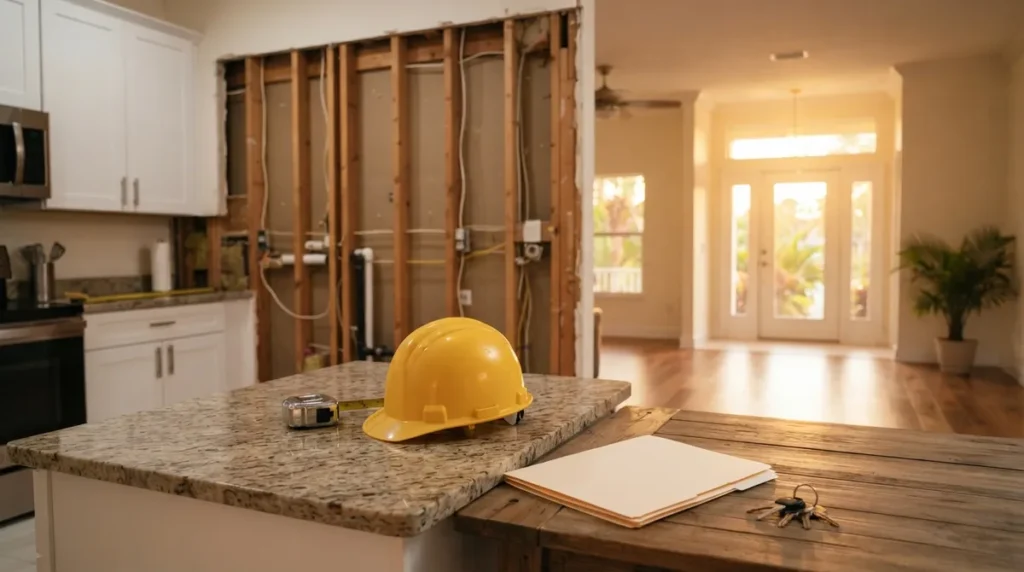
An open permit found at closing is usually fixable, but you must decide early whether to clear it before closing day or close as-is and handle it afterward, since each path carries different trade-offs.
-
An expired permit is not the same as a closed permit in Florida; always check the actual status definitions in the local building department's record rather than trusting a generic label.
-
Florida Statutes § 553.79 generally allows a subsequent owner to close a permit through the original contractor, a licensed replacement contractor, or an owner-builder route, depending on local rules.
-
For most financed Florida closings, fixing the permit hold first is the safer path because it keeps lenders, insurers, and title companies comfortable and avoids price renegotiation.
-
Order a permit history review during the inspection period, not after, and get cost estimates before considering a close-as-is deal so you negotiate with facts.
-
Check permit history before listing or making an offer, and get written confirmation of closed status or final approval from the building department to share with the title company.
Picture this: the contract is signed, the movers are booked, and your lender is ready to fund. Then the title company calls with three words nobody wants to hear: "open permit found." Suddenly, a permit hold before closing in Florida is the only thing standing between you and the finish line.
Take a breath. This happens more often than you'd think, and it is almost always fixable. The real question is how you handle it. Do you clear the permit before closing day, or do you close as-is and deal with it afterward? Each path has trade-offs, and the right answer depends on your role in the deal, your timeline, and what the permit record actually says.
In this friendly guide, we'll walk through what a permit hold really is, how to check for one, and how the two main options stack up. Whether you're a buyer, seller, agent, investor, or contractor, you'll leave knowing exactly what to do next. If you want a deeper look at the closing side, our guide on what to do when an open permit is found at closing is a great companion read.
What Is a Permit Hold Before Closing in Florida?
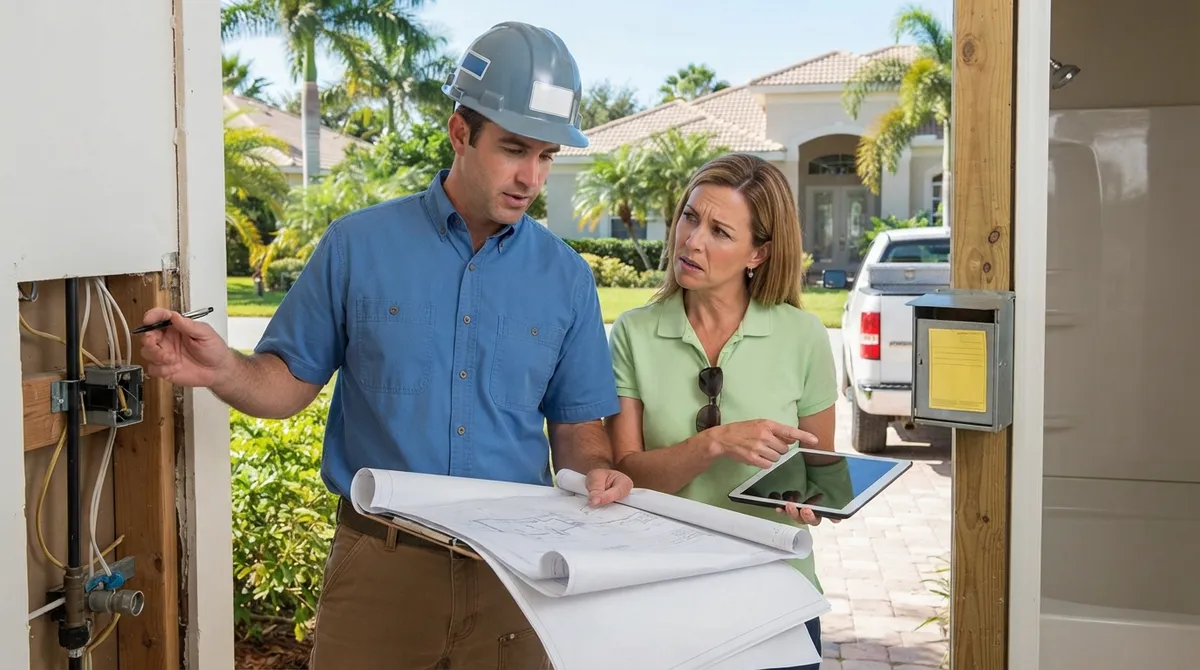
A "permit hold" is not an official legal status. It's a practical label. It usually means an unresolved building permit, or a related local-government record, surfaced during due diligence, and someone in the transaction wants it dealt with before money changes hands.
That someone could be the buyer, the lender, the title company, the insurer, or the local building department itself. An open permit doesn't automatically bar a sale statewide. Florida law generally doesn't prohibit selling a property just because a permit is open. But the practical effects can be real: delayed closings, renegotiated prices, or lenders pausing funding.
Why do open permits show up at closing?
Most of the time, nobody did anything sinister. Common causes include:
- A previous owner or contractor never called for the final inspection
- A permit expired after work stalled or the contractor disappeared
- Work was finished, but a document or fee was never submitted
- A roof, window, HVAC, or solar permit was never formally closed out
- Work was done without a permit at all, and a title search or inspection exposed it
The Florida Rules You Should Know
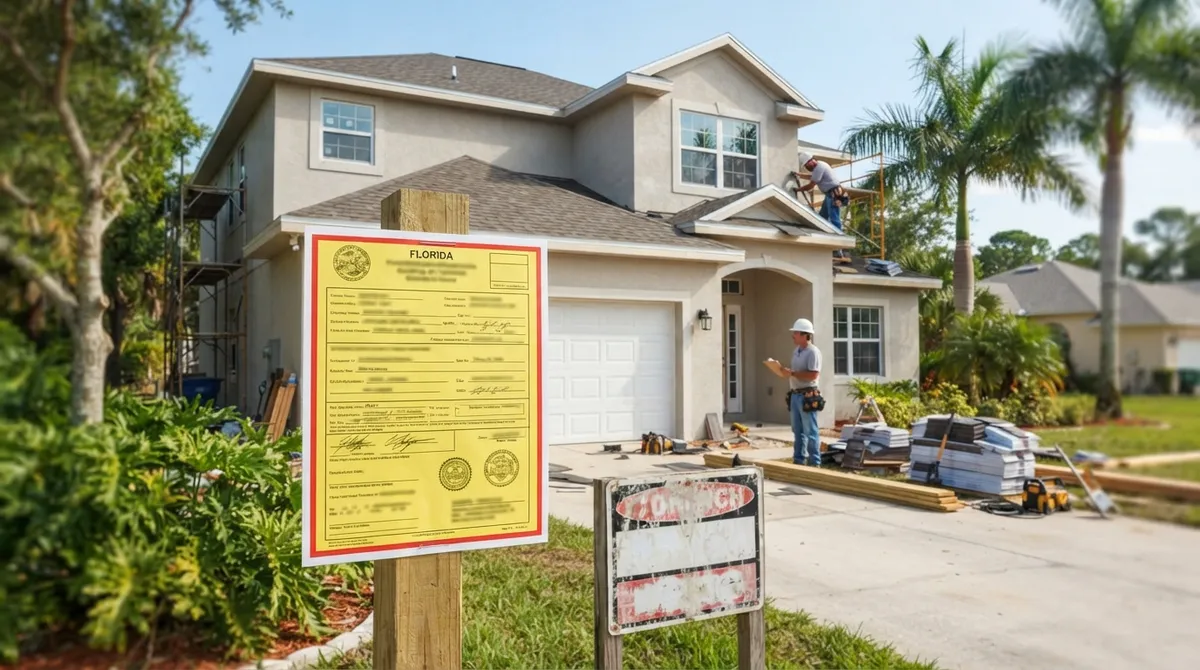
Florida Statutes § 553.79 governs building permits and inspections. It generally requires a permit for covered construction work and gives the local building official authority over how permits are administered. The city or county building department keeps the actual record and decides how a permit gets closed.
Here's the good news buried in that statute: a property owner, including a subsequent owner, can close a building permit. Depending on the situation, that may happen through the original contractor, a properly licensed replacement contractor, or an owner-builder route. Eligibility and procedures vary by jurisdiction, so always confirm with the authority having jurisdiction.
| Statutory Concept | What It Means in Practice |
|---|---|
| 180-day inactivity window | A permit may expire if work hasn't started within 180 days of issuance, or if no approved inspection is recorded within 180 days of the last one |
| Administrative closure | A building official may close certain permits inactive for at least six years, but only under statutory conditions and at the official's discretion |
| Subsequent owner rights | A new owner may pursue closing the permit through a licensed contractor or owner-builder route, subject to local rules |
Notice that administrative closure isn't automatic. Don't assume a very old permit simply vanished.
Expired does not mean closed
This one trips up almost everyone. An expired permit is not necessarily a closed permit. Collier County, for example, distinguishes closed statuses from other statuses and advises that anything outside its listed closed statuses may require further action. Always read the actual status definitions from the local jurisdiction instead of trusting a generic label. If this sounds like your situation, see our walkthrough on how to close an expired permit in Florida.
Option One: Fix the Permit Hold Before Closing
Clearing the permit before closing day is the "clean slate" approach. The title company, lender, and buyer all see a closed record, and nobody inherits a mystery.
How it works, step by step
- Search the property. Look up the address or parcel number in the city or county permit portal, or use our open permit search tool as a starting point.
- Verify the record. Confirm the permit number, scope of work, status, inspection history, contractor of record, and any open corrections or unpaid fees.
- Identify what's missing. Is it a final inspection, a corrected plan, a missing document, or an outstanding fee?
- Choose the closure route. That might be the original contractor, a licensed replacement contractor, or an owner-builder path where eligible.
- Complete the work and inspections. Fix anything that needs fixing, schedule the required inspections, and submit documents.
- Get written confirmation. Ask the building department for the closed status or final approval and share it with the title company.
Pros of fixing first
- Cleanest outcome for lenders, insurers, and title companies
- Avoids price renegotiation over "unknown" risk
- Gives the buyer confidence and protects the seller's reputation
- Prevents the problem from landing on a new owner
Cons of fixing first
- May require extending the closing date
- Timelines depend on the jurisdiction's inspection schedule
- If the work wasn't done correctly, corrective work and engineering may be needed
Option Two: Close As-Is and Resolve It After
Sometimes a deal is moving fast, the buyer is an experienced investor, or the closing date simply can't slide. In these cases, parties may agree to close with the open permit still on the record and allocate responsibility in the contract.
What "close as-is" usually involves
- A written agreement about who handles and pays for permit closure
- Possibly an escrow holdback or price credit to cover estimated costs
- Buyer acceptance of the risk that inspections or corrections may reveal more work
Keep in mind that lenders and insurers can have their own requirements. A cash buyer has far more flexibility than someone relying on a mortgage. This is also a good moment to involve your title company and a real estate attorney, because permit permitting services can research and coordinate, but they don't replace legal or title advice.
Pros of closing as-is
- Keeps the closing date intact
- Can suit investors planning renovations anyway
- Avoids rushing inspections and corrections
Cons of closing as-is
- The new owner inherits the open permit and any hidden issues
- Lender or insurer pushback can still derail the deal
- Costs are uncertain until the permit file is actually reviewed
- Unpermitted or incomplete work can complicate future sales or insurance claims
Head-to-Head: Fix First vs. Close As-Is
| Factor | Fix Before Closing | Close As-Is |
|---|---|---|
| Lender comfort | High | Varies; can be a dealbreaker |
| Timeline impact | May delay closing | Closing date preserved |
| Cost certainty | Higher, once file is reviewed | Lower until after closing |
| Risk to buyer | Low | Moderate to high |
| Risk to seller | Resolved up front | Possible credits or holdbacks |
| Best for | Financed buyers, owner-occupants, tight title requirements | Cash buyers, investors, planned renovations |
The verdict? For most financed Florida transactions, fixing first wins. It's the path that keeps lenders, insurers, and title companies comfortable. Closing as-is works best when everyone understands the permit file, the costs are estimated, and the buyer has the flexibility to take on the cleanup.
What Each Audience Should Do
Sellers and homeowners
Check your permit history before listing. Surprises at the closing table cost leverage. If you find an open permit, getting ahead of it shows buyers you're organized and trustworthy. Our homeowner permitting support can help you sort out where you stand.
Buyers and investors
Order a permit history review during your inspection period, not after. Some jurisdictions offer historical permit reviews specifically for property sales. If you're considering closing as-is, get cost estimates first so you're negotiating with facts.
Real estate agents
An open permit caught early is a speed bump. Caught late, it's a crisis. Build a quick permit check into your listing and offer workflow, and keep a go-to permitting partner ready. Our realtor closing support is built for exactly this.
General contractors and trades
If your name is on an old permit, that record can follow you. Closing out finished jobs promptly protects your clients and your license. If a prior project was never finalized, our general contractor services can help bring it to closure.
Solar and roofing companies
Solar and roof permits are common culprits at closing because final inspections slip through the cracks after installation. Staying on top of closeout protects homeowners at resale. See how we support solar contractors with documentation and tracking.
How Florida Permitting Services Can Help
A Florida permitting service can't guarantee approval, and it can't replace licensed trade work, engineering, or legal and title advice when those are required. But it can take a huge load off your shoulders by:
- Researching permit histories and pulling records
- Identifying missing inspections, documents, or fees
- Coordinating with contractors and building officials
- Arranging inspections and tracking the file through closure
- Preparing as-built drawings or engineer letters when a reviewer asks for them
At 1 Contractor Solutions, we act as Florida's outsourced permitting department across all 67 counties, with in-house drafting and engineering and our own engineer sealing the work. If a permit is also expired or the work was never permitted, our after-the-fact and expired permit service is built for those files, and our urgent permit rescue is designed for closings that are running out of runway. Curious how other customers feel? See what 1 Contractor Solutions customers say on Google.
Local rules matter
Procedures differ county to county and city to city. For example, buyers in Hillsborough should look at how to clear a Tampa permit hold before closing, while South Florida deals often run through Miami-Dade County or Broward County requirements. If you're not sure which office controls your address, our building department lookup can point you in the right direction.
Realistic Timelines and Costs
Here's the honest answer: it depends. We couldn't find any statewide statistic on how many Florida properties are delayed at closing by open permits, and fees and resolution times are specific to each jurisdiction and permit type. A simple missing final inspection may resolve quickly, while an expired permit with unfinished work may need plans, engineering, and multiple inspections.
| Situation | Typical Path | Relative Complexity |
|---|---|---|
| Finished work, final inspection never called | Request and pass final inspection | Lower |
| Expired permit, work complete | Verify status, reactivate or close, inspect | Moderate |
| Work done without any permit | After-the-fact permitting with plans and possibly engineering | Higher |
| Contractor of record unreachable | Replacement contractor or owner-builder route where eligible | Moderate to higher |
Our guide to after-the-fact permit costs in Florida can help you set expectations on the higher end of that table.
A Quick Pre-Closing Checklist
- Search the address or parcel number in the correct building department portal
- Confirm permit number, scope, status, and inspection history
- Note any open corrections, expired status, or unpaid fees
- Ask your title company and lender what they require
- Decide early: fix first or negotiate an as-is closing
- Get everything in writing, including final approvals from the jurisdiction
Wrapping Up: Which Path Wins?
For most financed Florida closings, clearing the permit first is the safer, smoother route. It protects the buyer, reassures the lender, and keeps the seller's good name intact. Closing as-is can work for cash buyers and investors who understand the file and price in the cleanup, but it carries more uncertainty.
Whichever way you lean, the secret is speed and clarity. Know exactly what's on the record before the clock gets tight. If a permit hold is threatening your Florida closing right now, we'd love to help. Get a free quote and let our team research your permit file, coordinate with the building department, and get your deal moving again. You can also follow us on LinkedIn or follow us on Facebook for more Florida permitting tips. For official statutory language, you can review Florida Statutes § 553.79 directly.
FAQs
Can an open building permit stop a home closing in Florida?
It can, but not because Florida law bans the sale. An open permit usually causes trouble when a lender, title company, insurer, or buyer wants it resolved first. The good news is that most open permits can be researched and cleared with the right steps.
How do I check for open permits on a Florida property?
Search the property address or parcel number in the city or county building department's permit portal, then confirm the permit number, scope, status, and inspection history. Some jurisdictions even offer historical permit reviews for property sales, which is a handy shortcut.
Can a new owner close a permit pulled by the previous owner or contractor?
Yes, in many cases. Florida Statutes § 553.79 allows an owner, including a subsequent owner, to close a permit, often through the original contractor, a licensed replacement contractor, or an owner-builder route. Eligibility and procedures vary by jurisdiction, so confirm with your local building department.
Is an expired permit the same as a closed permit in Florida?
Nope, and that surprises a lot of people. An expired permit may still need further action, such as inspections, documents, or reactivation, before the building department treats it as closed. Always check the actual status on the permit record.
Can a Florida permitting service help clear an open permit before closing?
Absolutely. A permitting service can research permit histories, identify missing inspections or documents, coordinate with building officials, and track the file through closure. It can't guarantee approval or replace licensed trade, engineering, or legal and title advice, but it can make the process far less stressful.
We do this work every day across all 67 Florida counties. Call (866) 314-6931 and we will tell you what your situation actually requires — including when you do not need us.
Related services
Permit Facilitation & Filing
You have a crew scheduled, a client asking for dates, and a permit sitting somewhere in a queue you cannot see. We file it, w…
See the servicePlan Review Coordination
A permit in plan review is not one queue. On a commercial project it can be six queues, each with its own reviewer, its own c…
See the serviceReady to get your permit moving?
One call tells you which jurisdiction controls your project, what it will take, and what it will cost. Most of the time we can scope it on the phone.