
Blog
How to Bring Unpermitted Construction Up to Code in Florida
Found unpermitted work on your Florida property? Learn the step-by-step process to document it, file, pass inspections, and get compliant in 2026.
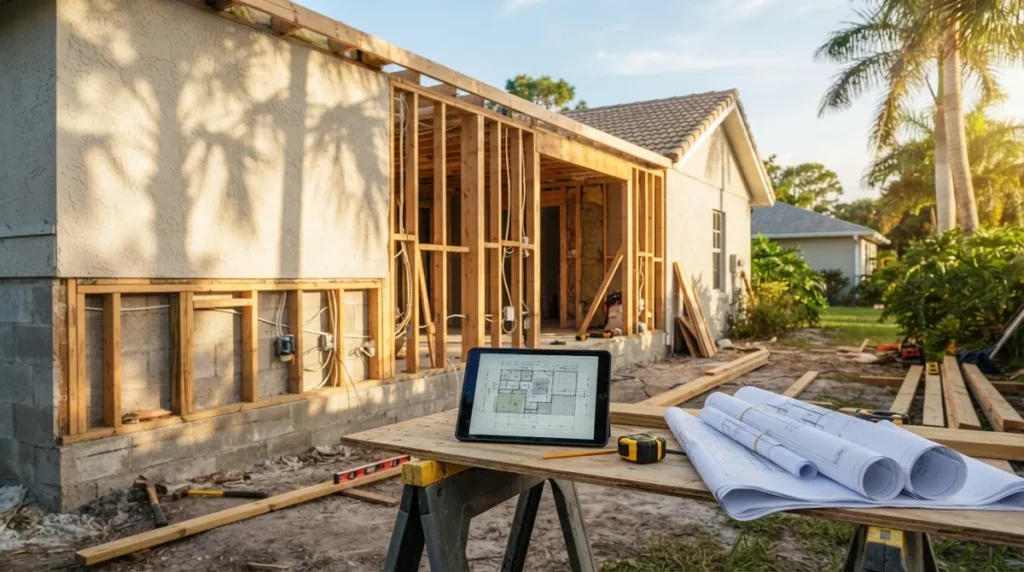
Key Takeaways
-
Florida Statutes §553.79 generally requires a permit before covered construction, but there is no statewide after-the-fact fee schedule or penalty formula; the local city or county with jurisdiction sets the process.
-
Confirm which building department has jurisdiction first, since incorporated cities often handle permits instead of the county, and check for open or expired permits on the property before filing anything new.
-
Document the existing work with clear photos, measured as-built drawings, and a site plan showing setbacks, because the permitting office expects an accurate picture of current conditions rather than original plans.
-
Identify every trade involved (building, electrical, plumbing, mechanical) and file a permit for each, since missing a trade at the start is a common reason files get kicked back.
-
Expect at least one round of plan review comments and answer every comment completely before resubmitting, since partial responses cause repeated rejections and delays.
-
Be prepared to open walls or ceilings for inspection, since an after-the-fact permit is not automatic approval and concealed work may need to be exposed, corrected, or in rare cases removed.
So you just found out that your deck, garage conversion, or kitchen remodel was built without a permit. Take a breath. You are far from alone, and in most cases, there is a clear path forward. Florida has no shortage of homes with work that was done by a prior owner, a handyman who cut corners, or a contractor who simply never filed. The good news is that you can usually fix it, and you do not have to do it blindly.
This guide walks you through exactly how to bring unpermitted construction up to code in Florida in 2026. We will cover who controls your property, what documents you need, what inspectors look for, and what it may cost. Whether you are a homeowner, a general contractor, a realtor with a closing on the line, or a solar company cleaning up an old install, the steps are the same at their core.
One honest note up front: approval is never guaranteed, and every city and county runs its own process. But with the right preparation, most owners get through it. Let's walk through it together.
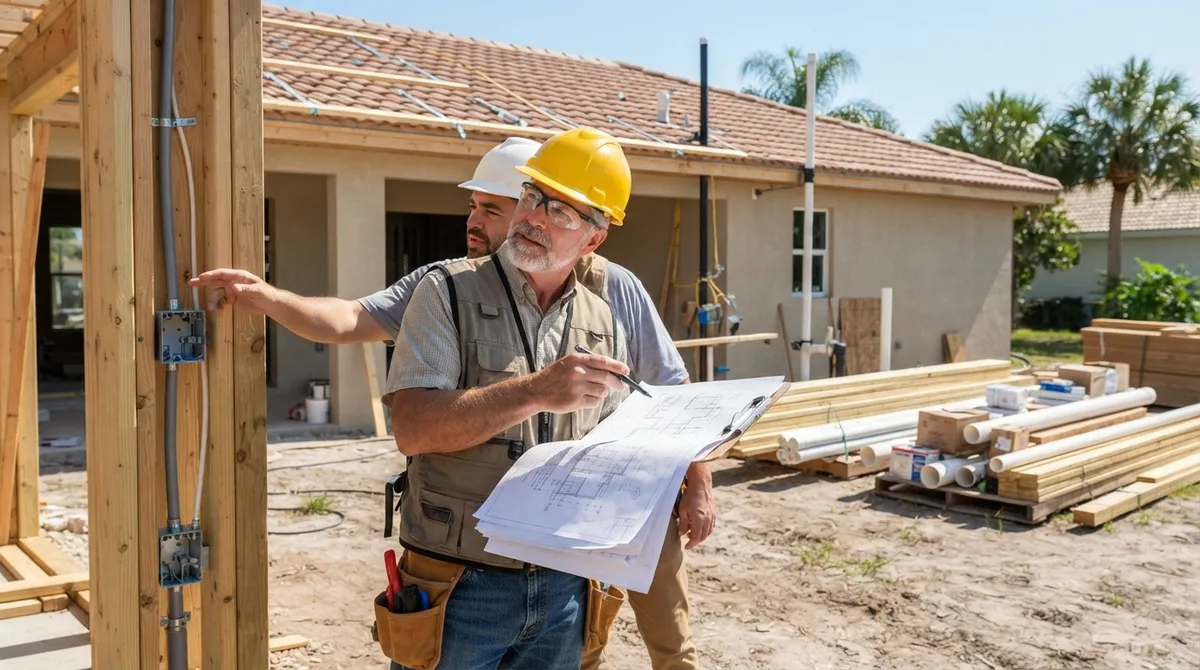
Why Florida Requires Permits in the First Place
Florida Statutes §553.79 generally requires a permit from the local enforcing agency before covered construction, alteration, modification, repair, or demolition begins. Permits exist so a trained reviewer and inspector can confirm that structural, electrical, plumbing, and mechanical work meets the Florida Building Code and keeps people safe.
When work skips that process, nobody has verified what is behind the walls or under the finish. That is why the fix is not just paperwork. It is about proving the work is safe and compliant, or correcting it until it is.
Statewide Law, Local Process
Here is the part that surprises people: Florida does not have one statewide after-the-fact application, fee schedule, or penalty formula. The statute sets the general rule, but the city or county with jurisdiction decides the details. That means the process in Tampa can look quite different from the process in Miami or Orlando.
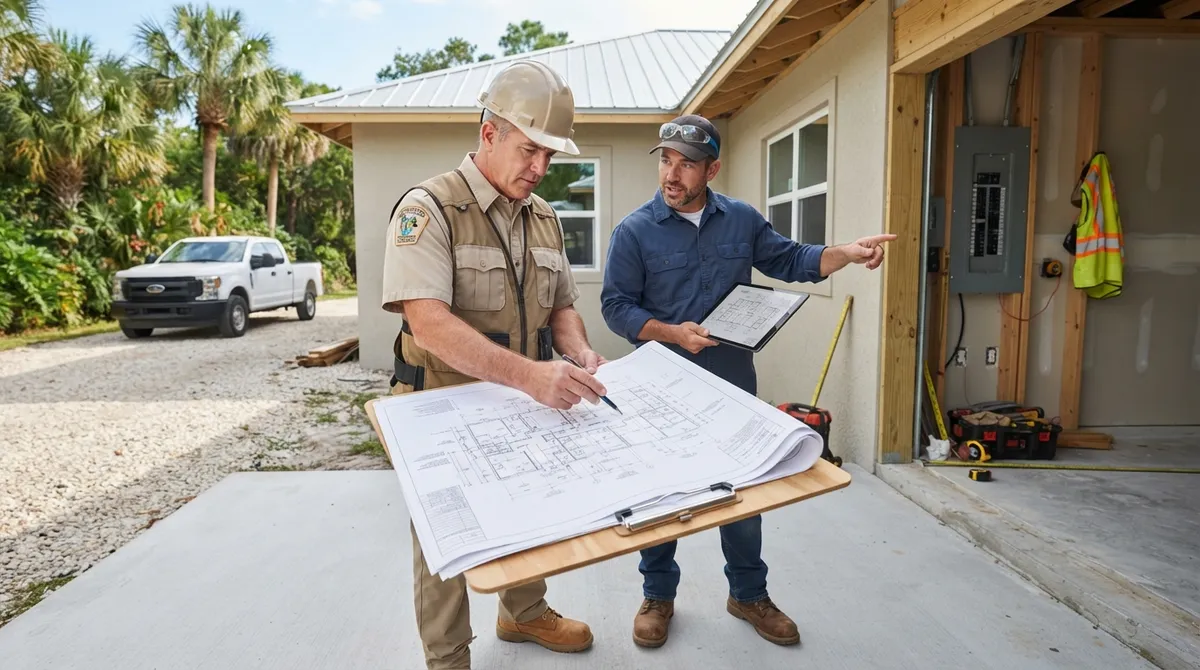
Step-by-Step: How to Bring Unpermitted Work Into Compliance
Here is the roadmap most Florida properties follow. Your local department may add or reorder steps, but this is the backbone of the process.
- Confirm which building department has jurisdiction. Do not assume it is the county.
- Search for existing permit history on the property, including open or expired permits.
- Document the existing work with photos, measurements, and as-built drawings.
- Determine which trades are involved (building, electrical, plumbing, mechanical).
- Prepare plans and any required engineering.
- File the after-the-fact or corrective permit application.
- Respond to plan review comments and resubmit if needed.
- Pass inspections and correct any deficiencies.
- Close the permit and obtain final approval.
Let's break the most important steps down.
Step 1: Confirm Who Actually Has Jurisdiction
Florida has 67 counties, but a county building department does not automatically control every property inside its borders. If your home sits inside an incorporated city, that municipality often handles permitting. Near city boundaries, this gets confusing fast, and filing with the wrong office wastes weeks.
You can start with the building department lookup tool to identify the right authority. If you are still unsure, our guide on which Florida jurisdiction reviews my project explains how to sort it out.
Step 2: Check for Open or Expired Permits
Before you file anything new, find out what is already on record. Sometimes the work was permitted but never finalized, which is a different problem with a different fix. An expired or open permit may only need to be reopened and closed out rather than started from scratch.
Run an open permit search for your address. If you find a stale record, see how to close an expired permit in Florida before choosing your next move.
| Situation | What It Usually Means | Typical Fix |
|---|---|---|
| No permit on record | Work was never permitted | After-the-fact permit |
| Permit open, never finaled | Work started, inspections incomplete | Reactivate, inspect, close |
| Permit expired | Permit lapsed before completion | Renew, reopen, or reapply |
| Notice of Violation issued | Code enforcement is involved | Corrective permit plus compliance |
Step 3: Document the Work as It Exists Today
This is where many owners stall, because the original contractor is gone and there are no plans. That is normal. The permitting office does not expect original drawings. It expects an accurate picture of what exists now.
A good documentation package often includes:
- Clear photos of the work from multiple angles
- Measured as-built drawings showing existing conditions
- A site plan showing setbacks and where the work sits on the lot
- Notes on materials, framing, and fasteners where visible
- Any receipts, contracts, or product information you still have
If you are not sure how to produce these, read how to prepare as-builts for an after-the-fact permit in FL. A reviewer who sees clean, accurate drawings is far more likely to move your file along.
Step 4: Identify Every Trade Involved
Unpermitted work often touches more than one system. A garage conversion, for example, can involve framing, new outlets, a mini-split, and added plumbing. Each of those may need its own permit application.
| Trade | Common Unpermitted Examples | What Reviewers Often Want |
|---|---|---|
| Building / Structural | Additions, enclosures, walls, decks | Plans, engineering, truss or load-path verification |
| Electrical | Panels, added circuits, generators | Load calculations, inspection access |
| Plumbing | Bathrooms, kitchens, water heaters | Riser diagrams, pressure tests |
| Mechanical | HVAC changes, ducting, exhaust | Equipment specs, sizing calculations |
Missing a trade at the start is one of the most common reasons files get kicked back. Our guide on after-the-fact electrical, plumbing and HVAC help covers this in more detail.
Step 5: Get the Right Plans and Engineering
Depending on the scope, your jurisdiction may require sealed drawings or an engineer's letter confirming the work is structurally sound. This is especially common for additions, enclosures, roofs, and anything involving load paths or wind resistance.
An engineer letter can verify existing conditions and save you from costly demolition. For deeper structural questions, structural engineering and MEP engineering support can provide the sealed documentation reviewers expect.
At 1 Contractor Solutions, our drafting and engineering are done in house, and our own engineer signs and seals the work. That means when a reviewer flags a comment, we can fix it directly rather than waiting on an outside consultant to call back.
Step 6: File the After-the-Fact Permit Application
Now you are ready to file. You will typically submit permit applications for each relevant trade, along with your drawings, site plan, contractor or owner-builder details, photos, and any supporting engineering. Requirements vary by jurisdiction, so your checklist may differ from your neighbor's across the city line.
If you are handling this yourself as the owner, review the owner-builder permit rules first, since they affect who can sign the application. For a full walkthrough of the filing itself, see how to apply for an after-the-fact permit in Florida.
Many owners prefer to hand this stage off. Professional permit facilitation and filing takes the guesswork out of submission and tracking, and plan review coordination keeps comments from piling up unanswered.
Step 7: Expect Plan Review Comments
Almost every after-the-fact file gets at least one round of comments. Do not panic when that happens. Reviewers ask for clarification, missing details, or corrections, and a thorough response usually clears them.
The key is to answer every comment completely and resubmit cleanly. Partial answers lead to another rejection and another delay. If you hit a wall, our revisions and resubmittals support and the article on why a building permit gets rejected can help you understand what went wrong.
Step 8: Pass Inspections (and Be Ready to Open Walls)
This is the step people dread, and it deserves honesty. Inspectors need to verify structural components and concealed electrical, plumbing, or mechanical work. If they cannot see it, the jurisdiction may require you to open walls, ceilings, or other finishes. They may also ask for testing or professional evaluations.
Here is how to prepare so the inspection goes smoothly:
- Photograph work before closing anything up, if you can
- Leave key areas accessible on inspection day
- Have your drawings and engineer letter on site
- Be ready to correct any item the inspector flags
- Ask whether a private provider option is available in your area
It is also important to understand that an after-the-fact permit is not automatic approval. The authority may require concealed work to be exposed, noncompliant work to be altered, or in some cases removed. Our article on whether you will really have to demolish unpermitted work explains when that actually happens, and it is less often than most people fear.
What It May Cost to Bring Work Up to Code
There is no single statewide price. Local consequences can include the regular permit fee plus a surcharge or penalty, code-enforcement action, reinspection costs, and the cost to expose or correct the work. The amounts and the enforcement approach vary by jurisdiction.
For example, some Miami-Dade guidance describes a penalty equal to 100% of normal permit fees in certain Notice of Violation cases. That is a local example, not a statewide rule, so do not assume it applies where you live.
| Cost Component | Who Controls It | Notes |
|---|---|---|
| Standard permit fees | Local building department | Based on project valuation or fee schedule |
| Penalty or surcharge | Local jurisdiction | Varies widely; some add a percentage |
| Drawings and engineering | Your design professional | Depends on scope and complexity |
| Exposing or correcting work | You / your contractor | Depends on what inspectors find |
| Reinspection fees | Local building department | Charged if inspections fail |
For a deeper look at pricing, see our breakdown of after-the-fact permit costs in Florida and the penalties for building without a permit.
If You Already Received a Notice of Violation
A code enforcement notice adds urgency, but it does not mean the situation is hopeless. Respond within the deadline, do not ignore it, and start the corrective permit process right away. Many jurisdictions treat prompt, good-faith action more favorably than silence.
Our guide on code compliance violations explains how we help owners resolve these cases, and 14 steps to clear a notice of violation in Florida lays out the process in detail. If a stop work order is involved, our urgent permit rescue team handles exactly these situations.
Special Situations: Closings, Rentals, and Solar
Selling or Buying a Home
Unpermitted work has a way of surfacing at the worst moment: during an appraisal, a home inspection, or a title search. If you are a realtor or investor, getting ahead of it can save a closing. Our realtor closing support and the guide on permit holds that delay a Florida closing are good places to start.
Contractors and Solar Companies
If you inherited an install or a job from another crew, legalizing it protects your license and your customer. General contractors can explore resources built for general contractors, and solar teams can look at solar contractor support, including how to legalize unpermitted installs.
Homeowners
If you bought a property with unpermitted work from a prior owner, you can still fix it. See resources for homeowners and 4 steps if a prior owner skipped permits in Florida.
Common Mistakes That Slow Everything Down
After helping with thousands of Florida permits, certain mistakes show up again and again. Avoid these and you will save weeks:
- Filing with the wrong jurisdiction
- Submitting drawings that do not match what was actually built
- Skipping a trade (like electrical) that also needs a permit
- Ignoring a plan review comment instead of answering it fully
- Covering up work before the inspector has seen it
- Waiting until a closing deadline to start
For more on this, our article on 13 unpermitted work mistakes Florida owners should avoid goes deeper.
Should You DIY It or Get Help?
You can absolutely handle some of this yourself, especially for small, simple work. But most owners find the combination of drawings, engineering, multi-trade permits, and inspection coordination more time-consuming than expected. A professional who knows your local department's quirks can often shorten the timeline and reduce surprises.
If you want to compare options, read DIY vs. pro help for an after-the-fact permit. And if you want a clear read on your specific property, our guide to unpermitted work in Florida and how to legalize it is a solid next step.
You Can Get Back to Compliant
Bringing unpermitted construction up to code in Florida takes patience, good documentation, and the right local knowledge, but it is very doable. Confirm your jurisdiction, document what exists, get the engineering and drawings you need, file for each trade, answer comments thoroughly, and pass your inspections. Stay honest about the fact that approval is not guaranteed, and plan for the possibility that some work may need to be corrected.
1 Contractor Solutions acts as Florida's outsourced permitting department. We work in all 67 counties, respond within 30 minutes day or night, and handle everything from drafting and sealed engineering to filing, tracking, and closeout. You can visit us on Google — 1 Contractor Solutions to see what customers say, and you can follow us on LinkedIn or follow us on Facebook for more Florida permitting tips.
Ready to stop worrying about that unpermitted work? Get a free quote and let our team map out the fastest path to a clean, closed permit.
FAQs
Can unpermitted construction be legalized in Florida, or will it have to be removed?
In many cases it can be legalized through an after-the-fact or corrective permit, but approval is never guaranteed. The local building department may require you to expose concealed work, make corrections, or in some situations remove noncompliant work. Good documentation and engineering give you the best chance of keeping what you built.
Which Florida building department has jurisdiction over my property?
It depends on your exact address. Properties inside an incorporated city usually go through that municipality, while unincorporated areas go through the county, and the boundary can be tricky near city lines. Confirm the correct authority before filing so you do not lose weeks with the wrong office.
Will I have to open walls or ceilings for inspection of unpermitted work?
Possibly. If an inspector cannot verify concealed structural, electrical, plumbing, or mechanical work, the jurisdiction may require you to open finishes or provide testing and professional evaluations. Photos taken during construction and an engineer's letter can sometimes reduce how much needs to be exposed.
Do I need separate after-the-fact permits for building, electrical, plumbing, and mechanical work?
Often yes. Each trade involved in the work may need its own permit application, along with supporting drawings and documents. Identifying every affected trade up front helps you avoid rejections and delays later.
What penalties or extra fees apply to unpermitted construction in Florida?
There is no single statewide formula. Local jurisdictions may charge the regular permit fee plus a surcharge or penalty, along with reinspection and correction costs. Miami-Dade guidance, for example, describes a penalty equal to 100% of normal permit fees in certain Notice of Violation cases, but your city or county may differ.
We do this work every day across all 67 Florida counties. Call (866) 314-6931 and we will tell you what your situation actually requires — including when you do not need us.
Related services
Permit Facilitation & Filing
You have a crew scheduled, a client asking for dates, and a permit sitting somewhere in a queue you cannot see. We file it, w…
See the servicePlan Review Coordination
A permit in plan review is not one queue. On a commercial project it can be six queues, each with its own reviewer, its own c…
See the serviceReady to get your permit moving?
One call tells you which jurisdiction controls your project, what it will take, and what it will cost. Most of the time we can scope it on the phone.