
Blog
How Do You Apply for an After-the-Fact Permit Florida?
Learn how to apply for an after-the-fact permit in Florida, including required documents, fees, timelines, and how a permitting expert can help.
Key Takeaways
-
Each Florida county and municipality has its own after-the-fact permit process with different fees, forms, and requirements—verify your correct jurisdiction first to avoid wasting time filing with the wrong office.
-
After-the-fact permits resolve paperwork and safety verification but don't automatically erase existing penalties, code enforcement notices, fines, or stop-work orders, which are handled as separate legal matters.
-
Most after-the-fact applications require sealed engineering or architectural drawings, especially for concealed work like plumbing or electrical; a licensed engineer's evaluation can sometimes avoid opening walls for inspection.
-
Unpermitted work discovered during a real estate closing can delay or derail the sale since lenders, insurers, and title companies typically require resolution before releasing funds.
-
Permit applications can be abandoned after 180 days of inactivity, and issued permits become invalid if work doesn't start within 6 months or pauses for 6 months—staying on top of deadlines is critical.
-
Professional permitting services benefit contractors, solar companies, realtors, and homeowners with code enforcement notices by handling jurisdiction research, sealed drawings, and deadline management to avoid costly mistakes.
So, you (or the person who owned your house before you) built something without a permit. Maybe it's a lanai enclosure, a converted garage, a new electrical panel, or that pool deck that just sort of... appeared one summer. First, take a breath. You're not the first Florida property owner to find yourself here, and you won't be the last. Every week, our team at 1 Contractor Solutions helps homeowners, contractors, and real estate professionals figure out how to apply for an after-the-fact permit Florida jurisdictions will actually accept, and the good news is that it's almost always fixable.
That said, the process isn't as simple as filling out a form and mailing a check. Florida has 67 counties and hundreds of municipalities, and each one runs its own after-the-fact program with its own fees, forms, and quirks. This guide walks you through exactly what to expect, what documents you'll need, and how a Florida permitting professional can save you weeks of frustration. Let's get you back into compliance with a smile on your face.
What Is an After-the-Fact Permit, Exactly?
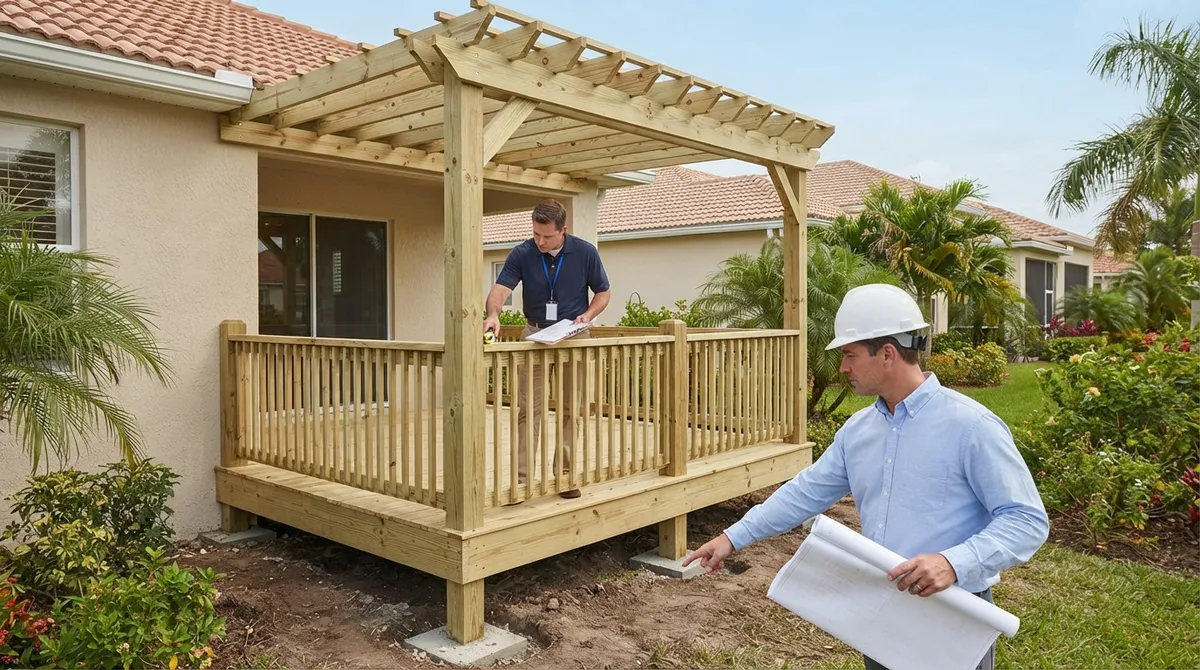
An after-the-fact permit, sometimes called a retroactive or corrective permit, is how a Florida building department documents and inspects construction that already happened without the required approval. Under Florida Statutes §553.79, most construction, alteration, repair, or installation of electrical, plumbing, mechanical, or gas systems requires a permit before work begins. When that step gets skipped, the after-the-fact process is the path back to legitimacy.
Here's the part people often misunderstand: getting the permit approved doesn't erase the fact that the work started without authorization in the first place. It resolves the paperwork and safety verification, but it doesn't automatically wipe out penalties, code enforcement notices, or fines that may already be in motion. Those are often separate matters handled on their own track.
Why Florida Doesn't Have One Standard Process
This trips up a lot of homeowners and even seasoned general contractors: there's no single statewide after-the-fact application or fee schedule. Each city or county building department sets its own rules. What works in Tampa might look completely different in Miami or St. Petersburg.
Some jurisdictions charge a straightforward penalty fee. Others, like St. Lucie County, double the standard permit fee for after-the-fact applications. That's why confirming the correct jurisdiction first is such a crucial step; property lines near city borders can be deceiving, and filing with the wrong office wastes valuable time. Our building department lookup tool is a great place to start if you're unsure who actually reviews permits for your address.
Step-by-Step: How to Apply for an After-the-Fact Permit in Florida
While the specifics vary by county, the general roadmap looks pretty similar across the state. Here's what you can expect:
- Stop any ongoing unpermitted work immediately. Continuing without a permit only adds risk and potential fines.
- Confirm the correct jurisdiction. Verify whether your property falls under city or county building department authority.
- Pull open permit and code enforcement records. You'll want to know if there's already a violation notice or stop-work order tied to the property, which our open permit search tool can help clarify.
- Document existing conditions. Photos, measurements, and site details help establish what was built.
- Prepare as-built drawings or plans. Structural, electrical, plumbing, and mechanical work typically requires sealed engineering documentation.
- Submit the application and pay applicable fees. This includes the standard permit fee plus any after-the-fact penalty.
- Schedule and complete inspections. Inspectors will verify the work meets current code, which may mean opening walls or ceilings for concealed items.
- Correct any deficiencies. If something doesn't pass, you'll need to fix it before moving forward.
- Obtain final approval and permit closure. This is the finish line, where the permit officially closes out.
Documents You'll Likely Need
Building departments want to see proof that the completed work is safe and code-compliant. Depending on the scope, you may need:
- Site plans showing the structure's location on the property
- As-built construction drawings, especially for additions or structural changes
- Contractor information or an owner-builder disclosure
- Product approval documentation for windows, doors, or roofing materials
- Engineer or architect-sealed plans for structural, electrical, plumbing, or mechanical work
- Photographs documenting existing conditions
Concealed work, like plumbing inside a slab or wiring inside finished walls, often requires either opening portions of the structure for inspection or a licensed engineer's evaluation certifying the work meets code. This is where our engineer letters and as-built drawings services come in handy, since our in-house engineers can seal documentation without you waiting on an outside consultant.
Common Triggers for an After-the-Fact Permit
Curious what typically lands people in this situation? Here are the usual suspects we see across Florida:
| Project Type | Common Trigger | Documentation Usually Required |
|---|---|---|
| Additions or conversions | Garage-to-living-space conversions, enclosed patios | Structural plans, sealed drawings |
| Pools and spas | Installed without permit or final inspection | Site plan, electrical/plumbing documentation |
| Roofing | Reroof completed without permit pulled | Product approval, roof permit application |
| Electrical/plumbing | Panel upgrades, rewiring, repiping | Engineer or licensed contractor sign-off |
| Solar installations | Panels installed without structural/electrical permit | Structural load calculations, electrical diagrams |
What About Fees and Penalties?
Let's talk numbers, because this is often the first question everyone asks. Under Florida Statutes §162.09, code enforcement fines are generally capped at $250 per day for a first violation and $500 per day for repeat violations, with up to $5,000 possible for violations deemed irreparable or irreversible. That's separate from the permit fee itself.
Many jurisdictions also add a penalty multiplier on top of the standard permit fee. As mentioned, St. Lucie County doubles its fee for after-the-fact applications, and similar structures exist elsewhere. Because these numbers shift from county to county, it's smart to verify current rates with your local building department or work with a permitting service that already knows the going rates. Curious about typical costs? Our after-the-fact permit Florida cost guide breaks it down further.
Timelines: How Long Does This Actually Take?
Florida Statutes §553.792 creates a 30-business-day processing framework for certain qualifying residential permits, but that shouldn't be treated as a guarantee for every after-the-fact application, especially ones involving concealed work or structural review. Also worth knowing: a permit application can generally be considered abandoned after 180 days without activity, and issued permits typically become invalid if work doesn't start within six months or is paused for six months. Staying on top of deadlines matters just as much as getting the paperwork right the first time.
Comparing DIY vs. Professional Permitting Help
| Factor | Doing It Yourself | Working With a Permitting Service |
|---|---|---|
| Jurisdiction research | Time-consuming, easy to get wrong | Handled immediately, verified accuracy |
| Sealed drawings | Requires hiring an outside engineer | In-house engineering, faster turnaround |
| Reviewer comments | You track and resolve each one | Managed and resubmitted for you |
| Timeline management | Risk of abandonment after 180 days | Proactively tracked and extended if needed |
| Concealed work certification | May require opening walls unnecessarily | Engineer evaluation can sometimes avoid demolition |
Who Benefits Most From Professional Help
Not every after-the-fact permit needs a professional, but many do. Here's who tends to benefit the most:
- General contractors managing multiple properties who need reliable permit facilitation and filing without losing track of deadlines
- Solar companies needing fast, code-compliant structural and electrical documentation for distributed energy systems, especially given how quickly Florida solar permit timelines can shift
- Realtors and investors who discover unpermitted work during due diligence and need it resolved before or during closing
- Homeowners facing a code enforcement notice who aren't sure where to even start
- Architects and designers who need outsourced drafting and structural or MEP engineering without adding in-house overhead
When Selling: Why This Matters at Closing
If you're a realtor or property owner preparing to sell, unpermitted work can absolutely delay or derail a closing. Buyers' lenders and insurance companies frequently flag open permits found at closing, and title companies may require the issue resolved before funds are released. Getting ahead of this with realtor and closing support can save a deal from falling apart at the worst possible moment.
How 1 Contractor Solutions Can Help
This is exactly the kind of file we love taking on. Our in-house drafting and engineering team prepares sealed as-built drawings, our staff tracks every jurisdiction's specific requirements, and because we're a licensed private provider, we can sometimes perform plan review ourselves instead of waiting in a county queue. Whether you're in Fort Lauderdale, Orlando, or anywhere across our Florida service area, we've likely already filed in your municipality before.
We also handle the trickier files that other providers decline, including after-the-fact and expired permits, code compliance violations, and urgent permit rescue situations involving stop-work orders. If you want to see what past clients have experienced, take a look at what people are saying and visit us on Google — 1 Contractor Solutions before reaching out. You can also connect with our team and follow us on LinkedIn or follow us on Facebook for updates on Florida permitting changes.
A Quick Word on Legal Consequences
We'd be doing you a disservice if we didn't mention this plainly: paying an after-the-fact permit fee doesn't automatically clear a code enforcement case. Notices of violation, stop-work orders, liens, and daily fines can all exist as separate legal matters that need their own resolution. This is one more reason working with someone who understands both the permitting side and the enforcement side, like our team, tends to save people real headaches down the road. For general reference on code enforcement authority, the Florida Bar offers helpful consumer resources on property and construction law basics.
Final Thoughts: You've Got This
Discovering unpermitted work on your property, or realizing you skipped a step yourself, can feel overwhelming. But here's the encouraging truth: thousands of Florida property owners resolve this every year, and the path forward is well-established even if it takes some patience. Confirm your jurisdiction, gather your documentation, and don't be afraid to lean on people who do this for a living.
If you're ready to stop guessing and start moving forward, our team would love to help you sort out the details and get a free quote for your specific situation. We're here 24/7, we respond fast, and se habla español. Let's get your permit approved and your project moving again.
FAQs
How do I apply for an after-the-fact permit in Florida?
You'll want to start by confirming which city or county building department has jurisdiction over your property, then gather documentation like as-built drawings, photos, and possibly sealed engineering plans. From there, you submit the application, pay the applicable fees, and complete the required inspections. Every jurisdiction handles this a little differently, so working with a Florida permitting professional can make the whole process feel a lot less daunting.
How much does an after-the-fact permit cost in Florida?
Costs vary widely by jurisdiction since Florida doesn't have one statewide fee schedule. Some counties charge a flat penalty on top of the standard permit fee, while others, like St. Lucie County, double the regular fee entirely. It's always best to verify the current rate with your local building department or ask a permitting service familiar with your area.
Will I have to open walls or ceilings for an after-the-fact inspection?
It depends on the scope of the concealed work and how confident the inspector is without seeing it directly. Sometimes a licensed engineer's evaluation or certification can satisfy the building department without requiring demolition, which is one reason having in-house engineering support is so valuable. We always try to explore that path first before recommending anyone open up finished walls.
Can a Florida permitting service handle my after-the-fact permit application for me?
Absolutely, and honestly, that's exactly the kind of project we enjoy tackling most. A good permitting partner will confirm your jurisdiction, prepare or coordinate sealed drawings, file the application, and manage every bit of back-and-forth with reviewers until you reach final approval.
What happens if I sell a Florida property with unpermitted work?
Unpermitted work discovered during a real estate transaction can delay or even derail closing, since lenders, insurers, and title companies often require it resolved first. The earlier you address it, whether you're the seller or the buyer, the smoother your closing timeline will be.
We do this work every day across all 67 Florida counties. Call (866) 314-6931 and we will tell you what your situation actually requires — including when you do not need us.
Related services
Permit Facilitation & Filing
You have a crew scheduled, a client asking for dates, and a permit sitting somewhere in a queue you cannot see. We file it, w…
See the servicePlan Review Coordination
A permit in plan review is not one queue. On a commercial project it can be six queues, each with its own reviewer, its own c…
See the serviceReady to get your permit moving?
One call tells you which jurisdiction controls your project, what it will take, and what it will cost. Most of the time we can scope it on the phone.