
Blog
How to Find After-the-Fact Electrical, Plumbing & HVAC Help
Unpermitted electrical, plumbing, or HVAC work in Florida? Learn how after-the-fact permits work, what to expect, and how to choose the right help.
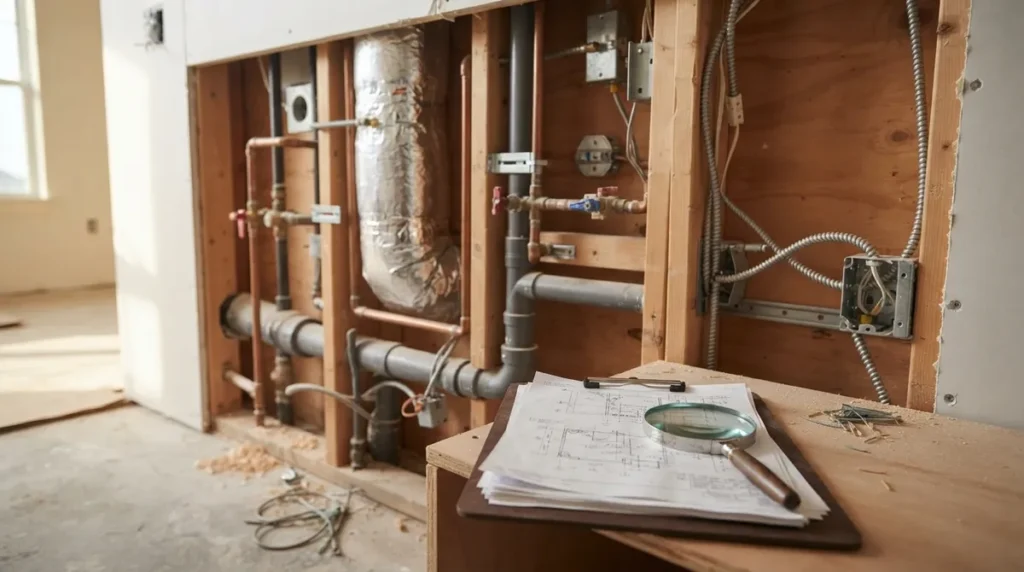
Key Takeaways
-
Each Florida city and county sets its own after-the-fact permit fees and penalties—there is no statewide fixed amount, so verify your local building department's current fee schedule before proceeding.
-
Do not cover, patch, or hide any electrical, plumbing, or HVAC work until the building department inspects it; officials may require access to concealed areas, and opening a small access point now is much cheaper than surprise demolition later.
-
Confirm the correct jurisdiction first using a building department lookup tool, as property lines near city borders can be tricky and the authority may be the city, county, or special district.
-
Most trade permits require a licensed contractor to pull the permit and pass official inspection, and a single project often needs separate electrical, plumbing, and mechanical permits.
-
Gather all documentation before applying—invoices, equipment specs, model and serial numbers, photos, and contractor details—as reviewers need proof that finished work meets code.
-
Check for open or expired permits before filing anything new, as sometimes a permit was pulled years ago and never closed, which can complicate a new application.
So you just found out that the electrical panel upgrade, the water heater swap, or the new AC system at your Florida property never got a permit. Take a breath. You are far from the first person to land here, and this is very fixable.
Maybe a previous owner skipped the paperwork. Maybe a contractor said "I'll pull it" and never did. Maybe an appraiser, a lender, or an insurance adjuster flagged it right before closing. Whatever brought you here, the next move is the same: get the work legalized the right way, with the right people, in the right order.
This guide walks you through exactly how to find the best after-the-fact electrical plumbing HVAC help in Florida. You will learn how the process works, what the building department will want to see, what questions to ask before you hire anyone, and how to avoid the mistakes that cost owners time and money. Whether you are a homeowner, a general contractor, a solar company, or a real estate pro, you will find practical steps you can use today.
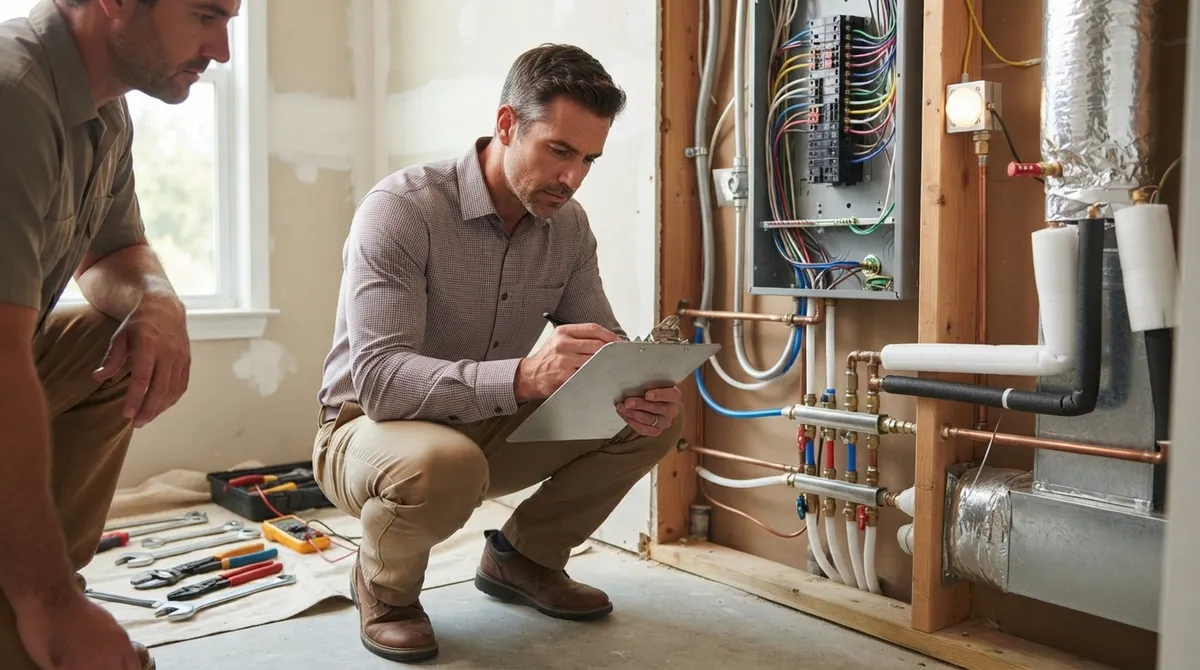
What After-the-Fact Permitting Really Means for Trade Work
In Florida, electrical, plumbing, and mechanical (HVAC) work covered by the Florida Building Code generally needs a permit before the work begins. Florida Statutes §553.79 sets the permit requirement, and your local building department administers permits and inspections.
When work was already completed without that permit, the property may need to go through an after-the-fact process. Think of it as asking the local authority to review and inspect work that should have been reviewed and inspected the first time around.
Here is the part many people miss: there is no single statewide retroactive-permit procedure or fee. Every city and county decides what applications, documents, inspections, corrections, and penalties apply. An after-the-fact permit is not a blanket approval. The local authority still needs proof that the finished work meets code.
If you want a deeper look at the broader process, our guide on how to get an after-the-fact permit in Florida covers the full picture, and our after-the-fact and expired permits service page explains how we handle these files.
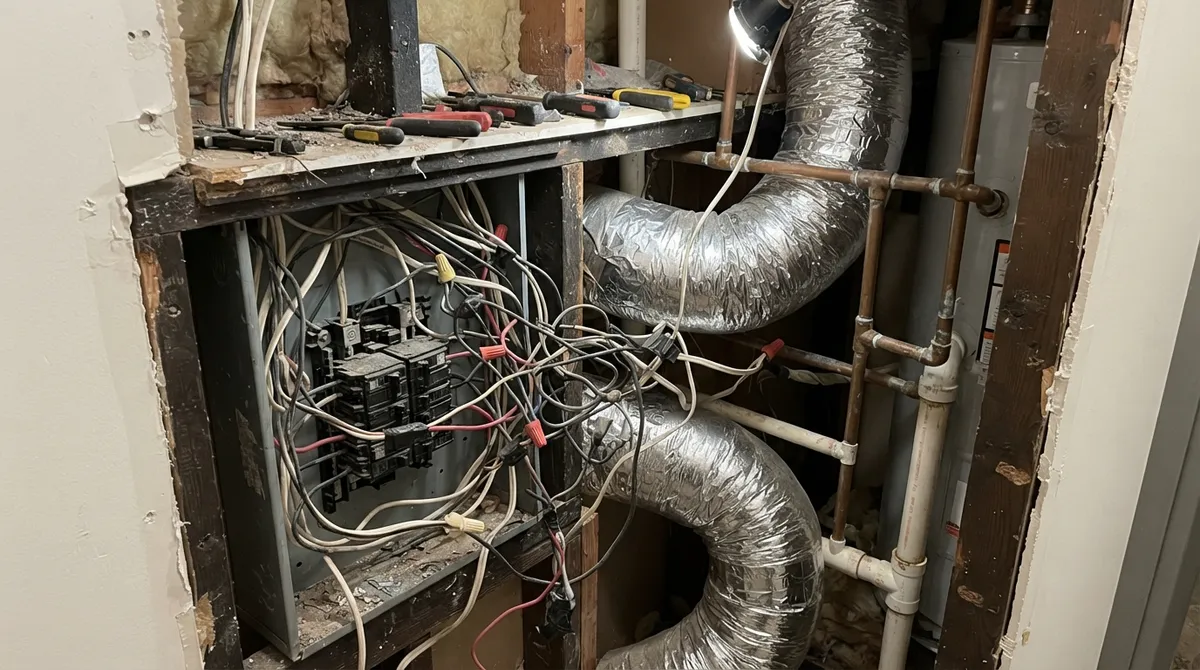
Common Trade Work That Ends Up Unpermitted
Trade permits are separate from a general building permit. You might not have touched a wall or a roof and still need one. These are the situations we see most often:
- HVAC replacement: Orange County, for example, states that HVAC equipment replacement or modification requires a mechanical permit.
- Electrical changes tied to HVAC: An upgrade that changes wire or breaker sizing may also need an electrical permit.
- Water heater replacements: Often swapped quickly and never permitted.
- Panel upgrades and added circuits: Common in remodels, garage conversions, and outdoor kitchens.
- Re-piping, new fixtures, and added bathrooms: Plumbing changes frequently happen during DIY or handyman projects.
- Solar and battery tie-ins: Electrical work that affects the main service or utility interconnection.
If you are dealing with wiring specifically, take a look at these 14 facts about unpermitted electrical work in Florida. For pipes and fixtures, see why unpermitted plumbing haunts Florida homeowners.
How to Get After-the-Fact Electrical, Plumbing, or HVAC Permits: Step by Step
The exact order varies by jurisdiction, but most Florida after-the-fact trade permit jobs follow this general path.
- Confirm the real jurisdiction. Property lines near city borders can be tricky. The authority having jurisdiction might be the city, the county, or a special district. Our building department lookup tool is a good starting point.
- Check for open or expired permits. Sometimes a permit was pulled years ago and never closed. Use the open permit search tool to find out before you file anything new.
- Gather your paper trail. Invoices, equipment specifications, model and serial numbers, photos, prior plans, and contractor details all help the reviewer understand what was installed and when.
- Identify the permit types needed. Electrical, plumbing, and mechanical permits are often separate. A single project may need all three.
- Prepare the application and any required drawings. Some jurisdictions accept a simple trade permit application with equipment data. Others want as-built drawings, load calculations, or an engineer's letter.
- Use a licensed contractor where required. Many trade permits must be pulled by a properly licensed contractor, and the work must pass official inspection.
- Schedule inspections and correct anything flagged. If the inspector finds issues, those need to be fixed and re-inspected before final approval.
- Close out the permit. A final inspection sign-off is what actually clears the record.
What About Concealed Work?
Here is the honest answer: it depends on the inspector and the jurisdiction. Officials may require access to concealed wiring, piping, ductwork, or equipment. Do not cover, patch, or hide anything until the building department tells you what inspection is required. Opening a small access point now is much cheaper than a surprise demolition later.
What the Building Department May Ask For
Requirements differ by city and county, but this table shows what reviewers commonly request for each trade.
| Trade | Typical Documents | Common Inspection Focus |
|---|---|---|
| Electrical | Permit application, panel schedule or load calculation, as-built sketch, license information | Grounding, breaker and wire sizing, bonding, GFCI/AFCI protection, concealed wiring access |
| Plumbing | Permit application, fixture count, riser or isometric diagram, water heater specifications | Pipe materials, venting, pressure testing, backflow, water heater safety devices |
| HVAC / Mechanical | Permit application, equipment specifications, load calculation, Manual J if required | Equipment sizing, condensate drain, ductwork, disconnect and electrical connection, refrigerant lines |
Always confirm the current list with the local building department. Their adopted rules control, not a general checklist.
What It Costs and What Penalties to Expect
This is where owners worry most, so let's be straightforward. There is no statewide fixed after-the-fact fee or penalty. Each local authority sets its own fee schedule and enforcement rules.
Some Florida Building Code educational materials describe a penalty of up to 100% of the usual permit fee for work started without approval. But that is educational guidance, not a promise of what your jurisdiction charges today. The current local fee schedule controls.
Local examples show how much this can swing:
| Jurisdiction (Example) | Reported Consequence | Note |
|---|---|---|
| Jacksonville | $250 fine for starting residential work without applying | Local guidance, subject to change |
| Pinecrest | Unpermitted work may incur a $500-per-day fine | Local FAQ, verify current rules |
| Statewide | No single fixed amount | Set by each authority having jurisdiction |
These are local examples, not statewide rates. For a closer look at what drives pricing, read our breakdown of after-the-fact permit costs in Florida and the penalty for building without a permit in Florida.
What a Permitting Service Can (and Can't) Do for You
A good Florida permitting service takes the paperwork and coordination off your plate. Here is what that help typically looks like:
- Identify the correct jurisdiction and permit types.
- Assemble and submit applications.
- Coordinate licensed trade contractors and design professionals.
- Prepare as-built drawings or engineer letters when the reviewer wants them.
- Track plan review and respond to correction notices.
- Arrange inspections and help carry the permit through closeout.
Just as important is what no honest provider can do. A permitting service cannot guarantee approval. It also cannot replace licensed contractor work, required engineering, or the official inspection. Approval always depends on the authority having jurisdiction and on demonstrated code compliance.
At 1 Contractor Solutions, we act as Florida's outsourced permitting department. Our drafting and engineering are in house, and our own engineer signs and seals the work, so when a reviewer flags something we can fix it instead of waiting on an outside consultant. Learn more about our permit facilitation and filing and MEP engineering services.
How to Choose the Best After-the-Fact Electrical, Plumbing, and HVAC Help in Florida
Not every provider is the right fit for retroactive trade permits. Use these questions to separate the pros from the pretenders:
- Do you serve my exact city or county? Local knowledge matters more than a big logo. Ask about your specific jurisdiction, such as Hillsborough County, Orange County, or Miami-Dade County.
- Have you handled retroactive trade permits before? Ask for real examples involving electrical, plumbing, or mechanical work.
- Will you explain your fees and scope in writing? Look for clear deliverables, not vague promises.
- Do you coordinate directly with the building department? Direct communication speeds up corrections.
- Do you have engineering and drafting in house? This keeps revisions moving fast when a reviewer asks for changes.
- Can you verify licenses? You should be able to confirm contractor and professional licenses through Florida's official licensing resources.
- How fast do you respond? Same-day response is a good sign when you have a closing or a violation notice ticking.
A quick tip: if anyone promises guaranteed approval or tells you to cover up the work and skip the inspection, walk away.
Tips for Different Readers
For Homeowners and Property Owners
You do not have to figure this out alone. Start with your paperwork, resist the urge to patch drywall, and ask a permitting pro to confirm what your local office expects. Our homeowner resources are a friendly place to begin, and if you are considering doing some of the work yourself, check our owner-builder permits page and read who can pull a permit in Florida.
For General Contractors and Design Trades
If a sub skipped a permit and you are the one on the hook, speed and documentation are your best friends. Outsourcing drafting, MEP engineering, and permit administration keeps your crews working. See how we support general contractors.
For Solar Companies
Electrical interconnection work that went in without a proper permit can stall inspections and utility approval. A clean as-built electrical package and coordinated inspection are usually the fastest path. Take a look at our solar contractor support.
For Real Estate Professionals
An unpermitted AC swap or panel upgrade can show up at the worst moment, right before closing. The earlier you identify it, the more options you have. Our realtor and closing support is built for exactly this, and our article on an open permit found at closing shows how these situations play out.
Mistakes That Slow Down Retroactive Trade Permits
- Covering concealed work before the inspector weighs in.
- Assuming one statewide rule applies everywhere.
- Hiring an unlicensed installer to "make it right."
- Skipping the open permit search and filing a duplicate.
- Throwing away invoices and equipment data you will need later.
- Waiting until a lender or buyer forces the issue.
If a notice has already arrived, our guide on what to do after a code enforcement notice in Florida can help you respond calmly and correctly.
Your Next Step
Legalizing unpermitted electrical, plumbing, or HVAC work is a process, not a punishment. With the right documents, the right licensed professionals, and a team that knows how your local office works, most properties can move forward in 2026 without drama.
Want to see what other owners say about working with us? Visit us on Google — 1 Contractor Solutions to read reviews, and follow us on LinkedIn or follow us on Facebook for Florida permitting updates.
Ready to get your trade work legalized the right way? Reach out today and get a free quote. We answer 24/7, respond within 30 minutes, and se habla español.
FAQs
How do I get an after-the-fact electrical permit in Florida?
Start by confirming which building department controls your property, then check for any open permits. From there you will typically submit an application with documentation, pass inspections, and correct anything flagged. Requirements vary by city and county, so a permitting pro can save you a lot of back-and-forth.
What should I do if my HVAC replacement was installed without a permit?
Gather your invoice, equipment specs, and photos, then apply for a mechanical permit with your local building department. If the installation changed wire or breaker sizing, an electrical permit may also be needed. Don't conceal any related work until the inspector confirms what they need to see.
How much does an after-the-fact permit cost, and are there penalties?
There is no single statewide amount. Each local authority sets its own fees and penalties, and some add charges for work started without a permit. Your building department's current adopted fee schedule is the number that counts.
Will the inspector make me open walls for unpermitted electrical or plumbing work?
Possibly. Officials may require access to concealed wiring, piping, ductwork, or equipment so they can verify code compliance. Wait for the building department's direction before covering or patching anything.
Can a homeowner apply for an after-the-fact permit, or must a licensed contractor do it?
It depends on the jurisdiction and the type of work. Many trade permits must be pulled by a properly licensed contractor, while some owner-builder options exist for qualifying properties. Check with your local building department, or ask a permitting service to confirm what applies to you.
We do this work every day across all 67 Florida counties. Call (866) 314-6931 and we will tell you what your situation actually requires — including when you do not need us.
Related services
Permit Facilitation & Filing
You have a crew scheduled, a client asking for dates, and a permit sitting somewhere in a queue you cannot see. We file it, w…
See the servicePlan Review Coordination
A permit in plan review is not one queue. On a commercial project it can be six queues, each with its own reviewer, its own c…
See the serviceReady to get your permit moving?
One call tells you which jurisdiction controls your project, what it will take, and what it will cost. Most of the time we can scope it on the phone.