
Blog
14 Steps to Clear a Notice of Violation in Florida
A friendly, step-by-step guide to resolving a Florida notice of violation for unpermitted construction — from stop-work orders to final closure.
Key Takeaways
-
Immediately stop all flagged work if a stop-work order is included, as continuing work escalates fines and complicates after-the-fact permit applications.
-
Submit an after-the-fact permit application with sealed plans or as-built drawings; fees vary by jurisdiction but can include 10% of construction value or flat charges up to $250.
-
Confirm your property's enforcing jurisdiction first, as Florida has 67 counties and hundreds of municipalities with overlapping boundaries that determine which building department has authority.
-
Obtain written closure documentation from the building department, not verbal assurances, and keep all records including the notice, application, inspections, and closure letter for future sales or refinancing.
-
Budget for inspectors to expose concealed work like walls and ceilings for verification, and prepare to correct any code deficiencies before final inspection and closure.
-
Unresolved violations can delay or kill real estate closings because lenders, title companies, and buyers get nervous about unresolved code issues on the property.
Finding a notice of violation taped to your door — or waiting in your inbox — is one of those moments that can turn a calm Tuesday into a stressful one. Take a breath. You are not the first Florida property owner or contractor to deal with a notice of violation for unpermitted construction, and you will not be the last. The good news? There is a clear, well-worn path to resolving it, and thousands of Florida homes and businesses get through this every year. Whether you are a general contractor caught off guard on a jobsite, a homeowner who inherited a mystery addition, or a realtor trying to save a closing, this guide walks you through exactly what a notice of violation means, why it happens, and the 14 practical steps that move you from "uh oh" to "all clear." Grab a coffee, and let's work through this together.
What Is a Notice of Violation for Unpermitted Construction in Florida?
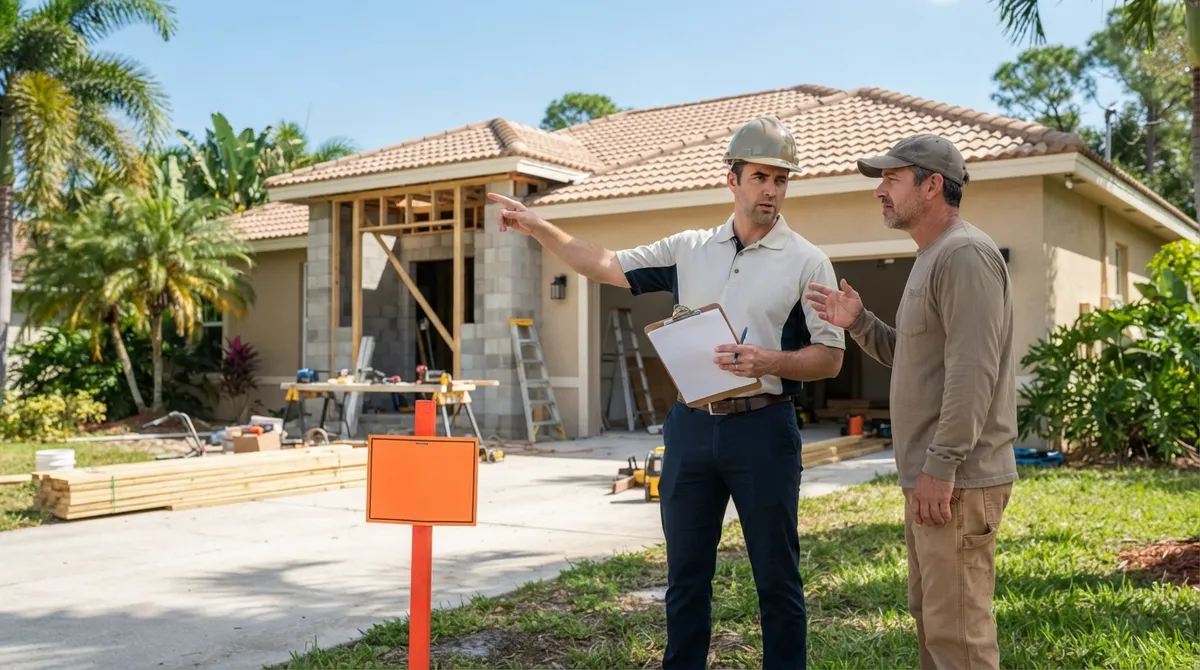
A notice of violation is an official document from your local building department or code-enforcement office. It shows up after an inspector, neighbor complaint, insurance adjuster, or even a routine drive-by identifies construction work that was done without the required permit. Under Florida Statutes §553.79, it is generally unlawful to construct, alter, repair, or demolish a structure without first pulling the appropriate permit from the enforcing agency. So when work happens outside that process, the local authority has a duty to flag it.
The notice will typically describe the violation, name the property and the work involved, and give you a deadline or set of instructions for correcting the problem. Depending on your county or city, this could also come bundled with a stop-work order, which is a separate and more urgent animal — more on that below.
Notice of Violation vs. Stop-Work Order: What's the Difference?
These two terms get mixed up constantly, so let's clear the air.
| Feature | Notice of Violation | Stop-Work Order |
|---|---|---|
| Purpose | Documents the violation and requests correction | Halts active construction immediately |
| Work Status | May allow continued occupancy or limited activity | All covered work must cease right away |
| Resolution | Correct the issue by the stated deadline | Requires permit, inspection, or written authorization to lift |
| Common Trigger | Complaint, inspection, or records review | Active unpermitted work observed on-site |
In some jurisdictions, a single incident triggers both documents at once. That is why understanding which building department has authority over your property matters so much before you plan your next move.

14 Steps to Resolve a Notice of Violation in Florida
Here is the roadmap our team walks clients through every week, whether the project is a Tampa addition, a Miami solar array, or a Sarasota pool enclosure.
1. Stop All Affected Work Immediately
If the notice includes a stop-work order, do not touch the flagged area again until you have written authorization. Continuing work can escalate fines and complicate your after-the-fact application.
2. Read the Notice Carefully
Note the deadline, the specific code section cited, and the contact information for the inspector or code officer. Every county writes these a little differently, so do not assume it matches a notice you've seen before.
3. Confirm the Enforcing Jurisdiction
Florida has 67 counties and hundreds of municipalities, and boundary lines are not always obvious. A property near a city line might actually fall under county jurisdiction, or vice versa. Our building department lookup tool helps confirm exactly who is regulating your property before you file anything.
4. Pull Existing Permit Records
Search the property's permit history to see what was previously approved. Our open permit search tool is a great starting point for identifying gaps.
5. Determine What Permits Are Actually Required
Not every improvement needs a permit, but structural changes, electrical, plumbing, roofing, and additions almost always do. A plan review coordination specialist can help you map out exactly what's missing.
6. Get Plans and Engineering in Order
Most after-the-fact applications require sealed drawings showing what was built. If the original work lacks documentation, you may need new architectural drafting or structural engineering to bring it up to code.
7. Prepare As-Built Drawings if Needed
As-built drawings document exactly what exists in the field, which is often required when original plans were never filed.
8. Submit the After-the-Fact Permit Application
This is the formal request asking the building department to review and legalize the completed work. Fees vary by jurisdiction — for example, some counties charge a flat additional fee, while others (like Monroe County, per public materials) charge $250 or 10% of construction value, whichever is greater. Our after-the-fact and expired permits team handles this daily across the state.
9. Pay Standard and Additional Fees
Under Florida Building Code section 109.4, the local building official can impose an additional fee when work starts before a permit is obtained. The exact amount is set locally, so budget for more than the standard permit cost.
10. Expose Concealed Work for Inspection
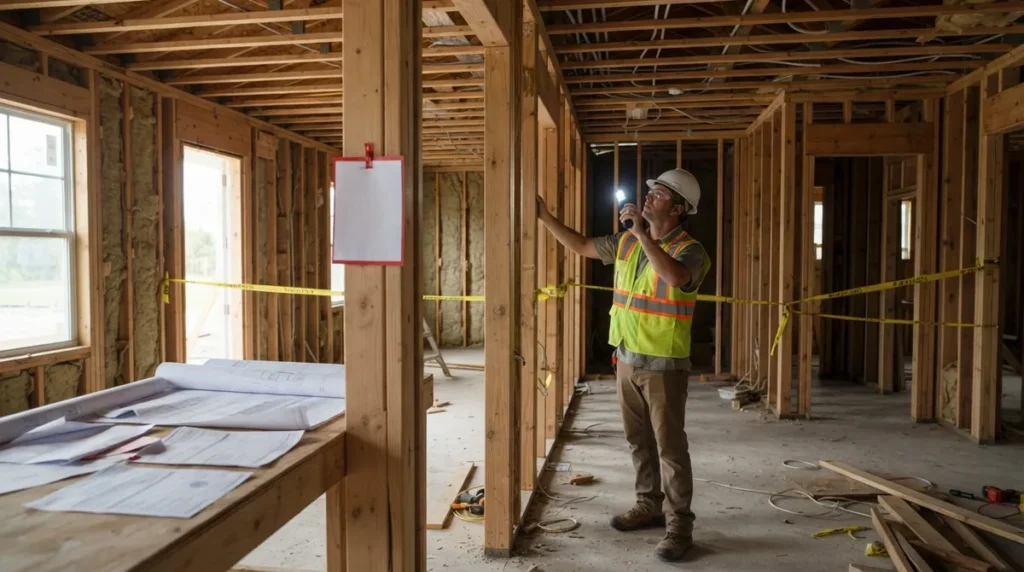
Inspectors may require you to uncover walls, ceilings, or foundations so they can verify framing, wiring, or plumbing that was covered up before permitting. This step surprises a lot of homeowners, so plan for it early.
11. Correct Any Code Deficiencies
If the work does not meet current code, you will need to make repairs or modifications. This is where engineer letters can sometimes support alternative compliance paths when full reconstruction isn't necessary.
12. Schedule and Pass Required Inspections
Once corrections are made, the building department (or a licensed private provider) will conduct inspections to confirm compliance.
13. Obtain Written Closure
Do not consider the matter resolved until you have documentation that the violation is closed and the permit has received final approval. Verbal assurances are not enough — get it in writing.
14. Keep Records for Future Sales or Refinancing
Save every document: the notice, the application, inspection reports, and the closure letter. Realtors and title companies will thank you when it's time to sell, and lenders often request this paperwork during underwriting.
Why Unpermitted Construction Happens in the First Place
Most violations aren't malicious. They usually stem from:
- A previous owner who completed work quietly and never filed for a permit
- A DIY project that grew bigger than originally planned
- A contractor who told the homeowner "I'll pull the permit" and never did
- Confusion over whether a small project (like a shed or fence) actually required a permit
- Solar or electrical upgrades installed without proper documentation
Regardless of the cause, Florida Statutes chapter 162 generally requires a code inspector to notify the violator and allow a reasonable period for correction, subject to statutory exceptions. That means you usually have some breathing room — but not unlimited time.
The Legal and Financial Stakes
Unpermitted work carries real consequences beyond the notice itself. Here's a quick snapshot of what's at stake under Florida law.
| Risk | Statutory Basis | Potential Consequence |
|---|---|---|
| Unlicensed contracting | Fla. Stat. §489.127 | First offense: first-degree misdemeanor; repeat offense: third-degree felony |
| Administrative fines | Fla. Stat. §489.13 | Up to $10,000 in DBPR fines |
| Misdemeanor penalties | Fla. Stat. §§775.082–775.083 | Up to 1 year jail and $1,000 fine (maximum, not automatic) |
| Stop-work order | Fla. Stat. §489.127 | Immediate halt to unlicensed regulated work |
These numbers aren't meant to scare you — they're meant to underline why acting promptly and working with licensed professionals matters. Beyond legal exposure, unresolved violations can delay a sale, spook a lender, or trigger a demand to remove work that can't be verified.
How Different Florida Property Owners Experience This Process
General Contractors
If you're managing multiple projects across counties, a single unpermitted scope item can stall an entire job. Reliable permit facilitation and filing keeps your crews moving instead of waiting on paperwork. Our general contractor resources are built around exactly this kind of jurisdiction-hopping workflow.
Solar Companies
Fast-growing solar installers sometimes discover that a previous electrical modification on a property wasn't permitted, which can delay interconnection approval. Coordinated, code-compliant documentation from our solar contractor services helps prevent that bottleneck before it starts.
Real Estate Professionals
An open notice of violation can absolutely delay — or kill — a closing. Buyers get nervous, lenders hesitate, and title companies flag it. Our realtor and closing support team specializes in untangling these situations quickly so deals stay on track.
Homeowners
Most homeowners just want clear answers and a straightforward plan. Our homeowner resources walk you through the process in plain language, without the jargon.
Working With a Florida Permitting Service
Here's the honest truth: a permitting service cannot guarantee approval, because your local building official always retains final say. What a good permitting partner can do is identify the responsible jurisdiction, gather existing permit and code records, coordinate the plans and engineering you need, prepare the after-the-fact application correctly the first time, communicate directly with the building department, and track everything through to closure.
This is exactly the kind of work 1 Contractor Solutions handles every day across all 67 Florida counties, from Hillsborough County to Miami-Dade County and everywhere in between. Because our drafting and engineering teams are in-house, when a reviewer flags a deficiency, we can fix it directly instead of waiting on an outside consultant to call back. If you're facing a stop-work order or a closing deadline, our urgent permit rescue service is built for exactly that kind of pressure.
Curious what past clients have experienced? You can visit us on Google — 1 Contractor Solutions to read reviews, or follow along for updates through follow us on LinkedIn and follow us on Facebook.
A Quick Reality Check on Timelines and Costs
Every jurisdiction sets its own fees, timelines, and hearing procedures, so treat any number you read online — including here — as a starting point rather than a guarantee. According to the Florida Senate's official statutes page, permit-expiration notices must go out at least 30 days before expiration, which is a separate issue from an unpermitted-construction violation but worth knowing. For deeper background on the legal framework, the Florida Legislature's statute library is a solid primary source.
If you'd rather skip the research and get a straight answer for your specific property, our team can review your notice, confirm your jurisdiction through resources like our open permit search, and lay out a clear correction plan.
You've Got This
A notice of violation feels overwhelming at first, but it's genuinely one of the most fixable problems in Florida property ownership. Thousands of homeowners, contractors, and real estate professionals resolve these every year by following the same basic playbook: stop the work, confirm the jurisdiction, get the right plans and engineering, file the after-the-fact permit, pass inspection, and get it closed out in writing. You don't have to navigate county-by-county rules alone. If you're ready to move from stress to solved, get a free quote from our team and let's get your property back in good standing — same-day response, in-house sealed drawings, and someone who actually answers the phone.
FAQs
What should I do first after receiving a notice of violation for unpermitted construction in Florida?
Take a deep breath, then stop any flagged work immediately if a stop-work order is included. Read the notice carefully, confirm which local building department actually has jurisdiction over your property, and start gathering permit history before you make any other moves.
How do I get an after-the-fact permit for unpermitted work in Florida?
You'll typically need sealed plans or as-built drawings showing what was constructed, then submit an application to the enforcing jurisdiction along with standard and additional fees. Our after-the-fact and expired permits team handles this from start to finish, including working with reviewers on any comments.
How much does it cost to legalize unpermitted construction in Florida?
Costs vary widely by county and project scope, since each jurisdiction sets its own additional fees under Florida Building Code section 109.4. Some areas charge a flat fee while others calculate a percentage of construction value, so getting a jurisdiction-specific quote is your best bet.
Can I sell or refinance a Florida property with an open notice of violation?
It's possible, but an open violation often slows down or complicates closings because lenders and title companies get nervous about unresolved code issues. Clearing the notice before listing typically leads to a smoother, faster sale.
What's the difference between a notice of violation and a stop-work order in Florida?
A notice of violation documents the issue and gives you a deadline to correct it, while a stop-work order requires you to halt construction immediately until you get written authorization to resume. Sometimes both arrive together, especially if active unpermitted work is discovered on-site.
We do this work every day across all 67 Florida counties. Call (866) 314-6931 and we will tell you what your situation actually requires — including when you do not need us.
Related services
Permit Facilitation & Filing
You have a crew scheduled, a client asking for dates, and a permit sitting somewhere in a queue you cannot see. We file it, w…
See the servicePlan Review Coordination
A permit in plan review is not one queue. On a commercial project it can be six queues, each with its own reviewer, its own c…
See the serviceReady to get your permit moving?
One call tells you which jurisdiction controls your project, what it will take, and what it will cost. Most of the time we can scope it on the phone.