
Blog
Can Solar Companies Legalize Unpermitted Installs?
Solar companies can help fix unpermitted installs, but only the building department can legalize them. Here's how the process really works.
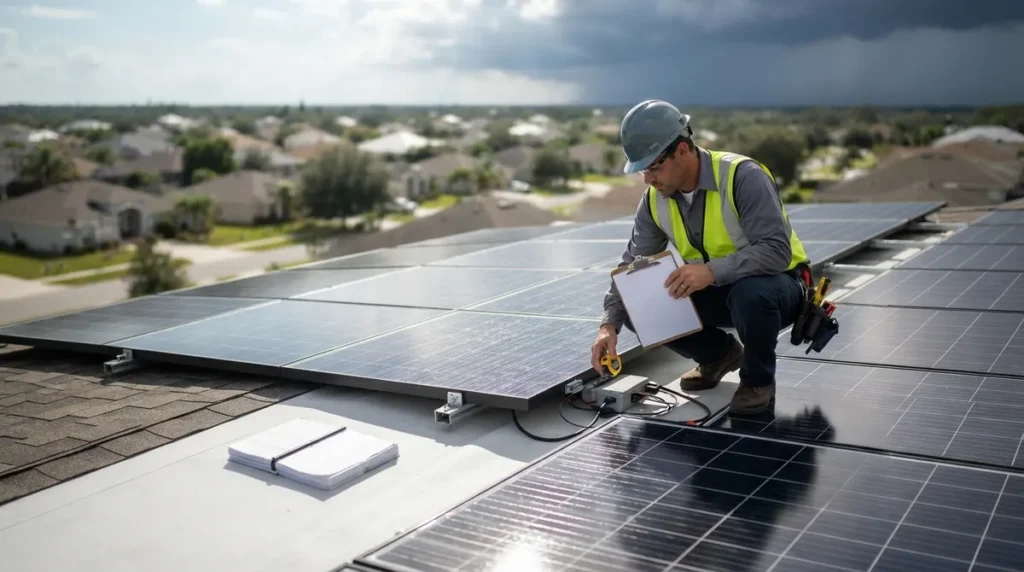
Key Takeaways
-
Solar companies cannot legalize unpermitted installations themselves; only local building departments have authority to approve after-the-fact permits through formal inspections and code compliance verification.
-
Florida's 2025 permitting reforms introduced a five-business-day review target for rooftop solar applications, potentially speeding approvals if statutory conditions are met, though after-the-fact applications may be treated differently.
-
After-the-fact permits require sealed structural and electrical drawings from Florida-licensed engineers, site layouts, load calculations, and proof of contractor licensing—documentation that takes time to prepare correctly.
-
Unpermitted solar systems can derail insurance claims, home sales, refinancing, and utility net-metering agreements, making legalization essential before major financial transactions or property transfers.
-
Florida counties have vastly different requirements and fee structures; for example, Charlotte County charges $90 base plus valuation fees, while Miami-Dade requires additional product approvals due to high-wind standards.
-
If inspections reveal code violations, homeowners may need to reinforce roof attachments, correct wiring, or add required disconnects before final approval, potentially extending the timeline from weeks to months.
Picture this: a homeowner in Bradenton discovers their previous solar installer never pulled a permit. Or maybe you're a solar company that just found out a subcontractor cut corners on a job three years back. Either way, the panic sets in fast, and the first question everyone asks is the same one bringing you here today: can solar companies legalize unpermitted installs in Florida on their own? We get this question a lot, and we want to give you the honest, friendly, no-fluff answer you deserve.
Here's the short version, and we promise the long version is just as reassuring: solar companies can absolutely help fix the problem, but they can't wave a magic wand and legalize anything by themselves. That authority sits with your local building department. The good news? With the right team, the right paperwork, and a clear plan, getting back into compliance is very doable. Let's walk through exactly how this works, county by county quirks and all, so you can move forward with confidence instead of anxiety.
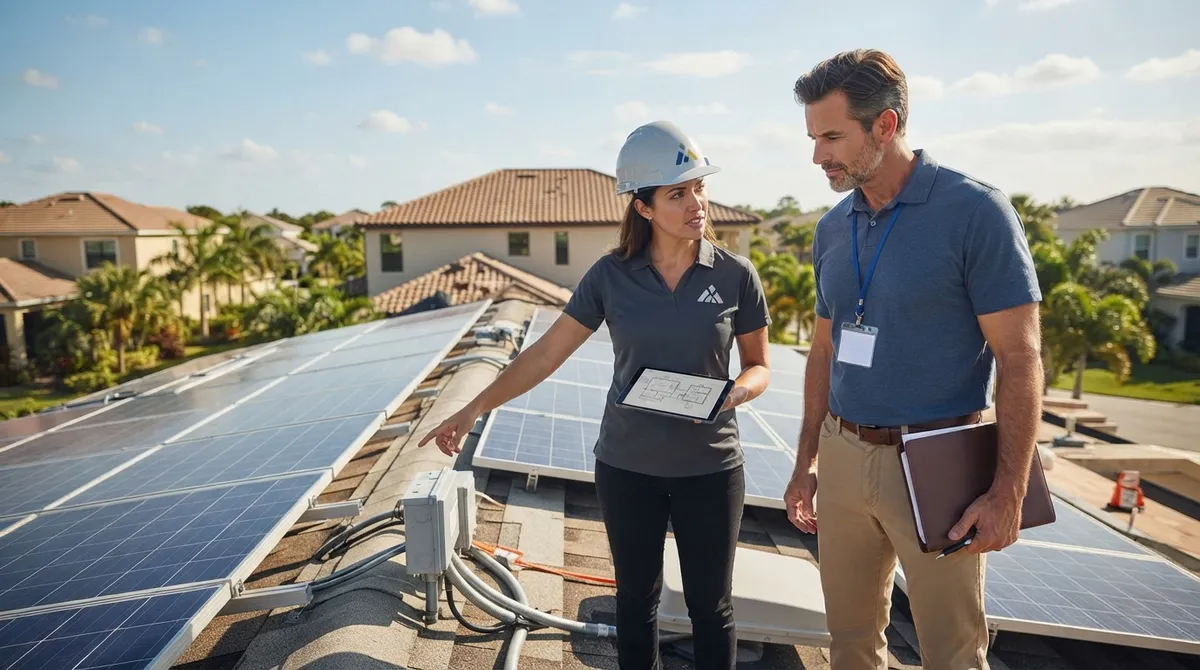
Why Solar Companies Can't Self-Legalize an Installation
It helps to understand the roles here, because there's often confusion about who actually has the power to say "yes, this is legal now."
Solar companies are experts at installing panels, inverters, and racking systems. But when it comes to declaring a project code-compliant after the fact, that decision belongs entirely to the city or county building official with jurisdiction over the property. The installer, no matter how skilled or well-intentioned, is not the approving authority.
- Building departments issue permits, not solar contractors.
- Inspectors verify code compliance in person, not through installer testimonials.
- Only a licensed contractor or the property owner can typically apply for the corrective permit.
- Engineering documentation must often come from a Florida-licensed engineer, not the installation crew.
So while your solar company might be the one holding your hand through the process, the actual "legalizing" happens at the building department counter, not the job site.
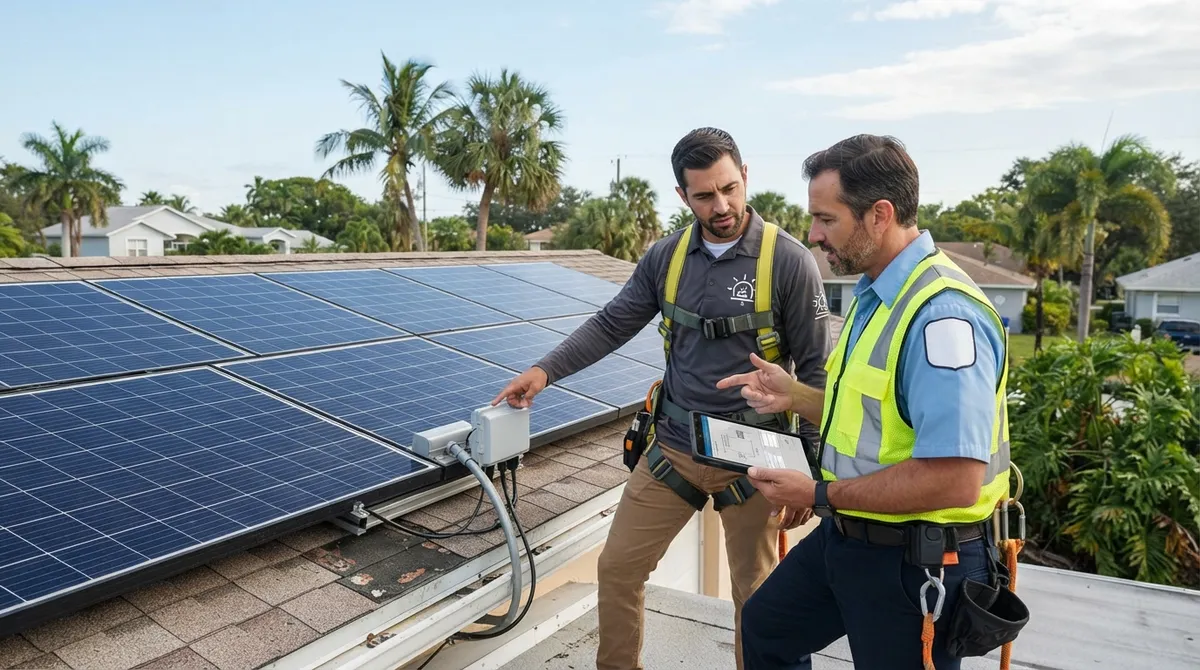
What Actually Happens During the Legalization Process
Let's demystify this. An after-the-fact permit, sometimes called a retroactive or corrective permit, is essentially a formal request asking the jurisdiction to review work that's already been completed. It doesn't erase the fact that the installation started without approval, but it does bring the system into the light and, ideally, into compliance.
Florida generally requires permits for solar photovoltaic work because these systems touch electrical wiring, roof attachments, structural loads, grounding, and utility interconnection. That's a lot of moving parts, and each one needs a second set of eyes before the county considers it safe.
Steps Typically Involved
- Identify the correct building department. This sounds simple, but jurisdiction lines can be tricky, especially near city borders. Our Building Department Lookup tool takes the guesswork out of this step.
- Check for existing code enforcement history or open permits using a resource like our Open Permit Search tool.
- Prepare as-built documentation, including site layout, electrical diagrams, and equipment specs.
- Engage a Florida-licensed engineer for structural certification, especially for roof attachments and wind-load compliance.
- Submit the after-the-fact permit application, along with any required Notice of Commencement.
- Respond to plan review comments (there are almost always a few).
- Schedule and pass all required inspections, which may include exposed wiring checks or roof attachment verification.
- Receive final approval and a closed permit record.
Notice how many of these steps require specialized expertise? That's exactly where a permitting partner earns their keep.
Documents You'll Likely Need
Every jurisdiction is a little different, but most after-the-fact solar permit applications ask for a similar documentation package. Here's what tends to show up on the checklist.
| Document Type | Purpose |
|---|---|
| Site or roof layout | Shows panel placement, setbacks, and access pathways |
| Electrical one-line or three-line diagram | Details wiring, disconnects, and grounding |
| Structural and attachment details | Confirms roof or ground mount can handle wind and dead loads |
| Load calculations | Verifies the electrical system won't overload existing service |
| Engineering certification or FSEC documentation | Provides sealed proof of code compliance where accepted |
| Proof of contractor licensing | Confirms the installer or applicant is properly credentialed |
This is where in-house sealed drawings really shine. When a reviewer flags a structural question, you don't want to be waiting a week for an outside engineer to call back. That kind of delay can turn a two-week process into a two-month headache.
How Local Requirements Differ Across Florida
Because permitting authority lives at the city or county level, there's no single statewide form or fee schedule for after-the-fact solar permits. What flies in one county might trigger extra scrutiny in another.
| Jurisdiction | Notable Requirement |
|---|---|
| Charlotte County | Flat $90 fee for the referenced solar permit category, plus valuation-based charges and a Notice of Commencement required before first inspection on contracts over $5,000 |
| Hillsborough County | Requires signed and sealed plans, electrical drawings, FSEC certification acceptance, and roof/wind-load information per its 2025-updated checklist |
| Miami-Dade County | Additional product approval documentation often required due to high-wind zone standards |
If your project touches Manatee County, Hillsborough County, Pinellas County, or Charlotte County, the local nuances matter enormously. What works for a rooftop system in Tampa might not satisfy a reviewer in Naples.
The 2025 Permitting Reforms and What They Mean for You
Here's some genuinely good news. Florida's 2025 permitting reforms introduced a five-business-day review target for certain single-trade projects, and that includes many rooftop solar applications. If the statutory conditions are met and the local government misses the deadline, the permit may be deemed approved and issued the next business day. According to pv-magazine-usa.com's coverage of the reform, this is meant to speed up rooftop solar approvals statewide, though applicants should always confirm applicability with their specific building department since after-the-fact applications may be treated differently than fresh permit requests.
What Happens If the System Doesn't Pass Inspection
Sometimes the news isn't all sunshine. If an inspector finds the existing installation doesn't meet current code, you may need to modify or even remove certain equipment before final approval. This can include:
- Correcting undersized or improperly grounded wiring
- Reinforcing roof attachment points that don't meet wind-load standards
- Adding required disconnects or labeling
- Opening up concealed areas so inspectors can verify hidden work
It's not fun to hear, but it's far better to find out now than after a hurricane tests your roof's attachment points. This is also where our structural engineering and MEP engineering teams step in to identify problems early and propose fixes that satisfy reviewers the first time.
Why Unpermitted Solar Work Creates Bigger Problems Down the Road
An unpermitted solar system isn't just a paperwork nuisance. It can quietly sabotage some of the biggest financial moments in a homeowner's life.
- Insurance claims: Adjusters may deny roof or fire-related claims if the solar installation lacks permit documentation.
- Home sales: Buyers' inspectors routinely flag unpermitted solar during due diligence, which can delay or derail closings.
- Refinancing: Lenders may require proof of permitted work before approving a loan against the property.
- Utility interconnection: Some utilities require permit closure before finalizing net-metering agreements.
- Future remodeling: Any future permit application on the property may trigger a review of the unpermitted solar system.
An installer's invoice or a verbal assurance that the system is "grandfathered" simply doesn't hold up the way a closed permit with a final inspection does. If you're a real estate professional navigating this on behalf of a client, our realtor closing support services and guide on open permits found at closing can help you keep deals on track.
Who Should Coordinate the Process
This is where things get practical. Depending on your role, your path forward looks a little different.
For Solar Companies
You likely need a partner who can prepare compliant as-built documentation, coordinate with a licensed engineer, and manage the back-and-forth with plan reviewers. Since scaling this across multiple job sites and counties gets complicated fast, many solar companies outsource the entire permitting workflow. Check out our resources on solar contractor support and how Florida solar permit timelines typically play out.
For General Contractors
If you're managing a broader renovation that includes solar, you'll want sealed structural drawings and coordinated plan review coordination to keep everything moving together rather than in separate silos.
For Homeowners
You don't need to become a permitting expert overnight. A good permitting partner will translate the jargon, handle the applications, and keep you updated without the runaround. Our team has walked plenty of Bradenton and Sarasota homeowners through exactly this kind of situation.
For Real Estate Professionals
Understanding how to legalize unpermitted work in Florida before it derails a closing is a skill that sets you apart from other agents in a competitive market.
A Realistic Cost and Timeline Snapshot
| Factor | What to Expect |
|---|---|
| Base permit fee | Varies widely; some counties list flat fees around $90 plus valuation-based charges |
| After-the-fact penalty | Many jurisdictions add a penalty fee on top of standard permit costs |
| Engineering and drafting | Depends on system complexity and whether new certification is required |
| Timeline | Can range from a few weeks to a few months depending on inspection results and jurisdiction backlog |
For a deeper dive into pricing specifics, our article on after-the-fact permit Florida cost breaks down the variables in more detail.
How 1 Contractor Solutions Helps Close the Gap
This is exactly the kind of tangled situation we love untangling. As Florida's outsourced permitting department, we coordinate everything from initial jurisdiction research to final closeout. Our in-house engineers seal structural and MEP documentation without the delay of outside consultants, and our status as a licensed private provider means we can sometimes bypass the county review queue entirely through private provider plan review and inspections.
If you're staring down a stop-work order or a denied application, our urgent permit rescue team responds fast, because we know a stalled solar project costs everyone money and peace of mind. We've handled cases just like this for clients across Lee County, Collier County, and beyond.
You can also see what our clients have to say by visiting Visit us on Google — 1 Contractor Solutions, and stay connected with our latest permitting updates when you follow us on LinkedIn or follow us on Facebook.
A Few Words of Encouragement
If you're dealing with an unpermitted solar installation right now, take a breath. This is far more common than most people realize, and it's absolutely fixable. Building departments deal with after-the-fact permits regularly, and there's no shame in getting caught up on paperwork that maybe should have happened sooner. What matters is the action you take from here.
Whether you're a solar company trying to protect your reputation, a homeowner who just found out about a prior owner's shortcuts, or a real estate agent trying to save a closing, the path forward is the same: identify the jurisdiction, gather solid documentation, bring in qualified engineering support, and work with the building department until that permit closes clean.
Ready to stop guessing and start solving? Our team is available around the clock, and we respond within 30 minutes day or night. Request your free quote today, and let's get your solar installation properly documented, inspected, and legally in the clear.
FAQs
Can a Florida solar company obtain an after-the-fact permit for panels already installed?
A licensed solar contractor can often apply for or coordinate an after-the-fact permit, but the building department is the one that ultimately approves it. Think of the solar company as your guide through the process, not the decision-maker at the finish line.
How much does it cost to legalize an unpermitted solar system in Florida?
Costs vary a lot by county since there's no statewide fee schedule, but expect a base permit fee, possibly an after-the-fact penalty, plus engineering and drafting costs if new documentation is needed. We're happy to walk through your specific situation and give you a realistic estimate.
Will Florida require me to remove solar panels installed without a permit?
Not necessarily! Many unpermitted systems can be brought into compliance with corrective documentation and, if needed, minor modifications. Removal usually only becomes necessary if the system has serious safety issues that can't be fixed in place.
Does an unpermitted solar installation affect homeowners insurance or net metering?
It absolutely can. Insurance adjusters may deny claims tied to unpermitted work, and some utilities require closed permits before finalizing net-metering agreements. Getting the permit closed protects you on both fronts.
How long does it take to obtain a retroactive solar permit in Florida?
Timelines range from a few weeks to a few months, depending on your jurisdiction's backlog and whether inspections reveal any needed corrections. Having sealed engineering documentation ready upfront tends to speed things along considerably.
We do this work every day across all 67 Florida counties. Call (866) 314-6931 and we will tell you what your situation actually requires — including when you do not need us.
Related services
Permit Facilitation & Filing
You have a crew scheduled, a client asking for dates, and a permit sitting somewhere in a queue you cannot see. We file it, w…
See the servicePlan Review Coordination
A permit in plan review is not one queue. On a commercial project it can be six queues, each with its own reviewer, its own c…
See the serviceReady to get your permit moving?
One call tells you which jurisdiction controls your project, what it will take, and what it will cost. Most of the time we can scope it on the phone.