
Blog
Does Your Tampa Condo Need a Milestone Inspection in 2026?
Wondering if your Tampa condo needs a milestone inspection in 2026? Learn the rules, deadlines, two phases, and how repair permits fit in.
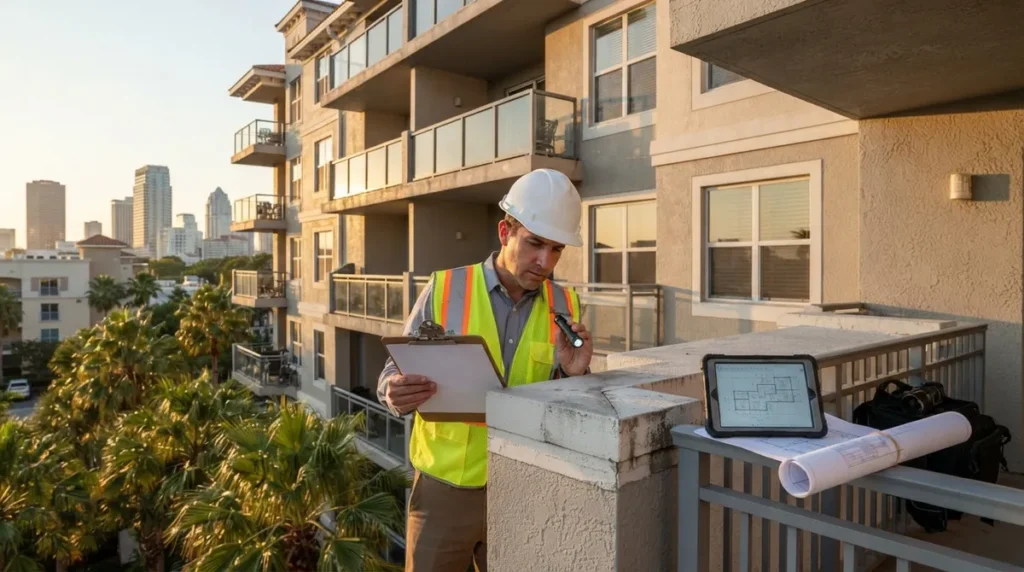
Key Takeaways
-
Florida's milestone inspection law (Statute 553.899) applies to condo and co-op buildings with three or more habitable stories, due at 30 years from the certificate of occupancy, or 25 if the local agency sets that trigger.
-
Phase One is a visual structural inspection by a Florida-licensed architect or engineer. Phase Two detailed testing is needed only if substantial structural deterioration is found.
-
Phase One must be completed within 180 days of receiving written notice from the local enforcement agency. Phase Two is due within 180 days after the Phase One report is submitted.
-
Confirm whether your property is in the City of Tampa or unincorporated Hillsborough County, since the enforcement agency and submission process can differ.
-
A milestone inspection is not a building permit. Any structural repairs it calls for require separate permits, which should be secured before regulated work begins.
-
If the milestone inspection is due by December 31, 2026, the SIRS may be done at the same time but must be completed by that date. Verify current requirements with DBPR or legal counsel.
Picture this: you open your mailbox, and there is a notice from the building department about a milestone inspection. Your condo board suddenly has a deadline, a long to-do list, and a pile of questions. Take a breath. You are not alone, and this process is far more manageable than it first looks.
If you have been searching for milestone inspection Tampa FL information, this friendly guide walks you through what the requirement means, who it applies to, how the two phases work, and where permits fit in. Florida's milestone inspection law is aimed at certain older condominium and cooperative buildings, not at every older home or building. That distinction matters for homeowners, investors, agents, and the contractors who may be hired to make repairs afterward.
Along the way, we will point out the Tampa-specific details worth checking, like whether your building sits inside city limits or in unincorporated Hillsborough County. Let's make this simple.
What Is a Milestone Inspection in Florida?
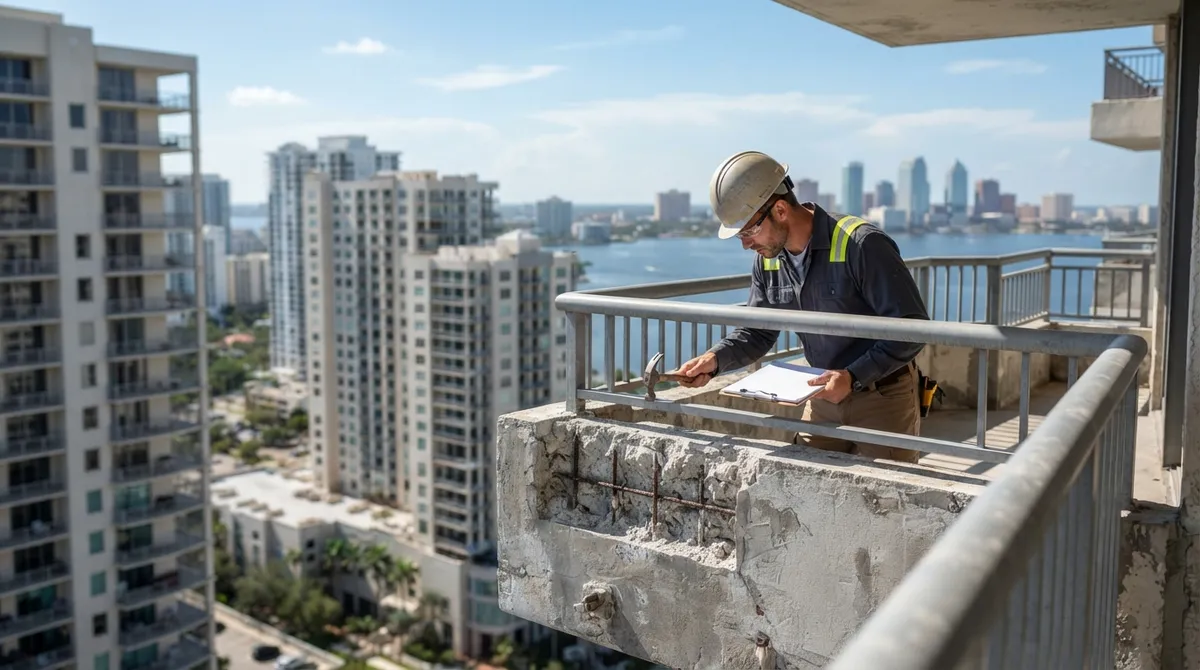
A milestone inspection is a structural evaluation required for qualifying condominium and cooperative buildings under Florida Statute 553.899. A Florida-licensed architect or engineer examines the building's load-bearing elements and primary structural systems, looking for substantial structural deterioration and structural safety concerns.
Think of it as a structural check-up at key points in a building's life. It is not a cosmetic review, and it is not a general permit inspection. The goal is to catch serious problems early, while they are still fixable.
Here is the quick version of the statutory framework:
- Who it applies to: residential condominium and cooperative buildings that are three or more habitable stories tall, including mixed-ownership buildings.
- When it is due: in the year the building reaches 30 years of age, measured from the certificate of occupancy, and every 10 years afterward.
- Local option: a local enforcement agency may set the first inspection at 25 years based on local conditions, such as proximity to salt water.
- Who performs it: a Florida-licensed architect or engineer who signs and seals the report.
Building height is based on habitable stories as defined by the Florida Building Code, so a quick glance at the exterior may not settle the question for every property.
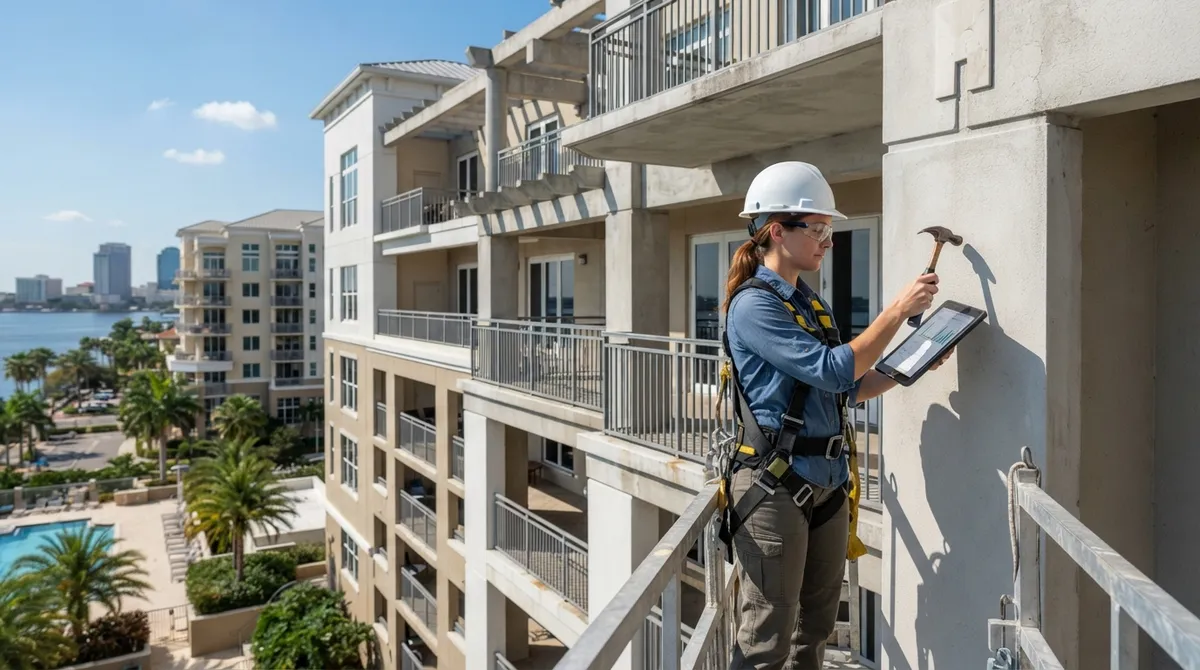
Does Your Tampa Building Actually Need One?
This is the question we hear most, and the honest answer is: it depends on a few checkable facts. Work through this list before you assume anything.
- Confirm the building type. Is it a condominium or cooperative with residential units? Single-family homes and most other building types are not covered.
- Count the habitable stories. Three or more habitable stories generally brings a building into scope.
- Find the certificate of occupancy date. Age is measured from the CO, not from when units were sold or renovated.
- Check for a 25-year trigger. Ask the local enforcement agency whether it has adopted the earlier first-inspection age.
- Confirm jurisdiction. Decide whether the property falls under the City of Tampa or unincorporated Hillsborough County.
Jurisdiction is a classic Tampa-area curveball. Addresses near city lines can be surprising, and the responsible building enforcement agency and its submission process may differ. If you are unsure which office controls your property, our team does this research daily across Hillsborough County and beyond, and you can learn which Florida jurisdiction reviews your project before you spend time on the wrong paperwork.
Milestone Inspection Tampa FL: How the City Handles It
The City of Tampa administers milestone inspections for buildings within its jurisdiction under Florida law and its local code. The city also maintains a milestone inspection information page and a report submission process, so it is worth checking the current instructions on the official Tampa construction services site before you submit anything.
A few practical reminders for any milestone inspection in Tampa, FL:
- The local enforcement agency issues written notice to the building owner, and that notice starts the clock.
- Reports are submitted through the local agency's process, so use the current method listed on the city's page.
- Keep copies of everything: the notice, the engagement agreement, the signed and sealed report, and your submission confirmation.
If you want a deeper local read, our companion piece on the 40 year recertification in Tampa and milestone inspection process pairs nicely with this article.
Phase One and Phase Two, Explained Simply
The milestone inspection happens in up to two phases. Many buildings never need the second one, which is a nice bit of good news.
Phase One: The Visual Inspection
Phase One is a visual examination of the building's structural components. The architect or engineer looks for signs of substantial structural deterioration and structural safety concerns. If no substantial deterioration is found, the report documents that and the process may end there.
Phase Two: Deeper Testing When Needed
If Phase One identifies substantial structural deterioration, Phase Two involves more detailed inspection and testing as needed to determine the extent and urgency of repairs. This can include sampling and other investigative work, depending on what the first phase uncovered.
For a closer comparison, see our guide to Phase 1 vs. Phase 2 milestone inspections in Florida.
Key Deadlines at a Glance
Deadlines are where associations get nervous, so here they are in one place.
| Milestone | Deadline or Trigger |
|---|---|
| First inspection (standard) | Year the building reaches 30 years from the certificate of occupancy |
| First inspection (local option) | May be set at 25 years by the local enforcement agency |
| Repeat inspections | Every 10 years after the first inspection |
| Phase One completion | Within 180 days after the owner receives written notice from the local enforcement agency |
| Phase Two report | Within 180 days after the Phase One report is submitted, if substantial structural deterioration is found |
Missing a deadline can create real complications for an association. If you are worried about timing, read what happens if a Florida condo misses its milestone deadline so you know what to expect and how to recover.
Don't Forget the Structural Integrity Reserve Study
Many associations pair the milestone inspection with a Structural Integrity Reserve Study (SIRS). Florida DBPR guidance indicates that associations with a milestone inspection due on or before December 31, 2026, may complete the SIRS at the same time, but the SIRS must be completed by December 31, 2026.
With today's date being November 22, 2026, that window is very short for any association still working through it. Because statutes and guidance can be amended, please verify current applicability with DBPR or your association's counsel. This article is general information, not legal advice.
If you are weighing the two requirements side by side, our explainer on milestone inspection versus SIRS breaks down how they differ.
Who Can Perform the Inspection?
Only a Florida-licensed architect or engineer can perform, sign, and seal a milestone inspection report. A general contractor, handyman, or home inspector cannot do it, no matter how experienced they are.
When choosing a professional, ask these questions:
- Are they licensed in Florida, and is the license active?
- Have they completed milestone inspections on similar buildings?
- Can they support Phase Two testing if it becomes necessary?
- Will they sign and seal the report for submission to the local agency?
We have a helpful walkthrough on how to find who can perform a milestone inspection in FL. And since budgets matter, you may also want to see how much a milestone inspection costs in Florida.
The Milestone Inspection Is Not a Permit
Here is a point that trips up even seasoned property managers: a milestone inspection is not a building permit, and it does not replace one. It is an evaluation. If the report calls for repairs or structural work, that work is a separate step.
When repairs are needed, owners should coordinate with the local building department and obtain the applicable permits before performing regulated work. Depending on findings, that could involve structural repairs, concrete restoration, electrical or mechanical corrections, or other scopes.
| Stage | What Happens | Who Is Involved |
|---|---|---|
| Notice | Local agency notifies the owner in writing | Building owner or association |
| Phase One | Visual structural inspection and sealed report | Licensed architect or engineer |
| Phase Two (if needed) | Detailed inspection and testing | Licensed architect or engineer |
| Repairs | Plans, permits, work, and inspections | Contractor, engineer, permitting team |
| Closeout | Permit finals and documentation | Contractor and building department |
This is where a permitting partner earns their keep. Our team at 1 Contractor Solutions handles permit filing, tracking, plan review coordination, and in-house sealed drawings, so repair permits do not turn into the bottleneck after the inspection is done. You can read more about our 40-year recertification and milestone inspection support if your association needs a hand with the paperwork side.
What This Means for Different Readers
The milestone inspection requirement touches more people than you might expect. Here is how it can look from each seat at the table.
Condo Owners and Associations
Your board will coordinate the inspection, budget for repairs, and communicate with owners. Early planning keeps special assessments from coming as a surprise.
General Contractors and Design Professionals
After a report identifies repairs, you may be asked to price and perform the work. Having sealed structural drawings and a clean permit package ready speeds approvals. See our guide on structural engineers for permits in Tampa, and for MEP-related repairs, our MEP engineering for permits in Tampa guide.
Real Estate Professionals and Buyers
If you are buying or selling a condo in a qualifying building, ask whether the milestone inspection is complete, what the report found, and whether repairs are permitted and closed out. Open permits or unpermitted work can surface during due diligence. Our article on permit due diligence in Tampa before you buy is a handy checklist.
Solar Companies and Other Trades
Rooftop equipment on older condo buildings can intersect with structural findings. If a milestone report flags roof or structural concerns, plan solar or equipment work around the repair schedule and permits.
A Simple Game Plan for Boards and Owners
Feeling overwhelmed? Here is a calm, step-by-step approach you can follow.
- Verify applicability. Confirm building type, habitable stories, CO date, and jurisdiction.
- Gather documents. Pull original plans, past repair records, permit history, and prior inspection reports.
- Hire the right professional. Engage a Florida-licensed architect or engineer with condo structural experience.
- Mind the clock. Track the 180-day Phase One window from the date you receive written notice.
- Submit correctly. File the sealed report with the proper local agency using its current process.
- Plan repairs early. If deterioration is found, line up engineering, permits, and funding right away.
- Communicate openly. Keep owners informed so there are no surprises.
Running an open permit search on your property can also reveal old, unclosed permits that complicate repairs. Our free open permit search tool is a good place to start.
Common Pitfalls to Avoid
A little foresight prevents a lot of headaches. Watch out for these frequent missteps:
- Assuming a building is exempt without checking the CO date and story count.
- Confusing City of Tampa and unincorporated Hillsborough County jurisdiction.
- Waiting until the deadline is close to hire an engineer or architect.
- Treating the inspection as a substitute for repair permits.
- Starting structural repairs before permits are in place.
If unpermitted work comes to light along the way, do not panic. There are established paths to bring it into compliance, and our guide on how to bring unpermitted work into compliance in Florida can help you plan.
Where to Find Official Guidance
Because statutes and agency procedures can change, always cross-check with official sources. The Florida Legislature publishes the current text of Section 553.899 online, and the Florida DBPR condominium inspections page offers plain-language guidance for associations. You can also stay connected with us for permitting updates by choosing to follow us on LinkedIn or follow us on Facebook.
If you would like to see how other property owners feel about working with us, you can visit us on Google and read 1 Contractor Solutions reviews from customers across Florida, including the Tampa Bay area.
Ready to Move Forward?
A milestone inspection does not have to be a source of stress. Verify your building's status, hire a qualified Florida-licensed architect or engineer, respect the 180-day windows, and line up permits early if repairs are needed. Do those things, and you will stay ahead of the process.
Our team works across all 67 Florida counties with same-day response and in-house sealed drawings, so repair permits move forward instead of stalling. Whether you are an association board, a contractor, an investor, or a homeowner, we are happy to point you in the right direction. When you are ready, get a free quote and let us take the permitting weight off your shoulders.
FAQs
Does my Tampa condo building need a milestone inspection?
Most likely, if it is a condominium or cooperative with three or more habitable stories that has reached the required age, generally 30 years from the certificate of occupancy, or 25 years if the local agency has adopted that trigger. Single-family homes and other building types are generally not covered. Confirm your CO date, story count, and jurisdiction with the local building department.
How do I know if my building is in the City of Tampa or unincorporated Hillsborough County?
Check your property record or ask the building department, because addresses near city lines can be surprisingly tricky. The responsible enforcement agency and submission process can differ between the two, so it is worth confirming before you submit anything.
How long do we have to complete a milestone inspection after receiving notice?
Phase One must be completed within 180 days after the owner receives written notice from the local enforcement agency. If Phase One finds substantial structural deterioration, the Phase Two report is due within 180 days after the Phase One report is submitted.
Who is qualified to perform and sign a Florida milestone inspection report?
A Florida-licensed architect or engineer must perform, sign, and seal the report. General contractors and home inspectors cannot sign it, so choose a licensed design professional with condo structural experience.
What permits are needed if the inspection finds structural problems?
The milestone inspection itself is not a permit, so any repair work generally needs its own permits from the local building department before regulated work begins. A permitting team can prepare sealed drawings, file the applications, and track them through approval and inspections.
We do this work every day across all 67 Florida counties. Call (866) 314-6931 and we will tell you what your situation actually requires — including when you do not need us.
Related services
Permit Facilitation & Filing
You have a crew scheduled, a client asking for dates, and a permit sitting somewhere in a queue you cannot see. We file it, w…
See the servicePlan Review Coordination
A permit in plan review is not one queue. On a commercial project it can be six queues, each with its own reviewer, its own c…
See the serviceReady to get your permit moving?
One call tells you which jurisdiction controls your project, what it will take, and what it will cost. Most of the time we can scope it on the phone.