
Blog
How to Do Permit Due Diligence in Tampa Before You Buy
Learn how to do permit due diligence in Tampa: confirm jurisdiction, search records, read permit status, and check zoning and flood data before you buy.
Key Takeaways
-
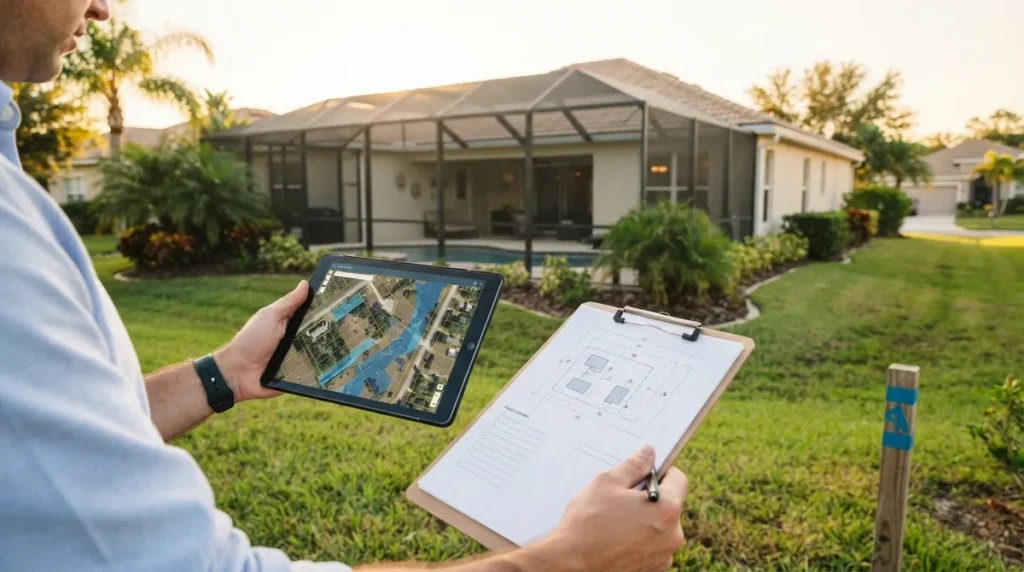
Confirm the parcel's jurisdiction first: many 'Tampa' addresses sit in unincorporated Hillsborough County, which uses separate permit systems, so searching the wrong one can falsely show 'no permits.'
-
Search the correct system: City of Tampa permits are in Accela, unincorporated county records are in HillsGovHub, and older or missing records can be requested through the City Public Records Center.
-
An issued permit does not prove the work passed final inspection; check scope, contractor, inspection results, and whether the permit is finaled, closed, expired, or still open.
-
Check zoning, future land use, and flood-zone status in the Hillsborough County Map Viewer before designing an addition, pool, or change of use, since county flood maps do not model coastal storm surge.
-
Compare permit history to the physical property during a walk-through, looking for unpermitted additions, enclosed lanais, new electrical or HVAC work, or pools with no matching permit records.
-
Document findings, contact the building department, and negotiate who pays for open permits or unpermitted work before closing, since a records search is a screen rather than a guarantee of compliance.
Picture this: you've found the perfect Tampa bungalow. The kitchen looks fresh, the lanai is gorgeous, and the price feels right. Then, two weeks before closing, someone discovers the renovation was never permitted. Suddenly your dream home comes with a stalled closing, a nervous lender, and a to-do list nobody budgeted for.
The good news? You can dodge that headache with solid permit due diligence in Tampa. It's simply a records-based review of a property's permits, inspections, zoning, code issues, and flood constraints before you commit to a purchase or a project scope. It won't replace a professional inspection, but it will tell you where to look closer.
Whether you're a homeowner, investor, agent, or general contractor, this friendly walkthrough shows you exactly how to run the search, read what you find, and handle surprises. Grab a coffee, and let's make this feel a lot less intimidating.
What Permit Due Diligence in Tampa Actually Means
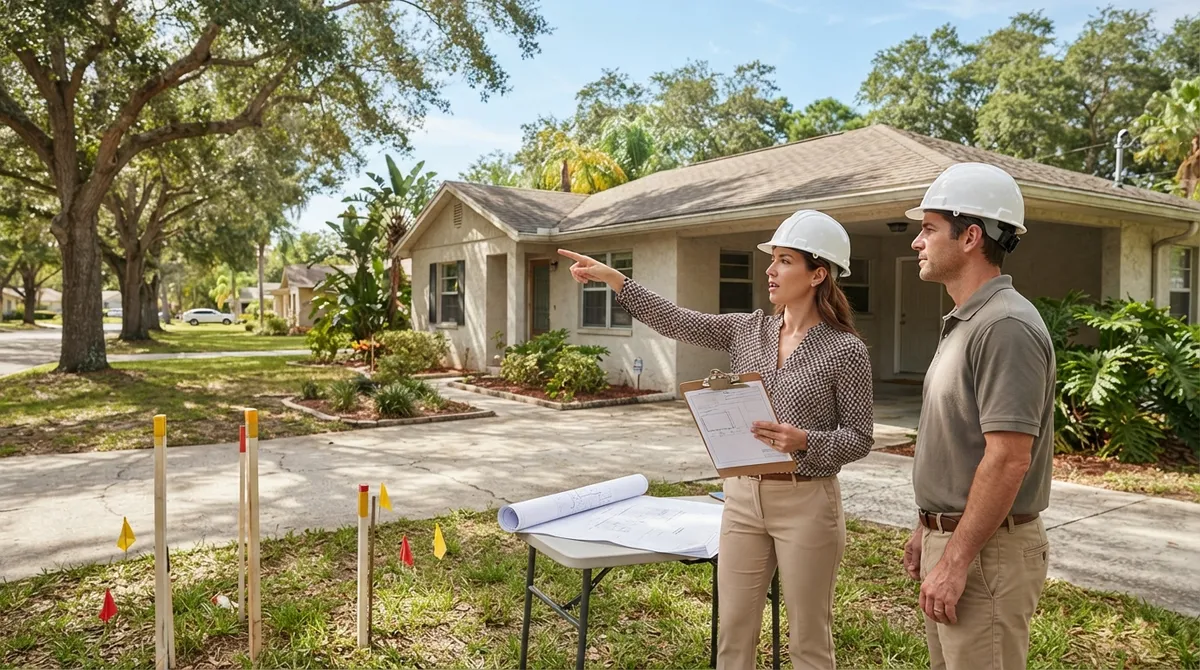
Permit due diligence is a property-specific check of building permits, inspection and closure status, zoning and land-use rules, code enforcement history, and flood-related requirements. Think of it as reading the property's paper trail before you sign anything.
Done well, it can reveal:
- Unclosed or expired permits that may transfer to you as the new owner
- Work done without permits, like additions, enclosures, or electrical upgrades
- Failed or missing inspections that were never resolved
- Zoning or flood restrictions that affect cost, schedule, or what you can build
Florida Statute 553.79 generally requires a permit before covered building construction, alteration, repair, modification, or demolition, subject to legal exceptions. The statute also provides for permit revocation when work violates or doesn't conform to the Florida Building Code. In plain English: if work needed a permit and didn't get one, that's a real issue worth catching early.
Step 1: Confirm Which Jurisdiction Governs the Property
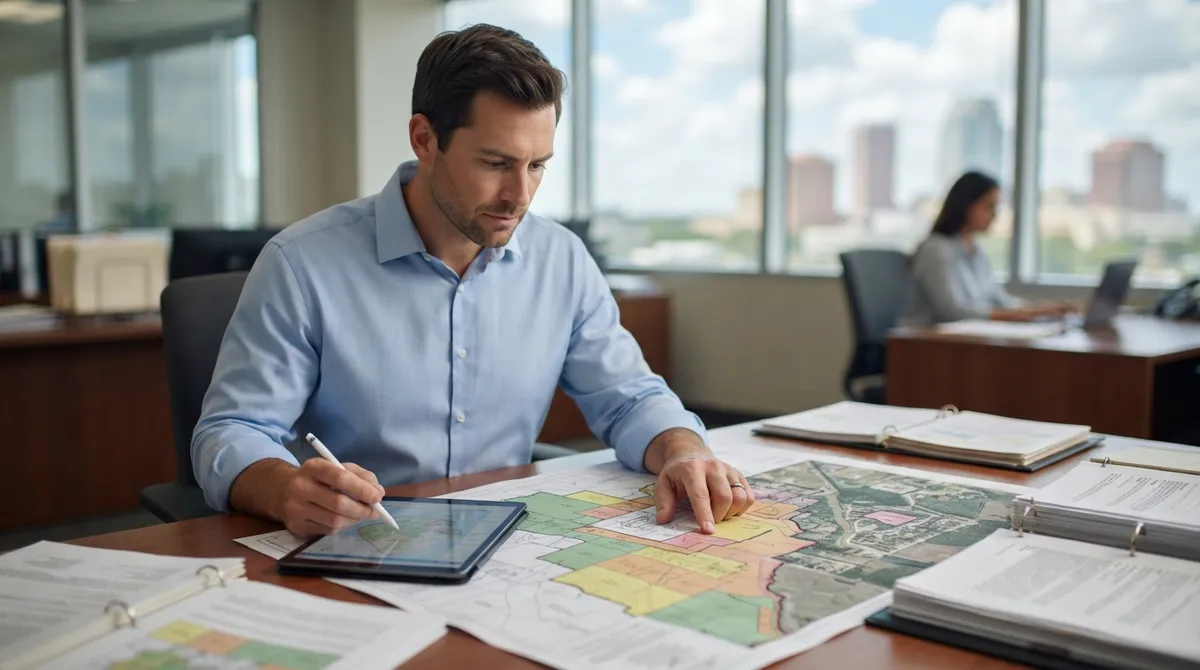
This is the step people skip, and it trips up even seasoned pros. A Tampa mailing address does not guarantee the parcel sits inside City of Tampa limits. Plenty of "Tampa" addresses are actually in unincorporated Hillsborough County, and nearby municipalities run their own permitting processes.
Why it matters: the City of Tampa and unincorporated Hillsborough County use separate permitting and records systems. Search the wrong one and you'll come up empty, which can look like "no permits" when the records are simply somewhere else.
- Pull the parcel number or folio from the county property appraiser record.
- Check the parcel's jurisdiction using Hillsborough County's Map Viewer.
- Confirm the responsible building department before searching any permit database.
- Write down the jurisdiction so every later search targets the right system.
Not sure which office controls a tricky parcel near a city line? That's exactly the kind of question our building department lookup tool helps with, and our team can confirm it for you when the answer isn't obvious.
Step 2: Search the Official Permit Records
Once you know the jurisdiction, it's time to dig into the records. Here's a quick comparison of where to look.
| Jurisdiction | Where to Search | What You Can Typically Find |
|---|---|---|
| City of Tampa | Accela online permit inquiry system | Permit status, history, inspections, payments |
| Unincorporated Hillsborough County | HillsGovHub and county permitting reports | Permit reports and related county records |
| Hillsborough County parcel data | County Map Viewer parcel reports | Zoning, flood-zone info, future land use |
| Older or missing records | City Public Records Center request | Archived permit documents by address or permit number |
The City of Tampa says most permit records are readily available through its Accela system. If you can't find what you need online, you can request records through the City Public Records Center. Include the property address and any relevant permit numbers or a date range to speed things up.
A quick note on cost: the City's public-records guide has stated that the first 30 minutes of research are complimentary, with additional research listed at $24.34 per hour and notice given if a charge is anticipated. Fees change, so verify the current rate before you submit a request.
Want a faster starting point? Our open permit search tool can point you in the right direction, and our guide on how to find open permits on a Florida property walks through the process in more detail.
Step 3: Read the Permit History the Right Way
Finding a permit is only half the job. The real value comes from reading it carefully. An issued permit alone does not prove the work passed final inspection or that every required approval was obtained.
For each permit you find, look at:
- Scope of work: Does it match what's physically on the property?
- Contractor of record: Was a licensed contractor involved?
- Inspection results: Were rough-in and final inspections passed?
- Expiration or closure status: Is it finaled, closed, expired, or still open?
- Certificate of occupancy information: Where applicable, was a CO or certificate of completion issued?
Here's a handy cheat sheet for what different statuses may signal.
| Permit Status | What It May Mean | Suggested Next Move |
|---|---|---|
| Finaled / Closed | Work was inspected and approved | Confirm scope matches the property |
| Issued, no final inspection | Work may be incomplete or unverified | Ask the building department about closure options |
| Expired | Permit lapsed before completion | Explore reopening or renewal paths |
| No record found | Possible unpermitted work or missing archive | Request records and compare to physical condition |
If you spot an expired record, our article on what reopens an expired Florida permit fastest is a great next read.
Step 4: Check Zoning, Future Land Use, and Flood Zones
Permits are only one slice of the pie. If you're planning an addition, a guest house, a pool, or a change of use, the parcel's zoning and flood status can make or break the project.
Hillsborough County's Map Viewer can generate parcel reports covering zoning, flood-zone information, future land use, and other county details. Start there to understand what's allowed on the lot and what restrictions might apply.
Understanding Flood Risk
Flood risk is its own due-diligence topic, and in Tampa it's a big one. Hillsborough County explains that FEMA Flood Insurance Rate Maps inform federal flood-insurance requirements and building requirements. High-risk FEMA flood zones are areas with a 1% or greater chance of flooding in any given year.
The county's floodplain maps may also identify additional regulated areas based on county watershed studies, which likewise include areas with a 1% or greater annual flood chance. One important caveat: these county maps do not model coastal storm surge. So a parcel can look fine on one map and still carry meaningful risk.
Why should permit-minded buyers care? Because flood-zone status can affect insurance costs, elevation requirements, and how much you can renovate before triggering stricter rules. Our guide to flood zone permitting in Florida goes deeper, and the FEMA 50 percent rule is worth understanding before any major remodel.
Step 5: Compare the Records to the Real Property
Here's where detective work pays off. Walk the property with the permit history in hand and ask: does what I'm seeing match what was approved?
Red flags to watch for during a walk-through:
- A room addition, enclosed lanai, or garage conversion with no matching permit
- New electrical panels, HVAC units, or water heaters without permit records
- A pool or pool cage that doesn't appear in any inspection history
- Newer roofing, windows, or doors with no corresponding permit entry
- Square footage that doesn't match county records
Also ask the seller for documentation: permit copies, final inspection sign-offs, contractor invoices, and any certificates of completion. Discrepancies aren't automatically deal-killers, but they do deserve a call to the relevant building or planning office before you rely on your findings.
A records search is not a guarantee. Not every historical record is online, and a clean search doesn't prove the property is fully compliant. Treat it as a smart screen, not a final verdict.
Step 6: Know Your Options When You Find a Problem
Found something messy? Take a breath. Florida owners, buyers, and agents deal with this all the time, and there are practical paths forward.
- Document everything. Save screenshots, permit numbers, dates, and status notes.
- Contact the building department. Confirm what the record means and what closure would require.
- Decide who pays. Open permits and unpermitted work are often negotiated between buyer and seller. See who pays for open permits when buying a Florida home.
- Choose a fix. Options may include closing an open permit, reopening an expired one, or legalizing the work through an after-the-fact process.
- Get the right paperwork. Depending on the work, you may need as-built drawings, sealed engineering, or an engineer letter.
For unpermitted work, our guides on 7 steps to legalize unpermitted work in Florida and what an as-built drawing is and when you need one are excellent places to start. If a prior owner left you a mess, check out 4 steps if a prior owner skipped permits in Florida.
Tips for Each Type of Reader
Different folks need different things from this process. Here's how to tailor your approach.
Buyers and Real Estate Professionals
Run the search early, ideally during your inspection period, so you have time to negotiate or cure issues. Agents who flag problems before the contract deadline protect both their clients and their own reputations. If a closing is already wobbling, see how to fix a Florida closing held up by unpermitted work.
Contractors and Trade Professionals
Before you bid or pull permits on an existing property, confirm there are no open permits from prior contractors that could block yours. Verifying jurisdiction and prior permit history saves you from surprise holds mid-project.
Homeowners Planning Renovations
Check zoning and flood status before you finalize a design. It's much cheaper to adjust a plan on paper than to redo work after a reviewer flags it. Our overview of how to get permit-ready plans Florida officials approve can help you prepare.
A Quick Due Diligence Checklist
Keep this handy for your next Tampa property review:
- Confirm whether the parcel is in City of Tampa or unincorporated Hillsborough County
- Search the correct permit system by address and parcel number
- Review each permit's scope, contractor, inspections, and closure status
- Pull zoning, future land use, and flood-zone data from the county Map Viewer
- Request older or missing records through the proper public-records channel
- Compare permit history to the property's physical condition
- Ask the seller for permits, final inspections, and certificates
- Call the building department about any discrepancies
When to Bring In a Pro
You can absolutely start the search yourself, but some situations call for backup: conflicting records, a looming closing date, a stop work order, or work that needs sealed drawings to legalize. That's where an outsourced permitting team earns its keep.
At 1 Contractor Solutions, we handle permit research, plan drafting, in-house sealed engineering, filing, tracking, and closeout across all 67 Florida counties, including Tampa. Because our drafting and engineering are in house, when a reviewer flags something, we fix it without waiting on an outside consultant. If your situation is urgent, our urgent permit rescue service is built for exactly that. You can also see how others rate us on Google — 1 Contractor Solutions, and you can follow us on LinkedIn or follow us on Facebook for more Florida permitting tips. Our marketing partner, Brain Buzz Marketing, also helps us share these guides.
Wrapping Up Your Tampa Permit Due Diligence
Permit due diligence in Tampa really comes down to a handful of smart habits: confirm the jurisdiction, search the right records, read each permit's status closely, check zoning and flood data, and compare everything to the real property. Do that, and you'll walk into your purchase or project with eyes wide open.
And if you uncover something tricky along the way? You don't have to untangle it alone. Get a free quote from our friendly team, and we'll help you figure out the fastest, cleanest path to a closed permit and a confident next step.
FAQs
How do I check for open permits on a property in Tampa?
First confirm whether the parcel is in the City of Tampa or unincorporated Hillsborough County, then search that jurisdiction's official permit system by address. The City of Tampa uses Accela for most permit records, and you can request anything missing through its Public Records Center. Easy peasy once you know which door to knock on!
Does a building permit show that the work passed final inspection?
Not by itself. An issued permit only shows approval to start work, so you'll want to check the inspection history, closure status, and any certificate of occupancy or completion. If the final inspection isn't recorded, it's worth a quick call to the building department.
How do I know whether a property is in the City of Tampa or unincorporated Hillsborough County?
Don't rely on the mailing address, since many "Tampa" addresses sit outside city limits. Use Hillsborough County's Map Viewer or the property appraiser record to confirm the parcel's jurisdiction before searching for permits.
Where do I request older Tampa permit records that aren't available online?
For City of Tampa properties, submit a request through the City Public Records Center and include the property address, any permit numbers, and a date range. Fees may apply beyond a short complimentary research window, so verify current rates before you submit.
What happens if a home has unpermitted work or an open permit?
It can complicate a sale, financing, or insurance, and the work may need to be legalized or the permit closed. Common solutions include reopening or closing the permit, preparing as-built drawings, and getting sealed engineering where required. A professional permitting team can map out the fastest route for your situation.
We do this work every day across all 67 Florida counties. Call (866) 314-6931 and we will tell you what your situation actually requires — including when you do not need us.
Related services
Permit Facilitation & Filing
You have a crew scheduled, a client asking for dates, and a permit sitting somewhere in a queue you cannot see. We file it, w…
See the servicePlan Review Coordination
A permit in plan review is not one queue. On a commercial project it can be six queues, each with its own reviewer, its own c…
See the serviceReady to get your permit moving?
One call tells you which jurisdiction controls your project, what it will take, and what it will cost. Most of the time we can scope it on the phone.