
Blog
How to Bring Unpermitted Work Into Compliance in Florida
Learn how to bring unpermitted work into compliance in Florida with after-the-fact permits, as-builts, engineering, and inspections.
Key Takeaways
-
Florida has no statewide after-the-fact permit process; each city or county sets its own requirements, fees, and procedures, so confirm local details before filing anything.
-
Submit as-built drawings showing the work as actually constructed (not what was planned), along with engineer letters for structural projects, to pass plan review and inspection.
-
Code enforcement cases and permits are separate processes; paying a permit fee or filing an application does not automatically resolve a code violation notice.
-
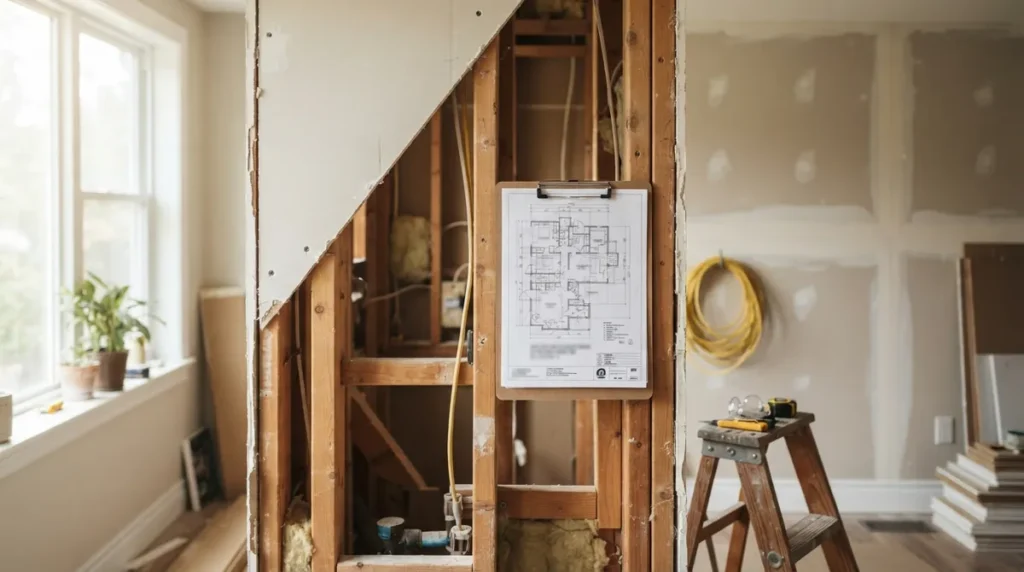
Concealed work like framing or wiring may require you to open walls or ceilings for inspection or provide engineer verification before final approval.
-
Unpermitted work often surfaces during sales, refinancing, appraisals, or insurance claims, and violations can be prosecuted as a second-degree misdemeanor under Florida law.
-
Identify the correct building department jurisdiction early using public lookup tools, as filing with the wrong office wastes weeks; properties near city lines can fall under county control despite appearances.
Finding out that a deck, addition, roof, or remodel was built without a permit can feel like a punch to the gut. Maybe a prior owner skipped the paperwork. Maybe a contractor promised to pull the permit and never did. Maybe a lender or buyer just flagged it days before closing. Take a breath. You are far from alone, and in most cases there is a clear path forward.
This guide walks you through exactly how to bring unpermitted work into compliance in Florida in 2026. We will cover who has jurisdiction, what documents you need, what inspectors look for, and what can go wrong. Whether you are a homeowner, a general contractor, a solar installer, or a real estate professional, you will find practical steps you can use right away.
One important note up front: Florida does not have a single statewide cleanup program. Your city or county building department sets the process, the fees, and the paperwork. So the goal is to learn the general roadmap and then confirm local details before you file anything.
What Does It Mean to Bring Unpermitted Work Into Compliance?
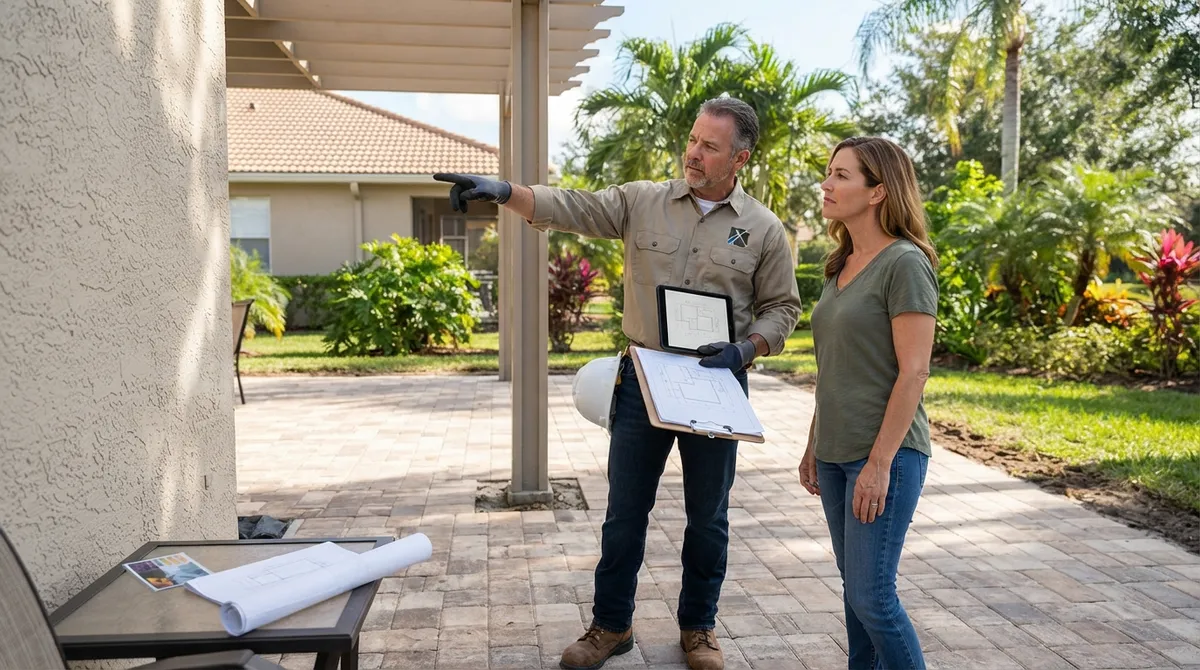
In Florida, bringing unpermitted work into compliance generally means working with the building department that has jurisdiction over the property. You apply for an after-the-fact (sometimes called retroactive) permit, document the work as it was built, pass the required inspections, and correct any deficiencies the building official finds.
Florida Statutes §553.79 sets the general rule: construction, alteration, repair, and demolition that requires a permit must be permitted before work begins. Exemptions are limited, so do not assume your project qualifies without checking the current code and local rules.
Here is the part many people miss. An after-the-fact permit is a local route, not a statewide guarantee. Submitting an application or paying a fee does not legalize the work by itself. The work still has to satisfy plan review and inspection. If it does not, you may need to repair it, rebuild it, or remove it.
Common Types of Unpermitted Work We See
- Room additions, enclosed patios, and garage conversions
- Roof replacements and structural roof repairs
- Electrical, plumbing, and HVAC changes
- Impact windows and doors installed without permits
- Pool cages, retaining walls, fences, and outdoor kitchens
- Solar and battery installations missing final approval
Step 1: Identify the Building Department With Jurisdiction
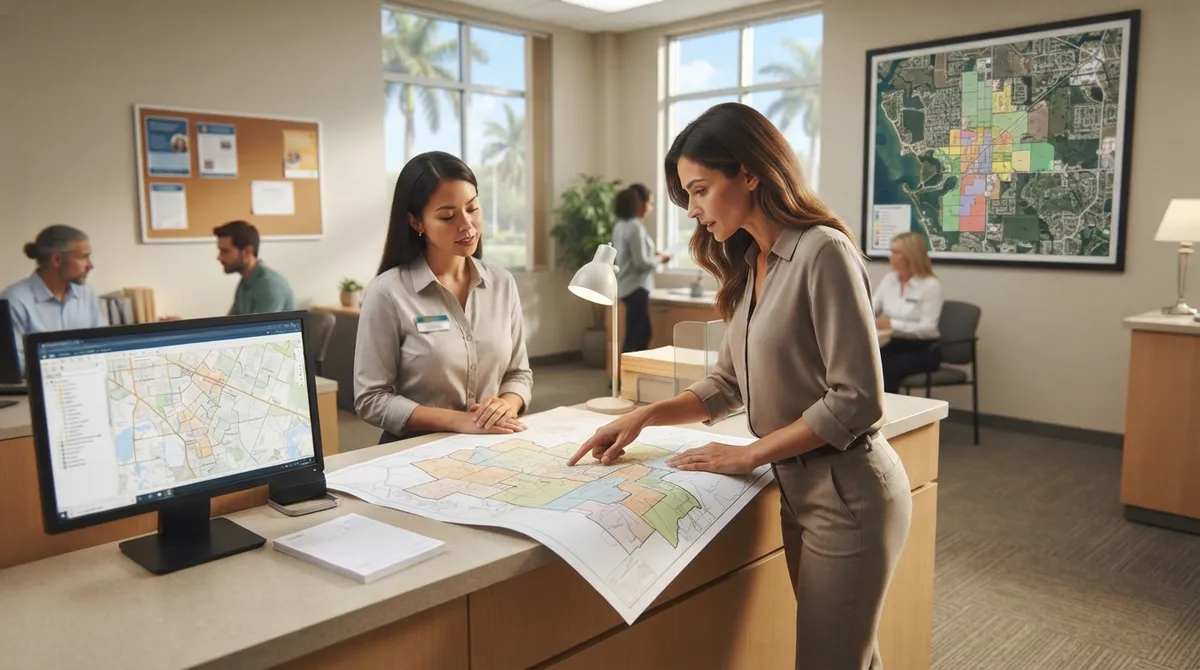
Before anything else, confirm which agency actually controls your property. This is trickier than it sounds. Properties near city lines can look like they sit inside a municipality but actually fall under the county, or the other way around. Filing with the wrong office wastes weeks.
You can use our building department lookup tool to point you in the right direction. For a deeper explanation, see our guide on which Florida jurisdiction reviews my project.
Counties are authorized under Florida Statutes §125.56 to enforce building and fire codes and to adopt inspection-fee schedules. That means procedures differ in places like Hillsborough County, Miami-Dade County, and Lee County, even for nearly identical projects.
Step 2: Check for Open Permits and Code Enforcement Notices
Next, find out what is already on record. You are looking for two separate things:
- Permit history: Prior permits that were never closed, or expired permits tied to the property.
- Code enforcement activity: Any notice of violation, citation, or order tied to the work.
These are handled differently. An after-the-fact permit addresses the construction. A code enforcement case is a separate process with its own deadlines, hearings, and potential fines. Clearing one does not automatically clear the other, so keep track of both.
Start with our open permit search. If you already received a notice, read our walkthrough on what to do when you get a Florida code enforcement notice. If the problem is an old permit that simply lapsed, our guide on how to close an expired permit in Florida will help.
Step 3: Document the Work As It Was Built
The building department needs to see what actually exists, not what was supposed to be built. This documentation is usually called as-built drawings, and it is the backbone of most after-the-fact applications.
| Document | Why It Matters | Typical Use |
|---|---|---|
| As-built floor plans | Shows dimensions, rooms, and layout as constructed | Additions, conversions, remodels |
| Site plan or survey | Confirms setbacks, lot coverage, and placement | Additions, sheds, pool cages, walls |
| Photographs | Records visible conditions and materials | Nearly all projects |
| Structural calculations or engineer letter | Verifies framing, connections, and load path | Roofs, additions, enclosures |
| Product approvals and specs | Confirms windows, doors, and roofing meet code | Impact products, roofing |
| Trade drawings | Documents electrical, plumbing, and mechanical work | MEP changes |
Professional as-built drawings save a lot of back-and-forth. If you want the full breakdown, see our guide on getting as-built drawings for Florida permits.
Step 4: Get an Engineering Evaluation When Needed
Many after-the-fact projects need an engineer to confirm the work is safe and code-compliant. This is especially true when structure is involved, like roof framing, truss connections, wall openings, or enclosed patios.
An engineer may inspect the site, review photos, run calculations, and issue a signed and sealed letter or drawings. These documents give the plan reviewer confidence that hidden elements meet code. Learn more about engineer letters and our structural engineering services.
Not sure if you need one? Our article on whether a sealed drawing is required for after-the-fact permits breaks it down.
Step 5: Submit the After-the-Fact Permit Application
Now you are ready to file. Depending on the project, you may need separate applications for building, electrical, plumbing, and mechanical work. Every jurisdiction has its own forms, portals, and submittal checklists, so confirm requirements before you upload anything.
A typical submittal package includes:
- The completed permit application for each trade
- As-built plans showing the work as constructed
- A site plan or survey, if required
- Engineering letters or calculations, if required
- Product approvals and manufacturer specifications
- Contractor license information or owner-builder paperwork
- Fee payment, including any local after-the-fact charges
If you plan to act as your own contractor, review the rules for owner-builder permits first. Our team also handles permit facilitation and filing so applications go in complete the first time.
Step 6: Respond to Plan Review Comments
Plan reviewers will often come back with comments. That is normal, and it does not mean you are in trouble. Typical comments ask for clearer dimensions, missing product approvals, additional calculations, or a corrected site plan.
The key is to respond quickly and completely. Every incomplete resubmittal restarts the clock. Using plan review coordination and organized revisions and resubmittals helps you avoid repeated rejections. If your application was rejected outright, read why building permits get rejected.
Step 7: Pass Inspections and Fix Deficiencies
Inspections are how the building department verifies the work. The inspector will compare what they see against your approved as-built plans and the applicable code.
Here is where concealed work becomes a concern. If framing, wiring, or plumbing is hidden behind finished walls or ceilings, the building official may require you to open sections for inspection or provide other evidence. Deficiencies may require correction, reconstruction, or even removal of noncompliant work.
| Inspection Outcome | What It Means | Next Step |
|---|---|---|
| Pass | Work meets code as inspected | Schedule remaining inspections |
| Minor correction | Small fixes needed, such as fasteners or labeling | Correct and request reinspection |
| Open-up required | Concealed work cannot be verified | Expose areas or provide engineer verification |
| Major deficiency | Work does not meet code | Rebuild, retrofit, or remove |
Some owners and contractors choose a private provider to speed up reviews and inspections where allowed. Compare options in our article on private provider versus building department review, or learn about private provider inspections.
Step 8: Close the Permit and Resolve Violations
You are not done until the permit is closed. Final approval, a certificate of completion, or a certificate of occupancy (depending on the project) is what formally closes the loop. A paid application alone does not resolve the violation.
If code enforcement was involved, confirm that the case is closed too. This is separate from the permit. Get written confirmation whenever possible, and keep copies of final inspection records. Many projects also need a certificate of occupancy or related closeout. For active cases, see our code compliance violations service.
What Does It Cost to Legalize Unpermitted Work in Florida?
Honest answer: it depends. No statewide after-the-fact fee or uniform penalty amount was identified in the sources reviewed. Local fee schedules and ordinances control, and charges can differ by jurisdiction and project.
Florida Statutes §125.56(2) allows counties to set reasonable inspection-fee schedules, but it does not set one statewide after-the-fact fee. Some jurisdictions add charges for work started without a permit, and code enforcement fines may be separate from permit fees.
| Cost Category | What Drives It |
|---|---|
| Permit and inspection fees | Local fee schedule and project valuation |
| Work-without-permit surcharge | Local ordinance, if any |
| As-built drawings and drafting | Size and complexity of the structure |
| Engineering letters or calculations | Structural scope and site conditions |
| Corrections or opening walls | What inspectors find in concealed areas |
| Code enforcement fines | Separate case, timeline, and local rules |
For a closer look at numbers, review our guides on after-the-fact permit costs in Florida and what it costs to legalize an addition.
Why Fixing It Beats Ignoring It
It can be tempting to leave unpermitted work alone and hope nobody notices. That gamble rarely pays off. Unpermitted work can surface during a sale, an appraisal, a refinance, an insurance claim, or a neighbor complaint.
There is also a legal side. Under Florida Statutes §125.56(5), violations of that section or the Florida Building Code or Fire Prevention Code are a second-degree misdemeanor, with penalties referenced in §§775.082 and 775.083. Enforcement depends on circumstances, but it shows why this is worth taking seriously.
Read more about the tradeoffs in after-the-fact permits versus ignoring it and the penalty for building without a permit in Florida.
Tips for Different Readers
For Homeowners and Residential Property Owners
Start by gathering anything you have: old photos, contractor invoices, prior permits, and purchase documents. Then confirm the jurisdiction and check for open permits. Our homeowner resources explain the process in plain language.
For General Contractors and Design Trades
If a client inherited unpermitted work, set expectations early about opening walls and possible corrections. Having drafting and engineering lined up before filing keeps schedules realistic. See how we support general contractors.
For Solar Companies
Solar systems missing final approval can stall interconnection and create headaches for customers. Clean structural and electrical documentation speeds things up. Visit our page for solar contractors.
For Real Estate Professionals
Permit issues can derail a closing fast. Research the property early and flag concerns before contract deadlines. Our realtor and closing support is built for exactly this situation, and you can read about open permits found at closing.
Common Mistakes to Avoid
- Filing with the wrong city or county office
- Submitting plans that show what was intended instead of what was built
- Ignoring a code enforcement notice while working on the permit
- Assuming a paid application means the violation is resolved
- Painting or finishing over concealed work before inspection
- Skipping engineering when structure is clearly involved
Let Us Help You Get Compliant
Bringing unpermitted work into compliance does not have to be overwhelming. At 1 Contractor Solutions, we work as Florida's outsourced permitting department. We prepare as-built plans, provide in-house sealed engineering, file applications, work every reviewer comment, and carry the project through closeout across all 67 Florida counties. Learn more about our after-the-fact and expired permit services.
Curious how other Floridians feel about working with us? See what customers say when you visit us on Google — 1 Contractor Solutions. You can also follow us on LinkedIn and follow us on Facebook for Florida permitting updates.
For code and statute references, you can review the Florida Statutes §125.56 text directly and confirm local rules with your building department.
Ready to move forward? Get a free quote today. Give us an address and a problem, and we will tell you which jurisdiction controls it, what it will take, and then go do it. Permits approved. Projects moving.
FAQs
How do I bring unpermitted work into compliance in Florida?
Start by identifying the building department with jurisdiction, then apply for an after-the-fact permit with as-built plans showing the work as constructed. Complete the required inspections, correct any deficiencies, and get the permit closed. Requirements and fees vary by locality, so confirm details with your local office.
Does an after-the-fact permit clear a code enforcement violation or fine?
Not automatically. Code enforcement cases and permits are separate processes, so you will want to confirm that the violation is formally closed along with the permit. A permit application or payment alone does not resolve the violation.
Will I have to open walls or ceilings for an inspection?
Possibly. If concealed work cannot be inspected, the building official may require finishes to be opened or ask for other evidence, such as an engineer's verification. Skipping finishes until inspections are done can save you a lot of rework.
Can unpermitted work be required to be removed or rebuilt?
Yes, it can be. If the work does not meet code and cannot be corrected through repairs, the building department may require reconstruction or removal. That is why documenting and evaluating the work early is so helpful.
How much does it cost to legalize unpermitted work in Florida?
There is no single statewide fee, so costs depend on your local fee schedule, the project size, and any engineering or corrections needed. Some jurisdictions add charges for work started without a permit, and code enforcement fines may be separate. Checking with your local building department gives the most accurate number.
We do this work every day across all 67 Florida counties. Call (866) 314-6931 and we will tell you what your situation actually requires — including when you do not need us.
Related services
Permit Facilitation & Filing
You have a crew scheduled, a client asking for dates, and a permit sitting somewhere in a queue you cannot see. We file it, w…
See the servicePlan Review Coordination
A permit in plan review is not one queue. On a commercial project it can be six queues, each with its own reviewer, its own c…
See the serviceReady to get your permit moving?
One call tells you which jurisdiction controls your project, what it will take, and what it will cost. Most of the time we can scope it on the phone.