
Blog
How Much Does a Milestone Inspection Cost in Florida?
Florida milestone inspection costs vary by building. Learn typical Phase 1 and Phase 2 price ranges, cost drivers, and who pays in 2026.
Key Takeaways
-
Florida sets no fixed statewide fee for milestone inspections; the licensed architect or engineer sets the price, so get itemized, building-specific quotes from at least two or three professionals.
-
A straightforward Phase 1 inspection for a smaller or mid-size building is estimated at roughly $5,000 to $15,000, while mid-size properties may run $15,000 to $30,000 and large or complex properties can exceed $50,000.
-
Phase 2 is only required if Phase 1 finds substantial structural deterioration, and it can add roughly $10,000 to $50,000 or more; repairs are a separate, often much higher, construction cost.
-
Under Florida Statutes §553.899, the association generally pays for portions of the building it must maintain, while costs for areas outside its responsibility fall to the relevant owner, so plan for reserves or assessments early.
-
Local building department administrative or review fees are usually separate from the inspector's fee and vary by jurisdiction, so confirm them with your local authority before finalizing the budget.
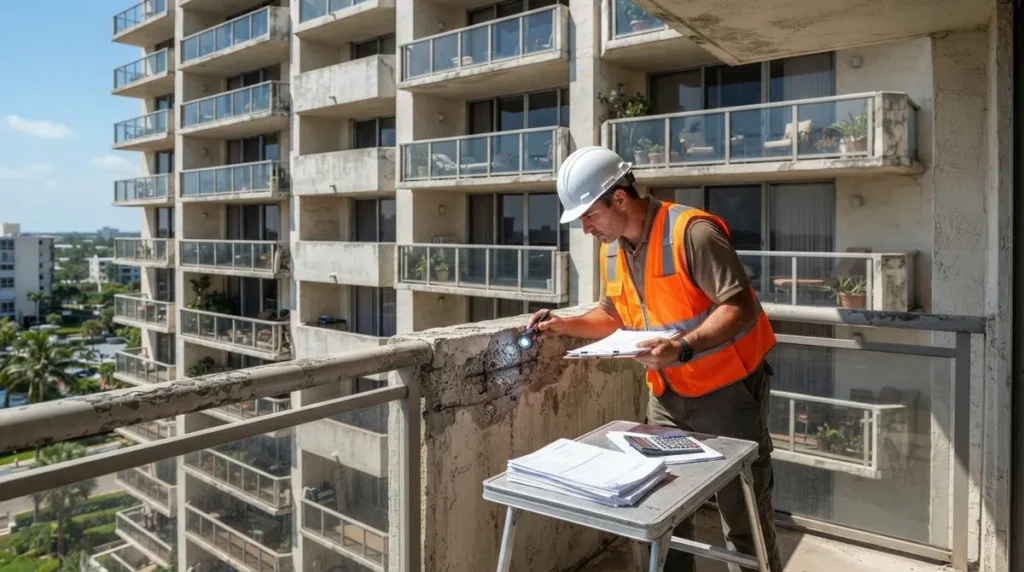
If your condo board just got a notice about a milestone inspection, your first question is probably the same one everyone asks: how much does a milestone inspection cost? It is a fair question, and honestly, a bit of a moving target. Florida does not publish a statewide price list for these inspections. The licensed architect or engineer sets the fee based on your building, and that fee can swing a lot from one property to the next.
The good news is that you can plan for it. In 2026, published Florida market estimates give us a workable budgeting range, and knowing what drives the price helps you compare bids with confidence. Whether you are a board member, a property manager, a realtor advising a buyer, or a unit owner wondering what your share will look like, this guide walks you through the numbers, the phases, and the hidden extras.
Think of this as a friendly roadmap. We will cover typical price ranges, what pushes costs up, who pays, and how to avoid surprises. Treat every figure here as an estimate, not a quote, and always get an itemized proposal for your specific building.
The Short Answer: What Does a Milestone Inspection Cost?
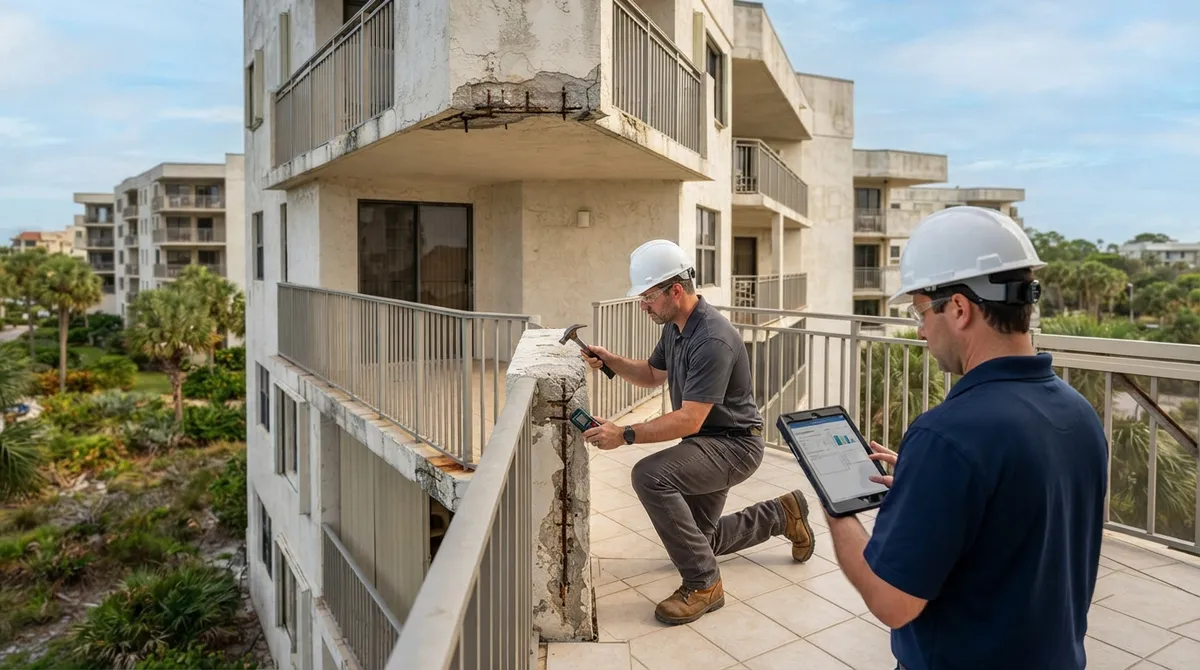
Here is the quick version. Because Florida law does not set a fixed fee, the price comes from the licensed professional you hire. Published Florida market estimates suggest a straightforward Phase 1 inspection and report for a smaller or mid-size building runs roughly $5,000 to $15,000. Some mid-size properties land closer to $15,000 to $30,000, and large or complex properties can exceed $50,000 for Phase 1 alone.
These are indicative numbers, not regulated rates or guaranteed quotes. Your actual cost depends on the building, the scope, and the professional you choose.
| Building Type | Estimated Phase 1 Cost | Notes |
|---|---|---|
| Smaller or straightforward building | About $5,000–$15,000 | Fewer stories, simple layout, good access |
| Mid-size building | About $15,000–$30,000 | More units, balconies, garage areas |
| Large or complex property | $50,000+ | Multiple buildings, towers, coastal exposure |
Remember, these ranges are for the first phase only. A second phase, if required, and any repairs are separate costs.
Understanding the Two Phases (and Why They Matter for Cost)
To understand the price, it helps to understand the process. A milestone inspection happens in up to two phases, and each one has its own cost.
Phase 1: The Visual Examination
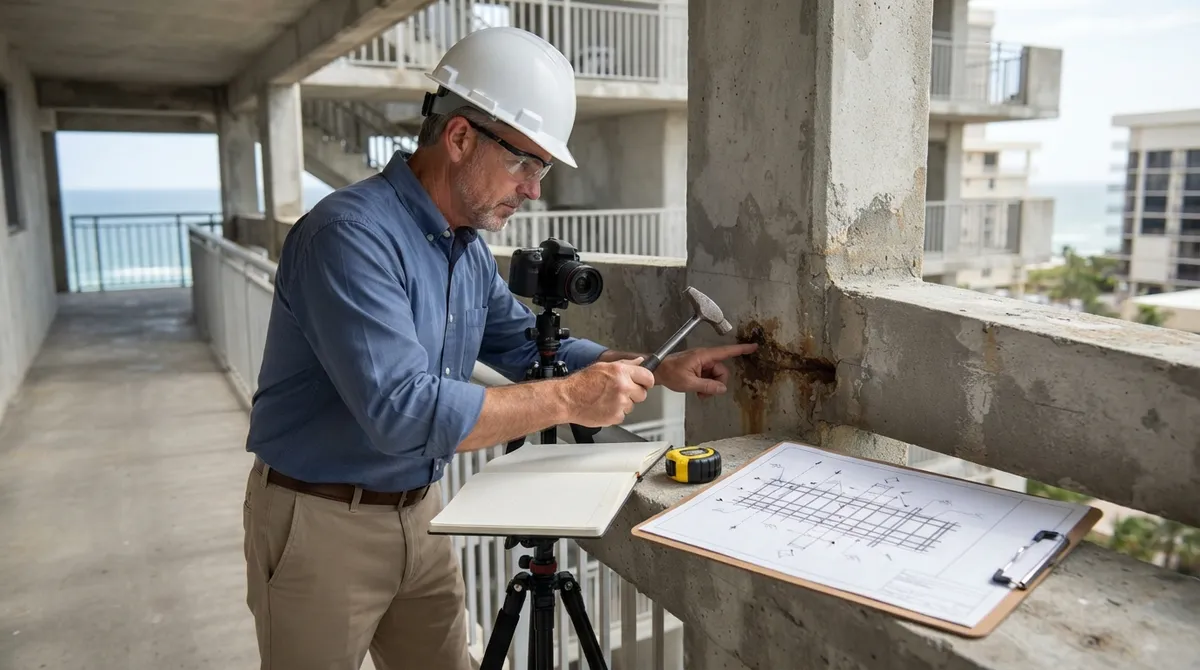
Phase 1 is a visual examination of habitable and nonhabitable areas of the building, including major structural components. A Florida-licensed architect or engineer performs it and prepares a report. This is the phase most people think of when they ask about cost.
Phase 2: The Deeper Investigation
If the Phase 1 inspector finds substantial structural deterioration, Phase 2 is required. This stage can involve more detailed or even destructive testing, such as concrete sampling and laboratory analysis. If you want a deeper comparison of the two stages, our guide on Phase 1 vs. Phase 2 milestone inspection in Florida breaks it down nicely.
| Phase | What Happens | Estimated Cost |
|---|---|---|
| Phase 1 | Visual examination and written report | About $5,000–$50,000+ depending on building |
| Phase 2 | Detailed investigation, possible testing | Roughly $10,000–$50,000 or more |
| Repairs | Fixing deficiencies found | Separate construction cost, often much higher |
One Florida source estimates Phase 2 may add roughly $10,000 to $50,000, depending on testing, access, and lab work. Again, that is a market estimate, not a statutory fee schedule.
What Drives the Price Up (or Down)?
Two buildings that look similar from the street can get very different quotes. Here is what shapes the number on your proposal:
- Building size and height: More floors and more square footage mean more time on site.
- Number of buildings and structural systems: A multi-building campus costs more than a single tower.
- Balconies and garages: These are common problem areas and need close inspection.
- Coastal exposure: Salt air accelerates corrosion, which can mean more scrutiny.
- Visible deterioration: Obvious cracking or spalling can expand the scope.
- Access constraints: Tight roofs, locked areas, or hard-to-reach facades add effort.
- Equipment needs: Lifts, scaffolding, concrete sampling, and lab analysis all add cost.
- Follow-up visits: Extra site trips can increase the final bill.
The more complete and organized your building records are, the smoother things tend to go. Original plans, prior repair records, and past inspection reports can save the inspector time, and that can help your budget.
Who Pays for the Milestone Inspection?
This is where many owners get nervous, so let us clear it up. Under Florida Statutes §553.899, the association is responsible for inspection costs attributable to the portions of the building it is required to maintain under its governing documents. Costs for portions outside the association's maintenance responsibility are attributable to the relevant owner.
In practice, that usually means the association handles the common elements, such as the structure, roof, and shared areas, and funds the work through reserves, budget items, or special assessments. Unit owners may see this show up as a line item or an assessment. If your association is short on funds, it is worth talking early about how to spread the cost. Our article on what happens if a Florida condo misses its milestone deadline explains why waiting is rarely the cheaper path.
Do Local Government Fees Add to the Cost?
Yes, they can. The engineer's inspection fee is one thing, but a local building department may charge separate administrative or review fees. These vary by jurisdiction, and they are not part of the professional's inspection price.
Before you finalize your budget, call the authority having jurisdiction and ask what fees apply. This small step can prevent an unwelcome surprise later. If you are unsure which office controls your property, especially near city lines, our team can help you sort that out quickly. Associations in Hillsborough County may find our guide on 40 year recertification in Tampa useful, and those on the Gulf Coast can read about condo structural inspections in Bradenton.
Does Your Building Even Need One? Timing and Deadlines
Before you budget, confirm that your building is covered. The statutory requirement generally applies to condominium or cooperative buildings that are at least three habitable stories tall. The first inspection is due by December 31 of the year the building reaches 30 years from its certificate of occupancy, and then every 10 years after that. A local enforcement agency may set an earlier 25-year threshold based on local conditions.
There are also key deadlines once you get notice:
- The association must notify unit owners within 14 days after receiving the local agency's written notice.
- Phase 1 must be completed within 180 days after the owner receives that notice.
- After receiving the report, the association must distribute the inspector-prepared summary within 45 days.
Those timelines are tight enough that early planning really matters. Bids from qualified engineers can take time to gather, and good professionals can be booked out. Starting the conversation now gives you room to compare options and avoid rush pricing.
How to Compare Milestone Inspection Bids
Since there is no fixed price, comparing proposals is your best tool. A low number is not always a bargain, and a high number is not always better. Here is a simple approach:
- Ask for itemized proposals. You want to see what is included, from site visits to the written report and summary.
- Confirm licensing. The inspector must be a Florida-licensed architect or engineer.
- Clarify the scope. Find out whether lifts, scaffolding, or sampling are included or billed separately.
- Ask about Phase 2 pricing. Even if it may not be needed, knowing the rate structure helps you plan.
- Check experience with similar buildings. A pro who knows coastal high-rises will spot issues faster.
Getting at least two or three bids gives you a realistic sense of the market for your building. Do not be shy about asking questions. A good professional will happily walk you through the proposal.
Planning Beyond the Inspection: Repairs and Permits
Here is the part many boards overlook. The inspection itself is only the beginning. If the report recommends repairs, those are separate construction costs and can be substantially higher than the inspection fee. Repairs typically need permits, sealed drawings, and sometimes engineering letters.
That is where a good permitting partner earns their keep. At 1 Contractor Solutions, we handle permit filing, tracking, plan review coordination, and structural and MEP engineering across all 67 Florida counties, with in-house sealed drawings. When a report flags structural work, having drawings and permits ready to go can keep your project moving. If you want to understand who signs off on this kind of work, see who seals structural drawings for Florida permits.
If past work was done without proper permits, that can complicate things too. Our resources on after-the-fact permit requirements in Florida and the as-built drawing process can help you get ahead of it.
Smart Ways to Keep Costs Manageable
You cannot negotiate the building's age, but you can influence the final bill. A few friendly tips:
- Gather original plans and prior inspection or repair records before the inspector arrives.
- Make sure all areas, including roofs and garages, are accessible on inspection day.
- Address obvious maintenance issues early so they do not expand into bigger findings.
- Build a reserve line for the inspection now, instead of waiting for a surprise assessment.
- Ask whether bundling visits or services can reduce follow-up trip charges.
Staying organized does not just save money. It also reduces stress for everyone involved, from the board to the residents.
Wrapping Up: Your Next Step
So, how much does a milestone inspection cost? For a straightforward Phase 1 inspection, plan on roughly $5,000 to $15,000, with mid-size and large buildings costing more, and a Phase 2 investigation plus repairs adding separate expenses. These are estimates, so the smartest move is to get itemized, building-specific quotes and confirm any local fees.
You do not have to figure all of this out alone. If you need help with permitting, sealed drawings, or coordinating repairs after your inspection, get a free quote from our team. You can also visit us on Google — 1 Contractor Solutions to see what our customers say, or follow us on LinkedIn and follow us on Facebook for more Florida permitting tips. Our website and marketing are supported by Brain Buzz Marketing.
FAQs
How much does a Florida milestone inspection cost for a condo building?
There is no statewide fixed price, so it depends on your building. As a rough 2026 budgeting guide, a straightforward Phase 1 inspection often falls around $5,000 to $15,000, while mid-size and large buildings can cost considerably more. Always get an itemized quote for your property.
How much more does a Phase 2 milestone inspection cost?
Phase 2 is a separate expense that is only needed if Phase 1 finds substantial structural deterioration. Florida market estimates range from roughly $10,000 to $50,000 or more, depending on testing, access, and lab work. Repairs afterward are a separate construction cost.
Who is responsible for paying for a Florida milestone inspection?
Under Florida Statutes §553.899, the association covers inspection costs for the portions it must maintain under its governing documents. Costs for portions outside the association's responsibility are attributable to the relevant owner. Many associations fund it through reserves or assessments.
Are local building department fees included in the inspection price?
Usually not. The engineer's fee is separate from any administrative or review fees a local building department may charge, and those vary by jurisdiction. It is smart to confirm fees with your local authority before finalizing your budget.
When does a Florida condominium need a milestone inspection?
The requirement generally applies to condominium or cooperative buildings at least three habitable stories tall. The first inspection is due by December 31 of the year the building reaches 30 years from its certificate of occupancy, then every 10 years, though a local agency may set an earlier 25-year threshold.
We do this work every day across all 67 Florida counties. Call (866) 314-6931 and we will tell you what your situation actually requires — including when you do not need us.
Related services
Permit Facilitation & Filing
You have a crew scheduled, a client asking for dates, and a permit sitting somewhere in a queue you cannot see. We file it, w…
See the servicePlan Review Coordination
A permit in plan review is not one queue. On a commercial project it can be six queues, each with its own reviewer, its own c…
See the serviceReady to get your permit moving?
One call tells you which jurisdiction controls your project, what it will take, and what it will cost. Most of the time we can scope it on the phone.