
Blog
How to Find Who Can Perform a Milestone Inspection in FL
Learn who can legally perform a Florida milestone inspection, how to vet candidates, and where permitting services help your condo stay on track.
Key Takeaways
-
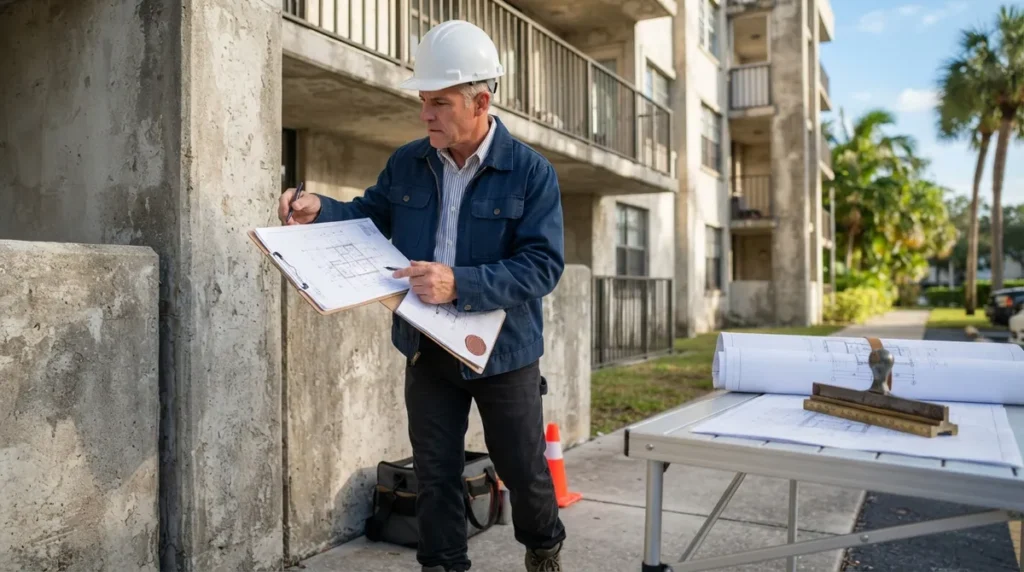
Only a Florida-licensed architect (Chapter 481) or Florida-licensed engineer (Chapter 471) can perform a statutory milestone inspection; an out-of-state license alone does not qualify.
-
A team may perform the inspection, but a Florida-licensed architect or engineer must be in responsible charge, and each member must sign and seal the portions within their qualifications.
-
Home inspectors, general property inspectors, permit expediters, and drafters without a licensed design professional cannot serve as the inspector of record.
-
The local building official receives and administers the sealed report and summary but does not perform or approve the inspection itself.
-
Phase one must be completed within 180 days after owners receive the local enforcement agency's written notice, so boards should act quickly once that letter arrives.
-
Phase two is required only if phase one identifies substantial structural deterioration, so many buildings can avoid its added cost and time.
If your condo association just got a letter about a milestone inspection, take a deep breath. You're not alone, and this is very doable. The big question most boards ask first is simple: who can perform a milestone inspection in Florida? The answer matters, because hiring the wrong person can cost you time, money, and a rejected report.
Here's the short version. A statutory milestone inspection must be performed by an architect licensed in Florida or an engineer licensed in Florida and authorized to practice in the state. That professional must be in responsible charge, and the work must be signed and sealed. A permitting team can help with the paperwork and coordination, but it can't replace the licensed professional's structural conclusions.
In this friendly guide, we'll walk through who qualifies, who doesn't, how to vet candidates, and where permitting support fits in. Whether you're a board member, property manager, realtor, or general contractor supporting a building, you'll leave knowing exactly what to do next.
What a Milestone Inspection Actually Is
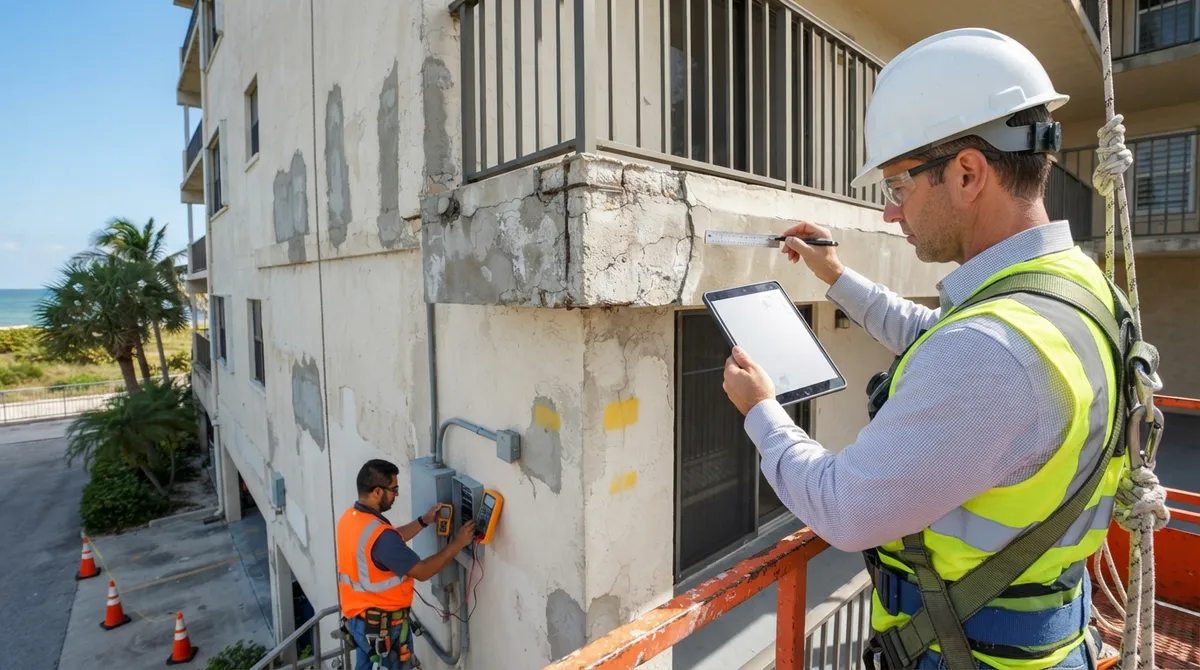
Before you hire anyone, it helps to know what you're hiring them to do. Under Florida Statute §553.899, a milestone inspection is a structural inspection of a covered building's load-bearing elements and primary structural members and systems. Its purpose is to assess structural condition and life safety.
Just as important is what it is not. It is not a certification that the building complies with the Florida Building Code or the fire-safety code. Think of it as a structural health check, not a code audit.
Which Buildings Need One?
The statewide requirement generally applies to residential condominium or cooperative buildings that are at least three habitable stories tall. The first inspection is generally due by December 31 of the year the building reaches 30 years of age, measured from the certificate-of-occupancy date. After that, inspections are generally required every 10 years. A local enforcement agency may require an earlier inspection in qualifying circumstances.
| Requirement | What Florida Statute §553.899 Generally Says |
|---|---|
| Covered buildings | Residential condominium or cooperative buildings with 3 or more habitable stories |
| First inspection due | By December 31 of the year the building turns 30 (based on certificate-of-occupancy date) |
| Repeat inspections | Every 10 years after the first |
| Phase one deadline | Within 180 days after owners receive the local enforcement agency's written notice |
| Earlier inspection | A local enforcement agency may require one in qualifying circumstances |
Who Can Perform a Milestone Inspection in Florida?
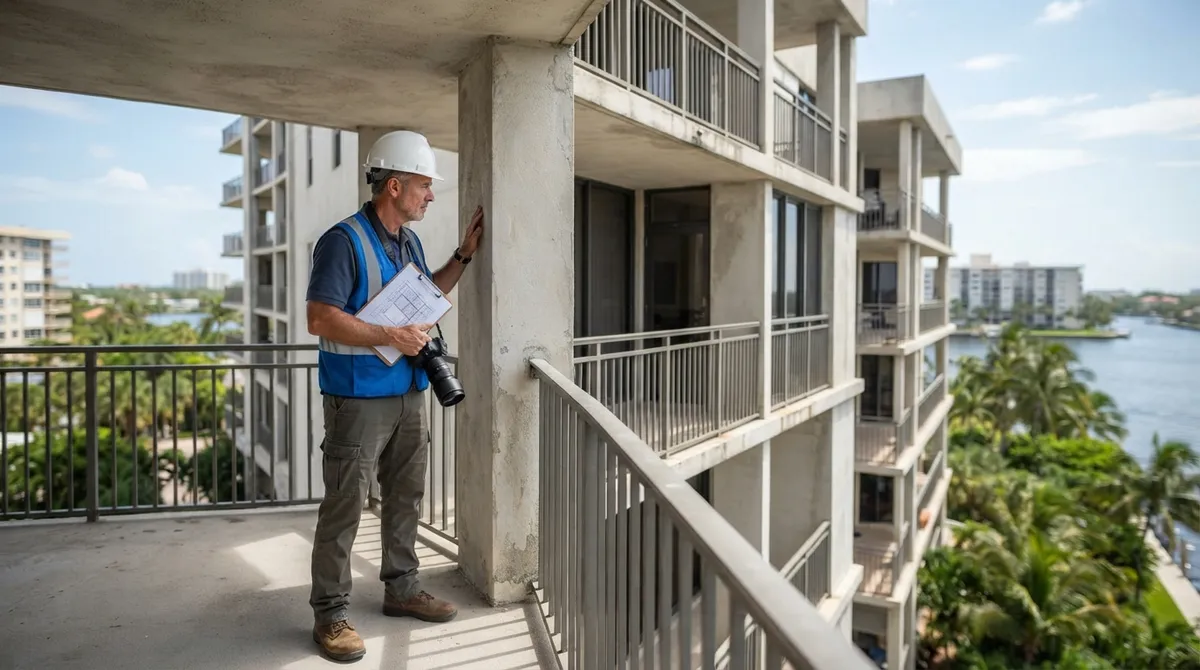
This is the heart of it. Florida law is clear on who is allowed to do the work. The inspection must be performed by one of two types of licensed professionals:
- An architect licensed under Chapter 481 who is authorized to practice in Florida
- An engineer licensed under Chapter 471 who is authorized to practice in Florida
That's it. Either one qualifies. So if you've ever wondered whether it has to be an architect or an engineer, the answer is that a Florida-licensed professional engineer can perform a milestone inspection, and so can a Florida-licensed architect.
What About Out-of-State Professionals?
A professional licensed only in another state does not meet the requirement. They must also be authorized to practice in Florida. Always ask to see the Florida license number and confirm it through the state's licensing lookup before you sign anything.
Can a Team Do the Inspection?
Yes, a team may provide milestone inspection services. The catch is that a Florida-licensed architect or engineer must act as the registered design professional in responsible charge. Each team member must also sign and seal the portions of the work and the report that fall within that member's qualifications.
For example, a structural engineer might handle load-bearing elements while a specialist contributes testing data during phase two. The responsible professional ties it all together.
Who Cannot Perform a Milestone Inspection
Knowing who is off the list saves a lot of headaches. These folks are wonderful at what they do, but they cannot be the inspector of record:
- General contractors acting on their own, without a licensed architect or engineer in responsible charge
- Home inspectors and general property inspectors
- Permit expediters, runners, and drafters working without a licensed design professional
- Engineers or architects licensed only in another state
- The local building department, which receives and administers the report but does not replace the licensed professional
This last point trips people up. The local building official doesn't perform or approve the inspection itself. Their role is to receive the sealed report and summary, and to administer the process locally.
How to Vet and Hire the Right Professional: Step by Step
Ready to find your inspector? Here's a simple process that boards and property managers can follow.
- Confirm your building is covered. Check the stories, ownership type, and certificate-of-occupancy date, then compare them against the §553.899 criteria.
- Wait for or confirm your local notice. The 180-day phase one clock starts when owners receive the local enforcement agency's written notice, so keep that letter handy.
- Verify Florida licensure. Look up the architect or engineer through the state licensing database and confirm the license is active and in good standing.
- Ask about relevant experience. Request examples of past condo structural work, especially for buildings of similar age, height, and construction type.
- Get the scope in writing. The proposal should clearly cover phase one, outline when phase two might apply, and name who will be in responsible charge.
- Confirm who signs and seals what. If a team is involved, each member's sealed portion should be identified up front.
- Check local submission rules. Ask how the report gets delivered to the local building official and whether your jurisdiction has extra requirements.
Phase One vs. Phase Two: What the Professional Does
Understanding the two phases helps you budget time and money. Our deeper breakdown in Phase 1 vs. Phase 2 Milestone Inspection in Florida (2026) covers this in detail, but here's the overview.
| Feature | Phase One | Phase Two |
|---|---|---|
| Type of work | Visual examination of habitable and nonhabitable areas, including major structural components | Further evaluation, which may include destructive or nondestructive testing |
| Output | Qualitative assessment of structural condition | Deeper findings and recommended repairs |
| When required | Always, for covered buildings | Only if substantial structural deterioration is identified in phase one |
| Who performs it | Florida-authorized architect or engineer | Florida-authorized architect or engineer, often with testing specialists |
Phase one is the baseline. If the professional sees substantial structural deterioration, phase two kicks in. Many buildings pass phase one without needing phase two, which is great news for your budget.
What the Report Must Include and Who Receives It
The responsible architect or engineer must provide a sealed inspection report. They must also prepare a separate summary of material findings and recommendations. These documents go to:
- The condominium or cooperative association
- Any applicable non-condominium owner
- The local building official
The local enforcement agency receives and administers the report. Again, it doesn't stand in for the licensed inspector. If you're curious about timing and consequences, take a look at What Happens If a Florida Condo Misses Its Milestone Deadline so your board can plan ahead.
Where Permitting Services Fit In
Here's where a permitting partner earns its keep. Coordinating notices, records, permits, and repairs is very different from performing the statutory inspection. The inspection and professional conclusions must come from the appropriately licensed architect or engineer.
So what can a Florida permitting team actually do for you? Quite a lot:
- Track down building records, prior permits, and certificate-of-occupancy information the inspector will want
- Help figure out which jurisdiction controls your building and what its submission procedures look like
- Coordinate repair permits when the inspection recommends structural work
- Prepare plans and drawings to support those repairs, with sealed work from a licensed professional
- Track applications, work through reviewer comments, and handle resubmittals
At 1 Contractor Solutions, we act as an outsourced permitting department across all 67 Florida counties, with in-house drafting and engineering and sealed drawings. We don't replace your inspector, but we help keep everything around the inspection moving. You can learn more about our approach to 40-year recertification and milestone inspections.
Repairs, Records, and Related Paperwork
An inspection often leads to follow-up work. If the report recommends repairs, those repairs usually need permits, and that's where plan quality really matters. Our guide on who seals structural drawings for Florida permits explains why the right signature on the right sheet saves you from rejections.
If your building has older renovations, missing records, or work done without permits, the inspector may flag it. In that case, it helps to understand after-the-fact permit requirements in Florida and, where relevant, how as-built drawings support the file.
Tampa Bay readers may also like our local explainer, 40 Year Recertification Tampa: Milestone Inspection Guide, or the Gulf Coast-focused 11 Things to Know About Condo Structural Inspection Bradenton.
Timing and the 2026 Reserve Study Connection
Here's a timely tip for 2026. According to DBPR guidance, associations whose milestone inspection is due on or before December 31, 2026, may complete a structural integrity reserve study at the same time. That study must also be completed by December 31, 2026.
Why does this matter when choosing a professional? Because combining the two can save coordination effort and sometimes cost. Ask your candidate whether they can support both, or whether you'll need a separate qualified provider for the reserve study.
Common Mistakes to Avoid
Boards can sidestep the most common pitfalls with a little planning:
- Waiting too long. The 180-day phase one window moves quickly once the notice arrives.
- Hiring on price alone. The cheapest bid may skip important scope or lack the right experience.
- Skipping license verification. Always confirm Florida authorization, not just a license from somewhere else.
- Confusing coordination with inspection. A permit helper can organize your records, but only the licensed architect or engineer can perform the inspection.
- Ignoring local rules. Submission procedures and added requirements vary by jurisdiction, so confirm them early.
Who Benefits From This Guide
This topic touches more people than just condo boards. Property managers juggle deadlines. Realtors want clean disclosures before a sale. General contractors may be hired for the repairs that follow, and architects and engineers often partner with outside drafting and permitting support. If you fall into any of these groups, your best move is to line up your licensed professional and your permitting partner early, so the repair phase doesn't stall.
Ready to Take the Next Step?
Finding who can perform a milestone inspection in Florida comes down to one simple rule: a Florida-licensed architect or engineer must be in responsible charge, and they must sign and seal the work. Verify the license, get the scope in writing, and let a permitting team handle the coordination around it.
When you're ready for help with records, repair permits, and local submissions, get a free quote from our team. We respond fast, day or night. You can also Visit us on Google — 1 Contractor Solutions to see what customers say, follow us on LinkedIn, or follow us on Facebook for more Florida permitting tips. Our website was built with help from Brain Buzz Marketing.
FAQs
Who is legally allowed to perform a Florida milestone inspection?
Only an architect licensed under Chapter 481 or an engineer licensed under Chapter 471 who is authorized to practice in Florida can perform it. A professional licensed only in another state doesn't qualify unless they're also authorized in Florida. Always verify the license before you sign a contract!
Can a team of professionals perform a milestone inspection in Florida?
Yes, a team can help, as long as a Florida-licensed architect or engineer acts as the registered design professional in responsible charge. Each team member must sign and seal the portions of the work within their own qualifications. It's a great way to bring in specialists for testing or specific systems.
Does the local building department perform or approve the milestone inspection?
Nope, the local enforcement agency receives and administers the sealed report and summary, but it doesn't replace the licensed architect or engineer as the inspector. Their role is to track and process the paperwork. The structural conclusions always come from your hired professional.
When is a phase-two milestone inspection required?
Phase two is required when the phase-one visual inspection identifies substantial structural deterioration. It may include destructive or nondestructive testing to dig deeper into the problem. Many buildings never need it, which is good news for your timeline and budget.
Which Florida buildings need a milestone inspection, and when is it due?
The statewide rule generally covers residential condominium or cooperative buildings with at least three habitable stories. The first inspection is generally due by December 31 of the year the building reaches 30 years old, then every 10 years after that. Your local enforcement agency may require one sooner in qualifying cases.
We do this work every day across all 67 Florida counties. Call (866) 314-6931 and we will tell you what your situation actually requires — including when you do not need us.
Related services
Permit Facilitation & Filing
You have a crew scheduled, a client asking for dates, and a permit sitting somewhere in a queue you cannot see. We file it, w…
See the servicePlan Review Coordination
A permit in plan review is not one queue. On a commercial project it can be six queues, each with its own reviewer, its own c…
See the serviceReady to get your permit moving?
One call tells you which jurisdiction controls your project, what it will take, and what it will cost. Most of the time we can scope it on the phone.