
Blog
After-the-Fact Roofing Permit Florida: 2026 Owner Guide
Roof done without a permit? Learn how after-the-fact roofing permits work in Florida, what inspectors need, and how to move toward approval.
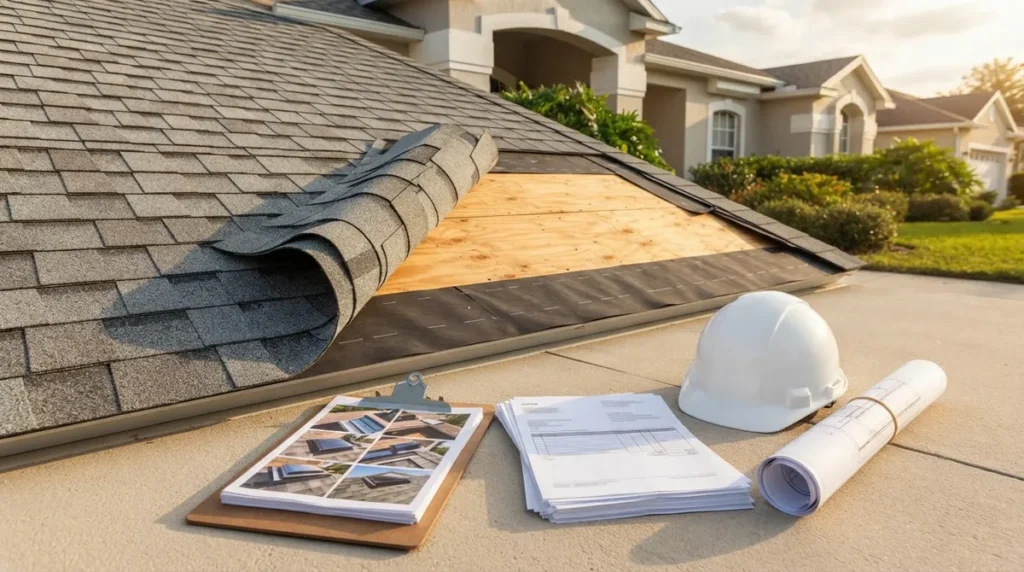
Key Takeaways
-
An after-the-fact roofing permit brings unpermitted work back into the system, but it is a request, not a guarantee; the building official decides what documentation, inspections, or corrections are required.
-
Roofing inspections are hard to satisfy after the fact because decking, underlayment, and fastening are hidden, so strong photos, invoices, product approvals, and contractor records are critical.
-
Check for open or expired permits first and confirm which jurisdiction controls the address, since city and county rules differ and a stalled permit may just need closing or reinstating.
-
Florida Statutes §553.79 requires a permit before covered work begins, and §489.127 targets unlicensed work, so the unpermitted roof may create consequences for the contractor as well as the homeowner.
-
Respond fully to every correction notice and pass all required inspections, including any exposure of concealed areas, to avoid slowing approval or triggering further code enforcement.
-
Waiting too long, relying only on an affidavit, or hiring an unlicensed roofer to fix the paperwork can make a fixable problem worse during a sale, insurance claim, or solar install.
So the roof is done, the shingles look great, and then someone mentions the word permit. Maybe a buyer's inspector flagged it. Maybe your insurance company asked for paperwork. Maybe you just bought the house and the previous owner shrugged and said, "Oh, the roof was replaced a few years ago." Take a deep breath. You are far from the first Florida property owner to land here, and there is a real path forward.
An after-the-fact roofing permit in Florida is a local building permit you apply for once roofing work has already started or finished without the required permit. It does not automatically legalize the roof. The building department still reviews your application and decides what documentation, inspections, or corrective work it needs. This guide walks you through how the process works, what to expect, what it can cost you in time and stress, and how a permitting team can carry the load. Whether you are a homeowner, a contractor cleaning up a missed permit, a realtor staring at a stalled closing, or a solar company that needs a clean roof record, you will find practical answers below.
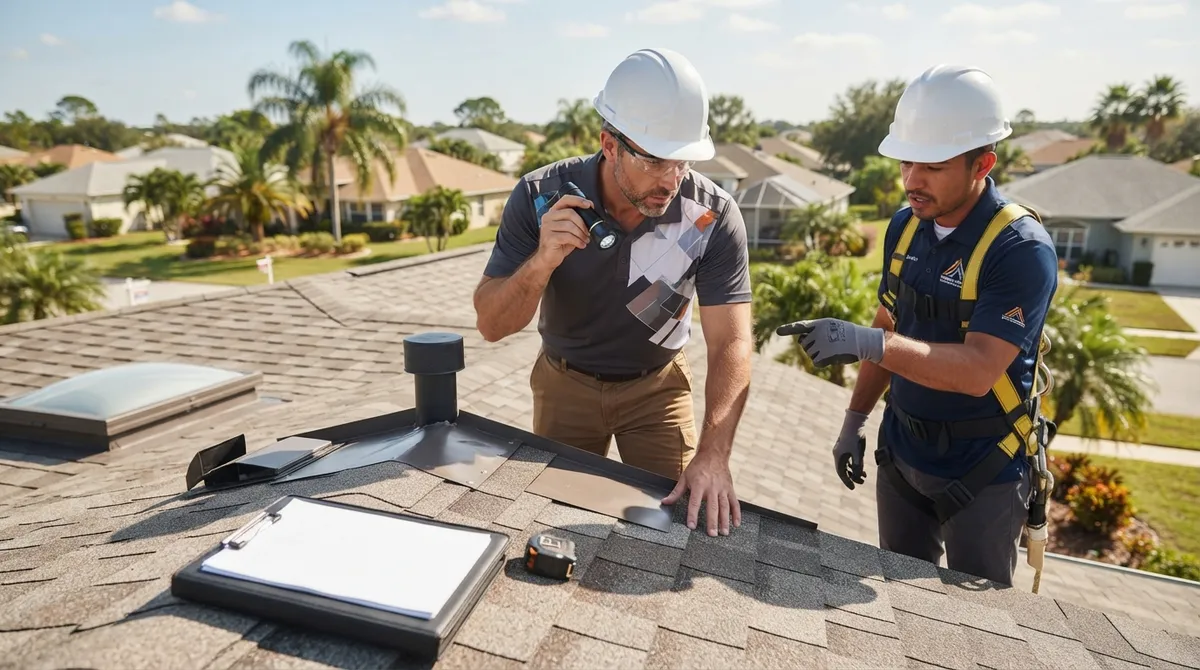
What an After-the-Fact Roofing Permit Actually Is
Florida law generally requires a permit before covered construction, alteration, or repair work begins. That requirement comes from Florida Statutes §553.79, and the day-to-day administration belongs to the local enforcing agency, meaning your county or city building department. Because of that, the exact forms, fees, and evidence requirements differ from one jurisdiction to the next.
An after-the-fact (sometimes called retroactive or "ATF") roofing permit is simply the way you bring an unpermitted roof back into the system. Think of it as asking the building official to look at what already exists and decide whether it can be verified, corrected, or must be reopened. It is a request, not a guarantee.
If you want a broader look at the concept, our guide on what after-the-fact permitting in Florida involves is a good companion read, and our after-the-fact and expired permits service page explains how we take on these files.
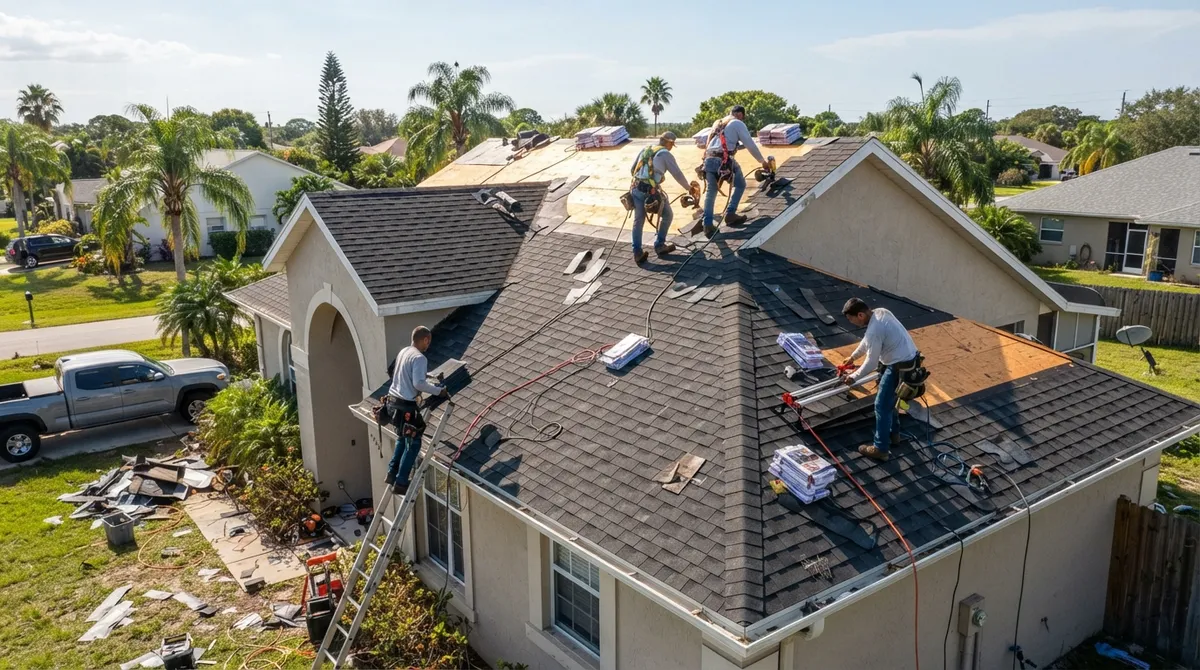
Why Roofs Go Unpermitted in the First Place
Nobody wakes up planning to skip a permit. It usually happens one of a few ways:
- A contractor promised to pull it and did not. This is the classic story, and it is why we wrote about what happens when a homeowner said they would pull the permit.
- Storm-season rush. After a hurricane, crews are overbooked and paperwork slips.
- A prior owner did the work. You inherit the problem along with the house.
- Misunderstanding the rules. Some owners assume a "repair" does not need a permit when the scope actually crosses a threshold.
- The permit expired before final inspection. The roof exists, but the paper trail ended early.
No matter how you got here, the fix starts the same way: figure out exactly which jurisdiction controls the property and what it will require.
What Florida Law Says (In Plain English)
Two statutes matter most here.
- Florida Statutes §553.79 sets the general rule that a permit is required before covered building work begins, with local agencies running the process.
- Florida Statutes §489.127 prohibits starting or performing work that requires a building permit without an effective permit. For certain violations by an unlicensed person it provides for a first-degree misdemeanor, and it allows local enforcement procedures and civil penalties in specified circumstances, including a maximum $2,000 civil penalty in the stated enforcement context.
Those consequences generally point toward whoever performed the work, particularly someone operating without proper licensing. Still, homeowners can face code enforcement notices, fines under local ordinances, and real trouble at sale or insurance time. For a deeper look, see our article on the penalty for building without a permit in Florida.
Can You Actually Get One? The Honest Answer
Usually, yes, you can apply. Whether the roof is ultimately approved depends on what can be verified. The building official decides, and the decision turns on evidence. Roofing is tricky because most of what matters (decking nailing, underlayment, flashing details, fastener patterns) gets buried once the roof covering goes on.
That is why the strongest after-the-fact applications are the ones that build a convincing record. If you are wondering whether your specific situation qualifies, our piece on getting an after-the-fact permit in Florida offers extra context.
What the Building Department Typically Asks For
Exact forms and documentation vary by jurisdiction, so always confirm with your local department before filing. In general, expect requests for the items below.
| Item | Why It Matters |
|---|---|
| Property address and parcel info | Confirms the correct jurisdiction and record |
| Scope and dates of work | Establishes what was done and when |
| Contractor name and license details | Verifies who performed the work and their authority |
| Roof covering and underlayment details | Shows the system installed (shingle, tile, metal, low-slope) |
| Product approvals / notices of acceptance | Proves materials meet Florida product approval requirements |
| Photographs and invoices | Evidence of concealed work such as decking and dry-in |
| Affidavits or contractor statements | Sworn description of installation methods |
| Engineer letter or sealed documents (if requested) | Professional verification when the official needs it |
If photos from the original job exist, dig them out. Old text threads with the roofer, material delivery receipts, and insurance claim files can all help. Our guide on gathering the documents for an after-the-fact permit goes through this in detail.
The Big Challenge: Inspecting a Roof That Is Already Covered
Here is the part that surprises most people. Inspectors normally check a roof in stages, and after the fact, those stages are gone. Depending on the jurisdiction and what can be verified, officials may accept affidavits, photographs, and records, or they may require you to open or remove portions of the roof so they can see the concealed components.
Neither outcome is guaranteed. A permit application or affidavit alone does not promise approval. The goal of your packet is to give the reviewer enough confidence that the roof meets code so that destructive exposure is limited or avoided.
Common Roofing Inspection Stages
Roofing inspections commonly check stages such as roof decking, dry-in or underlayment, certain in-progress work where fastening is concealed, and final completion. St. Lucie County, for example, describes decking, dry-in, in-progress for certain concealed fastening methods, and final inspections. That is one local example, not a statewide rule, so confirm your own jurisdiction's procedure.
| Inspection Stage | What Is Checked | After-the-Fact Reality |
|---|---|---|
| Decking | Deck attachment and condition | Hidden; may need photos, affidavit, or exposure |
| Dry-in / underlayment | Underlayment type and installation | Hidden; documentation or partial removal possible |
| In-progress | Concealed fastening methods | Often requires records or a sample opening |
| Final | Completed roof system and details | Usually visible and the easiest stage to satisfy |
You can learn more about what these visits look like in our article on what inspections Florida after-the-fact permits require.
The 25% Rule and Code Thresholds
Florida code provisions about repair and replacement thresholds can affect how much of your existing roof must meet current requirements. Hillsborough County, for instance, summarizes a rule involving 25% of a roof area or section within a 12-month period, with different treatment for systems that complied with the 2007 Florida Building Code or later editions.
Why does that matter for an after-the-fact permit? Because it influences what the reviewer expects to see. A partial re-roof on an older roof might trigger upgrades to the whole section, while a roof already built to a newer code may be treated differently. The applicable code edition and interpretation vary, so verify with your local building department. If you live in the Tampa Bay area, our Hillsborough County permitting page is a helpful starting point.
Step-by-Step: How the Process Usually Works
- Confirm the jurisdiction. City limits and county lines are not always obvious. Use our building department lookup tool to see who actually controls your address.
- Check for open or expired permits. Sometimes a permit was pulled and simply never closed. Try our open permit search first. That could change your whole strategy.
- Gather evidence. Collect photos, invoices, product approvals, contractor info, and dates of work.
- Talk to the building department. Ask how they handle after-the-fact roofing applications and what they will accept for concealed work.
- Prepare and file the application. This includes the permit application plus supporting documents, with a licensed roofing contractor of record.
- Respond to review comments. Reviewers often send correction notices. Answer each one completely.
- Complete inspections. Pass whatever inspections the official requires, which may include exposure of concealed areas.
- Close the permit. Get final approval and keep your records somewhere safe.
For a complete walkthrough, see how to get an after-the-fact roof permit in Florida in 2026.
What Does It Cost?
Costs vary widely by jurisdiction, roof size, and what the reviewer requires. Many building departments charge higher fees or penalty multipliers for work done without a permit, and any destructive testing or corrective roofing adds to the total. Because fee schedules and penalty rules differ locally, ask your department for its current figures rather than trusting a one-size-fits-all number. Our breakdown of after-the-fact permit costs in Florida explains the common cost drivers.
Who Needs This Most? Real-World Scenarios
- Homeowners: Your insurer or lender asks for roof permit proof, or a code notice shows up in the mailbox.
- General and roofing contractors: A job closed without a final, and now you need to fix the record. Our roofing contractor services and general contractor support exist for exactly this.
- Realtors and investors: A buyer's inspector spots an unpermitted re-roof days before closing. See our guide on open permits found at closing and our realtor closing support.
- Solar companies: Many jurisdictions want a verified, permitted roof before panels go on. A clean roof record keeps your install on schedule.
- Design and trade professionals: You need sealed documentation or an engineer letter to support the verification. Our engineer letter service covers this.
Common Mistakes to Avoid
- Waiting too long. Problems rarely shrink with time, and a pending sale or insurance renewal adds pressure.
- Assuming an affidavit is enough. It may help, but it is not a guarantee.
- Hiring an unlicensed roofer to "fix the paperwork." Work requiring a permit generally needs an appropriately licensed contractor.
- Throwing away old photos and receipts. Those are your best evidence.
- Filing in the wrong jurisdiction. Delays and refiling follow.
- Ignoring a correction notice. Each unanswered comment slows approval.
We cover related missteps in 13 bulk after-the-fact roofing permit mistakes, which is useful reading for contractors handling multiple roofs.
Where a Florida Permitting Service Fits In
A permitting service cannot guarantee approval. Only the building official decides that, and licensed contracting and code compliance cannot be skipped. What a good service can do is take the heavy administrative lifting off your plate and help you present the strongest possible case.
At 1 Contractor Solutions, we act as Florida's outsourced permitting department. For an after-the-fact roof, that means we help identify the correct jurisdiction, assemble the application and supporting records, coordinate with the licensed roofing contractor, and track inspections and correction notices through closeout. Because our drafting and engineering are in house and sealed by our own engineer, we can also address reviewer comments directly instead of waiting on outside consultants. We also offer permit facilitation and filing, dedicated roof permit support, and private provider plan review where it applies.
In a hurry? Our urgent permit rescue service is built for denials, stop work orders, and closings that are about to slip. If you want to see how clients describe working with us, visit us on Google — 1 Contractor Solutions and read the reviews.
Related Problems Worth Knowing About
An unpermitted roof rarely travels alone. Keep an eye out for these related issues:
- Expired roofing permits. If a permit was pulled but never finaled, you may be dealing with reinstatement instead. See how to close an expired permit in Florida and why Tampa roofing permits keep expiring.
- Insurance trouble. Unpermitted or expired permits can complicate claims, as covered in expired permits and insurance claims in Florida.
- Product approval gaps. Florida requires approved roofing products, and Miami-Dade has its own system, explained in Miami-Dade NOA vs. Florida product approval.
- Code enforcement notices. If you already received one, read code compliance violation help in Florida and consider our code compliance violations service.
Local Notes: The Rules Are Not the Same Everywhere
Florida has 67 counties and hundreds of municipalities, and each one runs its own show. A roof that sails through one office can draw extra questions in another. Our team files across the state, including Miami-Dade, Broward, Sarasota, and Orange counties. For city-specific reading, try our guides on the after-the-fact roofing permit in Tampa and the after-the-fact roofing permit in Miami.
Your Next Move
An unpermitted roof feels heavy, but it is solvable more often than people expect. Start by finding out who controls your address, checking for any open permits, and pulling together every photo and receipt you can find. Then bring in a team that handles these files every week so you are not learning the system on the fly. If you would like to see what we can do for your property, get a free quote and tell us your address and your situation. We answer around the clock, respond within 30 minutes day or night, and se habla español. You can also follow us on LinkedIn or follow us on Facebook for more Florida permitting tips. For the statutory text itself, you can read Florida Statutes §553.79 on Online Sunshine.
FAQs
Can I get an after-the-fact roofing permit in Florida?
In most cases, yes, you can apply with your local building department. Approval isn't automatic, though. The building official reviews your evidence and decides what inspections, documents, or corrections are needed, so a well-prepared application really helps.
What happens if I replaced my roof without a permit in Florida?
You may face a code enforcement notice, extra fees, and complications with insurance or a home sale. The good news is that applying for an after-the-fact permit is the usual way to bring the roof back into compliance. Reach out early, because it rarely gets easier with time.
Will the building department make me remove roofing to inspect it?
Sometimes, but not always. Depending on the jurisdiction, officials may accept photos, records, and affidavits, or they may require opening portions of the roof to check decking and underlayment. Strong documentation can reduce the chance of a destructive inspection.
Can a Florida permitting service get the after-the-fact roofing permit for me?
A permitting service can handle the heavy lifting: identifying the right jurisdiction, assembling your application and records, coordinating with a licensed roofer, and tracking inspections. What it can't do is guarantee approval, since that decision belongs to the building official. Think of it as a very experienced guide through the process.
Does Florida require a permit to repair part of a roof?
Often yes, depending on the scope and your local rules. Some jurisdictions use thresholds, such as Hillsborough County's 25% roof-area guideline within 12 months for certain older roof systems. Always confirm the exact requirement and code edition with your local building department before starting work.
We do this work every day across all 67 Florida counties. Call (866) 314-6931 and we will tell you what your situation actually requires — including when you do not need us.
Related services
Permit Facilitation & Filing
You have a crew scheduled, a client asking for dates, and a permit sitting somewhere in a queue you cannot see. We file it, w…
See the servicePlan Review Coordination
A permit in plan review is not one queue. On a commercial project it can be six queues, each with its own reviewer, its own c…
See the serviceReady to get your permit moving?
One call tells you which jurisdiction controls your project, what it will take, and what it will cost. Most of the time we can scope it on the phone.