
Blog
Code Compliance Violation Help Florida: What To Do Now
Facing a Florida code compliance violation? Learn how enforcement works, fines you could face, and how to resolve it fast.
Key Takeaways
-
After-the-fact permits can legalize unpermitted work in Florida, but require sealed plans from a design professional, documentation of existing conditions, and completion of all required inspections—the process isn't automatic and may cost more than standard permits.
-
Code enforcement fines escalate quickly: first-time violations up to $250/day, repeat violations up to $500/day, and irreparable violations up to $5,000 one-time; unpaid fines become property liens enforceable for up to 20 years under Florida law.
-
Each Florida city and county administers its own code enforcement process with different procedures and timelines; identifying the correct enforcing jurisdiction is a critical first step, and missing the correction deadline triggers escalation to a hearing.
-
Ignoring a violation notice allows the case to be referred to a code enforcement board, which can assess daily fines and record a lien against your property—responding in writing, even to request more time, prevents automatic escalation.
-
Open code violations can stall real estate closings when discovered in title searches, making buyers and lenders nervous; resolving violations before listing or having a documented resolution plan prevents closing delays.
-
Contractors face quadruple review fees (four times the standard rate) after three rejections for the same unresolved code issue under Florida Statutes §553.80, making early coordination with a qualified permitting partner critical to project timelines.
Finding a code enforcement notice tucked into your door — or worse, mailed with a hearing date attached — has a way of ruining an otherwise good day. Take a breath. You're not the first Florida property owner to deal with this, and you won't be the last. Whether you're a homeowner who inherited an old patio enclosure, a general contractor whose crew got flagged mid-project, or a real estate agent trying to save a closing, code compliance violation help in Florida is available, and the path forward is usually more manageable than it first appears.
This guide walks through how Florida's code enforcement system actually works, what your options are once you've been cited, and how a permitting partner can shoulder the heavy lifting. We'll also cover the specific concerns that matter to general contractors, solar installers, real estate professionals, homeowners, and design trade pros — because the right next step often depends on who you are and what's at stake.
What Counts as a Code Compliance Violation in Florida
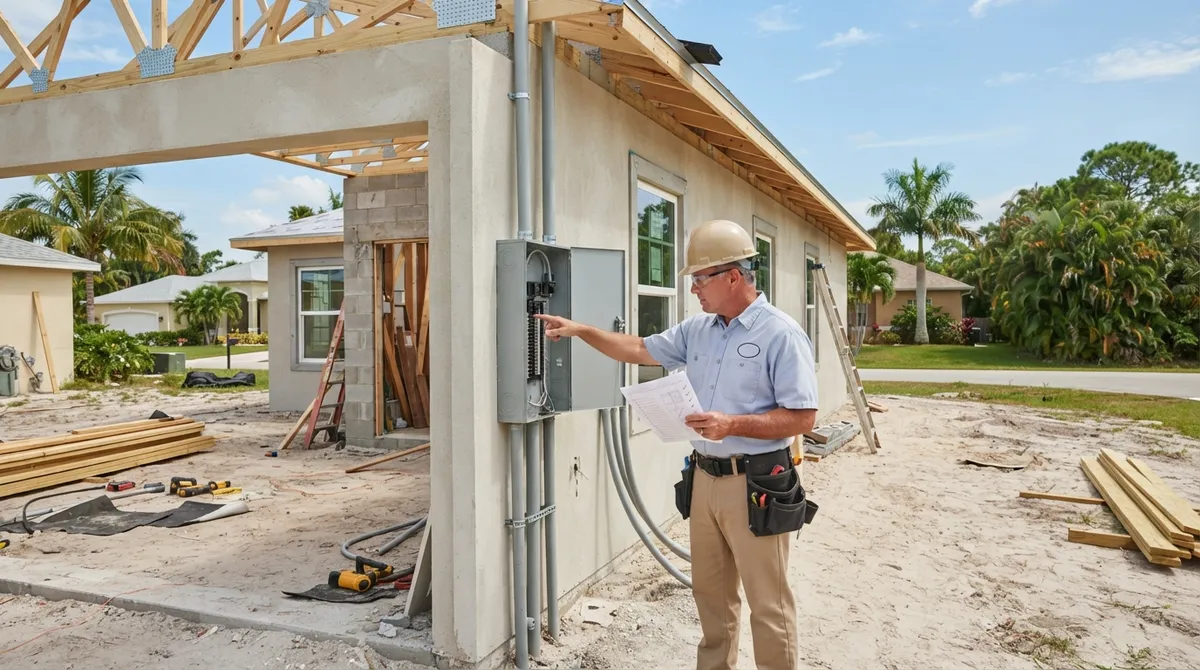
A code compliance violation is any condition or activity that doesn't meet the Florida Building Code, local zoning ordinance, or property maintenance standard. It's a broad category, and the responsible authority depends entirely on what's being cited and where the property sits.
- Unpermitted construction — additions, enclosures, garage conversions, or electrical work done without pulling a permit first
- Work that deviates from approved plans, such as a contractor building beyond what was submitted for review
- Unsafe structural, electrical, or plumbing conditions identified during an inspection or complaint
- Zoning or land-use violations, including setback issues, unauthorized commercial use, or occupancy limits
- Property maintenance violations like overgrown lots, abandoned pools, or deteriorating exteriors
- Work performed by an unlicensed or improperly registered contractor
Under Florida Statutes §553.79, most construction, alteration, repair, or demolition work requires a permit before it begins, unless a specific exemption applies. When that step gets skipped — often by a well-meaning homeowner or a contractor cutting corners — the property ends up carrying risk that can surface years later, often at the worst possible moment, like a sale or refinance.
How Florida's Code Enforcement Process Actually Works
Florida doesn't run one statewide code enforcement system. Every city and county administers its own process under the umbrella of the Local Government Code Enforcement Boards Act. That means procedures, forms, fees, and timelines vary depending on whether your property sits in Hillsborough County, Miami-Dade County, or a smaller municipality altogether.
Generally, the process follows a predictable sequence:
- A code inspector identifies a violation, either through a routine inspection, a complaint, or a permit audit tied to a sale.
- The property owner receives a notice of violation with a correction deadline, usually somewhere between 10 and 30 days depending on severity and jurisdiction.
- If the issue isn't resolved, the case gets referred to a code enforcement board or special magistrate for a hearing.
- The board can order corrective action and, if it's not taken, begin assessing daily fines.
- Unpaid fines can be recorded as a lien against the property under Florida Statutes §162.09 and §162.10.
Because every jurisdiction handles this a little differently, one of the most valuable first moves is figuring out exactly which office has authority over your case. Our building department lookup tool and open permit search tool can help you identify open issues before they escalate further.
Why Ignoring a Violation Notice Gets Expensive Fast
We get it — enforcement letters are intimidating, and it's tempting to set them aside and hope the problem resolves itself. It won't. Florida law gives code enforcement boards real teeth, and the numbers add up quickly.
| Violation Type | Maximum Daily Fine (F.S. §162.09) |
|---|---|
| First-time violation | Up to $250 per day |
| Repeat violation | Up to $500 per day |
| Irreparable or irreversible violation | Up to $5,000 (one-time) |
Those fines don't just disappear if you sell the property. A recorded code enforcement lien can attach to the land itself, and under Florida Statutes §162.10, that lien can remain enforceable for up to 20 years unless a court action is initiated within that window. In practical terms, that means an unresolved violation from years ago can still show up during a title search and stall a closing.
Can You Fix Unpermitted Work With an After-the-Fact Permit?
In most Florida jurisdictions, yes — but it's not a rubber stamp. An after-the-fact permit is the mechanism for legalizing work that was completed without proper authorization, but it comes with strings attached.
Here's generally what the process involves:
- Researching the property's permit history to understand what was (and wasn't) previously approved
- Documenting existing conditions, sometimes requiring portions of finished work to be exposed or tested
- Hiring a licensed design professional or engineer to prepare compliant plans, especially for structural or electrical scope
- Submitting the after-the-fact application along with any required fees, which are often higher than standard permit fees
- Completing every required inspection, even for work that's already built and covered
- Correcting, removing, or reconstructing anything that doesn't meet current Florida Building Code standards
This is exactly the kind of project where after-the-fact and expired permit services earn their keep. Our in-house drafting and engineering team can prepare the sealed drawings a reviewer needs without you having to chase down a separate consultant every time a comment comes back. If you want a deeper walkthrough of the process, our guide on how to legalize unpermitted work in Florida breaks down the steps in more detail.
What This Means for Different Property Stakeholders
General Contractors and Design Trade Professionals
If you're managing a job and a code violation surfaces mid-project — maybe an inspector flags unpermitted electrical from a previous owner, or a plan review keeps bouncing back for the same issue — the clock is ticking on your crew's schedule. Florida Statutes §553.80 even allows local governments to impose an additional review fee equal to four times the standard rate after the third rejection for the same unresolved code issue. That's a costly way to learn a lesson. Coordinating plan review coordination and revisions and resubmittals through a team that drafts and seals in-house means comments get resolved on the first or second pass, not the fifth.
Solar Companies
Solar installers face a unique version of this problem: structural attachment points, electrical interconnection, and roof penetrations all need to satisfy code, and a violation on the underlying structure can stall an entire interconnection approval. If a property already has an open violation, it needs to be resolved before new permitted work can move forward cleanly. Our solar contractor services are built around keeping structural and electrical documentation compliant from the first submission.
Real Estate Professionals
Few things derail a closing faster than a title search turning up an open code case or unpermitted addition. Buyers get nervous, lenders get cautious, and sellers get frustrated. If you're representing a client in Sarasota, St. Petersburg, or anywhere else in the state, getting ahead of permit history research before it becomes a closing-day emergency is worth the effort. Our realtor and closing support services exist specifically to untangle these situations quickly, and our piece on what happens when an open permit is found at closing is worth a read if you're navigating this now.
Florida Homeowners and Residential Property Owners
Maybe you bought a house with a screened porch that was never permitted, or you added a shed a decade ago without realizing it needed approval. You're not alone — this is one of the most common calls we get. The good news is that most residential violations are correctable with the right documentation and a cooperative approach with the local building department.
Steps to Take Right Now If You've Received a Violation Notice
- Read the notice carefully and note the correction deadline — missing it is what triggers escalation.
- Confirm which office issued it (city vs. county) using a jurisdiction lookup, since boundaries aren't always intuitive.
- Pull your property's permit history to understand what's actually on file versus what was built.
- Determine whether the fix requires a licensed contractor, an engineer, or simply a corrective permit application.
- Reach out to a permitting professional who can assess the violation and outline a realistic resolution timeline.
- Respond to the notice in writing, even if you need more time — silence is what gets cases referred to a hearing.
If you want a broader view of how enforcement plays out region by region, our article on fixing Orlando code violations fast is a useful companion read, and our code compliance violations service page outlines exactly how we approach these cases across the state.
What a Florida Permitting Service Can (and Can't) Do
| What We Can Help With | What Remains With Legal Counsel or the Building Department |
|---|---|
| Identifying the correct enforcing jurisdiction | Legal representation at a code enforcement hearing |
| Pulling and reviewing permit history | Final approval authority (always the building official) |
| Preparing sealed engineering and architectural plans | Waiving statutory fines outright |
| Filing after-the-fact or corrective permits | Guaranteeing a specific approval timeline |
| Coordinating inspections and reviewer comments | Providing formal legal advice |
1 Contractor Solutions has spent more than 15 years handling exactly this kind of work across all 67 Florida counties, with in-house sealed drawings that mean revisions get turned around without waiting on an outside consultant. We're a licensed private provider too, which means in many cases we can perform the plan review ourselves instead of leaving you stuck in a county queue. You can see how past clients describe working with us by visiting our 1 Contractor Solutions location on Google, and we're always happy to connect through our LinkedIn page or our Facebook community for updates on Florida permitting trends.
How Long Does It Take to Close a Code Compliance Case?
Timelines vary widely depending on the violation's complexity, the jurisdiction's backlog, and how quickly documentation gets submitted. A straightforward after-the-fact permit for a minor addition might close in a matter of weeks. A structural issue requiring engineering review, exposed inspections, and multiple resubmittals could take several months. According to the U.S. Department of Housing and Urban Development, local permitting and inspection timelines are one of the most variable factors in residential project planning nationwide, which is exactly why having someone track the case daily — rather than checking in occasionally — makes a real difference in how fast it moves.
Frequently Encountered Situations Worth Knowing About
- Buying a property with an inherited violation from a previous owner
- Discovering a permit was never closed out after work was completed years ago
- A neighbor complaint triggering an inspection that uncovers unrelated issues
- A stop-work order halting an active renovation mid-project
- Zoning conflicts surfacing after a change in property use, like a home-based business
Each of these scenarios has a workable resolution path, but the right first step differs. That's why an initial assessment matters so much before diving into paperwork.
Ready to Resolve Your Florida Code Compliance Issue?
Code enforcement notices feel overwhelming, but they're solvable problems with a clear process behind them. Whether you're dealing with an unpermitted addition in Bradenton, a stalled solar interconnection in Orlando, or a closing held up in Fort Lauderdale, getting the right people involved early saves time, money, and stress. Our team handles permit research, sealed plans, and full case tracking so you're not managing five different phone calls to five different offices. When you're ready to move forward, get a free quote and let's map out exactly what your property needs to get back into compliance.
FAQs
How do I find out whether my Florida property has an open code violation?
The quickest way is to check with the city or county building department where your property is located, since records aren't centralized statewide. We also offer an open permit search tool that can help you get a clearer picture before you start making calls.
Can I get an after-the-fact permit for unpermitted work in Florida?
In most cases, yes! An after-the-fact permit is the standard path for legalizing work that was completed without proper approval, though it may require exposing finished work, updating plans, or completing extra inspections. It's not guaranteed, but it's very often achievable with the right documentation.
What happens if I ignore a Florida code enforcement notice?
Ignoring it is the one thing you really don't want to do, since it typically leads to a hearing, daily fines that can reach $250 to $500 under Florida law, and eventually a lien recorded against your property. The good news is that responding early, even just to ask for more time, usually keeps things from escalating.
Can a code violation prevent me from selling or refinancing a Florida property?
It absolutely can, since title searches often surface open violations or unpermitted work, which can make lenders and buyers nervous. Resolving the issue before listing, or having a plan in place to address it during the transaction, keeps your closing timeline on track.
Do I need an architect, engineer, contractor, or permitting service to correct a Florida building violation?
undefined
We do this work every day across all 67 Florida counties. Call (866) 314-6931 and we will tell you what your situation actually requires — including when you do not need us.
Related services
Permit Facilitation & Filing
You have a crew scheduled, a client asking for dates, and a permit sitting somewhere in a queue you cannot see. We file it, w…
See the servicePlan Review Coordination
A permit in plan review is not one queue. On a commercial project it can be six queues, each with its own reviewer, its own c…
See the serviceReady to get your permit moving?
One call tells you which jurisdiction controls your project, what it will take, and what it will cost. Most of the time we can scope it on the phone.