
Blog
How to Resubmit After-the-Fact Plans in Florida (2026)
Learn how to resubmit after-the-fact plans in Florida: respond to comments, meet correction deadlines, and avoid common mistakes.

Key Takeaways
-
Confirm which building department has jurisdiction before revising anything, since Florida has no statewide resubmittal process and sending revisions to the wrong office wastes time.
-
Track your correction deadline immediately; for qualifying single-family deficiency notices under s. 553.792, you generally have 10 business days to submit revisions or risk denial.
-
Answer every review comment individually: quote the comment, state your fix in plain language, and reference the revised sheet number and detail.
-
Cloud every change on the plan sheets, add revision triangles or numbers, and update the title block revision date so reviewers can find edits quickly.
-
Check whether your jurisdiction wants corrected sheets only or the complete plan set, and follow its file naming and format rules exactly to avoid administrative rejection.
-
Expect after-the-fact files to need sealed plans, as-built drawings, engineer letters, and possibly opened walls for inspection, and remember that resubmitting plans does not legalize the work by itself.
So your after-the-fact permit came back with a pile of review comments, and now you are staring at a screen wondering how to resubmit plans for after the fact in Florida without making things worse. Take a breath. You are not the first person to land here, and a correction notice is not a denial of your project. It is simply the building department saying, "Almost there, but we need a few things fixed."
The tricky part is that Florida does not run one statewide process. Every city and county sets its own portal, checklist, and resubmittal format. Get one detail wrong and your plans can bounce again, or worse, your correction window can close.
In this guide, we will walk through exactly how resubmittals work for after-the-fact permits, what reviewers expect, and how to avoid the most common mistakes. Whether you are a general contractor, solar installer, realtor, or homeowner, you will leave with a clear game plan. And if you would rather hand the whole thing off, our after-the-fact and expired permit team handles these files every day.
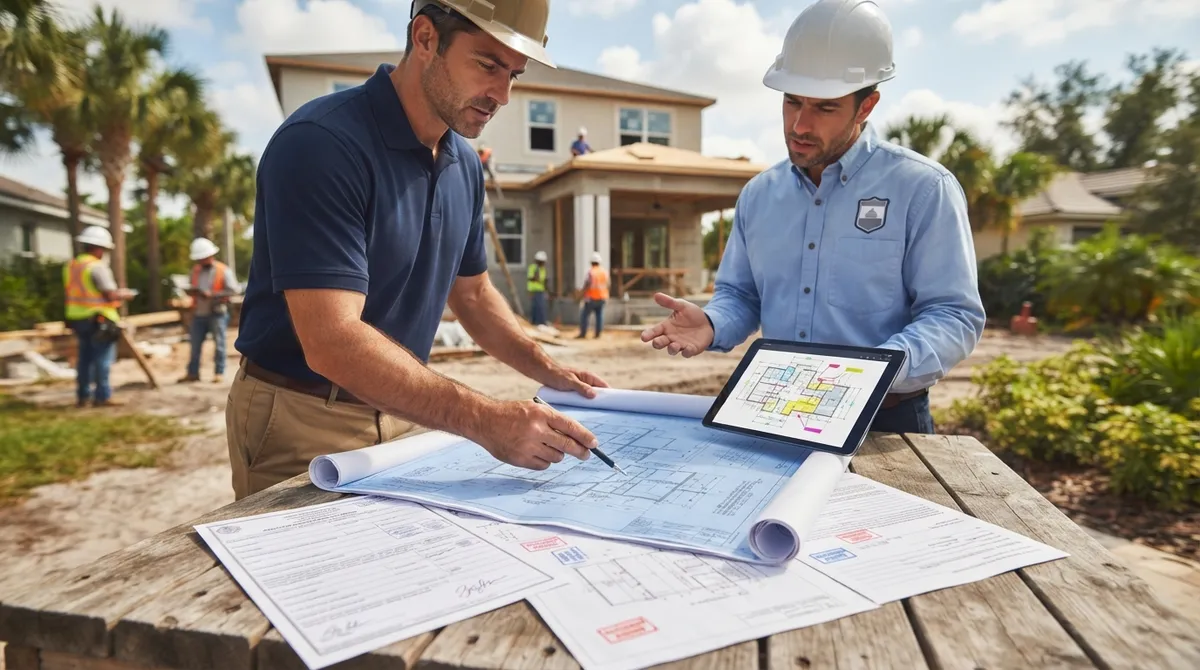
What an After-the-Fact Resubmittal Actually Is
An "after-the-fact" permit is an application for work that was started or finished without the required permit. A resubmittal is what happens after plan reviewers send comments and you respond with corrected documents.
Think of it as a conversation. You submit plans, the reviewer replies with questions or required fixes, and you answer with revised sheets and explanations. That back-and-forth continues until every discipline signs off.
Two things surprise most people:
- Submitting plans does not legalize the work or guarantee it can stay as built.
- Local rules differ widely, so what worked in one county may fail in the next.
If you want a refresher on the basics before diving in, our guide on how to get an after-the-fact permit in Florida covers the front end of the process.

Step One: Confirm Who Actually Has Jurisdiction
Before you touch a single plan sheet, confirm which building department controls your property. Properties near city lines are sometimes governed by the county, and sometimes the other way around. Sending revisions to the wrong office is a surprisingly common time-waster.
You can use our building department lookup tool to double-check, and our article on which Florida jurisdiction reviews my project explains the edge cases.
While you are at it, find out whether a code enforcement case exists. If it does, you will need the case or violation number on your paperwork, and some cities require the application to be labeled as after-the-fact.
The Step-by-Step Resubmittal Process
Here is the general sequence most Florida jurisdictions follow. Treat it as a roadmap, then confirm the specifics with your local department.
- Read every comment carefully. Sort them by discipline: building, structural, electrical, mechanical, plumbing, zoning, fire, or flood.
- Check your deadline. Some permit types have a fixed correction window. Missing it can mean denial and a brand-new application.
- Gather what you need. That may include a sealed engineer letter, product approvals, surveys, or calculations.
- Revise the plans. Update only what the comments require, and keep the existing-conditions drawings accurate.
- Write a response letter. Address each comment individually, referencing the revised sheet number.
- Upload through the designated portal. Follow the file naming and format rules exactly.
- Track the review. Watch the portal daily so you can react to any new comments quickly.
Understanding the Correction Window
Timing matters more than most applicants realize. Under Florida Statutes section 553.79 and related provisions such as section 553.792, certain existing single-family residential applications get a defined correction period after a timely written deficiency notice.
| Situation | Typical Timing | What Happens If Missed |
|---|---|---|
| Qualifying single-family deficiency notice (s. 553.792) | 10 business days to submit revisions | Application may be denied; new application required |
| Agency review after qualifying revisions | Generally 10 business days to approve or deny | Longer only if applicant agrees in writing |
| Other permit types and projects | Varies by jurisdiction and project value | Depends on local policy |
Applicability depends on the permit category and statutory conditions, so always confirm with your building department which clock you are on.
How to Respond to Each Review Comment
A strong response letter is your best friend. Reviewers read dozens of these, and clear, organized answers get approved faster.
Here is what a good response looks like:
- Quote the comment exactly as written.
- State your answer in plain language.
- Point to the fix by sheet number and detail reference.
- Attach support such as calculations or product approvals when relevant.
On the plan sheets themselves, cloud every change, add a revision triangle or number, and update the revision date in the title block. That way the reviewer can find your edits in seconds instead of hunting through the whole set.
If a comment confuses you, do not guess. Call the reviewer or the permit technician and ask what they need. A two-minute phone call can save you a two-week review cycle.
Do You Resubmit the Whole Set or Just the Corrected Sheets?
This is one of the most common questions we hear, and the honest answer is: it depends on the jurisdiction.
| Approach | When It Is Usually Required | Tip |
|---|---|---|
| Corrected sheets only | Many portals accept revised sheets per discipline | Keep sheet numbers consistent so they replace the originals |
| Complete plan set | Some departments want the full set each round | Include every sheet, even the unchanged ones |
| Separate uploads by discipline | Common with electronic review systems | Label files clearly, such as "Structural Rev 1" |
Whatever the rule, follow it to the letter. Uploading the wrong format is one of the quickest ways to trigger an administrative rejection.
What Documents Reviewers Commonly Ask For
After-the-fact files tend to need more supporting paperwork than a standard permit because the work already exists. Depending on the scope, expect requests for:
- Signed and sealed plans from a Florida-licensed design professional
- Structural calculations or an engineer letter verifying existing construction
- Product approvals for windows, doors, roofing, or tie-downs
- As-built drawings showing conditions exactly as they exist
- A current survey or site plan
- Contractor licensing and insurance information
Our team prepares as-built drawings and engineer letters in house, with sealed documents from our own engineer, which helps resubmittals move quickly when a reviewer asks for something specific.
Inspections and Concealed Work
Here is where after-the-fact permits differ most from regular ones. Because the work is already built, the building official may need to verify what you cannot see.
That can mean:
- Opening a wall or ceiling to expose wiring, framing, or plumbing
- Photographs or field verification by an engineer
- Additional inspections beyond the standard sequence
- Corrective work if something does not meet code
It sounds intimidating, but most files resolve with documentation and a smart inspection plan. Our article on what happens during a Florida ATF site inspection walks through what to expect on the day.
Fees, Timelines, and What to Budget
After-the-fact fees are a local policy, not a statewide rule. Some jurisdictions charge doubled permit fees, and some require a licensed contractor to pull the permit. Pembroke Pines, for example, states that its after-the-fact permits are subject to double fees.
Review timelines also vary. Miami-Dade reports initial reviews and reworks can take roughly 24 hours to 10 business days depending on permit type and complexity, while Orlando publishes different timelines by project category, including 5 business days for certain small existing single-family projects. These are local figures, not guarantees.
For a deeper look at budgeting, see our breakdown of after-the-fact permit costs in Florida.
Common Resubmittal Mistakes to Avoid
After handling thousands of permits, we see the same missteps repeat. Dodge these and you are already ahead of the pack.
- Ignoring the deadline. A missed correction window can reset the entire application.
- Answering only some comments. Every single comment needs a response, even the small ones.
- Forgetting the violation number. Some cities will not process the file without it.
- Submitting unsealed documents when a Florida-licensed professional seal is required.
- Changing unrelated parts of the plans, which can trigger a brand-new round of review.
- Uploading to the wrong portal or discipline folder.
If your permit was flat-out rejected rather than just commented on, our guide on why a building permit gets rejected will help you diagnose the problem.
Who Should Handle Your Resubmittal?
Different readers need different levels of support, so here is a quick way to think about it.
| If You Are A... | Biggest Challenge | Best Move |
|---|---|---|
| General contractor | Juggling many jurisdictions and portals | Outsource filing and tracking so crews stay scheduled |
| Solar company | Structural and electrical documentation | Use code-compliant, sealed packages from the start |
| Realtor or investor | Closing deadlines and permit holds | Get a fast permitting research and legalization plan |
| Homeowner | Technical jargon and unclear comments | Have a pro translate comments and prepare the response |
We work with general contractors, solar contractors, realtors, and homeowners across all 67 Florida counties. Our revisions and resubmittals service is built for exactly this stage of the process.
What If a Stop Work Order or Code Case Is Involved?
If code enforcement is already in the picture, timing gets more urgent. You may need to pause work, respond to the case, and move the permit forward at the same time.
Do not panic, and do not ignore the notice. Resolving the permit is usually how the case gets closed. For hands-on help, see our code compliance violations service or our urgent permit rescue option when a closing or crew schedule is on the line.
Why Work With a Local Permitting Team
At 1 Contractor Solutions, we act as Florida's outsourced permitting department. We are not a construction contractor. We prepare or review the plans, file, track, work every reviewer comment, and carry the permit through approval and closeout. Because our drafting and engineering are in house, a reviewer comment gets fixed by our own team instead of waiting on an outside consultant to call back.
If you have questions about how a particular jurisdiction handles resubmittals, you can also browse our Florida county pages or read what past clients say in our 1 Contractor Solutions reviews on Google. You can also follow us on LinkedIn for permitting updates.
Ready to Get Your Plans Approved?
Resubmitting after-the-fact plans in Florida comes down to a few habits: confirm jurisdiction, respect the deadline, answer every comment, document existing conditions honestly, and follow the local upload rules. Do those well and most files move to approval smoothly.
If you would rather skip the guesswork, we are happy to help. We respond within 30 minutes, day or night, and se habla español. Reach out to get a free quote and let us take the permit off your plate so your project can keep moving.
FAQs
How do I resubmit plans for after the fact in Florida?
Start by reading every review comment, then revise your plans and write a response letter that addresses each one. Upload the corrected documents through your jurisdiction's designated portal or process, following its rules on file format and sheet identification. Because every Florida building department sets its own procedure, confirm the details with your local office first.
Do I need to resubmit the entire plan set or only the corrected sheets?
It depends on your jurisdiction. Some departments accept only the corrected sheets for each discipline, while others want the complete set every round. Check the local resubmittal instructions, and when in doubt, ask the permit technician before you upload.
How long do I have to respond to plan review comments?
For certain existing single-family residential permits under Florida Statutes section 553.792, you generally have 10 business days after a timely written deficiency notice to submit revisions. Other permit types vary by jurisdiction, so confirm your deadline right away. Missing it can lead to denial and a new application.
Can the building department make me open walls to inspect completed work?
Yes, it is possible. If work is concealed, the building official may require exposure, field verification, or other proof before approving the permit. A well-prepared engineer letter and photo documentation can often reduce how much needs to be opened.
Does resubmitting plans mean my unpermitted work is legal?
Not by itself. Submitting plans starts the process, but the work is only legalized once the permit is approved and passes required inspections. Corrections may be required if anything does not meet code.
We do this work every day across all 67 Florida counties. Call (866) 314-6931 and we will tell you what your situation actually requires — including when you do not need us.
Related services
Permit Facilitation & Filing
You have a crew scheduled, a client asking for dates, and a permit sitting somewhere in a queue you cannot see. We file it, w…
See the servicePlan Review Coordination
A permit in plan review is not one queue. On a commercial project it can be six queues, each with its own reviewer, its own c…
See the serviceReady to get your permit moving?
One call tells you which jurisdiction controls your project, what it will take, and what it will cost. Most of the time we can scope it on the phone.