
Blog
13 Bulk After-the-Fact Roofing Permit Mistakes FL
Avoid these 13 mistakes when coordinating bulk after-the-fact roofing permits across Florida's varied county and city requirements.
Key Takeaways
-
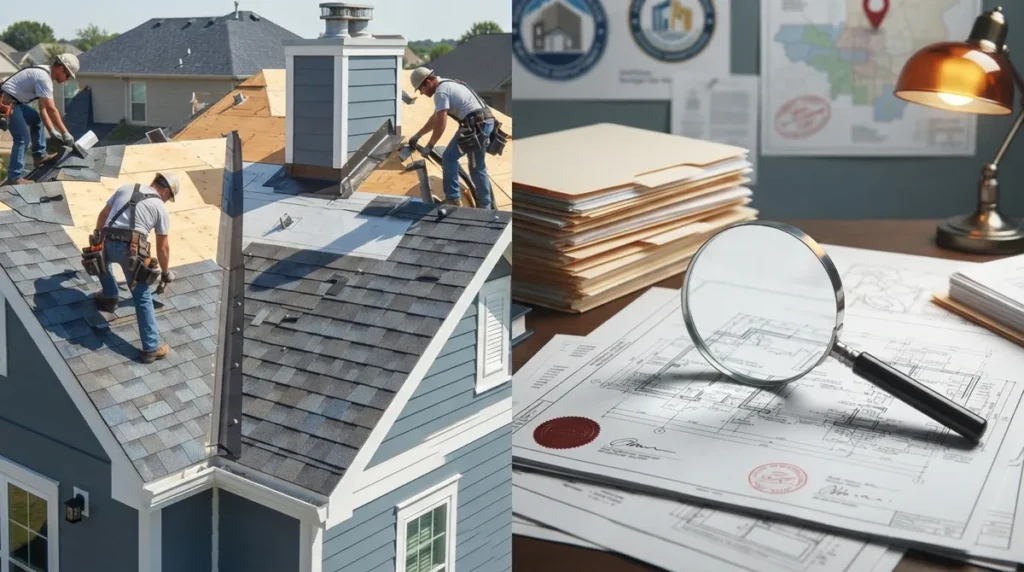
Florida has no statewide bulk permit process; requirements vary significantly by city and county, so treating all properties identically across jurisdictions will result in rejected applications.
-
After-the-fact roofing permit fees are often double the standard fee in many Florida counties, so factor this multiplier into budget projections early when managing bulk portfolios across multiple properties.
-
Concealed roofing work frequently requires third-party engineering analysis and sealed evaluations, particularly when fasteners or flashing details cannot be visually confirmed after installation.
-
Each Florida jurisdiction has different inspection requirements, thresholds, and documentation checklists; verify specific rules with the relevant building department before submission rather than after rejection.
-
Property owner authorization documents must match the exact legal entity on title records; inconsistent paperwork is a primary cause of application rejections in bulk permitting projects.
-
Centralized tracking systems across multiple counties are essential to prevent missed reviewer comments, expired application windows, and forgotten inspections when managing bulk portfolios.
If you're managing a portfolio of properties and you've discovered a stack of roofs replaced without permits, take a breath. You're not the first, and you're definitely not alone. Every month, roofing contractors, property managers, and investors across Florida find themselves staring at the same problem: roof work is done, tenants are happy, but the paperwork trail is nonexistent. Coordinating after the fact expired permits for one house is a project. Doing it for a dozen properties across multiple counties? That's a whole different animal, and it's where most people trip up.
This guide walks through the mistakes that turn a manageable bulk permitting project into a months-long headache. Whether you're a general contractor cleaning up a subcontractor's mess, a solar company that inherited a roof compliance gap, a realtor trying to close deals, or a homeowner who just found out three outbuildings were never permitted, these are the pitfalls to avoid. We'll also cover what Florida law actually says, what local building departments tend to require, and how a coordinated approach can save you real time and money.
1. Assuming There's One Statewide Bulk Permit Process
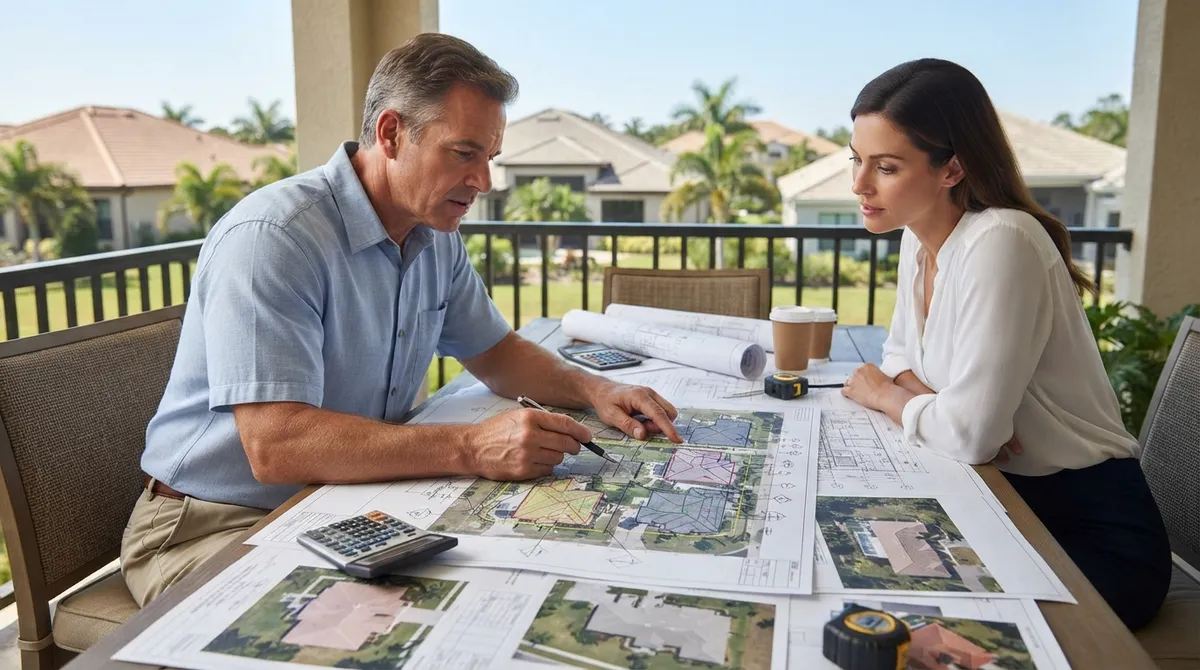
The biggest mistake people make is assuming Florida has a single, standardized system for bulk after-the-fact roofing permits. It doesn't. Requirements and workflows vary by city and county, and there is no uniform statewide bulk application process. What works in Tampa may look completely different in Miami or Fort Lauderdale. Treating every property the same way, regardless of jurisdiction, is a fast track to rejected applications.
2. Ignoring the Legal Backbone Behind the Requirement
Florida Statutes §489.127 identifies performing work without a required permit as prohibited contractor conduct, and §553.79 governs how building permits are administered and enforced. These aren't suggestions. If your portfolio includes unpermitted roofing work, the law already assumes you need to fix it. Understanding this framework helps you explain the process to property owners, tenants, or business partners who might otherwise push back on the extra paperwork and cost.
3. Forgetting That Approval Isn't Automatic
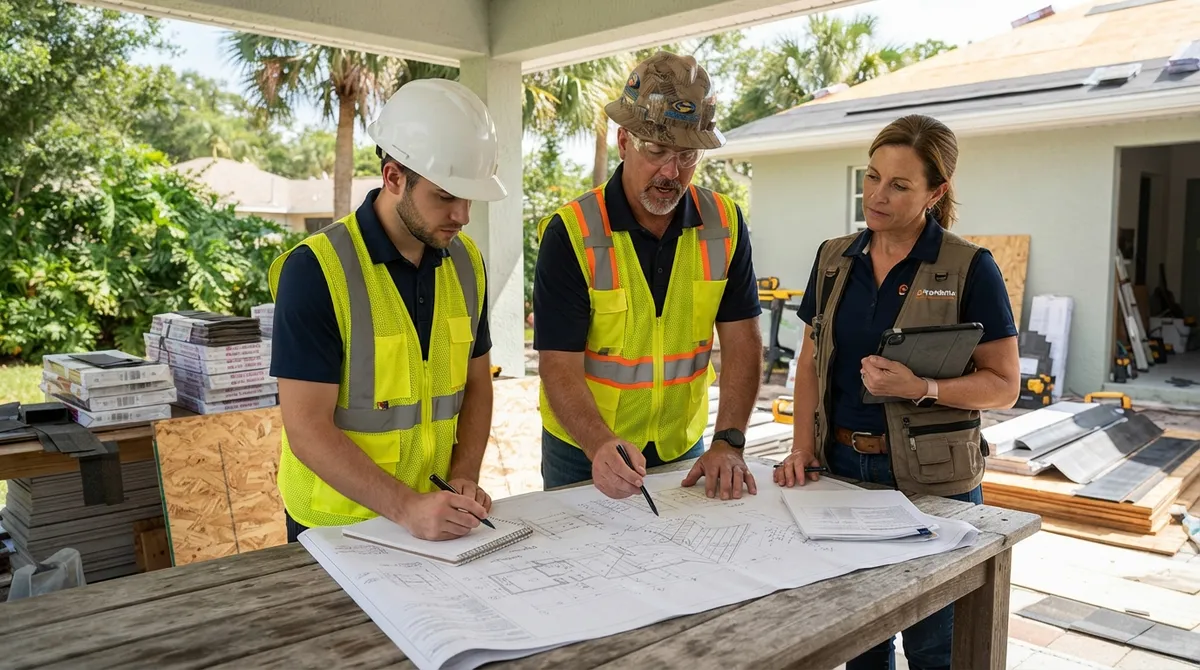
Some people assume that once they submit the paperwork, the permit basically rubber-stamps itself. It doesn't work that way. The local building department may require a full application, contractor and property details, scope and cost of the work, roofing-system specifications, product approvals, affidavits, and inspections. Depending on roof type, building age, and local rules, they might ask for even more. Going in with a "just get it done" mentality, instead of a documentation-first mindset, slows everything down.
What Documentation Usually Gets Requested
- Contractor license and property ownership verification
- Detailed scope of work and total project cost
- Roofing system type and manufacturer product approvals
- Signed affidavits confirming the work performed
- Photos or evidence of the completed roofing system
- Engineering reports when work areas were concealed
4. Not Planning for Concealed Work Complications
Roofing is tricky because so much of the work gets covered up almost immediately. St. Lucie County, for example, notes that a third-party engineering analysis may be required when work areas are concealed. The authority having jurisdiction ultimately decides what evidence or corrective work will be accepted. If you're managing bulk permits and several roofs already have shingles or membrane fully installed, don't be surprised if an engineer needs to get involved for at least a portion of them. Our engineering team regularly steps in for exactly this kind of situation, providing sealed evaluations when hidden fasteners or flashing details can't be visually confirmed.
5. Overlooking Inspection Stage Differences
Not every county inspects roofs the same way. St. Lucie County describes a final inspection requirement for all roof and reroof permits, plus in-progress inspections for systems with hidden fasteners. Collier County, on the other hand, requires a reroof affidavit on site for specified dry-in and flashing inspections. If you're batching permits across several counties, you need a system that tracks which inspection rules apply where, or you'll miss steps and delay closeout.
| County/City | Notable Requirement | Source |
|---|---|---|
| St. Lucie County | Permit required if reroof exceeds 25% of roof area within 12 months; final inspection required for all reroofs | St. Lucie County Building FAQ / SOP |
| Collier County | Reroof affidavit required on site for certain dry-in/flashing inspections | Collier County guidance |
| Tampa | Permit required for roofing work exceeding 500 square feet | City of Tampa Roofing Permit Requirements |
6. Assuming Permit Thresholds Are the Same Everywhere
This is a subtle one, but it trips up a lot of bulk applicants. St. Lucie County's published guidance says a permit is required for reroof work exceeding 25% of the existing roof area within a 12-month period, while Tampa's published guidance describes a permit requirement for roofing work exceeding 500 square feet. These thresholds are not universal across Florida. Always confirm the current rule with the relevant building department before assuming a property falls under or over the line. Our building department lookup tool can help you identify which office actually has jurisdiction over each address.
7. Underestimating the After-the-Fact Fee Multiplier
Here's a number that surprises a lot of property owners: St. Lucie County states that its after-the-fact permit fee is double the standard fee. That's a local example, not a statewide rule, but it illustrates a pattern you'll see in many jurisdictions — retroactive permits often cost more than they would have if pulled up front. When you're budgeting for a bulk cleanup across ten, twenty, or fifty properties, that fee multiplier adds up fast. Factor it into your cost projections early so there are no surprises for ownership groups or investors.
8. Treating Every Property Owner Authorization the Same
When you're coordinating permits across a portfolio, you're likely dealing with different ownership structures — LLCs, trusts, individual owners, or even out-of-state investors. Each authorization document needs to match the actual owner of record, and inconsistent paperwork is one of the fastest ways to get an application bounced back. Organizing owner and contractor authorizations consistently, before submission, is a step that's easy to skip when you're moving fast.
Steps to Keep Authorizations Clean
- Verify the legal owner of record for each property through county appraiser records
- Match authorization letters to the exact entity name on title
- Confirm the contractor of record's license status and standing
- Keep a centralized tracking sheet for every property's authorization status
9. Skipping a Jurisdiction-by-Jurisdiction Requirement Check
It's tempting to build one application template and reuse it everywhere. Resist that urge. Each city or county building department may have its own checklist, fee schedule, and documentation expectations. A property in St. Petersburg might need something entirely different from one in Orlando or Jacksonville. Reviewing each jurisdiction's specific requirements before submission — rather than after a rejection — saves weeks of back-and-forth.
10. Not Tracking Reviews and Inspections Centrally
When you're only dealing with one property, it's easy to keep tabs on where things stand. Multiply that by a dozen or more properties across several counties, and manual tracking becomes a liability. Missed reviewer comments, expired application windows, and forgotten inspection scheduling are common outcomes when there's no centralized system. This is exactly the kind of coordination gap that plan review coordination services are built to solve.
11. Forgetting to Report Unresolved Violations Proactively
Some property owners hope that if they quietly submit an after-the-fact application, any existing code violation will simply disappear from the record. That's not how it typically works. Building departments generally expect any outstanding violations to be addressed as part of the process, not glossed over. Proactively reporting and resolving these issues, rather than hoping they go unnoticed, keeps your bulk project moving instead of stalling in a compliance review queue. Our code compliance violations team frequently works alongside after-the-fact permit filings for exactly this reason.
12. Hiring Someone Who Oversteps Their Role
A permit expediter or permitting service should never represent itself as the licensed contractor of record, and it should never guarantee approval. That's not how the system works, and any company promising a guaranteed yes should raise a red flag. A licensed contractor still needs to meet applicable Florida and local licensing requirements, and the building department — not the expediter — makes the final call. Working with a team that understands and respects that boundary protects you legally and keeps your project credible with reviewers.
13. Going It Alone Instead of Using In-House Engineering Support
Bulk after-the-fact roofing permit projects often hit a wall when engineering evidence is required and there's no in-house engineer to turn to. Waiting on an outside consultant to return a call, revise a report, or resubmit a stamped document can add weeks to every single property in your portfolio. Having sealed drawings and engineering support under one roof means comments get addressed immediately instead of sitting in someone else's inbox. This is one of the reasons 1 Contractor Solutions built its plans and engineering department in-house, so reviewer feedback on a roofing permit doesn't require a third party to weigh in before work can continue.
How Bulk Coordination Actually Helps
A Florida permitting service can add real value to a portfolio project by inventorying every property, checking jurisdiction-specific requirements for each one, organizing owner and contractor authorizations, preparing consistent application packages, tracking reviews and inspections across counties, and reporting unresolved violations before they become bigger problems. That's a lot of moving pieces, but when it's coordinated properly, a project that could take a year drags a lot less.
| Bulk Coordination Task | Why It Matters |
|---|---|
| Property inventory and jurisdiction mapping | Prevents applying the wrong local rules to the wrong property |
| Authorization document standardization | Reduces rejected applications due to ownership mismatches |
| Centralized review and inspection tracking | Keeps reviewer comments from slipping through the cracks |
| Engineering support for concealed work | Speeds up approval when visual inspection isn't enough |
| Violation resolution reporting | Keeps the application moving instead of stalling in enforcement |
Who This Matters Most For
General contractors managing multiple job sites often inherit unpermitted roofing work from prior subcontractors, and getting it resolved before final inspections protects the GC's license standing. Solar companies frequently discover that a roof needs after-the-fact permitting before a solar array can be legally installed on top of it, since roof integrity documentation often factors into structural approval. Realtors and investors run into this constantly during due diligence, when an open permit found at closing threatens to derail a sale. And homeowners who bought a property with prior unpermitted roofing work, or who did the work themselves years ago without realizing the requirement, need a clear path forward that doesn't involve tearing anything out.
If you're a property manager or investor with a portfolio spread across counties like Lee, Collier, or Palm Beach, the coordination challenge multiplies with every additional building department involved. Working with a team that already understands the local nuances in each of Florida's 67 counties means you're not reinventing the wheel every time you cross a county line.
A Quick Word on Timelines and Costs
No statewide bulk-permit fee, standard processing time, or uniform after-the-fact penalty amount currently exists across Florida. Fees, timelines, and penalty structures should always be verified with each local building department before you finalize your budget. If you want a general sense of what individual after-the-fact permits tend to cost, our breakdown on after the fact permit Florida cost is a good starting point, and it applies just as much when you're scaling that cost across multiple properties.
Getting Your Portfolio Back in Compliance
Bulk after-the-fact roofing permits aren't impossible to manage, they just require the right structure from day one. Avoid the thirteen mistakes above, build a jurisdiction-by-jurisdiction checklist, keep your documentation consistent, and lean on engineering support when concealed work demands it. 1 Contractor Solutions has coordinated permit portfolios across all 67 Florida counties, filed in more than 400 municipalities, and handled over 5,000 permits and projects with our in-house drafting and engineering team. You can follow us on LinkedIn or follow us on Facebook for regular updates on Florida permitting changes, and you can also visit us on Google — 1 Contractor Solutions to see how other Florida contractors and property owners have worked with our team.
If you're staring down a stack of roofs that need to get legalized, don't try to untangle it property by property on your own. Reach out and get a free quote so we can map out exactly what your portfolio needs, county by county, and get you moving toward approval.
FAQs
Can I get an after-the-fact roofing permit in Florida?
Yes, in most cases you can, though it isn't automatic. The local building department will typically want an application, scope details, product approvals, and possibly an inspection or engineering report before approving retroactive work.
Can one company handle after-the-fact roofing permits for multiple properties?
Absolutely, and that's really the heart of bulk permitting help. A coordinated team can inventory your properties, check each jurisdiction's specific rules, and track every application so nothing falls through the cracks across your whole portfolio.
What happens if a roof was replaced without a permit in Florida?
Florida law treats unpermitted work as a violation, so the building department will generally require you to file an after-the-fact permit application. Depending on the county, this can come with a higher fee, additional inspections, or even an engineering evaluation if parts of the work are concealed.
Will the building department require an inspection if the roof is already finished?
Very likely, yes. Many counties, like St. Lucie, require a final inspection for reroof permits even after the fact, and some hidden-fastener systems may need extra scrutiny since the original in-progress inspection was missed.
How much do after-the-fact roofing permits and penalties cost in Florida?
It really depends on where the property sits, since there's no statewide fee schedule. Some counties, like St. Lucie, double the standard permit fee for after-the-fact applications, so it's worth checking with the specific local building department for your properties before budgeting.
We do this work every day across all 67 Florida counties. Call (866) 314-6931 and we will tell you what your situation actually requires — including when you do not need us.
Related services
Permit Facilitation & Filing
You have a crew scheduled, a client asking for dates, and a permit sitting somewhere in a queue you cannot see. We file it, w…
See the servicePlan Review Coordination
A permit in plan review is not one queue. On a commercial project it can be six queues, each with its own reviewer, its own c…
See the serviceReady to get your permit moving?
One call tells you which jurisdiction controls your project, what it will take, and what it will cost. Most of the time we can scope it on the phone.