
Blog
How to Get an After-the-Fact Roof Permit in Florida (2026)
Can roofers get after-the-fact permits in Florida? Yes, usually. Learn the 7 steps, costs, and documents needed to legalize an unpermitted roof.
Key Takeaways
-
Yes, licensed Florida roofers can generally apply for after-the-fact permits, but the local building official decides approval, and corrections or reinspections may still be required.
-
Florida has no statewide after-the-fact roofing permit form; each city and county sets its own application steps, documentation, fees, and inspection requirements.
-
Stop all work immediately when an unpermitted roof is discovered, since continuing can trigger citations (Hillsborough County cites up to $500 per violation).
-
Confirm the correct building department first, including whether the property is in city or unincorporated county territory, to avoid wasting weeks on a wrong filing.
-
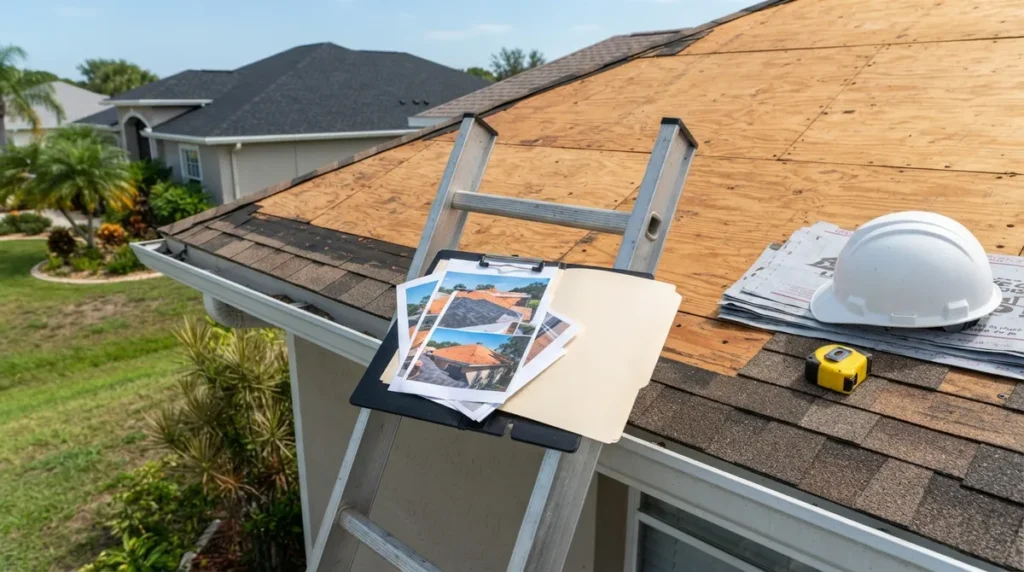
Build a strong documentation package with dated photos, product approvals (NOA or Florida Product Approval), installation details, and receipts, since strong photos can reduce the need to expose finished roofing.
-
Expect possible roof exposure, corrections, and penalty or investigation fees; a closed permit protects owners at resale, supports insurance claims, and keeps lenders satisfied.
Picture this: your crew wrapped up a roof replacement last month, the homeowner is thrilled, and then someone mentions the permit was never pulled. Maybe it slipped through the cracks. Maybe a prior owner skipped it. Maybe a storm-season rush made paperwork the first casualty. Whatever happened, take a breath. You are far from the first roofer to land here, and there is a path forward.
So, can roofers get after the fact permits in Florida? Generally, yes. A licensed roofer can help apply for one. But here is the honest part: the permit does not magically erase the problem. The local building department still has to review the work, verify code compliance, and approve inspections before anything is closed out.
This guide walks you through the process step by step, from stopping work to getting final approval. Whether you are a roofing contractor, a general contractor, a realtor with a closing on the line, or a homeowner who just learned your roof was never permitted, you will find a clear roadmap below.
Can Roofers Get After-the-Fact Permits in Florida?
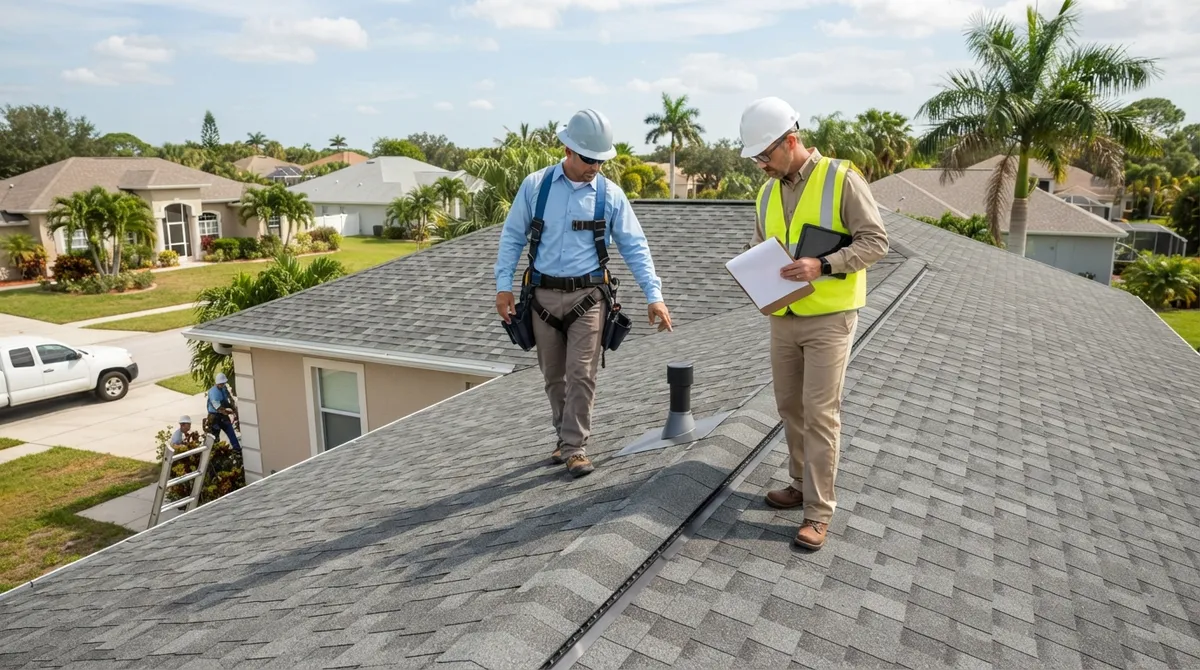
Yes, in most jurisdictions a licensed roofer can help obtain an after-the-fact permit, but approval is never guaranteed. Florida Statutes §553.79 generally requires a permit before covered construction, alteration, or repair begins. The local enforcing agency, meaning your city or county building department, administers the process when work has already started or finished.
That last point matters. Florida has no single statewide after-the-fact roofing permit form or uniform checklist. Each city and county sets its own application steps, documentation, fees, and inspection requirements. What works in one county may not fly in the next.
Here is the quick version of what is true statewide:
- A roofer can usually apply, but the building official decides whether to approve.
- The application does not waive code requirements.
- Corrections, reinspections, and final approval may still be required.
- Fees, citations, and enforcement vary by jurisdiction.
If you want a deeper look at how this works across the state, our guide on how to fix a roofer after-the-fact permit in Florida covers common scenarios roofers run into.
Step 1: Stop Work and Confirm the Situation
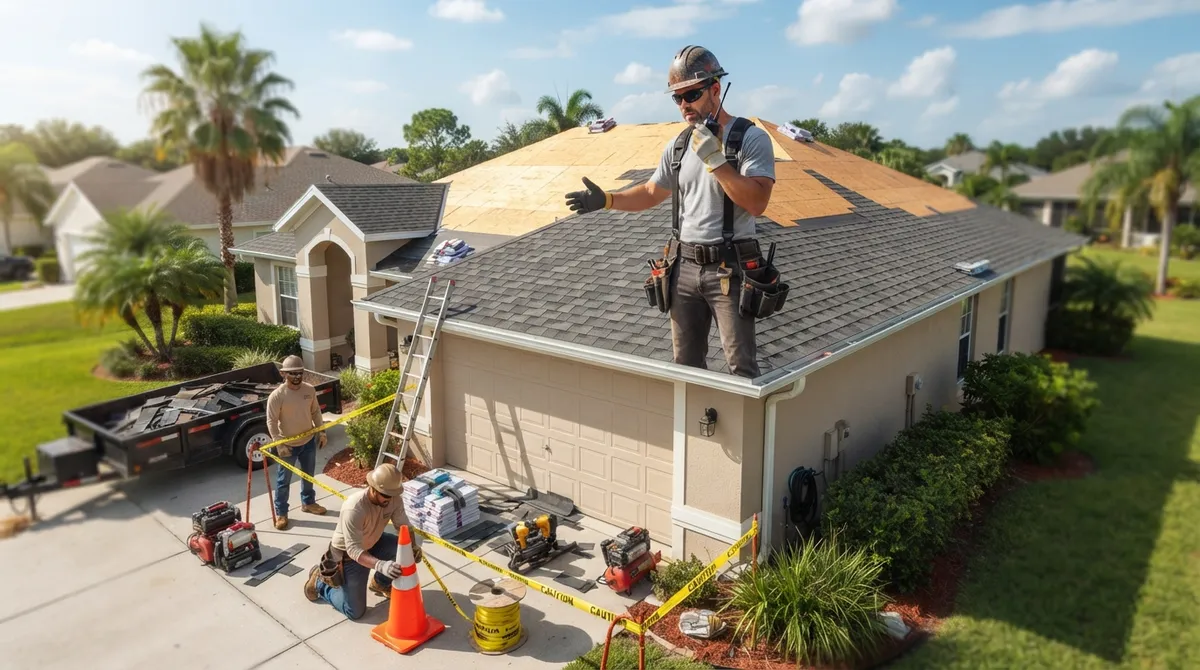
If any part of the roof is still in progress, pause right now. Continuing to work without a required permit can make a bad situation worse. Hillsborough County, for example, advises that work started without a required permit should stop while the owner contacts the county about an after-the-fact permit, and warns that continued work may lead to a citation of up to $500 per violation.
Before you do anything else, gather the basics:
- The property address and parcel number.
- The date work started and finished (or the current status).
- The scope: tear-off or overlay, roof type, square footage, and any decking repairs.
- The roofing products installed, including manufacturer and product approval details.
- Contractor license information for whoever performed the work.
- Any contracts, invoices, material receipts, and dated photographs.
That paper trail becomes your best friend later. Building officials want evidence, and the more you can document, the smoother things tend to go.
Step 2: Identify the Correct Building Department
This sounds obvious, but it trips people up constantly. A property with a city mailing address may actually sit in unincorporated county territory, and the reverse happens too. Submitting to the wrong office wastes weeks.
You can confirm jurisdiction using our building department lookup tool. If your project sits near a city line, double-check before you file anything. For more on why this trips so many people up, see which Florida jurisdiction reviews my project.
It is also smart to run an open permit search on the address. You may discover a prior permit that was opened but never closed, which changes your strategy completely. An expired or open permit is a different animal than no permit at all, and our page on after-the-fact and expired permits explains the difference.
Step 3: Verify Who Is Legally Allowed to Apply
Not everyone can sign the application. A contractor applying for or completing permitted roofing work must hold the appropriate active Florida license. Florida Statutes §489.127 identifies performing work that requires a permit without an effective permit as prohibited contractor conduct, and unlicensed work can trigger additional enforcement concerns.
Here is a quick breakdown of who can do what:
| Applicant | Can Typically Apply? | Key Considerations |
|---|---|---|
| Licensed roofing contractor | Usually yes | Must hold an active license and meet local registration rules |
| Licensed general contractor | Often yes | License scope and local registration must cover roofing |
| Homeowner (owner-builder) | Sometimes | Limited exemptions; primary residence and disclosure rules apply |
| Unlicensed worker or company | No | Faces enforcement exposure; owner may need a licensed contractor to resolve |
One caution for roofers: do not assume an owner-builder exemption covers contractor-performed work. Hillsborough County describes owner permits for eligible homeowners with primary-residence and disclosure requirements, but that does not turn a contractor's completed job into an exempt one. If you need to confirm your standing, our resources on who can pull a permit in Florida and Florida contractor municipality registration are worth a read.
Step 4: Build Your After-the-Fact Documentation Package
Think of this as your case file. The building official has to be convinced the roof meets code, and since they did not witness the installation, your documentation does the talking.
Requirements vary, but officials commonly ask for some combination of the following:
- A completed permit application describing the scope of work.
- Contractor license details and proof of insurance.
- Roofing product approvals for the materials installed (a Miami-Dade NOA or Florida Product Approval, depending on location).
- Installation information such as fastening patterns, underlayment type, and flashing details.
- Dated photographs showing the roof before, during, and after work.
- Material receipts and manufacturer installation data.
- Sometimes an engineer letter or sealed drawings when the work is complex or cannot be easily verified.
When a roof involves structural repairs, truss modifications, or unusual decking, a sealed engineering document can be the difference between a quick approval and a long back-and-forth. We cover that in more detail in our guide to engineer letters and our as-built drawings service.
Step 5: Submit the Application and Expect Possible Extra Fees
Now you file. Many jurisdictions have an online portal; others still want paper. Either way, expect the building department to review the submission just like a standard permit, with added scrutiny because the work is already in place.
Costs deserve an honest mention. After-the-fact permits can carry penalty multipliers or investigation fees in some jurisdictions, though this is local, not statewide. Nassau County's 2025 re-roofing application, for instance, notes that DBPR may assess fines up to $5,000 for relevant violations and describes potential stop-work enforcement. That is a jurisdiction-specific statement, not an automatic penalty everywhere.
Here is how different cost factors typically stack up:
| Cost Factor | What to Expect |
|---|---|
| Base permit fee | Based on project valuation; set locally |
| Investigation or penalty fee | Varies widely; some jurisdictions charge a multiplier |
| Engineering or drafting | Depends on scope and whether sealed documents are needed |
| Reinspection fees | Charged if corrections are required |
| Citations | Possible if enforcement has started; amounts vary |
For a realistic look at numbers, see our breakdown of after-the-fact permit costs in Florida and our tips on estimating after-the-fact roof permit costs.
Step 6: Prepare for Inspections and Possible Roof Exposure
Here is where roofers sometimes get a surprise. Because the building official could not inspect the work during installation, they may ask to verify concealed components. If that cannot be done through photos and documentation alone, the official may require portions of the roof to be exposed, inspected, or corrected.
That might mean:
- Pulling back a section of shingles or tile to inspect the underlayment.
- Exposing the deck to check nailing patterns or deck attachment.
- Verifying flashing at penetrations, valleys, and edges.
- Correcting anything that does not meet current code.
This is exactly why those dated photos matter so much. Strong photo documentation can reduce, or sometimes eliminate, the need to open up finished work. Private-provider options can also help speed things along in some counties, and our resource on whether a private provider can fix your after-the-fact permit explains when that route makes sense. You can also learn more about our private provider plan review and inspections.
Step 7: Make Corrections and Get Final Approval
If the inspector flags issues, do not panic. Corrections are a normal part of the process. You fix what was flagged, schedule a reinspection, and keep going until the permit is closed.
- Review each correction item carefully and ask for clarification if anything is unclear.
- Complete the repair or provide the missing documentation.
- Submit revisions or resubmittals if the department requires them.
- Schedule and pass reinspection.
- Obtain final approval so the permit closes properly.
A closed permit is the real finish line. It protects the owner at resale, supports insurance claims, and keeps lenders happy. An open or unfinished permit can haunt a property for years, as we explain in open permit found at closing and expired permits and insurance claims in Florida. If revisions are slowing you down, our revisions and resubmittals service can help.
Who Is Responsible: The Roofer or the Homeowner?
This is one of the most common questions, and the answer is: it depends, and both sides can face exposure. The contractor who performed work without a required permit may face licensing and enforcement consequences. The property owner, meanwhile, owns the property and the unpermitted condition that comes with it.
In practice, here is how responsibility often plays out:
- Roofers: risk licensing complaints, fines, and reputation damage when permits are skipped.
- Homeowners: face resale complications, insurance questions, and code enforcement attention.
- Realtors and buyers: may find the issue at inspection or closing, which can delay or derail a sale.
If a prior owner skipped permits, you are not stuck. See our guide on what to do if a prior owner skipped permits in Florida. And if the original contractor has disappeared, these common mistakes are worth avoiding.
Common Mistakes That Slow Everything Down
After helping with countless files, a few patterns show up again and again. Avoid these and you will already be ahead of the game:
- Filing with the wrong jurisdiction. Always confirm the authority first.
- Skipping documentation. Photos and receipts are gold.
- Ignoring a notice. Deadlines in code enforcement letters are real.
- Hiring unlicensed help. It can create additional enforcement problems.
- Assuming approval is automatic. It is not.
- Continuing work after a violation. This can escalate citations.
If you have already received a notice, check out what to do when you get a code enforcement notice in Florida and our overview of code compliance violations.
When to Bring in a Permitting Partner
You can absolutely tackle this on your own, but many roofers and owners find the process eats up time they would rather spend on active jobs. A permitting partner handles the paperwork, tracks the application, works reviewer comments, and coordinates inspections so your crews can keep moving.
At 1 Contractor Solutions, we act as Florida's outsourced permitting department. Our drafting and engineering are in house, so when a reviewer flags something, we fix it instead of waiting on an outside consultant. If you handle roofing at scale, our Roof Permit Partnership Program and services for roofing contractors are built for exactly this. We also work with homeowners and realtors and title companies racing a closing date.
Closing stuck on an unpermitted roof? Our urgent permit rescue service is designed for denials, stop-work orders, and held-up closings. You can also browse real feedback from our clients and visit us on Google — 1 Contractor Solutions to see how we work. For official guidance on the underlying rules, the Florida Legislature publishes the statutes online, including Florida Statutes §553.79, and the Florida Senate's Chapter 489 explains contractor licensing and prohibited conduct.
Quick Reference: The 7-Step Roadmap
| Step | Action | Why It Matters |
|---|---|---|
| 1 | Stop work and gather records | Prevents escalation and builds your file |
| 2 | Confirm the building department | Avoids wasted filings |
| 3 | Verify license and applicant eligibility | Ensures a valid application |
| 4 | Assemble documentation | Proves code compliance |
| 5 | Submit and pay fees | Starts official review |
| 6 | Prepare for inspections and exposure | Verifies concealed work |
| 7 | Correct issues and close the permit | Protects owner and contractor |
Ready to Get Your Roof Permit Back on Track?
So, can roofers get after the fact permits in Florida? Yes, in most cases they can, as long as the applicant is properly licensed, the documentation holds up, and the work passes local review. It takes patience and the right paperwork, but it is absolutely doable, and a closed permit is worth every bit of effort.
You do not have to figure it out alone. If you want a team that knows Florida's jurisdictions inside and out, get a free quote and we will tell you exactly what your roof will take. You can also follow us on LinkedIn and follow us on Facebook for more Florida permitting tips. Permits approved. Projects moving.
FAQs
Can a roofer apply for an after-the-fact permit in Florida?
Yes, a properly licensed roofer can generally help apply for one. Just keep in mind that the local building department makes the final call, so approval is not automatic and corrections or inspections may still be required.
What documents do I need for an after-the-fact roofing permit?
Requirements vary by city and county, but you will typically want the permit application, contractor license details, product approvals, installation information, and dated photos. Receipts, manufacturer data, and sometimes an engineer letter can help too.
Will Florida make me remove shingles or expose the roof deck?
Possibly. If the building official cannot verify concealed components through photos and records, they may require portions of the roof to be exposed, inspected, or corrected. Strong documentation can often reduce that risk.
How much does an after-the-fact roofing permit cost in Florida?
There is no single statewide price. Costs depend on your local jurisdiction and may include the base permit fee, possible penalty or investigation fees, reinspection charges, and any engineering or drafting needed.
Can I get an after-the-fact roof permit if the contractor was unlicensed?
It is possible to pursue a resolution, but it is more complicated. Unlicensed work can trigger additional enforcement concerns, and the owner may need a properly licensed contractor to help correct and close out the permit.
We do this work every day across all 67 Florida counties. Call (866) 314-6931 and we will tell you what your situation actually requires — including when you do not need us.
Related services
Permit Facilitation & Filing
You have a crew scheduled, a client asking for dates, and a permit sitting somewhere in a queue you cannot see. We file it, w…
See the servicePlan Review Coordination
A permit in plan review is not one queue. On a commercial project it can be six queues, each with its own reviewer, its own c…
See the serviceReady to get your permit moving?
One call tells you which jurisdiction controls your project, what it will take, and what it will cost. Most of the time we can scope it on the phone.