
Blog
How to Get an After-the-Fact Carport Permit in Florida
Built a carport without a permit? Learn how an after-the-fact carport permit works in Florida, what documents you need, and how to bring it into compliance.
Key Takeaways
-
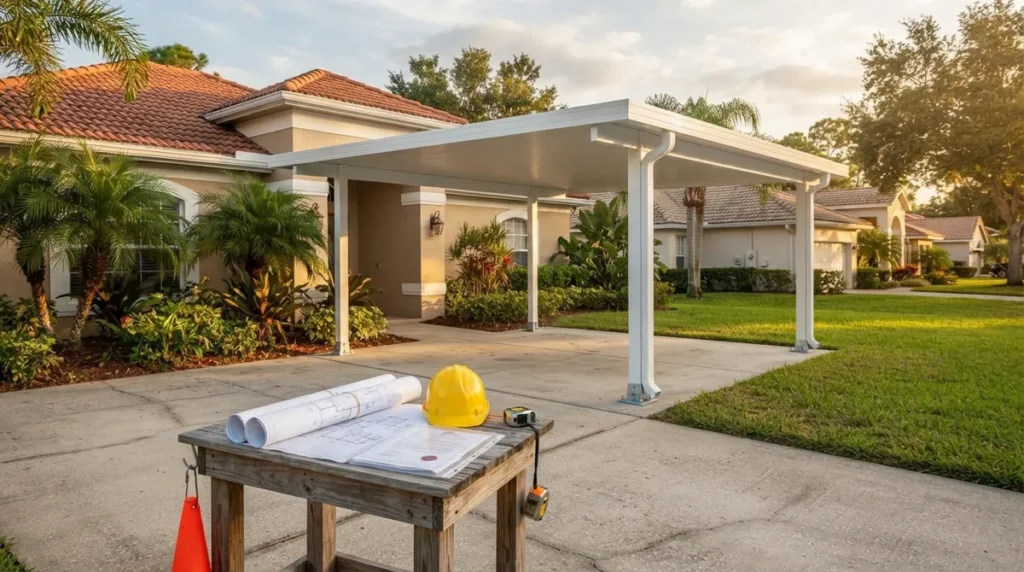
Florida has no statewide after-the-fact carport permit process; each county or city sets its own application, fees, and checklist, so identifying the correct jurisdiction is the critical first step.
-
Even lightweight aluminum carports often need permits in Florida, especially if attached to the home, large in size, or located in a flood zone, because wind uplift and anchoring are reviewed closely.
-
Building departments cannot watch an existing carport being built, so accurate as-built drawings and a sealed engineer letter verifying wind uplift, footings, and connections are usually what get it approved.
-
A permit does not automatically legalize a carport that violates setbacks, easements, right-of-way, or lot coverage rules; check zoning compliance before investing in drawings to avoid modifying or removing the structure.
-
Paying an after-the-fact fee does not necessarily erase code enforcement consequences, so confirm how your local rules treat unpermitted work and respond promptly to any violation notice.
-
Grandfathering is not automatic for unpermitted carports; owners generally must prove the structure existed lawfully, so keep old photos, records, or prior permits and ask the building department what evidence it accepts.
So you have a carport sitting in your driveway, and you just learned it was built without a permit. First, take a breath. You are far from alone, and this is more fixable than most people expect. Maybe a previous owner put it up years ago. Maybe a contractor told you a permit was not needed. Or maybe you assumed a simple aluminum structure was too small to bother with. Whatever the story, an after the fact carport in Florida is something local building departments see all the time.
Here is the friendly truth: there is a path to bring that carport into compliance. It just takes the right steps in the right order. This guide walks you through what an after-the-fact carport permit actually is, what your local building department will want to see, and how to avoid the common mistakes that slow people down in 2026. Whether you are a homeowner, a general contractor, a realtor with a closing on the calendar, or a designer who needs reliable drawings, you will find practical answers below.
What Is an After-the-Fact Carport Permit in Florida?
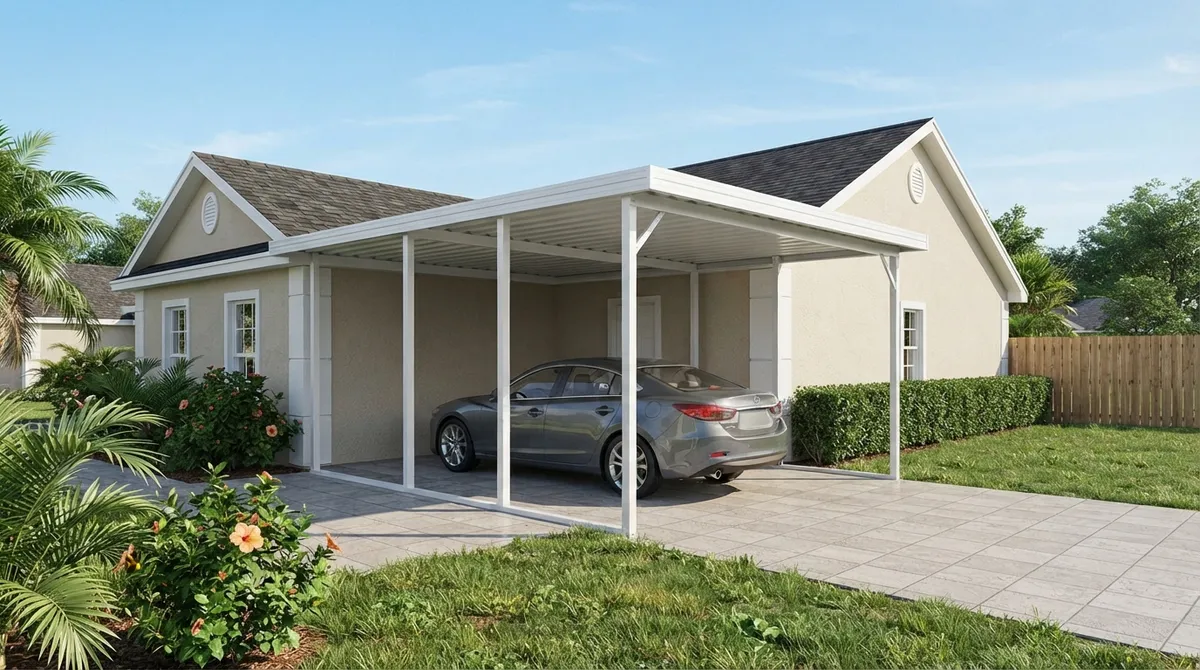
An after-the-fact carport permit is the local process for documenting and legalizing a carport that was already built, even though it required a building permit. Florida Statute §553.79 generally requires a permit before building, erecting, altering, modifying, or repairing a structure, subject to statutory exceptions. When that step was skipped, the building department typically offers a way to correct it after construction.
The key point to remember is that there is no single statewide application, fee, or checklist for this. Each county or municipality runs its own process. What works in one jurisdiction may look quite different in the next, which is why identifying the correct authority is always step one.
If you want a deeper look at the general process, our guide on how to get an after-the-fact permit in Florida covers the big picture beyond carports.
Does Your Carport Actually Need a Permit?
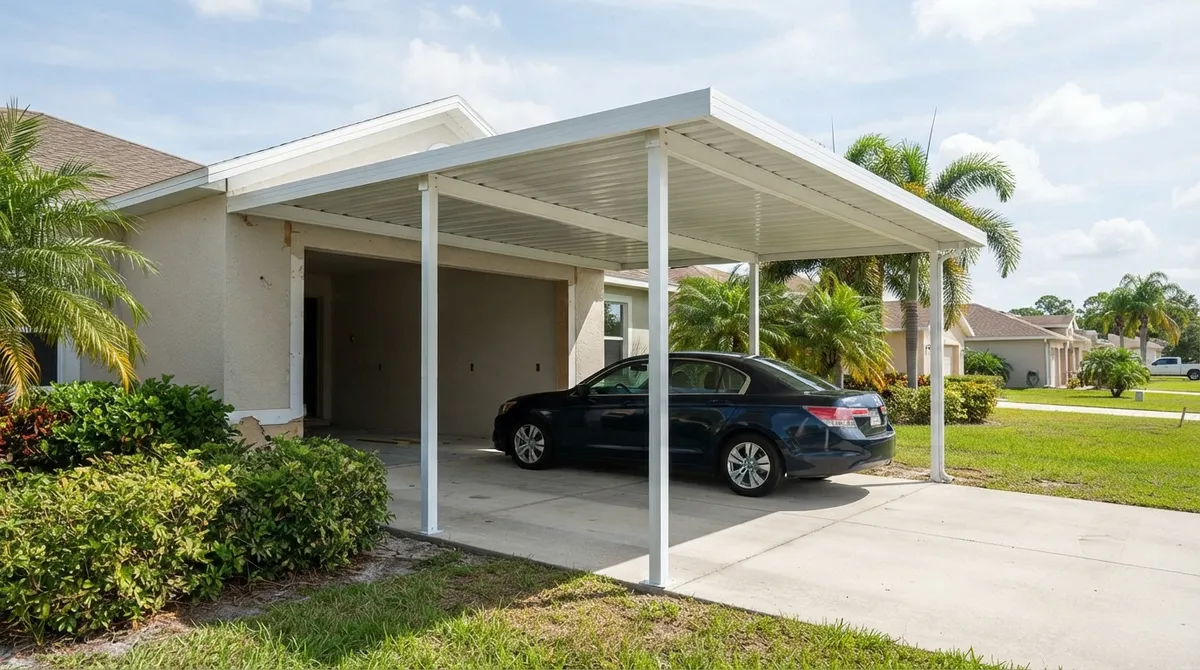
Not every carport requires a permit, but many do. Size, attachment to the home, height, materials, and local wind and flood rules all play a part. Because Florida is a high-wind state, even lightweight aluminum carports are often reviewed for uplift and anchoring.
Here are the factors that commonly trigger permit requirements:
- Size: Larger carports often require a permit, and some jurisdictions have extra requirements above certain square footage thresholds.
- Attachment: A carport attached to the house is usually treated differently than a freestanding one.
- Wind exposure: Structural anchoring must resist Florida's wind loads.
- Flood zone: Properties in flood zones may face additional rules.
- Location on the lot: Setbacks, easements, and right-of-way concerns can apply.
When in doubt, ask your local building department or have a permitting professional research it for you. Guessing is the expensive route.
Step-by-Step: How to Legalize an Existing Carport
Every jurisdiction differs, but the overall journey tends to follow a similar rhythm. Here is a simple roadmap you can use.
- Identify the correct jurisdiction. The authority having jurisdiction is not always obvious, especially near city lines. Your mailing address may not match the city that actually reviews your property. You can use our building department lookup tool to point you in the right direction.
- Check for open permits and violations. Before filing anything, find out whether there is already a record on the property. A quick open permit search can save you from surprises.
- Gather your documents. Collect your survey or site plan, product or manufacturer specifications, photos, and any contractor details.
- Get plans and engineering prepared. Most jurisdictions want drawings that show the carport as it actually exists, often with engineering for wind and structure.
- File the after-the-fact application. Submit your documents through the local portal or office.
- Respond to review comments. Reviewers often ask for clarifications or revisions. Quick, accurate replies keep things moving.
- Complete required inspections. Because the carport is already built, expect a focused evaluation of what can be seen and verified.
- Close out the permit. Once approved and inspected, the permit is finalized and your record is cleaned up.
Think of it like a puzzle. Each piece is simple, but the order matters.
What Documents Will the Building Department Want?
Submittal requirements vary, but there is a common core. Local guidance gives a useful picture of the variety. For example, Charlotte County lists signed and sealed plans and a site plan among its carport requirements, while Flagler County's owner-builder checklist includes an application, a disclosure, a site plan or survey, and code-compliant drawings.
Here is what you may be asked to provide:
- A completed permit application
- A property survey or site plan showing the carport's location
- Construction drawings, often with engineering
- Product or manufacturer specifications
- Owner-builder disclosure or contractor information
- Notice of Commencement, where the contract price exceeds local thresholds
Remember that these examples are county-specific. Always confirm the current checklist with the jurisdiction that reviews your property.
Why Engineering and Drawings Matter So Much
With a carport that is already standing, the building official cannot watch it being built. That means the drawings and engineering have to do a lot of the talking. Reviewers want evidence that the structure can handle wind uplift, that the posts and footings are adequate, and that the connections are sound.
This is where as-built documentation shines. Accurate as-built drawings capture what is really on your property, and a sealed engineer letter can verify structural adequacy. For help understanding that process, see how an engineer letter can save your permit and our overview of structural engineering services.
If the building department cannot verify concealed components, it may ask you to expose them, perform corrective work, or submit revised plans. The exact approach is project-specific, so plan for a little flexibility.
Typical Requirements at a Glance
To show how much local rules can differ, here is a snapshot based on published county examples. These are illustrations only, not statewide rules.
| Item | Example (Charlotte County) | Example (Flagler County) |
|---|---|---|
| Plans | Signed and sealed plans | Code-compliant drawings |
| Site information | Site plan required | Site plan or survey |
| Application fee | $90 flat application fee plus valuation-based and review fees | Confirm with county |
| Special letters | Letter of Compatibility for accessory structures over 250 sq. ft. | Owner-builder disclosure |
| Notice of Commencement | Required when contract price exceeds $5,000 | Confirm with county |
Notice how different the two lists are. That is exactly why a one-size-fits-all checklist does not exist. If your property is in Charlotte County, our Charlotte County permitting page is a helpful starting point.
Understanding Fees, Penalties, and Timelines
Let's talk about the part everyone worries about: cost. Fees and penalties vary widely. Some jurisdictions charge a standard permit fee plus an added after-the-fact or investigation fee, and some treat building without a permit as a code violation with enforcement consequences.
Pasco County's ordinance is one example. It treats failure to obtain a required permit for completed work as a violation and provides an after-the-fact permit process. Paying the fee does not necessarily erase enforcement consequences, so it is worth confirming how your local rules handle this. If you are in that area, see our Pasco County page.
For a broader view of what to expect on cost and penalties, read about the after-the-fact permit cost in Florida and the penalty for building without a permit.
On timing, Florida Statute §553.792 sets timeframes for local governments to act on completed and sufficient building permit applications. That is helpful, but it is not a guarantee of approval or a specific after-the-fact timeline. A complete, accurate submittal is the best way to avoid delays. For more on this, see how long a building permit takes in Florida.
What If the Carport Violates Zoning or Setbacks?
This is the question that keeps people up at night, and it deserves an honest answer. A permit does not automatically legalize a carport that violates zoning, setbacks, easements, flood requirements, or building code provisions. Building departments review both building code and land-use issues.
Common trouble spots include:
- Encroaching into a required side or front setback
- Sitting on a utility or drainage easement
- Extending into a right-of-way
- Exceeding lot coverage limits
- Blocking drainage or changing runoff patterns
If your carport cannot meet the rules as built, you may need to modify it, relocate it, or remove it, depending on local direction. In some cases, a variance or other zoning relief may be an option, but that is a separate process with its own requirements. Catching these issues early, before you invest in drawings, is one of the smartest moves you can make.
Can an Old Carport Be Grandfathered In?
Many owners hope that a carport built decades ago is simply grandfathered. Sometimes there is truth to this for older structures that were legal when built, but it is not automatic. The burden is typically on the owner to show the structure existed lawfully, and an unpermitted structure generally does not qualify just because it has been there a long time.
Do not assume. Ask your building department what evidence they would accept, and keep any old photos, records, or prior permits you can find. If you are dealing with an inherited problem, our article on what to do when a prior owner skipped permits is a good read.
Tips for Different Readers
For Homeowners and Residential Property Owners
Start by contacting your building department or a permitting professional before you hire anyone to tear down or rebuild. Many owners find that legalizing is easier than they feared. Our homeowner resources explain how we help with drawings, filing, and review coordination.
For General Contractors and Design Professionals
If a client asks you to bring an existing carport into compliance, accurate field measurements and engineering are your best friends. Outsourcing the drafting and permit administration keeps your crew focused on building. See our general contractor services and drafting-only option if you already have your own engineer.
For Realtors and Property Buyers
An unpermitted carport can surface during an inspection or appraisal and complicate a closing. Early research helps you decide whether to fix it before listing or negotiate around it. Our realtor and closing support is built for this situation, and you can read about whether a sale can close with unpermitted work.
For Solar Companies
If you plan to install solar over or near a carport, confirming that the structure is permitted and structurally sound matters. A carport without a permit can raise questions about load capacity and compliance, so verify the status before design begins.
Common Mistakes to Avoid
A few missteps tend to cause the most frustration. Steer clear of these and your project will go smoother.
- Assuming a fee fixes everything. Paying a permit fee does not necessarily resolve enforcement.
- Skipping the setback check. Submitting plans before confirming zoning compliance can waste time and money.
- Using generic drawings. Plans must reflect the actual structure and local wind requirements.
- Ignoring a notice. If you have received a violation, respond promptly. Our guide on what to do after a code enforcement notice can help.
- Waiting too long. Delays can compound problems, especially if a sale or refinance is coming up.
When to Bring in a Permitting Professional
You can try to handle this on your own, and some owner-builders do. But the process involves reading local rules, preparing accurate drawings, coordinating engineering, filing, and answering reviewer comments. A single missed detail can mean another round of revisions.
1 Contractor Solutions acts as Florida's outsourced permitting department. We research the jurisdiction, prepare or review plans with in-house engineering, handle after-the-fact permits, and carry the file through approval and closeout. We serve all 67 Florida counties and respond fast, so you are never left guessing about the next step. If you would like to see what others say, you can visit us on Google — 1 Contractor Solutions and read customer reviews.
Final Thoughts: You Have a Clear Path Forward
An unpermitted carport feels stressful, but it does not have to stay that way. By identifying the right jurisdiction, gathering the right documents, getting accurate plans and engineering, and responding to reviewers, you can bring your carport into compliance and put the worry behind you.
Ready to move forward? Reach out and get a free quote for your after-the-fact carport permit. You can also stay connected and follow us on LinkedIn or follow us on Facebook for more Florida permitting tips. We would be glad to help you get this finished.
FAQs
Do I need an after-the-fact permit for a carport in Florida?
If your carport required a building permit and was built without one, you generally need to bring it into compliance through your local building department. Florida Statute §553.79 requires a permit before construction, though some small structures may be exempt. Check with your county or city to confirm whether yours qualifies.
How much does an after-the-fact carport permit cost in Florida?
There is no statewide fee, so costs vary by county and city. For example, Charlotte County lists a $90 flat application fee plus valuation-based and review fees, but that is just one local example. Add the cost of drawings and engineering, and always confirm current fees with your local building department.
Can I keep a carport that was built without a permit?
Often yes, if it can be brought into compliance with building code and zoning rules. If it violates setbacks, easements, or flood requirements, you may have to modify or remove it. A permit does not automatically legalize a structure that cannot meet the rules.
What documents are required for an after-the-fact carport permit?
You will typically need an application, a survey or site plan, construction drawings or engineering, and product specifications. Some jurisdictions also ask for owner-builder disclosures or a Notice of Commencement. Requirements differ by location, so confirm the checklist with your building department.
Can a Florida carport be grandfathered in if it was built years ago?
Sometimes older structures that were legal when built can be treated as existing, but being old does not make an unpermitted carport automatically legal. Owners are usually expected to show lawful existence. Ask your building department what proof they accept and keep any old records or photos.
We do this work every day across all 67 Florida counties. Call (866) 314-6931 and we will tell you what your situation actually requires — including when you do not need us.
Related services
Permit Facilitation & Filing
You have a crew scheduled, a client asking for dates, and a permit sitting somewhere in a queue you cannot see. We file it, w…
See the servicePlan Review Coordination
A permit in plan review is not one queue. On a commercial project it can be six queues, each with its own reviewer, its own c…
See the serviceReady to get your permit moving?
One call tells you which jurisdiction controls your project, what it will take, and what it will cost. Most of the time we can scope it on the phone.