
Blog
Why Is Your Florida Enclosure Still Unpermitted?
Unpermitted lanai or patio enclosure? Learn how after-the-fact enclosure permits work in Florida, what documents you need, and how to move forward.
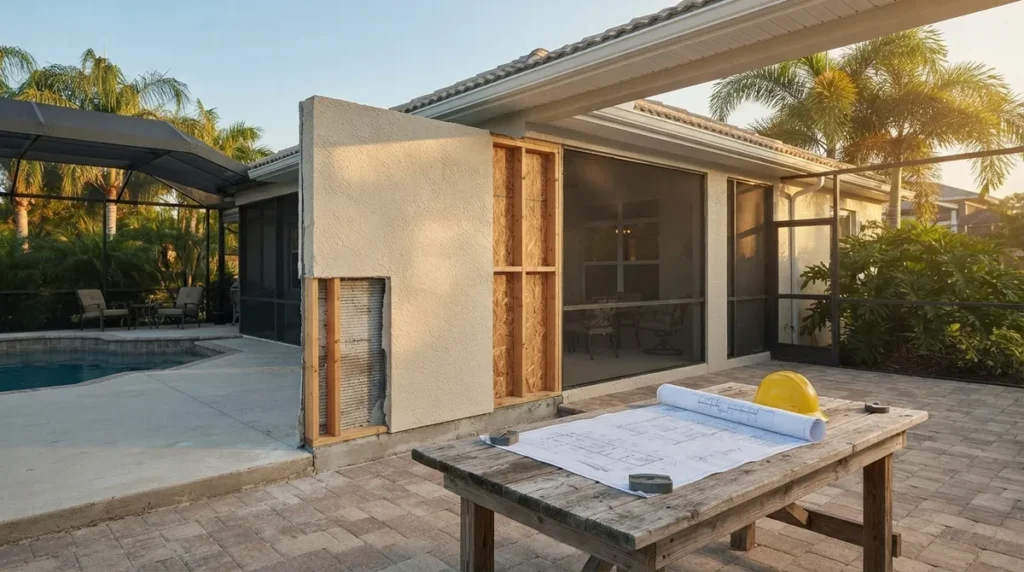
Key Takeaways
-
Florida has no statewide enclosure permit; the local city or county building department handles the application, review, fees, and inspections for your specific address.
-
Applying late does not automatically legalize unpermitted work. The enclosure must still meet building code, zoning, setback, and floodplain requirements.
-
Start by stopping any further unpermitted work, then identify the correct jurisdiction and check the address for open permits, expired permits, or code cases.
-
Reviewers commonly want a permit application, site plan or survey, as-built drawings, construction details, and wind-load documentation, and may require sealed plans from a Florida-licensed engineer or architect.
-
Hidden construction details like slab, footings, and connections may require openings or investigative work so inspectors can verify them, so plan for this rather than being surprised.
-
Cleaning up the permit record early is usually cheaper and less stressful than resolving it under a closing deadline, insurance claim, or buyer's inspection, since unresolved permits can stall sales.
Picture this: you bought a Florida home with a beautiful, bug-free lanai. Or maybe you enclosed the patio yourself a few summers ago, because the mosquitoes were winning. Then a buyer's inspector, an appraiser, or a code officer asks one simple question: "Where's the permit for the enclosure?" Suddenly, that cozy space feels a lot less cozy.
Take a breath. You are far from alone, and there is a path forward. An after the fact enclosure in Florida is one of the most common unpermitted-work situations we see, and it is very often fixable.
In this guide, we will walk through what an after-the-fact enclosure permit actually is, who handles it, what documents reviewers want, and what can slow things down. Whether you are a homeowner, a general contractor, a realtor, or an investor, you will leave with a clear plan. We will keep it friendly, practical, and honest, including the part where nobody can promise approval before the local building department weighs in.
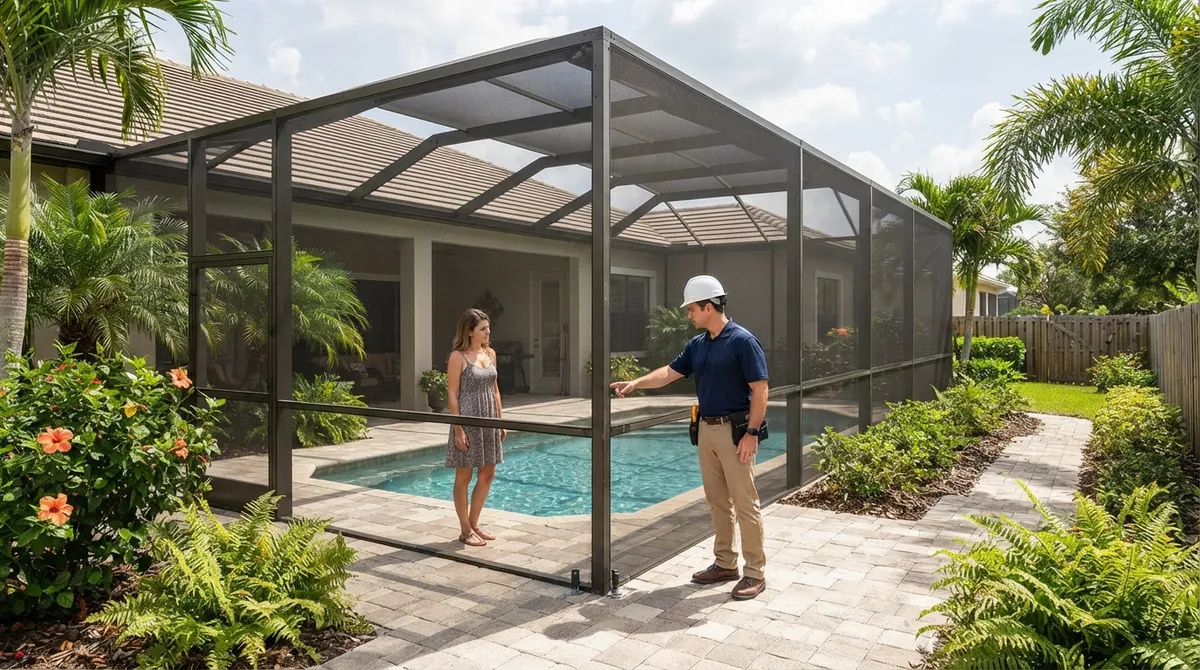
What Is an After-the-Fact Enclosure Permit in Florida?
An after-the-fact enclosure permit is a local application to document and obtain approval for an enclosure that was built before the required permit was issued. Think patios, porches, lanais, and similar spaces that were closed in without paperwork.
Here is the part that surprises most people: Florida does not have one statewide enclosure permit. The city or county with jurisdiction over the property handles the application, review, fees, and inspections. Florida Statutes §553.79 is the statewide reference that generally requires a permit before covered construction, alteration, repair, or demolition. But your local building department is the one that actually runs the process.
It also helps to know that applying late does not automatically legalize the work. The enclosure still has to satisfy the applicable building code, zoning, setback, floodplain, and other local requirements. The good news is that the process exists for exactly this situation. If you want the broader picture, our guide on what after-the-fact permitting in Florida involves is a great companion read.
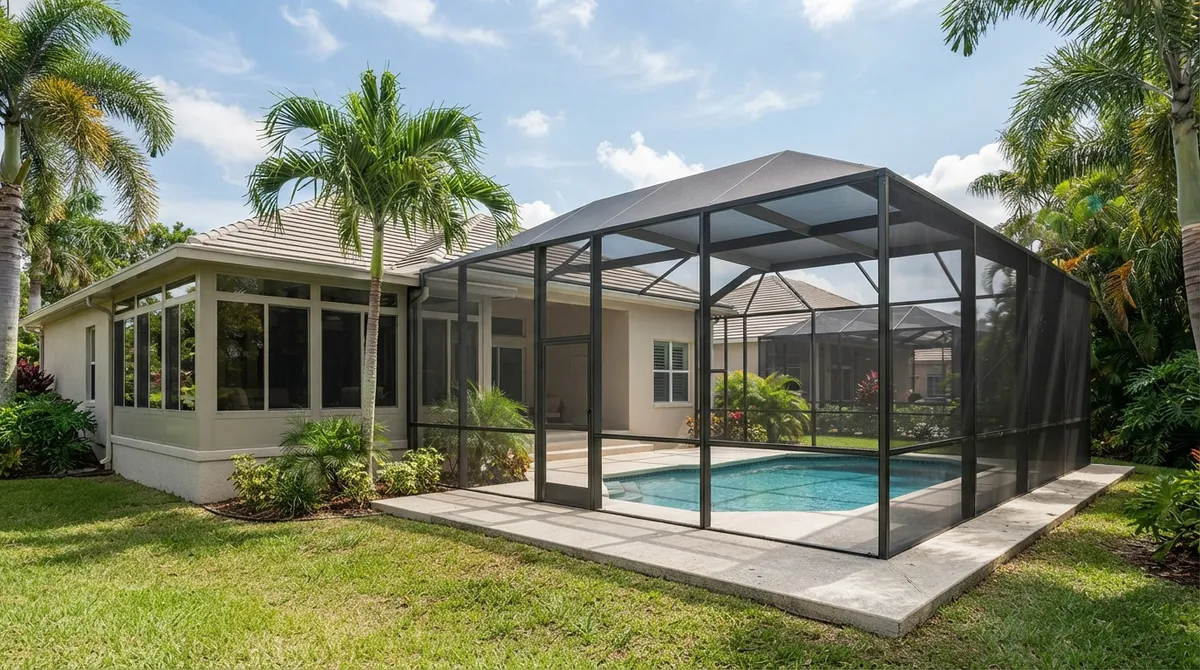
Which Enclosures Typically Need a Permit?
Not every outdoor change triggers the same review. Requirements depend on the work itself and the jurisdiction. Still, certain features commonly bring building review into the picture.
- A roof or structural attachment to the home
- New or modified screen walls
- Glass or removable panels, such as windows or vinyl panels
- Changes that create habitable or conditioned space
- Slab or footing work supporting the enclosure
On top of that, electrical, plumbing, HVAC, or gas work inside the enclosure may need its own trade permits. That means an enclosed lanai with a new ceiling fan circuit and a mini-split could involve several permit categories, not just one.
Because this varies so much, please confirm requirements with the building department serving your property address. A neighbor's experience in another city is a helpful story, but not a rule of thumb.
Why Do So Many Florida Enclosures End Up Unpermitted?
Honestly, it happens for pretty ordinary reasons. Understanding them can take the shame out of the situation.
- A prior owner did it. You inherited the enclosure with the house and never saw the paperwork.
- A contractor skipped the permit. Sometimes the contractor said they would pull it, and it never happened. We cover this in our article on when a homeowner said they would pull the permit.
- It seemed too simple. A screen room feels like a minor upgrade, so people assume it does not need review.
- The permit expired. The work started legally, but the inspections were never finished.
If your situation sounds like the last one, you may be dealing with an expired permit instead. Our post on expired permit vs. after-the-fact helps you sort out which fix applies.
The Step-by-Step Path to Permitting an Existing Enclosure
While every jurisdiction has its own quirks, the usual path looks like this. Following these steps in order keeps you out of unnecessary trouble.
- Stop any further unpermitted work. Adding to the project while it is unpermitted only complicates the review.
- Identify the correct jurisdiction. Near city lines, this is not always obvious. Our building department lookup tool can help, and our guide on which Florida jurisdiction reviews my project goes deeper.
- Check permit and violation records. Look for open permits, expired permits, or code cases tied to the address. Try our open permit search.
- Document existing conditions. Measure the enclosure, photograph the structure, and note the slab, walls, roof, and any electrical or mechanical work.
- Prepare and submit the local after-the-fact application. This includes drawings, a site plan or survey, and supporting documents.
- Respond to plan-review comments. Reviewers often have questions, and quick, accurate answers keep things moving.
- Complete inspections and corrections. The department verifies the work, and you fix anything that falls short.
- Obtain final permit closure. This is the finish line that lenders, buyers, and insurers care about.
A permitting-services provider can help coordinate records, drawings, engineering, applications, and inspection follow-up. What no one can honestly do is guarantee approval, because the building department makes that call.
What Documents and Drawings Do Reviewers Want?
Every department has its own checklist, but the common application materials are fairly consistent. Gathering them early saves real time.
| Document | What It Shows | Why It Matters |
|---|---|---|
| Permit application | Owner, contractor or owner-builder, and scope of work | Starts the official record |
| Site plan or property survey | Enclosure location and setbacks | Confirms zoning compliance |
| As-built drawings | Dimensions and layout of what exists | Lets reviewers evaluate the real structure |
| Construction details | Roof, walls, connections, openings | Supports code review |
| Structural documentation | Wind-load and attachment information | Verifies the enclosure can handle Florida weather |
| Contractor or owner-builder information | Who is responsible for the work | Satisfies licensing and permit rules |
Many departments require plans signed and sealed by a Florida-licensed architect or engineer, especially when structural work is involved. If your enclosure includes a roof tied into the house, plan on that being a real possibility. Learn more in our article on whether a sealed drawing is required for after-the-fact permits.
If you need drawings of what is already standing, our as-built drawings service is built for exactly that, and our structural engineering team can prepare the sealed documentation.
The Tricky Part: Hidden Construction Details
Here is where after-the-fact enclosures get a little more interesting than a standard new permit. Reviewers may ask about details that are now covered up by finished walls, ceilings, and flooring.
Examples include slab and footing dimensions, reinforcement, connections, and wind-load resistance. Because inspectors normally verify those items during construction, they cannot see them after the fact.
So what happens? The local authority may require openings or investigative work so the construction can be verified. The exact requirements depend on the department and the project conditions. It might mean a small opening in a wall, a look at the slab edge, or an engineer's field visit.
Do not let that scare you. A planned, well-documented investigation is far less painful than a surprise one. Our post on what happens during a Florida ATF site inspection explains what to expect.
Zoning, Setbacks, and Flood Zones Can Change the Game
A building permit and a zoning approval are two different things. Even if the structure is sound, an enclosure can run into zoning review.
Reviewers may look at:
- Setbacks from property lines
- Easements and right-of-way impacts
- Lot coverage limits
- Floodplain compliance and elevation information
A building permit does not waive any of these rules. For enclosures in flood-prone areas, expect additional review and possibly elevation documentation. In some cases, large enclosures or improvements can even raise questions covered by the FEMA 50 percent rule in Florida.
If the enclosure does not meet code or zoning, that does not automatically mean demolition. Depending on the issue, the fix could be a modification, an engineering solution, or a variance process. That decision belongs to the local authority, so early research is your best friend.
How Local Rules Differ: A Few Real Examples
Florida's patchwork of local rules is exactly why generic advice falls short. A few published examples show how details differ from place to place.
| Jurisdiction | Published Detail |
|---|---|
| Charlotte County | Residential lanai guidance states a Notice of Commencement is required for improvements with a direct contract price greater than $5,000, submitted before the first inspection |
| Charlotte County | Fee example lists a building fee of 0.004 × ICC valuation for projects valued at $50,000 or more, plus a surcharge of 0.025 × the building fee |
| Port St. Lucie | Patio-enclosure application requests enclosure square footage, slab and footing details, a property survey showing setbacks, and sealed plans |
| City of Tampa | Maintains its own residential screen enclosure permit guidance through Construction Services |
Please treat these as local examples, not universal thresholds. Always verify requirements with the department that serves your address. If you are in one of our busier service areas, you can explore local pages for Charlotte County, Tampa, and Port St. Lucie.
Wondering about the Notice of Commencement? Our explainer on the Notice of Commencement in Florida covers when it comes into play.
What Does It Cost and How Long Does It Take?
Everybody asks this, and we wish we could hand you one number. The honest answer is that cost and timeline depend on your jurisdiction, the enclosure's size and complexity, and what the review uncovers.
Here are the main cost drivers to keep in mind:
- Permit fees set by the local fee schedule, often tied to project valuation
- Drawings and engineering for as-builts, sealed plans, and field verification
- Penalties or after-the-fact surcharges that some jurisdictions apply
- Corrections if the existing work needs to be brought up to code
- Trade permits for any electrical, plumbing, HVAC, or gas work
Timelines follow the same logic. A clean, well-prepared packet in a responsive department moves faster than a rushed one with missing pieces. For a deeper look at numbers, see our guides on after-the-fact permit costs in Florida and how long a building permit takes in Florida.
Why This Matters for Sales, Closings, and Insurance
For some of you, the enclosure is not just a comfort issue. It is a deal issue.
An unpermitted enclosure can surface during an appraisal, a home inspection, or the title and lending process. That can stall a closing or push a lender to ask for a final, closed permit. If you are on the buying or selling side, our article on whether a permit hold can delay a Florida real estate closing is worth a look, as is our realtor closing support page.
Insurance can come into the picture too. Unpermitted or expired permit work can complicate claims. We cover that in expired permits and insurance claims in Florida.
The takeaway is simple: cleaning up the permit record now is usually cheaper and calmer than doing it under a closing deadline.
Tips for Each Type of Reader
For Homeowners and Residential Property Owners
Start by pulling together whatever you have: closing documents, old photos, receipts, and any contractor information. Then check your address for open permits or code cases. If a notice has already arrived, respond promptly. Our guide on how to respond to a Florida unpermitted work notice is a calm, step-by-step resource. You can also explore our homeowner services.
For General Contractors and Design Trades
If a past job turned up without a permit, treat it as a priority. Reviewers look at licensing and responsibility, so get the contractor information straight. Many firms outsource drafting, engineering, and filing so the crew can stay on schedule. See how we support general contractors with permit facilitation and filing.
For Realtors and Investors
Flag the enclosure early, ideally before listing or during due diligence. A closed permit is a strong selling point, while an unresolved one is a negotiation headache. Our realtor resources can help you plan around timelines.
For Solar Companies
If a roof or structure tied to an enclosure affects your install, confirm the structure is permitted before attaching equipment. That keeps your own permit clean and protects your project schedule.
How 1 Contractor Solutions Can Help
We are Florida's outsourced permitting department. For after-the-fact enclosures, that means we help you research the right jurisdiction, check records, prepare as-built drawings, coordinate sealed engineering, file the application, track it, work through reviewer comments, and follow up through inspections and closeout. Our drafting and engineering are in house, so when a reviewer flags something, we fix it without waiting on an outside consultant.
We serve all 67 Florida counties, respond within 30 minutes, and speak Spanish too. You can learn more about our after-the-fact and expired permits service, or read what other clients say by visiting our Google Business Profile for 1 Contractor Solutions. For authoritative background on the statute, you can review Florida Statutes §553.79 directly, and you can follow us on LinkedIn or follow us on Facebook for more Florida permitting tips.
As always, we cannot guarantee approval. The local building department decides. What we can promise is a prepared, organized, professional submission that gives your enclosure its best shot.
Your Next Move
An unpermitted enclosure is stressful, but it is rarely the end of the story. Most are resolved by identifying the right jurisdiction, documenting what exists, bringing in the right drawings and engineering, and walking the application through review and inspection. The sooner you start, the more options you have, and the less likely a closing, a sale, or an insurance claim catches you off guard.
Ready to turn that question mark into a closed permit? Get a free quote from our team today, and let us help you get your Florida enclosure legal, documented, and worry-free. Your lanai should be a place to relax, and we would love to help you get back to enjoying it.
FAQs
Do I need an after-the-fact permit for an enclosed patio, porch, or lanai in Florida?
If the enclosure was built without a required permit, yes, you will generally need to apply through the local building department that serves your property. Requirements vary by city and county, so it is smart to confirm the exact rules for your address before you start.
Will I need sealed plans or an engineer for an unpermitted patio enclosure?
Quite possibly! Many departments require plans signed and sealed by a Florida-licensed architect or engineer, especially when the work is structural. Your local building department makes the final call, and a permitting team can help you prepare the right documents.
What happens if my existing enclosure does not meet Florida Building Code or zoning setbacks?
Don't panic, because this does not automatically mean tearing it down. Depending on the issue, the fix could be corrections, an engineering solution, or a zoning process, and the local authority decides what is required. Early research and good documentation make a big difference.
Do electrical, HVAC, or plumbing work in an enclosure need separate permits?
Often, yes. Electrical, plumbing, HVAC, and gas work may require their own trade permits in addition to the enclosure's building permit, depending on your jurisdiction. Confirm the specifics with your local building department so nothing gets missed.
What inspections are required for an after-the-fact enclosure permit?
Required inspections vary by jurisdiction and project, but reviewers may ask to verify hidden details like slab, footings, connections, and wind-load resistance. That can sometimes mean small openings or investigative work so inspectors can see what is behind finished surfaces.
We do this work every day across all 67 Florida counties. Call (866) 314-6931 and we will tell you what your situation actually requires — including when you do not need us.
Related services
Permit Facilitation & Filing
You have a crew scheduled, a client asking for dates, and a permit sitting somewhere in a queue you cannot see. We file it, w…
See the servicePlan Review Coordination
A permit in plan review is not one queue. On a commercial project it can be six queues, each with its own reviewer, its own c…
See the serviceReady to get your permit moving?
One call tells you which jurisdiction controls your project, what it will take, and what it will cost. Most of the time we can scope it on the phone.