
Blog
How to Legalize an Unpermitted Bathroom Remodel in Florida
Found an unpermitted bathroom remodel? Learn the step-by-step Florida after-the-fact permit process, from inspections to corrections and closeout.
Key Takeaways
-
Stop any ongoing unpermitted work immediately, since continuing can increase costs and lead to citations; in Hillsborough County, citations can reach $500 per violation.
-
Do not rely on Florida's small-job exemption for bathroom remodels, because under §553.79 it excludes electrical, plumbing, structural, mechanical, and gas work and does not apply in flood hazard areas.
-
Contact the local building department that controls your address and ask whether they accept after-the-fact applications, which permits are needed, and what documents and fees apply.
-
Expect the inspector to require corrections: an after-the-fact permit does not automatically approve existing work, and permits can be denied or revoked if the work does not meet the Florida Building Code.
-
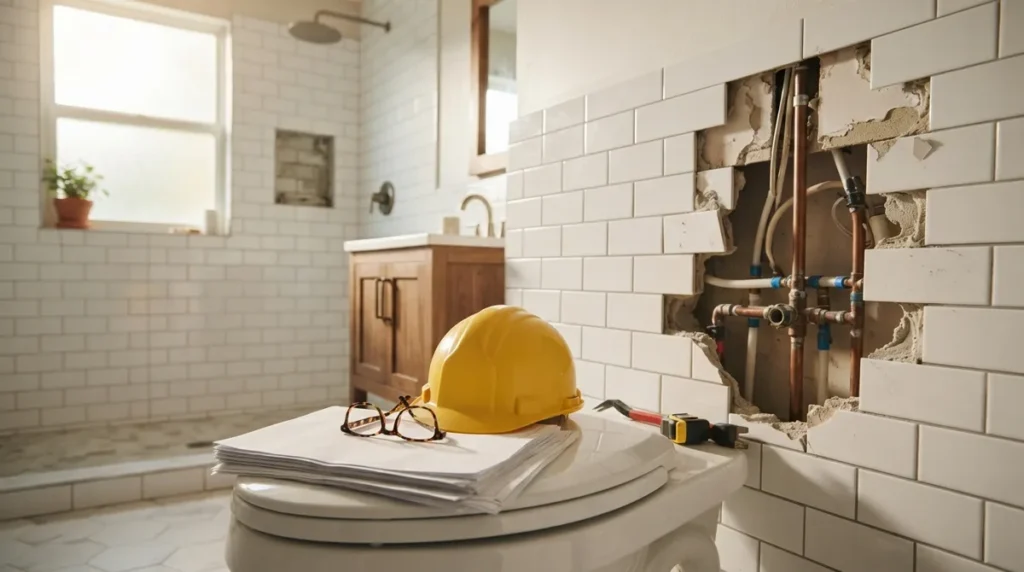
Ask the building department how to handle concealed work before cutting into tile or drywall, since jurisdictions may accept photos, engineer letters, or require selective opening.
-
Use licensed plumbers and electricians for regulated work, and get as-built drawings or engineering letters if walls or structure were changed.
So you just found out your bathroom remodel was done without a permit. Maybe a previous owner did it. Maybe a contractor swore it was "no big deal." Maybe your buyer's inspector spotted it two weeks before closing. Take a breath. You are far from the first Florida property owner to land here, and there is a clear path forward.
The good news is that Florida building departments deal with this all the time. The process is usually called an after-the-fact permit, and it is the standard way to bring existing work into the official record. The less-good news is that it is not a rubber stamp. The inspector gets to decide whether the work meets code, and fixes may be needed.
If you have been asking yourself, "how do I legalize an unpermitted bathroom remodel in Florida," this guide walks you through it step by step. We will cover how to figure out whether a permit was even required, who to call, what to submit, what inspectors look for, and how to avoid the most common pitfalls. Whether you are a homeowner, a general contractor, or a real estate professional, you will leave with a practical game plan.
Was a Permit Actually Required for Your Bathroom Remodel?
Before anything else, it helps to know whether the work needed a permit in the first place. Florida Statutes §553.79 assigns permitting and inspection to the local enforcing agency, so the answer depends on your city or county and on the scope of work.
In general, purely cosmetic updates are the least likely to need a permit. Plumbing, electrical, structural, and wall changes are the most likely to need one. Hillsborough County, for example, says tile and cabinet-only work may not require a permit, while plumbing work likely does. Fort Walton Beach calls for a permit when all cabinets and plumbing, gas, or electrical fixtures are removed, or when drywall is removed or walls are added or removed.
You may have heard about a Florida exemption for small jobs valued under $7,500. Do not lean on it here. Per §553.79, that exemption for certain single-family work expressly excludes electrical, plumbing, structural, mechanical, and gas work, and it does not apply in flood hazard areas. Most bathroom remodels involve at least one of those trades.
| Type of Work | Permit Likely Needed? | Why |
|---|---|---|
| Repainting walls | Usually no | Cosmetic only |
| Replacing tile or cabinets only | Often no (confirm locally) | No trade or structural changes |
| Moving or replacing plumbing fixtures | Typically yes | Plumbing trade work |
| New outlets, lighting circuits, or GFCI changes | Typically yes | Electrical trade work |
| Removing or adding walls | Typically yes | Structural and alteration work |
| Full gut with drywall removal | Typically yes | Alteration permit triggers |
Requirements vary by locality, so always confirm with the building department that has jurisdiction. If you are not sure which one that is, our building department lookup tool can point you in the right direction, which matters near city lines.
Step 1: Stop Work and Gather the Facts
If the remodel is still in progress, stop right away. Hillsborough County specifically directs owners with unpermitted work still under construction to stop and ask about an after-the-fact permit. Continuing can raise your costs and may lead to a citation. In that county, a citation of up to $500 per violation is possible. That is a local example, not a statewide penalty schedule, but it shows why pausing is smart.
Then do a little detective work. Write down everything you know:
- The property address and the exact jurisdiction (city or unincorporated county)
- When the work was done and by whom, if known
- What was changed: fixtures, wiring, walls, waterproofing, exhaust fans, windows
- Any receipts, photos, contractor invoices, or product spec sheets
- Whether any permit history already exists for the property
A quick check of the property's record can save headaches. Our open permit search tool helps you see what the county or city already has on file, so you know if you are starting from scratch or dealing with an expired or incomplete permit.
Step 2: Contact the Local Building Department
Here is the part many people dread, but it is usually far less scary than expected. Call or visit the building department that controls your address and say plainly that you have an existing bathroom remodel without permits and want to pursue an after-the-fact permit.
Departments generally prefer voluntary compliance over a code complaint. Ask these questions:
- Do you accept after-the-fact (retroactive) applications for this type of work?
- Which permit types are needed (building, plumbing, electrical, mechanical)?
- What documents, drawings, or engineer letters do you require?
- What are the fees, and is there an after-the-fact surcharge?
- How do you handle work that is now covered by tile or drywall?
The department, not a statewide rule, decides the application format, fees, and inspection process. Take notes and ask for the answers in writing when you can. If you would rather not run this gauntlet yourself, our team handles permit facilitation and filing so you do not have to chase counters and phone trees.
Step 3: Prepare the Application Package
Most after-the-fact applications for a bathroom remodel include some combination of the items below. Your jurisdiction will confirm the exact list.
| Document | Purpose | Notes |
|---|---|---|
| Completed permit application(s) | Opens the official file | Building plus trade permits as required |
| Scope-of-work description | Explains what was done | Be thorough and honest |
| As-built drawings or floor plan | Shows existing conditions | Often required for layout or wall changes |
| Photos of the finished work | Documents conditions | Include fixtures, panel, exhaust fan |
| Product specifications | Verifies approved materials | Faucets, fixtures, GFCI devices, fans |
| Licensed contractor info | Pulls trade permits legally | Regulated trades need licensed professionals |
| Engineer letter or sealed drawings | Verifies structure or code compliance | Needed for structural changes in many cases |
If walls were moved or removed, expect the department to want engineering. Fort Walton Beach guidance, for instance, notes that certain remodels may require engineered plans. Our as-built drawings and engineer letters services are built for exactly this situation, with in-house sealed work so you are not waiting on an outside consultant.
Step 4: Use Licensed Trades for Regulated Work
This is a point that trips up a lot of owners. Plumbing and electrical work generally must be permitted and performed under properly licensed contractors, with limited homeowner exceptions that vary locally. If an unlicensed handyman did the original work, you may need a licensed plumber or electrician to inspect, correct, and pull the trade permits.
If you are an owner who intends to pull the permit yourself, check whether an owner-builder permit is appropriate. Our overview of owner-builder permits explains how that works and what responsibilities come with it. General contractors, designers, and trade professionals can also lean on us for the drafting and permit administration pieces while they focus on the hands-on work. See how we support general contractors across Florida.
Step 5: Prepare for Inspections, Including Hidden Work
Here is where bathroom remodels get interesting. Inspectors normally want to see rough plumbing, wiring, framing, and waterproofing before they are covered. In an after-the-fact situation, those items are often already behind tile and drywall.
What happens next is local. The jurisdiction may accept photos, an engineer or contractor letter, or limited verification. It may also require selective opening, meaning small sections of finished surface are removed so the inspector can see what is behind them. Ask the building department what they require before you disturb any finished surfaces. Cutting open walls without direction can create unnecessary repair costs.
Here is what inspectors commonly look at in a bathroom:
- Drain, waste, and vent connections and proper slope
- Water supply lines, shutoff valves, and fixture clearances
- GFCI protection, circuits, and proper wire sizing
- Exhaust fan installation and venting to the exterior
- Shower pan and waterproofing methods
- Framing modifications and any load-bearing changes
- Smoke alarm and egress considerations when layout changed
Our inspections support helps you line up the right visits in the right order, and for some projects a licensed private provider can keep things moving faster than waiting in the county queue.
Step 6: Correct Deficiencies and Get Final Approval
An after-the-fact permit does not automatically approve existing work. This is the single most important expectation to set. The authority having jurisdiction may require corrections to meet the Florida Building Code, and under §553.79 a permit may be denied or revoked when plans or construction do not comply.
If the inspector issues comments, you will typically correct the issue, resubmit if needed, and request reinspection. Common corrections include adding GFCI protection, replacing improperly vented fans, fixing slope or trap issues, and improving waterproofing. Keep a running log of every comment and fix. When something comes back as a plan review note, our revisions and resubmittals team works through each reviewer comment so you do not get stuck in a loop.
Once all required inspections pass, the department closes out the permit. That closed permit becomes the paper trail you want when selling, refinancing, or dealing with insurance.
What Will It Cost, and How Long Will It Take?
Honest answer: it depends on the jurisdiction and the condition of the work. Costs can include permit and inspection fees, extra after-the-fact charges, correction costs, engineering, and in the worst cases demolition and rebuild. Timelines range from a couple of weeks for simple, clean situations to a couple of months when corrections and engineering are involved.
| Cost Factor | What Drives It |
|---|---|
| Permit and inspection fees | Local fee schedule, valuation, number of trades |
| After-the-fact surcharges | Some jurisdictions add penalty multipliers |
| Drawings and engineering | Layout changes, structural modifications |
| Corrections | Code deficiencies found during inspection |
| Opening and repairing finished surfaces | Whether concealed work must be verified |
| Code enforcement penalties | Only if a violation case was already opened |
For a deeper look at budgeting, see our guide on after-the-fact permit costs in Florida, and our broader walkthrough on how to legalize unpermitted work in Florida.
Special Situations: Selling, Buying, and Code Violations
Timing changes the playbook. If you are selling, an open issue with unpermitted work can surface at inspection, appraisal, or title review. If you are buying a home with an unpermitted bathroom, you can negotiate repairs or credits and require the seller to legalize the work before closing. Real estate professionals can learn more through our realtor and closing support services, and our article on open permits found at closing is a handy read.
If you have already received a notice from code enforcement, act promptly and keep every deadline. Our code compliance violations service helps you respond, and the page on after-the-fact and expired permits explains how we take on files others decline. If a closing date is breathing down your neck, our urgent permit rescue team is built for tight timelines.
Common Mistakes to Avoid
- Assuming a statewide exemption applies. Always confirm local rules rather than guessing.
- Tearing out finished work before asking. Wait for the department's direction on concealed items.
- Skipping licensed trades. Regulated plumbing and electrical work needs proper licensing.
- Ignoring a notice. Deadlines in code enforcement matters are real.
- Expecting automatic approval. The inspector's decision controls the outcome.
- Hiding the issue from buyers or lenders. Disclosure problems are usually worse than the permit problem.
How a Florida Permitting Service Can Help
A good permitting partner cannot guarantee approval or replace the building official's decision, and anyone who promises otherwise is overselling. What we can do is take the grind off your plate. At 1 Contractor Solutions, we identify the controlling jurisdiction, determine the right permit types, prepare as-built drawings and sealed engineering in house, file the application, track it, and work every reviewer comment through to closeout. We serve all 67 Florida counties, including busy markets like Hillsborough County, Miami-Dade County, and Sarasota County.
Homeowners who want a friendly place to start can visit our homeowner resources. Prefer to hear from other customers first? Visit us on Google and see what people say: Visit us on Google — 1 Contractor Solutions. You can also keep up with Florida permitting news if you follow us on LinkedIn or follow us on Facebook.
For the legal backbone behind all of this, you can read the text of Florida Statutes §553.79 directly on the Florida Senate website.
Your Quick Action Checklist
- Stop any ongoing work and document what exists.
- Identify the correct city or county building department.
- Call and ask about their after-the-fact process and fees.
- Assemble photos, receipts, and a clear scope of work.
- Get as-built drawings and engineering if layout or structure changed.
- Use licensed trades for plumbing and electrical corrections.
- Follow the department's direction on concealed work.
- Fix any deficiencies, pass inspections, and get the permit closed.
Final Thoughts
An unpermitted bathroom remodel feels like a big problem, but it is a very solvable one. The pattern is consistent: confirm what was required, talk to the right building department early, document the work, bring in the right professionals, and be ready to correct what the inspector finds. Moving quickly and honestly almost always costs less than waiting for a complaint, a failed sale, or an insurance headache to force the issue.
If you would rather have an experienced team carry this from first phone call to closed permit, we would love to help. Get a free quote and tell us your address and what happened. We respond fast, day or night, and we will tell you exactly what it will take to legalize your bathroom remodel.
FAQs
Do I need a permit to remodel a bathroom in Florida?
Often, yes, especially if the job involves plumbing, electrical, structural, or wall changes. Cosmetic-only updates like paint may not need one, but rules vary by city and county, so a quick call to your local building department is the safest first step.
Will the inspector make me open walls or remove tile?
Possibly. If the work is covered, some jurisdictions accept photos or an engineer letter, while others require selective opening so they can see plumbing, wiring, or waterproofing. Ask the building department what they need before you cut into anything.
What happens if my unpermitted bathroom remodel fails inspection?
Don't panic, it's pretty common! You'll typically correct the problems the inspector notes, then request a reinspection. An after-the-fact permit isn't automatic approval, so some fixes may be required before final sign-off.
Can I sell my Florida home if the bathroom remodel was done without permits?
You can, but it often complicates things because buyers, lenders, and inspectors may flag it. Most sellers do best by legalizing the work first or negotiating clearly with the buyer, and being upfront about it is always the smoother path.
Can a Florida permitting service help with a retroactive bathroom permit?
Absolutely. A permitting service can identify the right jurisdiction, prepare drawings and applications, coordinate trades and inspections, and track corrections. We can't guarantee approval, since that's the building official's call, but we can make the process a whole lot easier.
We do this work every day across all 67 Florida counties. Call (866) 314-6931 and we will tell you what your situation actually requires — including when you do not need us.
Related services
Permit Facilitation & Filing
You have a crew scheduled, a client asking for dates, and a permit sitting somewhere in a queue you cannot see. We file it, w…
See the servicePlan Review Coordination
A permit in plan review is not one queue. On a commercial project it can be six queues, each with its own reviewer, its own c…
See the serviceReady to get your permit moving?
One call tells you which jurisdiction controls your project, what it will take, and what it will cost. Most of the time we can scope it on the phone.