
Blog
Who Should You Hire to Permit a Lanai After the Fact in FL?
Unpermitted lanai in Florida? Learn who to hire first, what each pro does, and how to legalize your screen enclosure after the fact in 2026.
Key Takeaways
-
Hire a properly licensed enclosure contractor first, since they hold the license needed to apply for and stand behind after-the-fact work; add a permitting consultant and engineer as the jurisdiction requires.
-
Confirm which building department has jurisdiction over your address before hiring anyone, since city and county rules differ and filing in the wrong office can cost weeks.
-
There is no uniform statewide after-the-fact permit form or fee schedule, so ask your local building department for its specific retroactive process and required documents.
-
Expect that the building official may require as-built plans, a sealed engineering letter, photos, and product approvals, and may require concealed framing to be exposed for inspection.
-
Avoid anyone who guarantees approval before inspecting the structure, quotes a flat price without knowing your jurisdiction, or suggests skipping inspections.
-
Get an early assessment, because non-compliant work may need correction or removal, and many enclosures can be legalized with the right engineering and repairs.
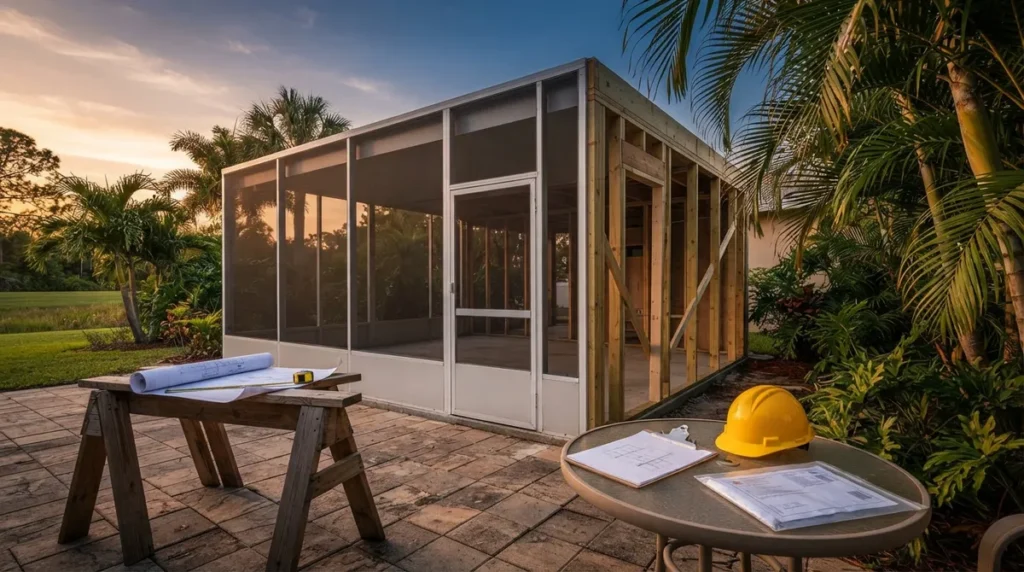
So you've got a lanai or screen enclosure in Florida, and somewhere along the way you learned it was never permitted. Maybe the prior owner skipped the paperwork. Maybe a handyman said, "Don't worry, nobody checks." Or maybe a buyer's inspector just flagged it. Take a breath. This is a very common situation, and it is fixable.
The big question most people ask next is simple: who should I hire for a lanai enclosure after the fact in Florida? The honest answer is that it depends on what your local building department requires, but there is a clear order of operations that keeps you safe, saves money, and avoids hiring the wrong person first.
In this friendly guide, we'll walk through who does what, what to ask before you sign anything, and how the retroactive process generally works across Florida in 2026. Whether you're a homeowner, a realtor trying to save a closing, or a general contractor helping a client, you'll leave knowing exactly who belongs on your team.
The Short Answer: Who to Hire First
For an unpermitted lanai or screen enclosure, the safest first hire is generally a properly licensed enclosure contractor who knows the building department that has jurisdiction over your property. A permitting consultant or permit facilitator can then support the process by researching records, preparing documents, and coordinating with the county or city.
Here's why that combination works so well:
- The contractor holds the license needed to legally apply for and stand behind the work.
- The engineer evaluates the structure and seals drawings when the building official requires them.
- The permitting team handles the filing, tracking, reviewer comments, and inspection scheduling.
No single person does everything in every case. A permitting consultant is not a substitute for a licensed contractor, architect, or engineer when one of those professionals is required, and nobody can guarantee approval. Anyone who promises otherwise is a red flag.
Step One: Find Out Who Actually Has Jurisdiction
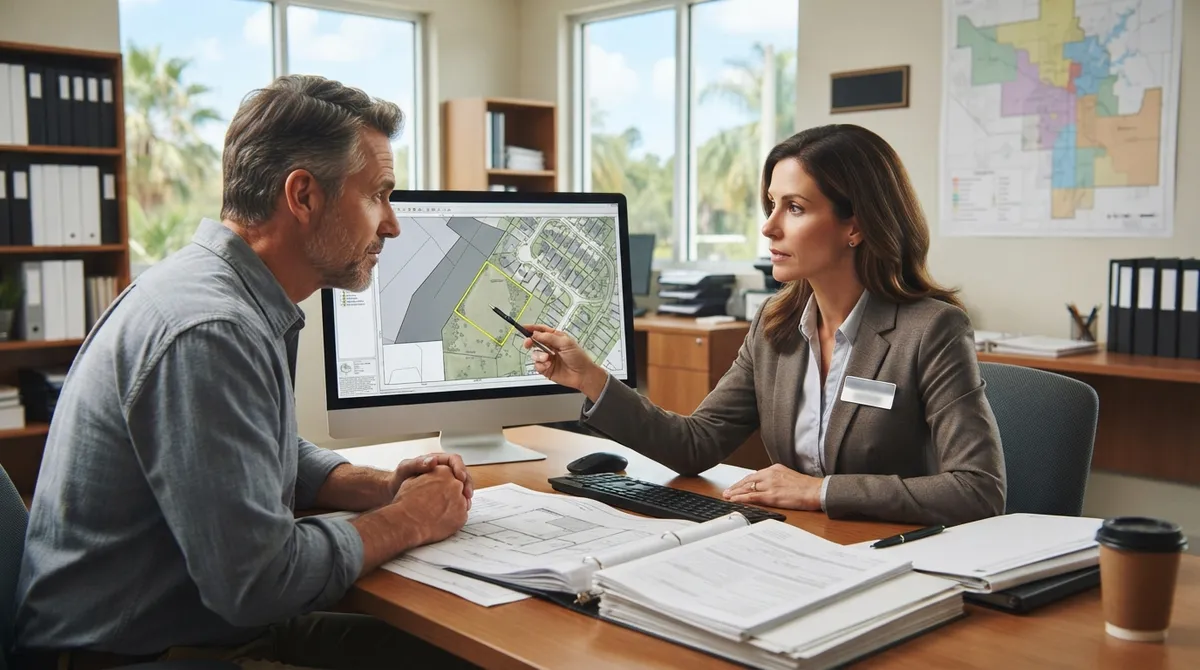
Before you hire anyone, you need to know which building department controls your address. This surprises many people. Florida has 67 counties, but your permitting authority may be a city or town rather than the county, especially near municipal boundaries.
Getting this wrong can mean filing in the wrong place and losing weeks. You can use the building department lookup tool to confirm where your project belongs, and the open permit search to check whether any permit history exists for your property.
It also helps to read about which Florida jurisdiction reviews your project before making any calls.
Step Two: Understand What the Law Says
Florida Statutes §553.79 generally requires a permit before covered construction begins. A completed enclosure does not become approved simply because it has been standing for years. The local authority decides the retroactive application process, required plans, inspections, fees, and any corrective work.
That last part matters. There is no single statewide after-the-fact permit form or uniform fee schedule. Each jurisdiction runs its own procedure, so what works in one county may not apply in the next.
If you want a deeper look at the broader process, our guide on how to get an after-the-fact permit in Florida covers the fundamentals.
The Professionals Who Can Help (and What Each One Does)
Think of this as building a small team. Each person has a lane. Here's how the roles compare.
| Professional | What They Do | What They Can't Do |
|---|---|---|
| Licensed enclosure contractor | Applies for the permit, performs or corrects the work, calls for inspections | Seal engineering drawings unless also a licensed engineer |
| Structural engineer | Evaluates connections, anchoring, wind loads; signs and seals plans or letters | Pull permits or build corrections |
| Permitting consultant / expediter | Researches permit history, prepares packets, files and tracks where authorized | Replace a required license or guarantee approval |
| Drafter | Produces as-built drawings and site plans | Seal drawings that require an engineer |
| Private provider | Performs plan review and inspections in jurisdictions that allow it | Override local building official decisions |
The Licensed Enclosure Contractor
This is usually your anchor. Florida Statutes §489.113 provides for a voluntary certified specialty-contractor category for structural aluminum or screen enclosures. However, it's not established as a uniform statewide requirement for every enclosure contractor, so verify the individual contractor's current license and scope with the state and with your local building department.
Some jurisdictions also require contractors to be registered locally. For example, a Miramar, Florida screen-enclosure permit package states that residential permit applications are issued to properly licensed contractors registered with the city. That's one city's rule, not a statewide one, but it shows why local verification matters. If you're a contractor, the contractor registration checklist and our article on Florida contractor municipality registration are worth a look.
The Structural Engineer
Because enclosures face serious wind loads in Florida, many building departments want engineering, especially for an existing structure they can't inspect during construction. An engineer can review the as-built condition, confirm the framing and anchors hold up, and provide sealed documentation. Learn more about structural engineering services and how engineer letters support retroactive approvals.
The Permitting Consultant
A good permitting consultant is like a translator between you and the building department. They can research permit history, pull the right forms, coordinate documents, and track the application. Where it adds value is speed and fewer mistakes, especially when reviewer comments start rolling in. See what permit facilitation and filing typically includes.
What the Building Department May Ask For
Every jurisdiction is different, but retroactive lanai packages commonly involve a few predictable items. Your building official may require:
- An application signed by the contractor of record or owner, depending on local rules.
- As-built plans showing the structure's size, location, and attachment to the home.
- Engineering or other professional documents when the structure's safety can't be verified visually.
- Photographs and product approvals for components like roofing panels, fasteners, or glass.
- Inspections to confirm the work meets the Florida Building Code.
If framing or connections are concealed, the authority may require them to be exposed. And if the work doesn't meet code, it may need correction or even removal before final approval. That's not meant to scare you. It's simply why getting a realistic assessment early is so valuable.
For help preparing the drawings, our as-built drawings and site plans services are built exactly for this scenario.
Questions to Ask Before You Hire Anyone
A little due diligence goes a long way. Before signing a contract, ask the contractor or consultant to do the following:
- Confirm the permit history and identify the correct jurisdiction.
- Explain who will be the applicant and contractor of record.
- Provide a written scope and a clear fee breakdown.
- Outline the plan for inspections and corrections.
- Show proof of an active Florida license, insurance, and references.
You can verify a contractor's license through the state's licensing database and confirm local registration with the building department. The Florida Department of Business and Professional Regulation is the official place to check license status.
Not sure whether a contractor is the right fit? Our article on who can pull a permit in Florida explains the rules in plain English.
Red Flags That Should Make You Pause
Most hiring mistakes are avoidable. Watch for these warning signs:
- Someone guarantees approval before looking at the structure.
- The person isn't licensed or can't show current credentials.
- They suggest skipping inspections or "just calling it a repair."
- They quote a flat price without knowing your jurisdiction.
- They ask you to pull the permit as owner-builder without explaining the responsibilities.
On that last point, owner-builder permits come with legal obligations, so understand them fully before agreeing. Our overview of owner-builder permits breaks it down. If a contractor ever vanishes mid-project, you'll also want to read 13 costly mistakes if a Florida contractor vanishes.
How Much Will It Cost?
Here's the honest truth: no reliable statewide number exists for after-the-fact lanai permits. Fees and penalties are jurisdiction-specific, and some departments charge multiples of the standard permit fee for work done without a permit. Engineering, drafting, and any corrective work add to the total.
| Cost Factor | Why It Varies |
|---|---|
| Permit and penalty fees | Set by the local building department |
| As-built drawings | Depends on size and complexity |
| Engineering letter or sealed plans | Depends on condition and wind requirements |
| Corrective work | Depends on what fails inspection |
| Inspections and resubmittals | Depends on how clean the first submittal is |
For a realistic look at budgeting, see our after-the-fact permit cost guide.
Who Should You Hire Based on Your Situation?
Your best first call depends on where you stand right now.
If You're a Homeowner
Start with a permitting team that can assess your property, then bring in a licensed contractor and engineer as needed. This keeps you from paying a contractor to guess at requirements. Our homeowner resources were designed with this exact need in mind.
If You're a Realtor or Buyer
A closing deadline changes everything. You'll want fast research, a clear scope, and someone who can coordinate quickly. Learn how realtor closing support works, and read about whether a home sale can close with unpermitted work.
If You're a General Contractor
You may already have the license, but not the bandwidth. Outsourcing drafting, engineering, and filing frees your crew to keep working. Explore services built for general contractors.
If You Received a Violation
If code enforcement has already contacted you, move quickly and don't ignore the notice. Our guide on what to do after a code enforcement notice and our code compliance violations service can help you respond calmly.
Why the Right Team Makes the Process Smoother
One of the biggest delays in retroactive permitting is the back-and-forth between a contractor, an outside engineer, and a drafter who never talk to each other. When reviewers send comments, everyone scrambles.
That's where a single coordinated team helps. At 1 Contractor Solutions, drafting and engineering happen in house, with our own engineer sealing the work, so reviewer comments get fixed quickly instead of bouncing between vendors. We handle after-the-fact and expired permits that others often decline, and we serve all 67 Florida counties. You can visit us on Google — 1 Contractor Solutions to see what customers say about working with us.
If you want to see how it all fits together, the guide to who should I hire to legalize an after-the-fact permit expands on this approach, and why your Florida patio enclosure may still be unpermitted explains how these situations happen in the first place.
A Simple Game Plan to Follow
- Confirm your jurisdiction and check for any existing permit history.
- Call the building department to ask about their retroactive process and required documents.
- Get an assessment from a permitting professional and, if needed, a structural engineer.
- Hire a licensed contractor to apply, correct, and stand behind the work.
- Submit, respond to comments, and pass inspections through final approval.
Following these steps in order keeps you from spending money on the wrong thing first. For a wider look at the process, check out our overview of how to legalize unpermitted work in Florida, and keep our 2026 guide to fixing unpermitted construction handy.
Ready to Get Your Lanai Legalized?
You don't have to figure this out alone, and you don't have to panic. An unpermitted lanai is one of the most common issues we see, and with the right team, most can be brought into compliance. If you'd like a clear starting point, get a free quote and we'll tell you which jurisdiction controls your property, what it will take, and then go do the work. You can also follow us on Facebook or follow us on LinkedIn for more helpful Florida permitting tips.
FAQs
Who can pull an after-the-fact permit for a lanai enclosure in Florida?
Generally, a properly licensed Florida contractor whose license covers enclosure work can apply, and some jurisdictions also require local registration. Rules vary by city and county, so confirm with your building department before you hire.
Can a Florida permitting consultant legalize an unpermitted lanai on their own?
A consultant can research permit history, prepare documents, and file or track the application where authorized, which is a huge help. But they can't replace a licensed contractor or engineer when one is required, and no one can guarantee approval.
How much does an after-the-fact lanai permit cost in Florida?
There's no uniform statewide fee, so costs depend on your local building department's fees and penalties, plus any drafting, engineering, and corrective work. A quick call to your jurisdiction is the best way to get a realistic starting number.
What happens if my unpermitted lanai doesn't meet Florida Building Code?
The building official may require corrections, and in some cases removal, before final approval. The good news is that many enclosures can be brought into compliance with the right engineering and repairs, so getting an early assessment really pays off.
We do this work every day across all 67 Florida counties. Call (866) 314-6931 and we will tell you what your situation actually requires — including when you do not need us.
Related services
Permit Facilitation & Filing
You have a crew scheduled, a client asking for dates, and a permit sitting somewhere in a queue you cannot see. We file it, w…
See the servicePlan Review Coordination
A permit in plan review is not one queue. On a commercial project it can be six queues, each with its own reviewer, its own c…
See the serviceReady to get your permit moving?
One call tells you which jurisdiction controls your project, what it will take, and what it will cost. Most of the time we can scope it on the phone.