
Blog
Can You Live in a Florida Home During After-the-Fact Permitting?
Wondering if you can stay in your Florida home during after-the-fact permitting? Learn what decides occupancy and the steps to protect your family.
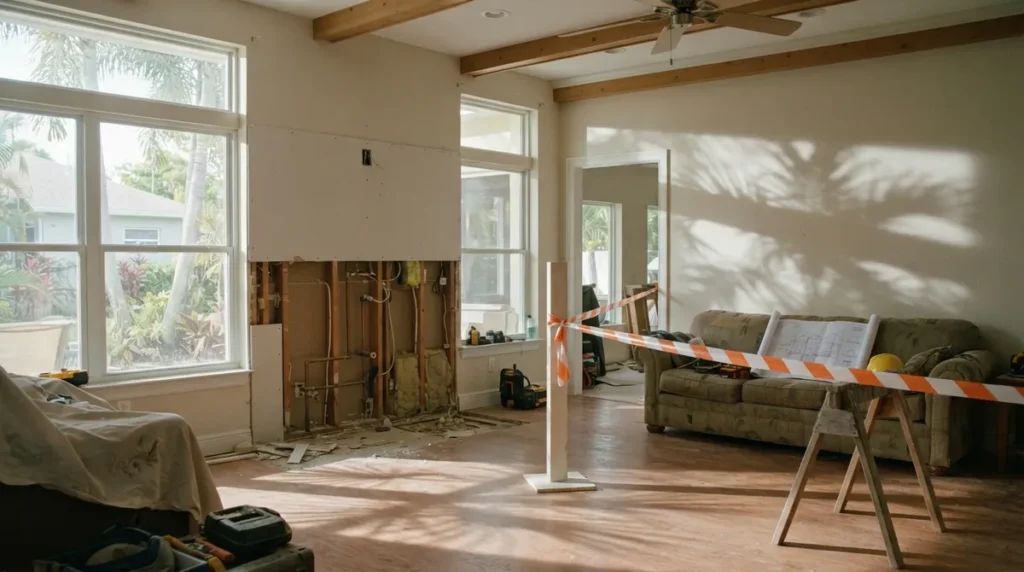
Key Takeaways
-
There is no single statewide rule in Florida; whether you can stay in a home with unpermitted work depends on the type of work, any immediate safety hazard, and the local building official's decision.
-
Submitting an after-the-fact permit application does not automatically make the work legal or grant permission to occupy the space; it starts a review with the building department.
-
Any stop-work order, unsafe-structure notice, or evacuation order must be followed immediately, and you must stay out of any restricted areas.
-
Get written confirmation from your local building department on whether the home or affected area may remain occupied while the permit review is pending.
-
Unpermitted electrical, gas, plumbing, or structural changes are the highest-risk items and should be evaluated for safety before anything else, since they are most likely to trigger occupancy restrictions.
-
Inspectors may require concealed work to be exposed, but a targeted opening or engineer's field documentation can sometimes reduce how much must be torn open, subject to local approval.
Picture this: you find out the deck, the garage conversion, or the finished bonus room in your Florida home never got a permit. Maybe a previous owner skipped it. Maybe a handyman said, "Don't worry, nobody checks." Now there's a quiet little knot in your stomach, and one big question: can I live in a house with unpermitted work during permitting in Florida, or do I need to pack the car?
First, take a breath. You are far from the only person asking this, and in many cases there is a clear path forward. The honest answer, though, is that there is no single statewide yes-or-no rule. Whether you can stay put depends on what the work is, whether it creates a safety hazard, and what your local building official decides.
In this friendly guide, we'll walk through how occupancy really works while a permit is pending, what can trigger an order to leave, and the practical steps that protect you, your family, and your wallet. Think of it as a calm conversation with someone who has seen this movie many times.
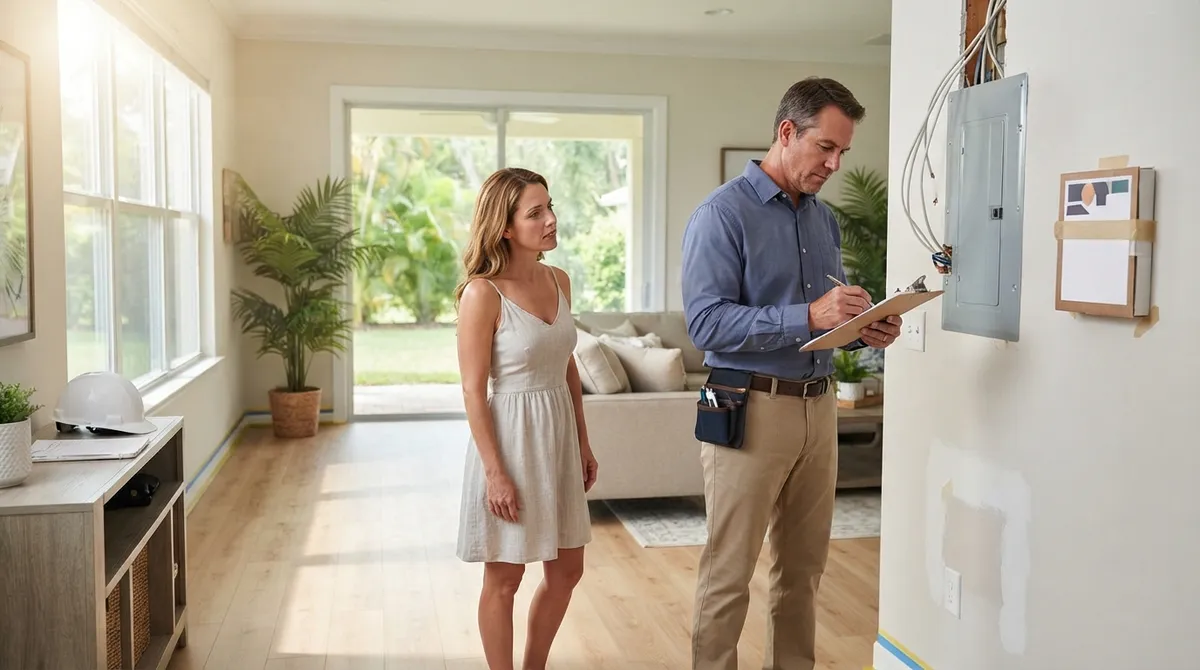
The Short Answer: It Depends on Safety and Local Orders
Here is the straight talk. Florida law generally requires a permit before covered construction, alteration, repair, or demolition begins. That requirement comes from Florida Statutes §553.79, and it comes with exemptions and local variations. When work was done without a permit, the matter is handled by your local building department, also called the authority having jurisdiction.
Applying for an after-the-fact permit does not automatically make the work legal, and it does not automatically grant permission to occupy the space. Think of the application as the start of a conversation with the building department, not a hall pass.
In practice, most homeowners with unpermitted work that is not an immediate safety threat continue living in their homes while they work through the process. But that is a general observation, not a guarantee. The building official has the final say.
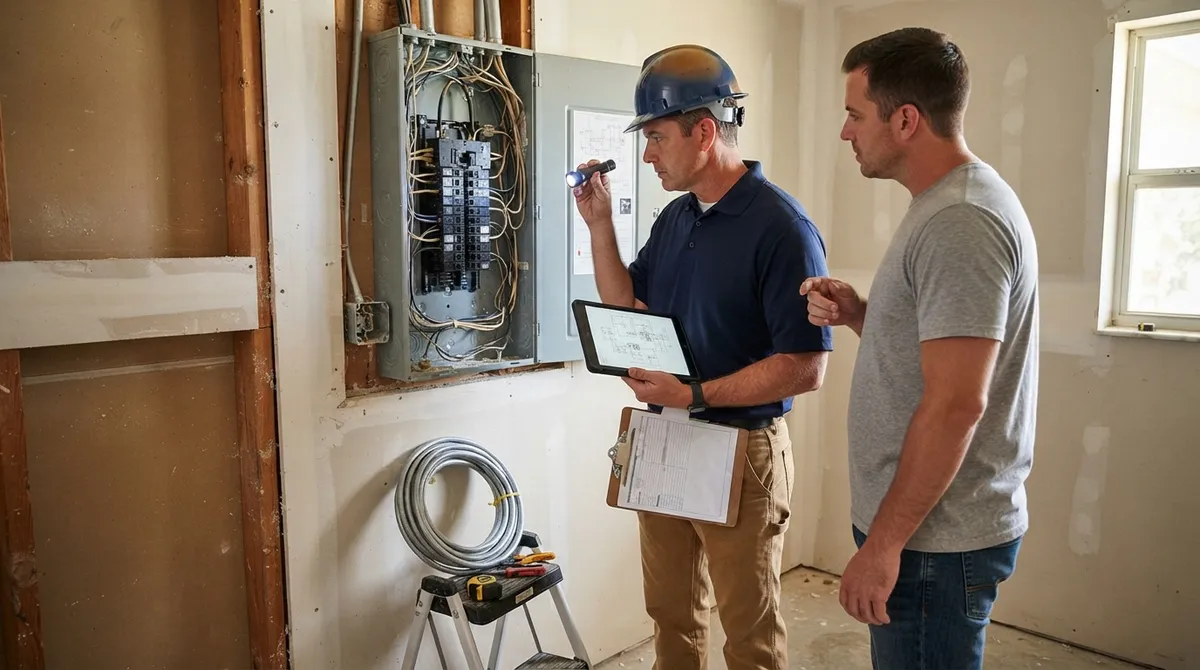
What Decides Whether You Can Stay?
Three big factors usually shape the answer:
- The nature of the work. A permitted-after-the-fact fence is a very different situation from live electrical wiring, altered load-bearing walls, or a roof structure that was changed without engineering.
- The condition of the building. If there is an immediate life-safety concern, officials can restrict occupancy of part or all of the structure.
- Orders from the building official or code enforcement. Stop-work orders, unsafe-structure notices, or evacuation orders must be followed. Do not occupy an area covered by one.
If none of those apply, you may be able to continue living in the home while review moves along. But the only way to know for sure is to ask your local building department, ideally in writing.
Occupancy Scenarios at a Glance
| Scenario | Typical Occupancy Outlook | What to Do |
|---|---|---|
| Low-risk work (e.g., a small unpermitted shed or minor non-structural finish work) | Often continued occupancy while an after-the-fact permit is processed | Apply promptly and confirm in writing with the building department |
| Unpermitted electrical or plumbing changes | Depends on safety; inspectors may require corrections | Consider having the system evaluated and prepare for inspection |
| Structural changes (walls, roof framing, additions) | Higher scrutiny; engineering review is common | Gather as-built drawings and engineer letters early |
| Stop-work order or unsafe-structure notice issued | Follow the order; do not occupy restricted areas | Contact the building department and seek professional help immediately |
| Work that created new living space (garage conversion, enclosed patio) | Depends on safety and local review; may affect the home's approval | Ask whether a certificate of occupancy or completion applies |
Keep in mind that this table describes general patterns. Every Florida city and county handles things a little differently.
Certificates of Occupancy: Where the Confusion Starts
Many homeowners hear "certificate of occupancy" and assume it means they must move out until one is issued. That is not quite right, so let's clear it up.
The Florida Building Code generally requires a certificate of occupancy before a new building, or a building with a changed occupancy classification, is used or occupied. That is different from ordinary, continued occupancy of an existing home that already has its approvals in place.
So the real question becomes: does your unpermitted work affect the home's existing approval, or does it require a new certificate? A big addition or a converted garage might raise that question, while a minor repair probably will not. Your building department can tell you, and a certificate of occupancy specialist can help you understand what your situation requires. If you are curious about the difference between the two certificate types, this breakdown of certificate of occupancy vs. certificate of use is a handy read.
Can the Building Department Make You Move Out?
In some circumstances, yes. A building official may withhold a certificate of occupancy or completion, require corrections, or issue a stop-work order when code violations or an immediate safety threat are found. Evacuation or unsafe-structure orders are the most serious, and they must be followed.
Here are the kinds of situations that can raise red flags:
- Exposed or improperly installed electrical wiring that could cause a fire or shock hazard
- Structural alterations that were never engineered, such as removed load-bearing walls
- Gas lines or water heaters installed without inspection
- Roof or truss changes that compromise wind resistance
- Living space created in an area never designed for it, with no safe exits
The good news is that these outcomes are typically tied to genuine safety concerns, not simply to the fact that a permit is missing. Most owners who come forward and cooperate with the process find the building department more helpful than they feared.
How After-the-Fact Permitting Actually Works
After-the-fact permitting is handled by your local jurisdiction, and the exact steps vary. Still, the general flow looks familiar across much of Florida.
- Identify the authority having jurisdiction. Near city lines this is not always obvious. Our building department lookup tool can point you in the right direction.
- Pull the permit and code-enforcement history. Knowing what is open, closed, or expired prevents surprises. Try the open permit search.
- Prepare plans or as-built drawings. These document what was actually built. Learn more about as-built drawings.
- Submit the application and pay applicable fees. Some jurisdictions charge additional or penalty fees for work done without a permit.
- Go through plan review. Reviewers may issue comments that need responses or revisions.
- Schedule inspections. Concealed work may need to be exposed, such as opening a wall or ceiling, so inspectors can verify it.
- Complete corrections and close out the permit. Once everything passes, the permit is finaled.
If you want a deeper walkthrough, our guide on how to get an after-the-fact permit in Florida covers each stage in detail, and our page on after-the-fact and expired permits explains how we help.
Will Inspectors Really Open My Walls?
They can. For unpermitted work, inspectors cannot verify what they cannot see. If framing, wiring, plumbing, or insulation is hidden behind finished surfaces, the building official may require some of it to be exposed for inspection.
Does that mean a demolition party for your living room? Not necessarily. Often a targeted opening or an engineer's field verification is enough. An engineer letter can sometimes document concealed conditions and reduce how much has to be torn open, though acceptance is always up to the local official.
What Are the Possible Consequences?
Let's talk honestly about the downside, so there are no surprises. Consequences of unpermitted work can include:
- Enforcement notices from code enforcement
- Additional or penalty fees on top of normal permit costs
- Required corrective work to bring things up to code
- In cases where work cannot be brought into compliance, removal or demolition
Exact procedures and fees vary by city and county. For a closer look at the money side, see our articles on the penalty for building without a permit in Florida and after-the-fact permit costs. Many owners are relieved to learn that legalizing is often far more achievable than demolition.
Your First Moves: A Practical Checklist
If you have just discovered unpermitted work, here is a calm, sensible sequence to follow:
- Check for official orders. If there is a stop-work order, unsafe-structure notice, or evacuation order, follow it and stay out of restricted areas.
- Identify your jurisdiction. Know whether the city, county, or another entity controls permitting for your address.
- Gather records. Request the permit history and any code-enforcement history for the property.
- Document the work. Photos, receipts, contractor names, and dates can all help later.
- Ask in writing. Email the building department and ask whether the home or affected area may remain occupied while review is pending. A written reply protects you.
- Consider safety now. If you suspect a wiring, gas, or structural problem, address it before anything else. Safety does not wait for paperwork.
- Get professional help. A permitting team can coordinate drawings, engineering, filing, and inspections so you are not juggling it alone.
Remember, a permitting professional can help you organize records, drawings, engineering review, applications, and inspections, but cannot guarantee approval or override the building official's safety and occupancy decisions. Be wary of anyone who promises otherwise.
Special Situations: Buyers, Sellers, and Lenders
Unpermitted work does not only affect people living in their homes. It also shows up at the closing table.
If you bought a Florida house and later discovered unpermitted work, the building department will generally treat the property, not the person, as the focus. Disclosing the issue and starting the legalization process is usually the wise path. Our article on what to do if a prior owner skipped permits is a helpful starting point.
Sellers and realtors should also know that open permits and unpermitted work can slow down or derail a sale. Learn more about how an open permit found at closing is handled, or explore our realtor and closing support.
How Local Differences Change the Picture
Florida has 67 counties and hundreds of municipalities, and each one runs its own permitting office with its own forms, fees, and timelines. What works smoothly in one place can look different just across a county line.
For example, owners in Hillsborough County, Pinellas County, or Manatee County may encounter different submittal requirements and review processes. Knowing which office actually controls your property is half the battle, and it is something our team does every day across the state.
How 1 Contractor Solutions Can Help
We are Florida's outsourced permitting department. When unpermitted work is keeping you up at night, we handle the heavy lifting: figuring out which jurisdiction controls your address, preparing as-built drawings and engineering, filing the application, tracking it, and working every reviewer comment through to closeout.
Our drafting and engineering are in house, and our own engineer signs and seals the work, so when a reviewer flags something we fix it rather than waiting on an outside consultant. If you are in a bind, our urgent permit rescue service is built for stop-work orders, denials, and closings held up by permit issues. You can also read what customers say, and visit us on Google — 1 Contractor Solutions to see reviews of our team.
We serve homeowners, general contractors, solar companies, realtors, and design professionals alike, with same-day response and 24/7 availability. Want to stay connected for more Florida permitting tips? Follow us on LinkedIn or follow us on Facebook.
You can also reference the official language yourself. The Florida Legislature publishes the statutes online, including Florida Statutes §553.79 on building permits, which is a good place to start if you like to read the source material.
Common Mistakes to Avoid
- Ignoring a notice. Letters from code enforcement do not disappear on their own, and deadlines matter.
- Assuming the application equals approval. A pending permit is not permission to occupy or proof of code compliance.
- Covering up the work. Hiding or finishing over concealed work usually makes inspection harder, not easier.
- Skipping the safety check. If something could cause a fire, shock, or collapse, address it right away.
- Relying on verbal answers. Get responses from the building department in writing whenever possible.
- Going it alone with complex structural work. Engineering questions are best handled by qualified professionals.
You Have More Options Than You Think
So, can you live in a house with unpermitted work during permitting in Florida? Often, yes, but it is never automatic. Your ability to stay depends on the type of work, how safe the home is, and what your local building official says. The best approach is to act promptly, be transparent, protect everyone's safety, and get the answer in writing.
Unpermitted work can feel like a heavy secret, but remember: most of these situations are solvable. Thousands of Florida homeowners legalize past work every year, finish the process, and get back to simply enjoying their homes. With the right records, drawings, and guidance, you can too.
If you are ready to take the stress out of the process, get a free quote from our friendly team today. Tell us the address and the problem, and we will tell you what it will take and then go do it.
FAQs
Can I stay in my Florida home while an after-the-fact permit is pending?
In many cases, yes, as long as there is no stop-work, unsafe-structure, or evacuation order and no immediate safety hazard. But a pending application doesn't guarantee permission to occupy, so ask your local building department in writing to be sure.
Can a Florida building department make me move out because of unpermitted work?
It can, but typically only when there is an immediate safety threat or an official order like an unsafe-structure or evacuation notice. If you receive one, follow it right away and reach out for help to resolve the underlying issues.
Do I need a certificate of occupancy for unpermitted renovations in Florida?
A certificate of occupancy is generally required for new buildings or those with a changed occupancy classification, not for ordinary continued occupancy of an existing home. Whether your renovation triggers one depends on the scope of the work, so confirm with your local building department.
Can inspectors require walls or ceilings to be opened for unpermitted work?
Yes, concealed work may need to be exposed so inspectors can verify it meets code. Sometimes a targeted opening or an engineer's documentation can limit how much has to be opened, though the building official makes the final call.
What happens if I discover unpermitted work after buying a Florida house?
The best first step is to identify your jurisdiction, pull the permit history, and ask the building department how to proceed. Most owners start the after-the-fact process with as-built drawings, any needed engineering, and inspections to legalize the work.
We do this work every day across all 67 Florida counties. Call (866) 314-6931 and we will tell you what your situation actually requires — including when you do not need us.
Related services
Permit Facilitation & Filing
You have a crew scheduled, a client asking for dates, and a permit sitting somewhere in a queue you cannot see. We file it, w…
See the servicePlan Review Coordination
A permit in plan review is not one queue. On a commercial project it can be six queues, each with its own reviewer, its own c…
See the serviceReady to get your permit moving?
One call tells you which jurisdiction controls your project, what it will take, and what it will cost. Most of the time we can scope it on the phone.