
Blog
Got a Code Enforcement Notice in Florida? Do This Now
Received a Florida code enforcement notice for unpermitted work? Here's exactly what to do first, next, and last to resolve it fast.
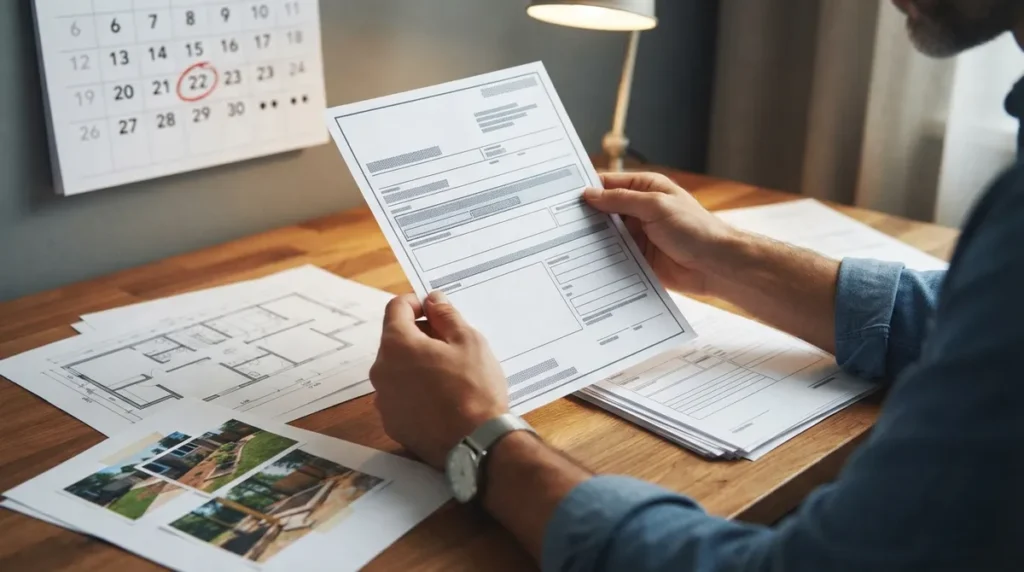
Key Takeaways
-
Read the notice carefully and record key details like case number, code sections cited, compliance deadline, and notice type immediately, as this information is essential for all communication with building departments.
-
Contact both code enforcement and the building department within one to two days—they are separate entities handling different aspects, and missing either one leaves your case unresolved.
-
Stop work immediately if the notice is a stop-work order; ignoring this instruction adds penalties and erodes goodwill with reviewing officials, potentially delaying resolution significantly.
-
Gather all documentation upfront including contractor invoices, prior permits, property records, and photographs, as reviewers move faster when you provide complete information and may require sealed engineering drawings.
-
Get written confirmation from code enforcement that your case is closed after passing inspections and finalizing your permit, since these are two separate tracks and passing building inspection alone does not close the enforcement case.
-
Hire Florida-licensed professionals for corrective work involving structural, electrical, plumbing, mechanical, or life-safety systems, and verify their credentials through the Department of Business and Professional Regulation before signing any contract.
Finding a code enforcement notice taped to your door or waiting in your mailbox can make your stomach drop. Take a breath. You are not the first Florida property owner to face this, and you will not be the last. Whether you are a homeowner who inherited a mystery addition, a general contractor mid-project, or a realtor trying to save a closing, knowing exactly what should i do after a code enforcement notice for unpermitted work can turn a stressful situation into a manageable checklist.
The good news is that Florida has clear pathways for resolving unpermitted work, even though the exact process varies by city and county. This article walks you through every step, from the moment you read the notice to the day you get written confirmation that your case is closed. We will also point you toward resources like the building department lookup and open permit search tools that make this process much less intimidating.

Understanding What Kind of Notice You Received
Not every code enforcement letter is the same, and the type you received determines your next move. Some notices simply flag a violation and give you time to respond. Others, like a stop-work order, demand that construction halt immediately. Reading the fine print carefully is your very first job.
Key Details to Record From Your Notice
Before you do anything else, sit down with the notice and pull out the essential facts. This information will matter every time you call the building department or fill out an after-the-fact permit application.
- Issuing city or county and the property address in question
- Case number and the specific code sections cited
- Date the notice was served and your compliance deadline
- Whether it is a notice of violation, stop-work order, or citation
- Any hearing date or appeal window mentioned
If your county isn't immediately obvious from the letterhead, tools like our jurisdiction lookup resource can help clarify which office actually has authority over your parcel, since municipal boundaries in Florida can get confusing near city lines.
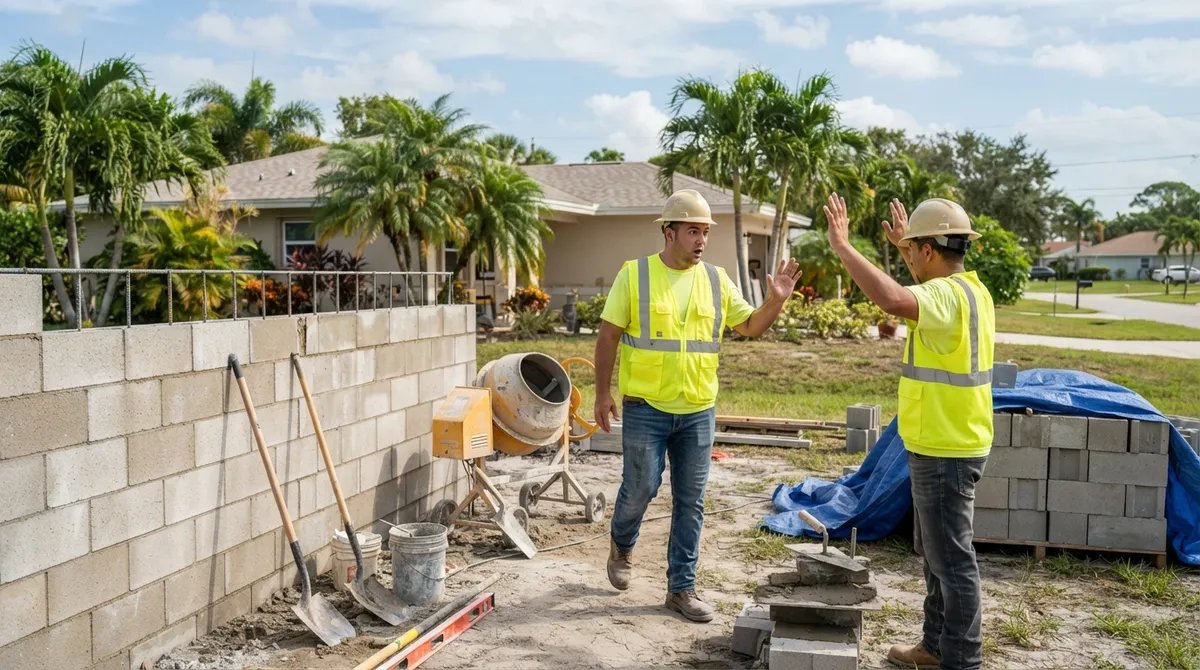
Step One: Stop Work If the Notice Requires It
If your notice is a stop-work order, this part is non-negotiable. Florida Statute 489.127 authorizes the Department of Business and Professional Regulation to issue stop-work orders when there is probable cause that work requiring certification or registration is happening without a valid license. Local building departments have similar authority under their own codes.
St. Petersburg's building code, for example, states that work under a stop-work notice must cease until a new or revised permit, or written authorization from the building official, allows it to resume. Ignoring this instruction almost always makes things worse, adding penalties and eroding goodwill with the reviewing office.
Step Two: Contact Both Code Enforcement and the Building Department
Here's something a lot of property owners miss: the code enforcement officer and the building department are not the same people, and they play different roles. Code enforcement manages the violation case itself, tracking deadlines and potential fines. The building department decides whether your project can actually be permitted, what plans are needed, and which inspections must happen.
Calling only one office leaves half the puzzle unsolved. Reach out to both, ideally within a day or two of receiving your notice, and take notes on who you spoke with and what they told you.
Questions Worth Asking Right Away
- Is this a compliance issue I can resolve with an after-the-fact permit, or do I need a hearing?
- What documents, plans, or engineering reports will the building department require?
- Are there fees beyond the standard permit fee, and how are they calculated locally?
- Will inspectors need to see concealed work, meaning walls or ceilings may need to be opened?
- What is the realistic timeline for closing both the permit and the enforcement case?
Step Three: Gather Every Document You Can Find
Permitting reviewers love documentation, and the more you can hand them upfront, the faster things move. Before you apply for anything, collect everything related to the property and the work in question.
- The notice itself, along with any photos of the alleged violation
- Prior permits, surveys, and property records
- Contractor invoices, material specifications, and any existing plans
- Inspection history and previous approvals for the property
- Photographs of the current condition, especially if walls or systems are still exposed
If you're missing plans entirely, our team can help you produce as-built drawings that document the existing conditions accurately, which is often the very first thing a reviewer will ask for.
Step Four: Explore Your After-the-Fact Permit Options
Many Florida jurisdictions allow property owners to apply for an after-the-fact permit to legalize unpermitted work retroactively. But don't assume this is automatic. The local building official may require sealed engineering drawings, exposure of concealed work for inspection, corrections to bring the project up to current code, and multiple trade permits depending on what was built.
Some local examples illustrate how much these requirements vary. Orange City's Building Division notes that discovered unpermitted work is stopped immediately, and the permit fee plus a penalty of two times the standard fee may apply. That is a local rule, not a statewide formula, which is exactly why checking with your specific jurisdiction matters so much.
| Resolution Path | What It Involves | Best For |
|---|---|---|
| After-the-Fact Permit | Submit plans, pay fees and penalties, pass inspections, close permit | Work that meets current code or can be corrected |
| Remove or Reconstruct | Demolish noncompliant work or rebuild to code | Work that cannot feasibly be brought into compliance |
| Contest or Appeal | Request a hearing to dispute the violation | Cases where the notice is factually or legally incorrect |
Step Five: Line Up the Right Professionals
If your unpermitted work touches structural, electrical, plumbing, gas, mechanical, or life-safety systems, this is not a do-it-yourself situation. You'll want a Florida-licensed contractor, architect, engineer, or permitting specialist involved before you disturb any concealed work or submit plans for review.
This is where working with a team that has in-house structural engineering and MEP engineering capabilities makes a real difference. When a reviewer flags an issue, having your own sealed drawings and engineering support in one place means faster corrections instead of waiting on outside consultants to call back.
Verify Licensing Before You Hire Anyone
Florida law allows action against unlicensed contracting activity, and local agencies can withhold final approval or even revoke a permit if licensing requirements are violated. Always verify credentials through Florida's Department of Business and Professional Regulation or your local licensing office before signing a contract for corrective work.
Step Six: Complete Inspections and Close Both the Permit and the Case
Florida jurisdictions often require several inspections for legalized work, including structural, electrical, plumbing, mechanical, and final inspections. Concealed work sometimes needs to be exposed so inspectors can verify what's behind the walls.
Here's a detail that trips people up constantly: passing your building inspection does not automatically close the code enforcement case. These are two separate tracks. Once your permit is finaled, follow up with the code enforcement office directly and get written confirmation that the enforcement case itself is closed. Keep that documentation forever, because it will matter the next time you sell, refinance, or insure the property.
What Happens If You Ignore the Notice
Ignoring a code enforcement notice rarely makes it disappear. Florida code-enforcement cases can involve permit and plan-review fees, after-the-fact or penalty fees, correction costs, inspection fees, and civil penalties or liens where local law authorizes them. Unresolved violations can also complicate selling, refinancing, or getting proper insurance coverage down the road, since unpermitted work can affect a certificate of occupancy.
Common Financial Consequences of Delay
| Consequence | Potential Impact |
|---|---|
| Accumulating Fines | Daily or per-violation penalties that grow over time |
| Property Liens | Unresolved civil penalties attached to the property title |
| Sale or Refinance Delays | Buyers, lenders, and title companies flag open violations |
| Insurance Complications | Carriers may deny claims tied to unpermitted construction |
If a violation is holding up a real estate transaction, our realtor and closing support services are designed specifically to untangle these situations quickly, since we know how much a delayed closing can cost everyone involved.
When You Disagree With the Violation
Not every notice is accurate. If you believe the citation is factually or legally wrong, most Florida jurisdictions offer a hearing or appeal process. Deadlines and procedures differ by county, so check your notice for hearing information and contact the code enforcement office promptly to preserve your right to contest it.
How Professional Permitting Help Speeds Things Up
Handling a code enforcement case alone means learning an unfamiliar system under deadline pressure. That's exactly why so many general contractors, solar companies, realtors, and homeowners bring in a permitting partner. At 1 Contractor Solutions, we've spent more than 15 years navigating Florida's 67 counties and over 400 municipalities, and our urgent permit rescue service exists specifically for situations like stop-work orders and closing delays.
Because our drafting and engineering teams work in-house, with our own engineer sealing the drawings, we can respond to reviewer comments fast instead of waiting on outside consultants. We're also a licensed private provider, meaning we can sometimes perform your plan review ourselves rather than leaving you stuck in a county queue. Whether you're in Tampa, St. Petersburg, Miami, or Bradenton, we know the local quirks that can make or break your timeline.
You can also visit us on Google — 1 Contractor Solutions to see how we've helped property owners across the state resolve these exact situations, or follow us on Facebook for regular permitting tips and updates.
A Quick Reference Checklist
- Read the entire notice and record every key detail
- Stop work immediately if instructed to do so
- Contact both code enforcement and the building department
- Gather all property records, plans, and documentation
- Determine whether an after-the-fact permit is possible
- Hire licensed, verified professionals for any corrective work
- Complete all required inspections
- Get written confirmation that both the permit and the case are closed
For additional guidance specific to Florida's after-the-fact process, the Florida Statutes Chapter 489 outlines the statewide framework, though local building departments administer the day-to-day details.
Moving Forward With Confidence
A code enforcement notice feels overwhelming at first, but it's genuinely a solvable problem for the vast majority of Florida property owners. Whether you need permit facilitation and filing, sealed plans and engineering, or help navigating a code compliance violation from start to finish, having an experienced team in your corner makes the entire process faster and far less stressful.
Ready to get your unpermitted work legalized and your case closed for good? Request your free quote today and let our team map out exactly what your property needs. You can also connect with us on LinkedIn to see recent case studies and permitting wins from across the Sunshine State.
FAQs
What should I do first after receiving a Florida code enforcement notice for unpermitted work?
Read the entire notice carefully and write down the case number, cited code sections, compliance deadline, and whether it's a stop-work order or violation notice. Then reach out to both the code enforcement office and the local building department right away, since they handle different parts of your case.
Can I get an after-the-fact permit for unpermitted construction in Florida?
In many cases, yes! Most Florida jurisdictions allow after-the-fact permits, but you'll likely need sealed plans, possibly exposed concealed work for inspection, and corrections to meet current code. It's not automatic, so checking with your specific building department is a smart first move.
Will I have to open walls or ceilings for inspection of unpermitted work?
It's possible, especially if the work involves structural, electrical, or plumbing systems that inspectors can't verify otherwise. This can feel frustrating, but it's really just the building department's way of confirming everything is safe and up to code.
What happens if I ignore a Florida code enforcement notice or stop-work order?
Ignoring it typically leads to bigger headaches down the road, including accumulating fines, potential liens on your property, and complications when you try to sell or refinance. It's always better to address it head-on rather than hoping it goes away.
Does a building permit close the code enforcement case automatically?
Not necessarily, and this catches a lot of people off guard. Passing your building inspection and finalizing the permit is a great step, but you'll still want written confirmation from code enforcement that your case specifically has been closed.
We do this work every day across all 67 Florida counties. Call (866) 314-6931 and we will tell you what your situation actually requires — including when you do not need us.
Related services
Permit Facilitation & Filing
You have a crew scheduled, a client asking for dates, and a permit sitting somewhere in a queue you cannot see. We file it, w…
See the servicePlan Review Coordination
A permit in plan review is not one queue. On a commercial project it can be six queues, each with its own reviewer, its own c…
See the serviceReady to get your permit moving?
One call tells you which jurisdiction controls your project, what it will take, and what it will cost. Most of the time we can scope it on the phone.