
Blog
How to Handle Miami-Dade After-the-Fact Permits vs. Other Counties
Learn how Miami-Dade after-the-fact permits differ from other Florida counties, plus a step-by-step plan to legalize unpermitted work.
Key Takeaways
-
In Miami-Dade, first confirm whether your property falls under county or a city building department, since many municipalities run their own permitting and enforcement.
-
Acting before a Notice of Violation is issued can change your options; Miami-Dade publishes a 100% additional 'double fee' in certain violation cases, so verify the current amount with the agency.
-
Do not assume Miami-Dade's surcharges, forms, timelines, or inspection sequence apply in other Florida counties, or that lighter rules elsewhere apply in Miami-Dade.
-
Expect inspectors to possibly require concealed framing, wiring, or plumbing to be uncovered, and plan budget and time for possible correction or reconstruction.
-
Prepare as-built drawings that match what is actually on site, and budget for engineering letters when structural, electrical, or mechanical scope is involved.
-
After approval, Miami-Dade guidance generally allows 180 days to complete work and call for inspections, with one possible 180-day extension, so confirm current rules to avoid lapsing.
If you have just discovered that a deck, a re-roof, a bathroom remodel, or a pool cage was built without a permit, take a breath. You are in good company, and there is a real path forward. The tricky part is that the path changes depending on where your property sits. Understanding how Miami-Dade after-the-fact permits differ from other Florida counties can save you weeks of frustration and a surprising amount of money.
Florida law generally requires a building permit before covered construction, alteration, repair, or demolition. But each local enforcing agency runs its own show, so forms, fees, inspection steps, and enforcement habits are not identical from one jurisdiction to the next. Miami-Dade, with its famously strict product approval rules and detailed fee schedule, has some features that other counties simply do not share.
This friendly guide walks you through the process step by step, compares Miami-Dade to the rest of the state, and shows you where homeowners, contractors, solar companies, and real estate pros most often get tripped up. Along the way, we will point out how a permitting partner can take the weight off your shoulders.
What an After-the-Fact Permit Actually Is
An after-the-fact permit (often shortened to ATF) is a way to document and bring previously unpermitted work into compliance. Here is the part that surprises most people: it is not an automatic approval, and it does not waive inspections. The work still has to be documented, reviewed, inspected, and shown to meet code.
Think of it like turning in homework late. The teacher will still grade it, and sometimes asks you to redo a problem or two. If you want a deeper primer, our guide on what is after-the-fact permitting in Florida covers the basics, and our after-the-fact and expired permits service page explains how we handle these files day to day.
Step 1: Confirm Which Agency Actually Controls Your Property
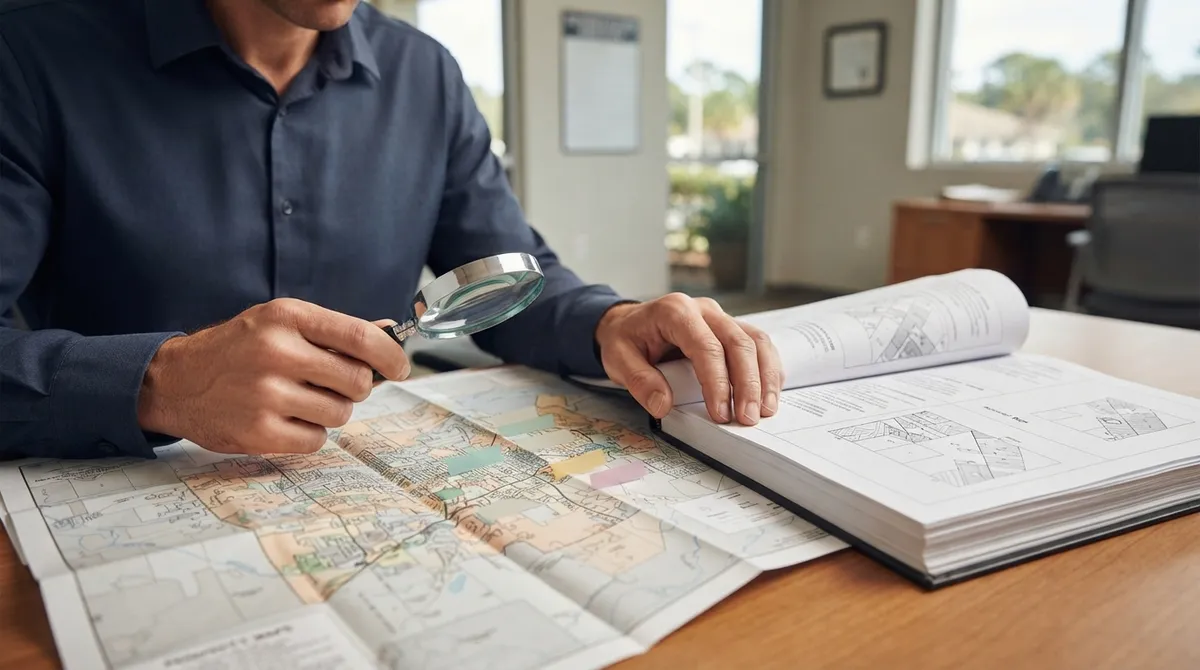
This is the single most overlooked step, and it matters more in Miami-Dade than almost anywhere else. Miami-Dade County's procedures do not automatically govern every property in the county. Many municipalities, such as the City of Miami and others, administer their own building permits and enforcement.
Before you spend a dollar, figure out who your permitting authority really is. A property near a city line can be trickier than it looks. Our building department lookup tool is a good starting point, and our article on which Florida jurisdiction reviews my project walks through the common pitfalls.
- Pull your property address and folio or parcel number.
- Check whether the property is in an incorporated municipality or unincorporated county.
- Confirm the correct building department by phone or through its portal.
- Search for any open permits or violations tied to the address.
That last item is where our open permit search tool comes in handy.
Step 2: Find Out Whether a Violation Is Already in Play
There is a big difference between volunteering to legalize work and responding to a Notice of Violation. In Miami-Dade, published guidance describes a 100% additional fee, often called a "double fee," in certain violation cases when a Notice of Violation has been issued for unpermitted work. The county's fee schedule also describes an additional fee when required work began before a permit was obtained.
The takeaway is simple: acting before an enforcement case opens can change your options. If a notice already exists, you will want to resolve the permit and the violation together. Our code compliance violations service exists for exactly this situation, and our post on how to respond to a Florida unpermitted work notice gives you a calm game plan.
Always confirm the current fee and how it applies to your specific case with the permitting authority, because schedules and amounts can change.
How Miami-Dade Differs From Other Florida Counties
Every Florida county enforces the Florida Building Code, but the local flavor varies. Miami-Dade stands out in a few ways, while other counties tend to keep things lighter or simply different. The table below gives a general comparison. Treat it as a map, not a promise, and verify specifics with the responsible agency.
| Topic | Miami-Dade County | Many Other Florida Counties |
|---|---|---|
| Governing law | Florida Building Code, administered locally | Florida Building Code, administered locally |
| Published after-the-fact guidance | Permits and inspections may be obtained for work completed without a permit | Varies; some publish detailed steps, others handle it case by case |
| Additional fee | Published 100% additional fee in certain violation cases | Surcharges, if any, differ and should not be assumed to match |
| Exposure of concealed work | Inspectors may require portions to be uncovered or corrected | Common nationwide, but how it is requested varies |
| Product approval | Strict Miami-Dade NOA expectations for many exterior products | Statewide Florida Product Approval is more common |
| Jurisdiction | County plus many separate municipalities | Often more consolidated, though cities still matter |
The big lesson: do not assume Miami-Dade's surcharge, forms, timelines, inspection sequence, or relief options apply elsewhere, and do not assume another county's lighter process applies in Miami-Dade. If product approvals are involved, our comparison of Miami-Dade NOA vs. Florida product approval is worth a read.
The Miami-Dade Process in Plain English
Miami-Dade says the process for existing work is generally the same as for new work. The twist is that inspectors may need to verify what you cannot see. Here is what that usually looks like.
Documenting the Existing Work
Because the work is already built, you typically need drawings that show what is actually there, not what you wish were there. Those are often as-built plans, and depending on the scope they may need an engineer's letter or sealed documents. We cover this in as-built drawings and engineer letters.
Review and Inspection
Miami-Dade inspections can involve several disciplines, including building, electrical, mechanical, plumbing, roofing, zoning, and fire, depending on the project. The permit fee includes an initial inspection and one follow-up for each type of mandatory inspection, and additional inspections may carry fees. Expect that to shape your budget.
Uncovering Concealed Work
This is the part nobody loves. If framing, wiring, or plumbing is hidden behind finished walls or ceilings, an inspector may ask you to open a section so compliance can be verified. Sometimes failed or inaccessible work needs correction or even reconstruction. Planning for that possibility early is far cheaper than being surprised by it.
Cost Differences to Expect
Pricing is where homeowners lose the most sleep, so let's be transparent. The cost of an after-the-fact permit is rarely one line item. It is usually a stack of smaller ones.
| Cost Component | What Drives It | Where It Varies by County |
|---|---|---|
| Standard permit fee | Scope and valuation of the work | Fee schedules differ by jurisdiction |
| Additional or double fee | Violation status or work started before permit | Published in Miami-Dade; other counties vary |
| Plans and drafting | Complexity and size of the project | Fairly consistent, depends on provider |
| Engineering or sealed letters | Structural, electrical, or mechanical scope | Required more often when work is hidden or complex |
| Extra inspections | Failed or repeated inspections | Inspection fee rules differ |
For more on ranges and planning, see our article on after-the-fact permit Florida cost and the roundup of 9 real costs behind after-the-fact permits in Miami for 2026.
A Practical Step-by-Step Plan
Whether you are in Miami-Dade or somewhere else in the Sunshine State, this sequence keeps you organized and avoids expensive detours.
- Identify the jurisdiction. County or municipality, confirmed in writing if possible.
- Check for violations and open permits. Know whether you are acting voluntarily or responding to a notice.
- Define the scope and status. What was built, when, and by whom? Is it finished or partially done?
- Ask what the authority requires. Plans, contractor credentials, engineering, exposure of concealed work, inspections, and fees.
- Prepare as-built drawings and engineering. Make sure they reflect what is truly on site.
- File and track the application. Respond quickly to every reviewer comment.
- Schedule inspections and correct deficiencies. Plan for possible exposure or rework.
- Close out the permit. Finals and, if applicable, a Certificate of Completion or Occupancy.
One more thing worth saying kindly: no honest provider can promise approval before the authority reviews your case. What a good team can do is prepare you thoroughly so that the review goes as smoothly as possible.
Who Can Legally Pull the Permit?
Credentials matter. In many cases a licensed contractor pulls the permit, but homeowners sometimes qualify under owner-builder rules, which carry their own responsibilities. Our guides on who can pull a permit in Florida and owner-builder permits explain the differences. If a previous contractor walked away from the job, check out 13 costly mistakes if a Florida contractor vanishes before you move forward.
Permit Timelines After You Get Approved
Once a permit is issued in Miami-Dade, guidance generally allows 180 days to complete the work and call for inspections, and an approved inspection can extend the permit for another 180 days. Confirm current rules and exceptions with the department, since they can change. If a permit lapses, you are in expired-permit territory, which is its own puzzle. Our article on how to close an expired permit in Florida helps untangle it.
Tips for Each Audience
Homeowners and Residential Property Owners
Start with the jurisdiction check and a violation search. Gather any photos, receipts, and contracts that show what was built and when. Our homeowner page explains how we guide owners through technical reviews.
General Contractors and Design Trade Professionals
Know your credentials and municipality registrations before filing. Keep clean as-built sets on hand, and loop in an engineer early when structural or MEP scope is involved. See our general contractor resources for more.
Solar Companies
Unpermitted or expired solar installs bring structural and electrical documentation questions. Coordinating the right plan set up front prevents repeated reviews. Our post on can solar companies legalize unpermitted installs is a helpful companion.
Real Estate Professionals
Unpermitted work often surfaces during inspections, appraisals, or title review. Early research protects your closing timeline. Read open permit found at closing and our realtor closing support page for ideas.
Common Mistakes That Slow Everything Down
- Assuming Miami-Dade County rules apply when the property is actually in a city with its own building department.
- Applying the lighter rules from another county to a Miami-Dade project.
- Filing without as-built drawings that match what is really on site.
- Ignoring a Notice of Violation and hoping it fades away.
- Covering up or finishing work before inspectors can verify it.
- Promising a buyer or lender approval before the building authority has reviewed the case.
For more cautionary tales, browse 14 after-the-fact permit Miami-Dade mistakes to avoid.
How 1 Contractor Solutions Can Help
We are Florida's outsourced permitting department. Our drafting and engineering are in house, and our own engineer signs and seals the work, so when a reviewer flags something, we fix it instead of waiting on an outside consultant. We work in all 67 Florida counties and have filed in more than 400 municipalities, which means we know which agency really controls your address. You can learn more on our Miami-Dade County page, or compare nearby processes in Broward County and Palm Beach County.
If you want to see how our customers feel, visit us on Google — 1 Contractor Solutions, and you can follow us on LinkedIn for permitting tips. When the clock is ticking, our urgent permit rescue team can jump in fast.
Ready to Get Moving?
The good news is that unpermitted work is fixable far more often than people fear. The right first move is identifying your jurisdiction, understanding whether a violation exists, and preparing documentation that matches reality. Miami-Dade has its own fee and inspection quirks, and other Florida counties have theirs, so a tailored plan beats guesswork every time.
Whenever you are ready, get a free quote and we will tell you which jurisdiction controls your property, what it will take, and then go do it. We respond within 30 minutes, day or night, and se habla español.
FAQs
What is an after-the-fact permit in Miami-Dade County?
It is a way to document and bring previously unpermitted work into compliance by obtaining the permits and inspections after the fact. The process is generally the same as for new work, but inspectors may require concealed portions to be uncovered or corrected. It does not automatically legalize the work.
How much is the Miami-Dade double fee for work done without a permit?
Miami-Dade's published guidance describes a 100% additional fee, often called a double fee, in certain violation cases, such as when a Notice of Violation has been issued. Fee schedules can change, so confirm the current amount and how it applies to your case with the permitting authority.
Does Miami-Dade County or my city issue the permit for my property?
It depends on your address. Many municipalities within Miami-Dade run their own building departments, so the county's procedures do not necessarily apply. Confirm your jurisdiction first, and our building department lookup tool can help.
Do after-the-fact permit rules and penalties differ by Florida county?
Yes. Every county enforces the Florida Building Code, but local forms, fees, timelines, inspection sequences, and relief options are not uniform. Never assume Miami-Dade's surcharge or process applies elsewhere, or the reverse.
What happens if unpermitted work fails inspection or cannot meet code?
Failed or inaccessible work may need correction, exposure, or in some cases reconstruction before the permit can be finalized. Engineering documentation and early planning can reduce surprises. The building authority makes the final call after review.
We do this work every day across all 67 Florida counties. Call (866) 314-6931 and we will tell you what your situation actually requires — including when you do not need us.
Related services
Permit Facilitation & Filing
You have a crew scheduled, a client asking for dates, and a permit sitting somewhere in a queue you cannot see. We file it, w…
See the servicePlan Review Coordination
A permit in plan review is not one queue. On a commercial project it can be six queues, each with its own reviewer, its own c…
See the serviceReady to get your permit moving?
One call tells you which jurisdiction controls your project, what it will take, and what it will cost. Most of the time we can scope it on the phone.